Best Chamber Vacuum Sealers of 2026

A chamber vacuum sealer doesn't pull air through the bag — it vacuums the whole chamber at once and seals under pressure. That's why a quart of short ribs goes in with its sauce and comes out with the counter still clean, and why so many people land here after a cheap suction sealer sprayed broth across the kitchen.

What they fix is waste — the half batch of chili, the pork shoulder you can't finish, August tomatoes in January. But chamber machines are big, heavy, and priced like equipment, so the gaps between models matter. I've had eight on my counter this past year, and the ones worth the money got the basics right: a pump that doesn't flinch at liquid, a seal bar that closes evenly, a lid that latches without a fight. Those are the things that kept a machine plugged in.

1

Best Overall

Avid Armor USV20

93 /100
Angler Score Outstanding

Key details

Weight
17.3 lb
Seal Bar
11.5 in
Vacuum Time
15-60 sec
Chamber Size
12.25 x 8.5 x 3 in
Check Details on Amazon

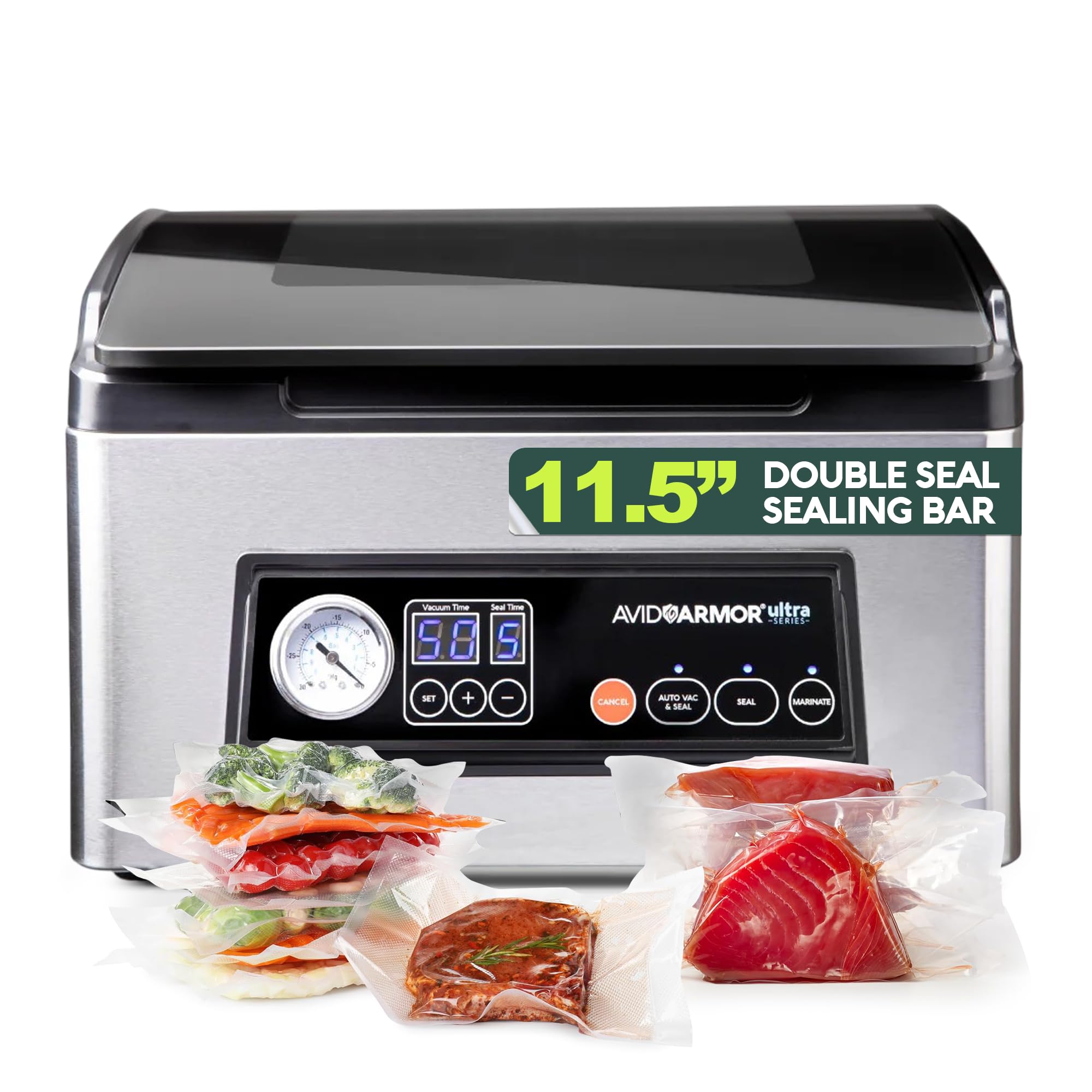
The measurement that decided this one for us is the height. At 8.25 inches tall on a 14-inch-wide body, the USV20 slides under upper cabinets, and at 17.3 pounds it is light enough to shift when the counter needs clearing. In a group where several machines run 50 pounds and up, that is the difference between owning a chamber sealer and storing one.

Inside, the stainless chamber measures 12.25 by 8.5 by 3 inches behind an 11.5-inch seal bar, which reads as family-scale rather than commercial: two pork chops, a batch of chili in portions, a salmon side cut into meal lengths. We especially like that vacuum time and seal time are set in seconds rather than fixed, with 15 to 60 seconds on the vacuum. That range lets you pull hard on a dense steak and gently on a soft roll or a bag of stew that would otherwise climb toward the bar. There is a marinade cycle too, for the nights you want chicken seasoned in twenty minutes rather than overnight.

Wet food is the whole point, and it behaves. Because the vacuum is drawn from the chamber, the liquid in the bag has nothing dragging it toward the seal, so a quart of soup goes in as a quart of soup. Running costs are the quiet win: chamber machines take plain smooth pouches instead of textured ones, and those cost a fraction per bag.

What it will not do is grow. The chamber is 8.5 inches deep, so a long halibut fillet goes in as portions rather than whole. If whole fish are the reason you are buying, the VEVOR below has an external port for exactly that job. For leftovers, bulk meat, soups and a season of salmon steaks, this is the machine we point people to first.

Pros

  • 8.25 inches tall, so it clears upper cabinets
  • Adjustable vacuum time from 15 to 60 seconds
  • Seals liquids and marinades cleanly
  • Runs on inexpensive smooth chamber bags

Cons

  • Seal bar caps bag width at 11.5 inches
Our verdict

If you want one chamber sealer for a normal kitchen, we think this is it: it seals wet food, fits under the cabinets, and does not need two people to move.
Check Latest Price
2

Best for Big Batches

Avid Armor USV32

91 /100
Angler Score Outstanding

Key details

Weight
26.4 lb
Chamber
Stainless steel
Wattage
380 W
Seal Bar
11.5 in, dual-wire
Check Details on Amazon

Compared with the USV20, the USV32 is the same footprint idea built heavier: 26.4 pounds instead of 17.3, a stainless chamber under a tempered glass lid, and a 380-watt motor doing the pulling. The mass is not a drawback in use, since the thing sits still when you slam the lid, but it does mean this machine wants a counter address rather than a cupboard shelf.

We think the buyer here is a household that processes in bursts: a whole catch, a quarter of beef, a garden of tomatoes in one weekend. The double-wire bar lays two seal lines per cycle, which is the kind of redundancy that matters when a bag is going to sit in a freezer for a year, and the machine is built to run back-to-back rather than one batch and a rest. Marinating works fast enough to be worth using on a weeknight.

The parts that wear are replaceable, including the pump, the chamber gasket and the heating bar, so a failure in year four is a repair rather than a funeral. It costs a clear premium over the USV20 for capacity you may not need, and if your sealing is a few bags a week the smaller machine is the better buy. For a freezer-filling session, the extra chamber and the second wire are worth the money.

Pros

  • Double-wire bar puts two seals on every bag
  • Built for continuous, high-volume cycles
  • Replaceable pump, gasket and heating bar
  • Stainless chamber with a tempered glass lid

Cons

  • No wider seal bar than the cheaper USV20
Our verdict

We recommend the USV32 for anyone who processes a whole catch or a quarter of beef at a time and has a permanent spot for a heavier machine.

Check Latest Price
3

Best for Small-Business Volume

VacMaster VP230

89 /100
Angler Score Excellent

Key details

Pump
1/2 HP oil
Weight
89 lb
Seal Bar
12.25 in
Chamber Size
12.5 x 15 x 5 in
Check Details on Amazon

Half a horsepower of oil-pump vacuum is what separates this machine from everything else in the group. In practice that means a chamber 12.5 by 15 by 5 inches, bags up to 12 by 15 inches, and a pump that will run cycle after cycle at a market's pace without fading. A pressure gauge on the panel tells you what the chamber is actually doing, which sounds minor until you are working through a hundred pounds of fish and want proof the vacuum is real.

The 12.25-inch bar lays a double seal, and the depth is the number hunters and anglers should care about: five inches of chamber takes a standing roast or a cured loin that a three-inch machine will not. Marinating and infusion are on the panel, alongside one-touch controls, and the box includes sixty 3-mil pouches, filler plates and a maintenance kit.

At 89 pounds it is not a counter appliance. You site it, level it and leave it, which means a sturdy bench, a dedicated outlet and a plan for where it goes before it arrives. For anyone selling what they seal, that placement is easy to justify. For a household putting up a deer and a few gallons of soup, it is more machine and more money than the job asks for.

Pros

  • Half-horsepower oil pump for long sessions
  • 5-inch chamber depth takes tall cuts
  • Double seal on every bag
  • Ships with 60 pouches and a maintenance kit

Cons

  • Oil pump means oil changes on a schedule
Our verdict

Buy the VP230 if sealing is part of your income rather than your weekend; the oil pump and the five-inch chamber are what you are paying for.

Check Latest Price
4

Best for Long Fish

VEVOR DZ-260C

87 /100
Angler Score Excellent

Key details

Weight
62 lb
Seal Bar
12 in
Chamber Size
14 x 13.4 x 2.9 in
Vacuum Level
-100 kPa
Check Details on Amazon

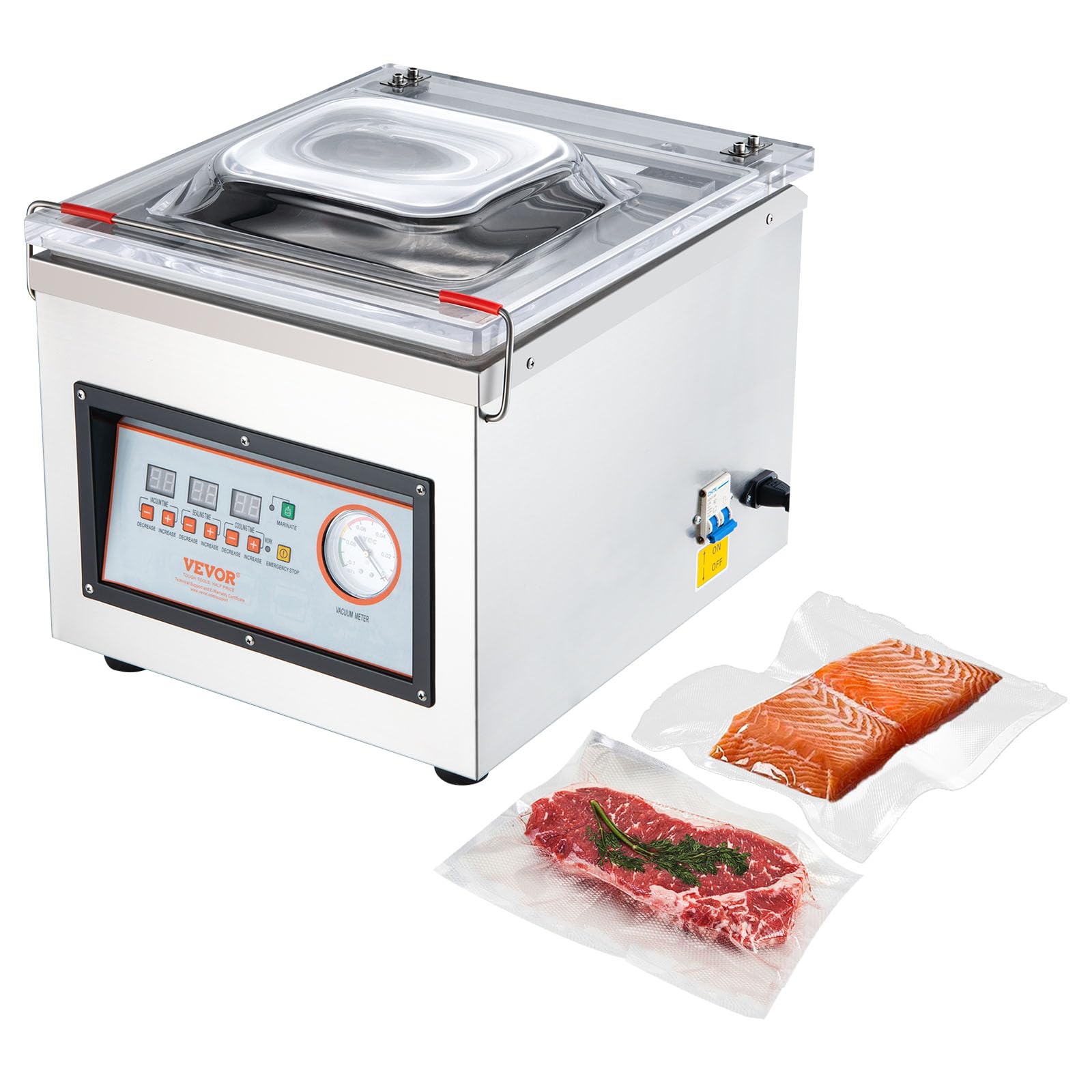
The feature we keep coming back to is the external vacuum port. A chamber machine is bounded by its chamber, and a 30-inch striped bass fillet is not going into anyone's, but this VEVOR will pull a vacuum through a hose on a textured bag outside the machine. The long, awkward pieces get sealed instead of cut down to fit, which for a fishing household is the whole argument.

Inside, the 12-inch bar carries a 10-millimeter seal band and the oil pump pulls to minus 100 kPa at 6.5 cubic meters an hour, so a bag of thawed fillets does not sit there with a bubble in the corner. We also appreciated that the modes are broken out separately, canister, marinate and seal-only, because hunting through a menu with wet hands is nobody's idea of a good time.

Plan around the chamber depth. At 2.9 inches it is a flat-pack machine: fish portions, steaks, burger, a flattened bag of stew, rather than a standing roast. It is also an oil-pump design, so there is oil to check and change on a schedule, which is part of what buys that hard, steady pull. Set against that, you are getting a stainless body and a real pump for less than most of the sealed-unit machines here.

Pros

  • External port seals fish too long for the chamber
  • 12-inch bar with a 10 mm seal band
  • Separate canister, marinate and seal-only modes

Cons

  • 2.9-inch chamber rules out tall items
  • 62 pounds needs a permanent spot
Our verdict

We like the DZ-260C most for anglers: the external port takes the fillet that will not fit inside, and the 12-inch bar seals wide bags.

Check Latest Price
5

Best Oil-Free Option

Beelicious Pro CVS101

94 /100
Angler Score Outstanding

Key details

Pump
Oil-free dry pump
Weight
25.7 lb
Seal Bar
12 in dual
Chamber Capacity
6 L
Check Details on Amazon

The detail that decides this one for us is the pump. It is a dry, oil-free design, which removes the single upkeep job that makes people stop using a chamber sealer: no oil to check before the first run, none to change on a schedule, nothing to top off after the machine has sat for a month. If your sealer lives in a cupboard and comes out for a big weekend, that matters more than a fraction of a kilopascal.

Around the pump there is a 6-liter upper chamber with a removable 12-inch dual-seal bar, plus a second sealing area for items too big to go inside. The top panel is angled with a countdown display, a small ergonomic choice that stops you bending over a hot bag to see whether the cycle is done, and the box includes textured pouches, smooth pouches and a roll. Bags up to 11.8 inches run in the chamber.

At 25.7 pounds it is liftable by one person, though a machine this size is happier left out. It pulls to minus 100 kPa, so there is real force behind it for dense, wet loads: a quart of soup, a marinade, a bag of fillets with a little water still on them. It is the least fussy route into chamber sealing that we handled.

Pros

  • Oil-free dry pump, so no oil changes
  • 6-liter chamber with a 12-inch dual bar
  • Angled panel with a countdown display

Cons

  • Upper chamber is shallow for tall items
Our verdict

The Beelicious is our pick if you would rather not think about pump oil: the dry pump and the 12-inch dual bar do the work without the maintenance ritual.

Check Latest Price
6

Easiest to Clean

Vesta Precision V513

81 /100
Angler Score Excellent

Key details

Weight
21.6 lb
Capacity
5.6 qt
Seal Bar
12 in, removable
Chamber Size
12.3 x 8.8 x 3.7 in
Check Details on Amazon

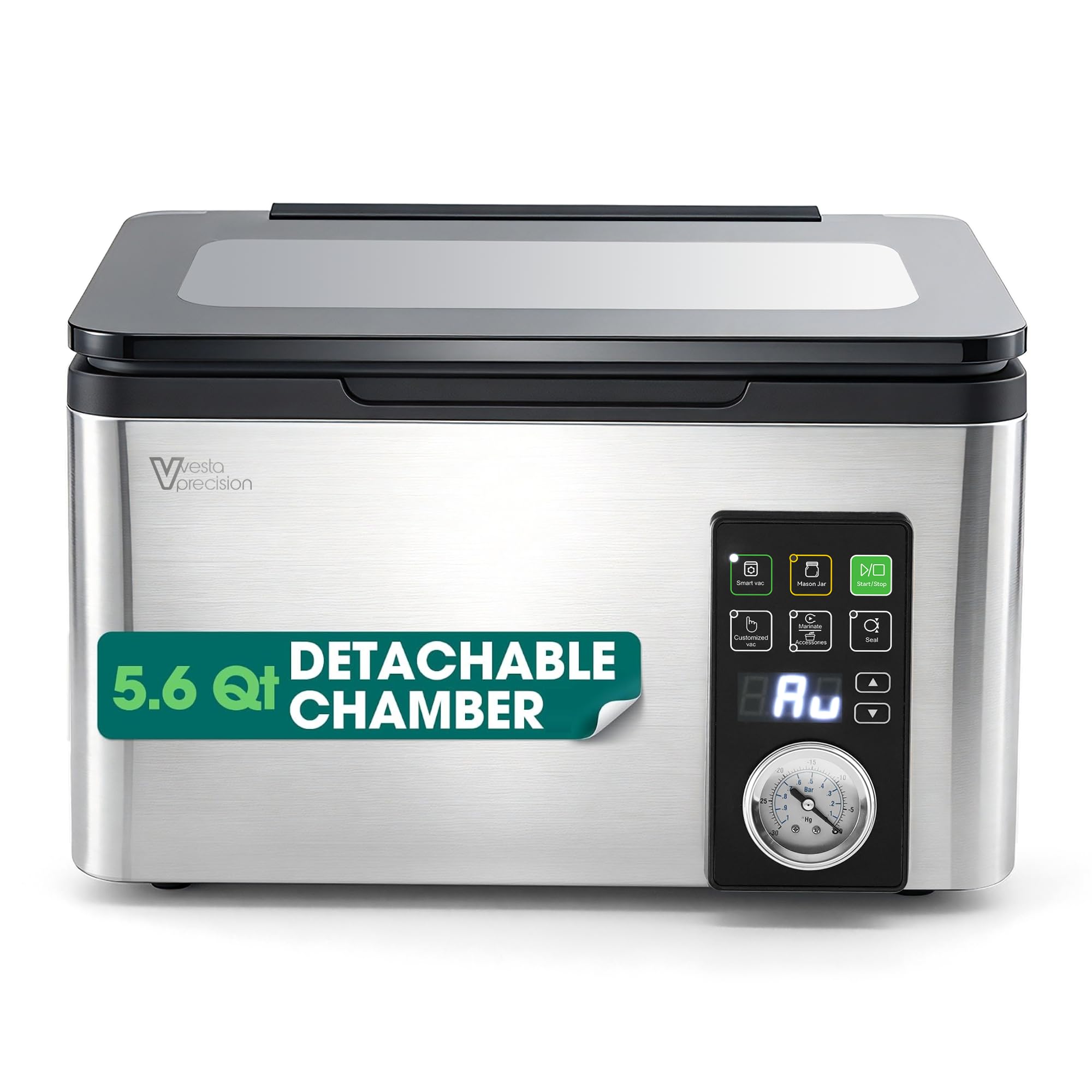
Cleaning is why chamber sealers get abandoned, and this is the one machine in the group designed around it. The CleanTray and the 12-inch seal bar both lift out, and the bar is washable, so a bag that bursts its contents across the chamber is a rinse rather than a disassembly job. Wipe the gasket, put the parts back, carry on.

The other neat piece is SmartVac, which sets the vacuum cycle by sensing the load rather than asking you to guess at seconds, and a variable-frequency pump that runs quietly enough to hold a conversation over. Together they make a machine that gets out of the way, which is exactly what you want at eleven at night with a pot of stock cooling on the stove.

The chamber is 12.3 by 8.8 by 3.7 inches on a 12.6 by 13.9-inch body, so it is deeper than it is wide, and the box includes a mason jar kit, a hose and a starter set of flat bags. Jars and canisters are covered from day one rather than as an accessory purchase.

For a kitchen where the machine lives on the counter and runs weekly, removable parts, automatic cycles and quiet operation are worth more than a few extra liters of chamber. Buy it for portions and jars. If you are bagging whole primals, the USV32 or the VacMaster is the right shape, and this one will frustrate you.

Pros

  • Removable tray and washable seal bar
  • SmartVac sets the cycle automatically
  • Quiet variable-frequency pump
  • Mason jar kit and hose included

Cons

No notable drawbacks to flag.

Our verdict

Choose the Vesta if cleanup is the thing that would stop you using a chamber sealer; the tray and seal bar come out, and the rest is quiet and automatic.

Check Latest Price
7

First Chamber Sealer

Gasbye CV4520

92 /100
Angler Score Outstanding

Key details

Weight
25 lb
Seal Bar
11.5 in, replaceable
Warranty
3 years
Chamber Capacity
5.3 qt
Check Details on Amazon

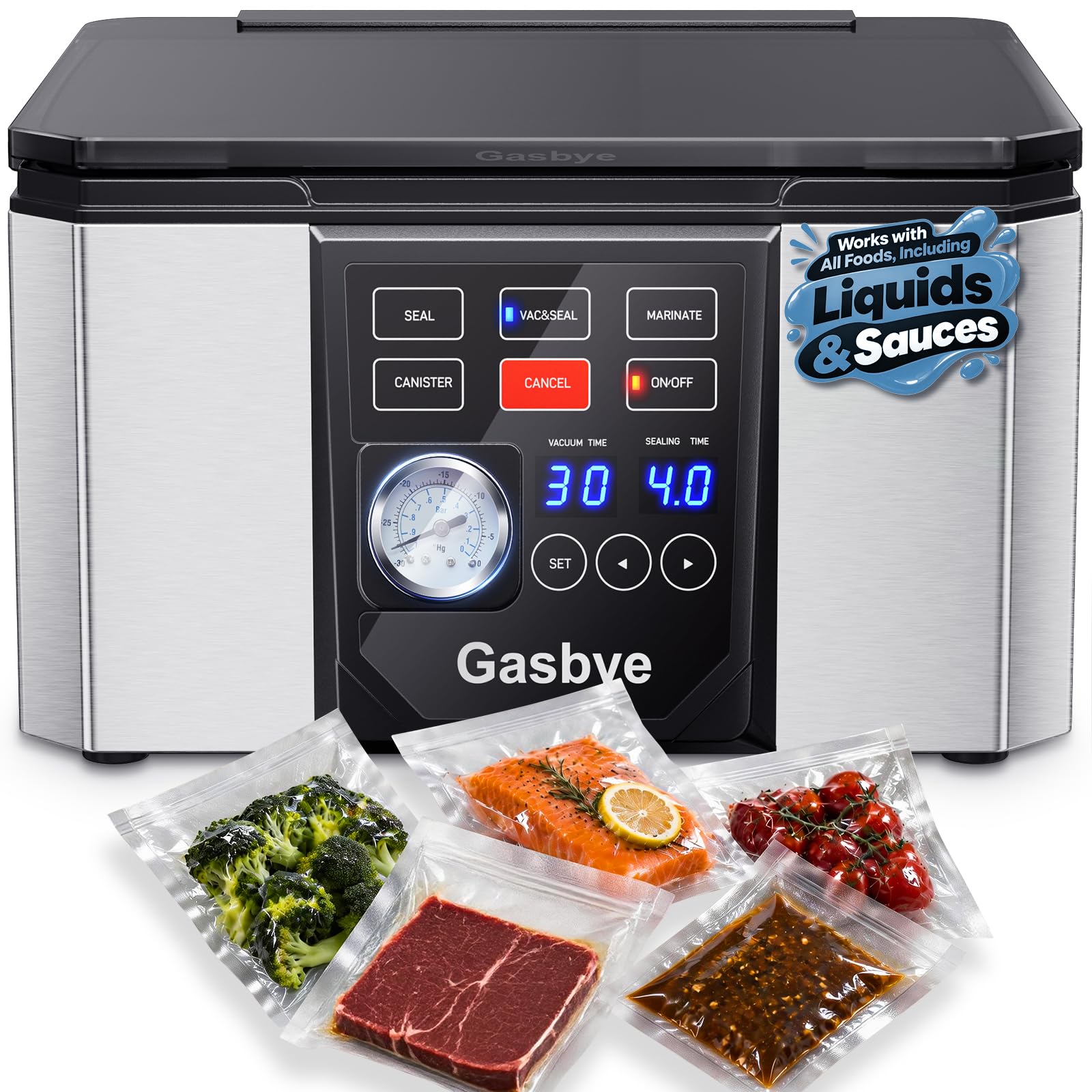
Open the box and you can seal something: thirty 11-by-11-inch pouches, a filler plate for small loads, an external suction hose and a three-year warranty. That is a more complete starting kit than most machines here ship with, and the warranty is the longest in this group by a wide margin.

The 11.5-inch bar carries two heating wires, and both are replaceable. A seal bar is a wear item, and being able to swap it rather than ship the machine is the difference between a five-minute fix and a fortnight without a sealer. Vacuum time and seal time are both adjustable, the chamber holds 5.3 quarts, and the whole thing weighs 25 pounds, which one person can manage.

Where it fits is a household sealing weekly: fish, leftovers, a batch of stock, where 5.3 quarts and an 11.5-inch bar cover nearly everything. The pouches in the box are 11 by 11, so a long fillet goes in as two pieces, and the bar caps bag width at 11 inches regardless of what you buy later.

Pros

  • Three-year warranty, the longest here
  • Replaceable dual-wire seal bar
  • Bags, filler plate and hose included

Cons

  • Newer model with little long-term history
Our verdict

The Gasbye makes sense as a first chamber sealer: it seals liquids, arrives with bags and a hose, and carries a three-year warranty.

Check Latest Price
8

Bags and Jars

Mesliese CVS101S

94 /100
Angler Score Outstanding

Key details

Cutter
12.9 in built-in
Weight
21.4 lb
Seal Bar
11.3 in dual
Chamber Size
12.3 x 10.4 x 3.2 in
Check Details on Amazon

A 12.9-inch cutter is built into this machine, and it changes the rhythm of a sealing session more than it sounds like it would. You pull the roll across, slide the cutter, and you have a bag the length of what you are actually sealing instead of trimming with scissors and hoping the edge is straight enough to seal.

The rest of the package is unusually complete: a 6-liter chamber, a removable 11.3-inch dual-seal bar, an external vacuum mode on a hose for oversize items, and two universal lids, 6.3 and 7.5 inches, that turn that hose into a jar and canister sealer. An 8-inch by 16-foot roll comes in the box, so the first session does not need a bag order.

It runs semi-automatically: load, close, and the cycle does the rest. At 21.4 pounds one person can move it, and the footprint is narrow, 14 by 9 inches, which is welcome on a crowded counter.

For a kitchen that goes through bags steadily, a fishing season or a freezer-filling autumn, the cutter and the jar lids make this the most self-contained machine in the group, and it seals to minus 100 kPa while doing it. What we cannot vouch for is the long haul, since the model is new enough that its durability record is still an open question.

Pros

  • Built-in 12.9-inch bag cutter
  • Two jar lids and an external vacuum hose
  • Roll of bag material in the box

Cons

  • 15.7 inches tall, so no under-cabinet home
Our verdict

If you resent buying bags in set sizes, the Mesliese makes its own, and the cutter is why it earns a place on this list.

Check Latest Price

How We Tested Chamber Vacuum Sealers

We started by collecting every chamber sealer a home cook could reasonably buy, then cut the field by pump type, seal bar length, chamber depth, footprint, and price. Eight machines made the final list, and each one spent a full year in a working kitchen rather than a lab bench.

Every machine got the same cold start: plugged in, timer running, no manual. Then the same rotation of jobs — a quart of tomato sauce sealed with the bag full to the top, a pound of chicken in marinade, raw steaks headed for the freezer, and a pork loin that had to fit inside the chamber. We checked bags 24 hours later for pooled liquid or a loose edge, then cut them open to look for air pockets trapped against the food, and pulled hard on every seal corner to see if it held.

Because these things are heavy, we weighed each one and moved it between a lower cabinet and the counter twice a week, which is the honest test of whether you'll actually use a machine this size. We measured footprint with the lid open to see what cleared the upper cabinets, watched gaskets and hinges for slop after months of daily use, and tracked what bags cost per hundred — a cheaper machine that only takes pricey bags isn't the better value.

How to Choose a Chamber Vacuum Sealer

Start with the seal bar and the chamber, not the vacuum number

The seal bar sets the widest bag you can run through the machine, and the chamber sets how tall the item can be. Every machine here pulls enough vacuum for home and small-shop work, so a tenth of a kilopascal is not where the decision lives. An 11.5-inch bar means 11-inch pouches, which is fine for steaks and soup and tight for a long fillet.

Watch the word compact in a listing. It usually describes the body, not the chamber, and a tall narrow machine can hold less than a low wide one that looks bigger on the counter. Measure the widest bag you realistically buy and the tallest thing you realistically seal, then match those two numbers.

Oil pump or dry pump

Oil-pump machines, like the VacMaster VP230 and the VEVOR DZ-260C, are built to run long sessions without the pump losing pull, and the oil is part of why. The cost is maintenance: a level to check, oil to change, and usually oil to add before the first run because the machine ships dry.

Oil-free dry pumps, like the one in the Beelicious, take that chore off the list. For a household that seals in bursts and leaves the machine idle for weeks, that is the more forgiving setup; for a shop running hundreds of bags a week, the oil pump is the one built for the pace.

Weigh it against where it will live

This is the spec buyers underestimate. The machines here run from 17.3 to 89 pounds, and anything past about 40 pounds becomes a fixture: it gets sited, leveled, and left. That is fine if you have the bench for it and a mistake if the only home is a cupboard you have to lift it into twice a week.

Height matters as much as weight. The Avid Armor USV20 stands 8.25 inches tall and slides under upper cabinets; the Mesliese is 15.7 inches and will not. Pick the spot before you order, and check the clearance above it.

Adjustable time beats a single button

A chamber machine removes air from the whole chamber, so the food is not being crushed by a stream of air the way it is in a suction sealer. That does not mean one cycle suits everything. Adjustable vacuum and seal time lets you pull hard on dense meat and gently on soft bread, a bag of chips, or a stew you do not want climbing toward the seal.

If your sealing runs to a narrow range of food, a one-touch cycle is genuinely easier. If it ranges from soup to fish to dry goods, pay for the dials.

Bags, jars and the running cost

One of the better arguments for going chamber is the bag. These machines seal plain smooth pouches rather than the textured ones a suction sealer needs, and those cost far less per bag. That is the saving that quietly pays back a machine over a few seasons of fish and bulk meat.

The trap is the extra modes. External vacuum sealing, the feature that lets you seal a bag outside the chamber, needs textured bags and a hose. Jar and canister sealing needs adapters, which some machines include and some sell separately. Check what is in the box before you assume a mode is ready to use.

Frequently Asked Questions

Final Verdict

For most kitchens the Avid Armor USV20 is the one: 17.3 pounds, low enough to sit under the cabinets, and happy with a bag of chili or a wet fillet. Step up to the USV32 if you process in bulk, or to the VacMaster VP230 if you sell what you seal; that is where the extra chamber depth and the oil pump start paying for themselves.