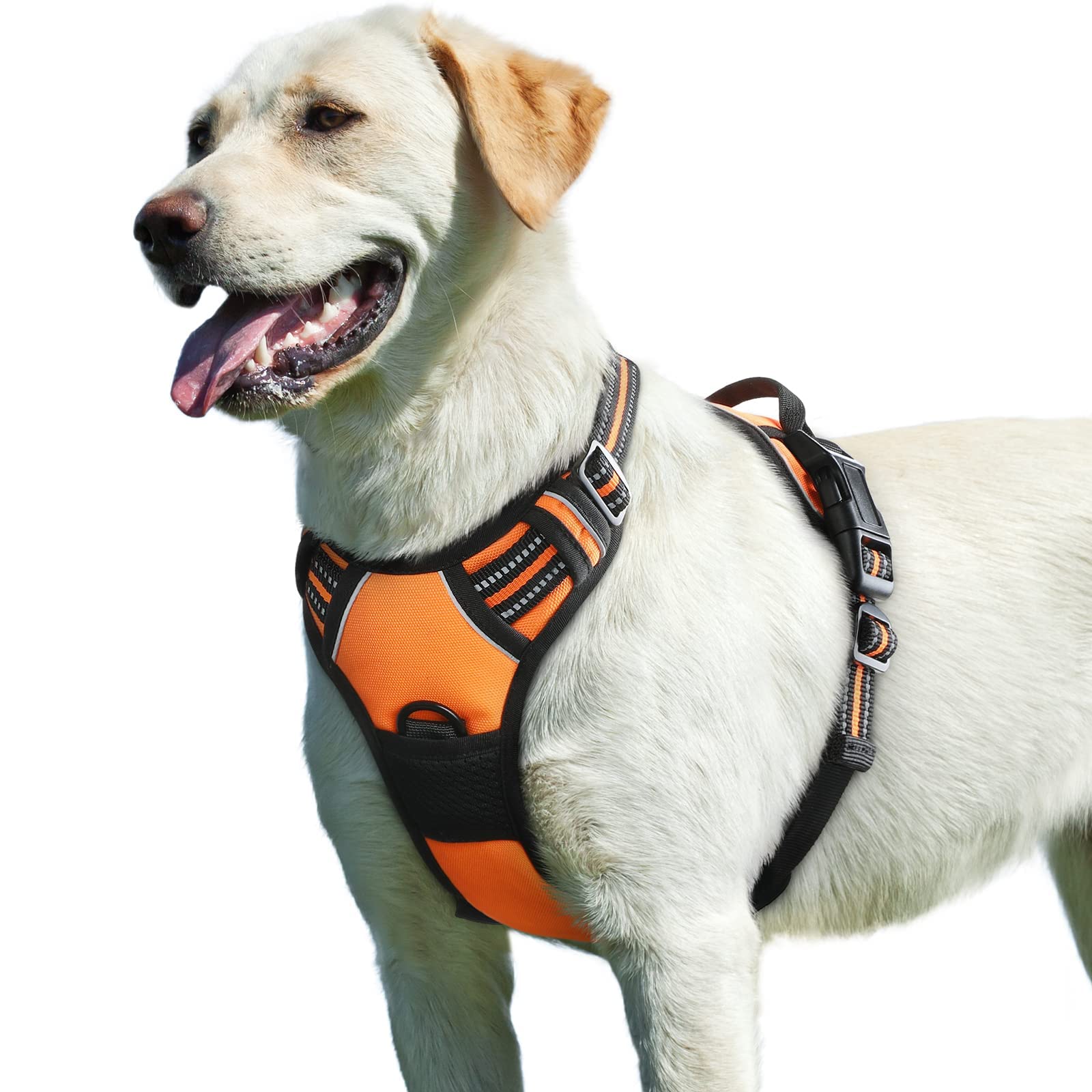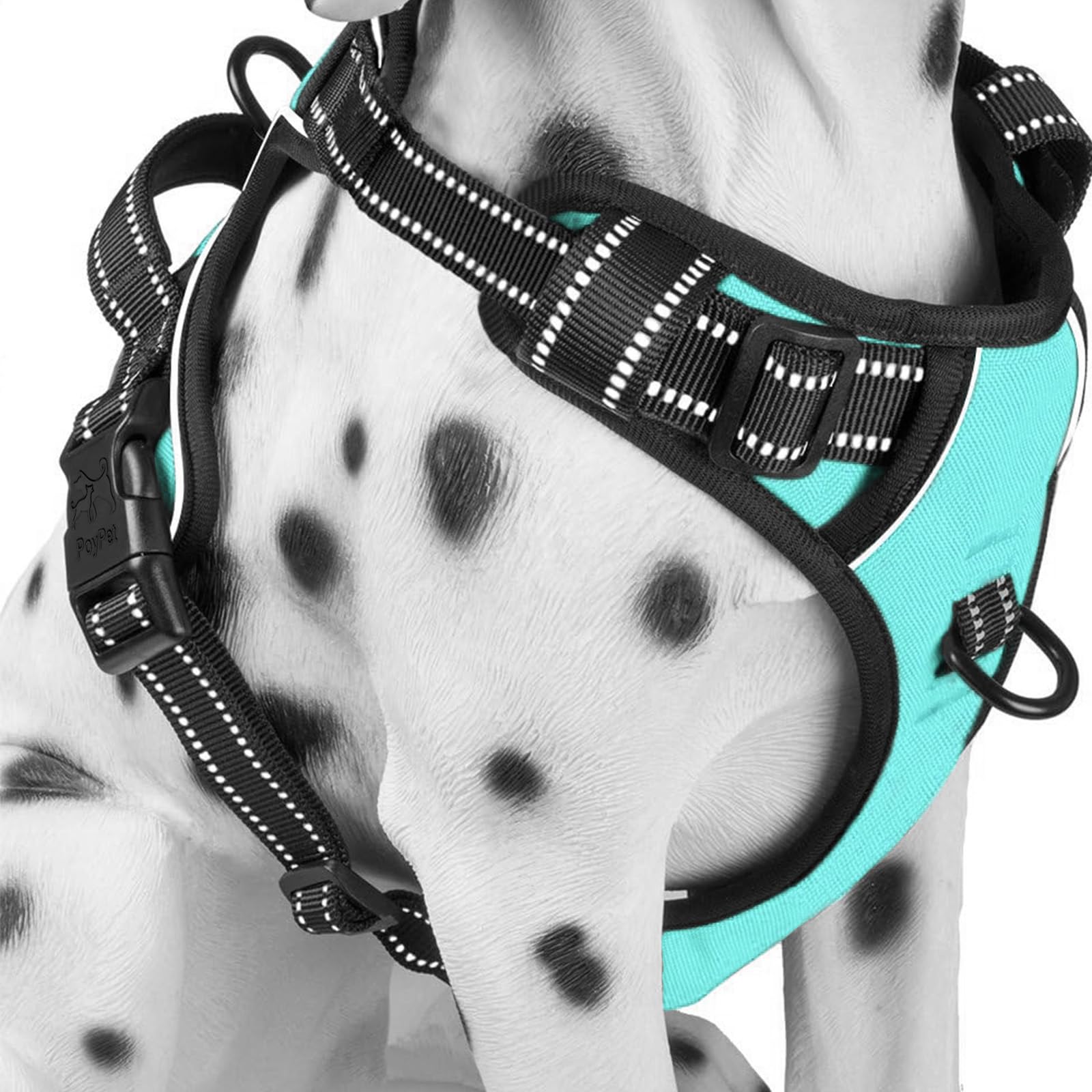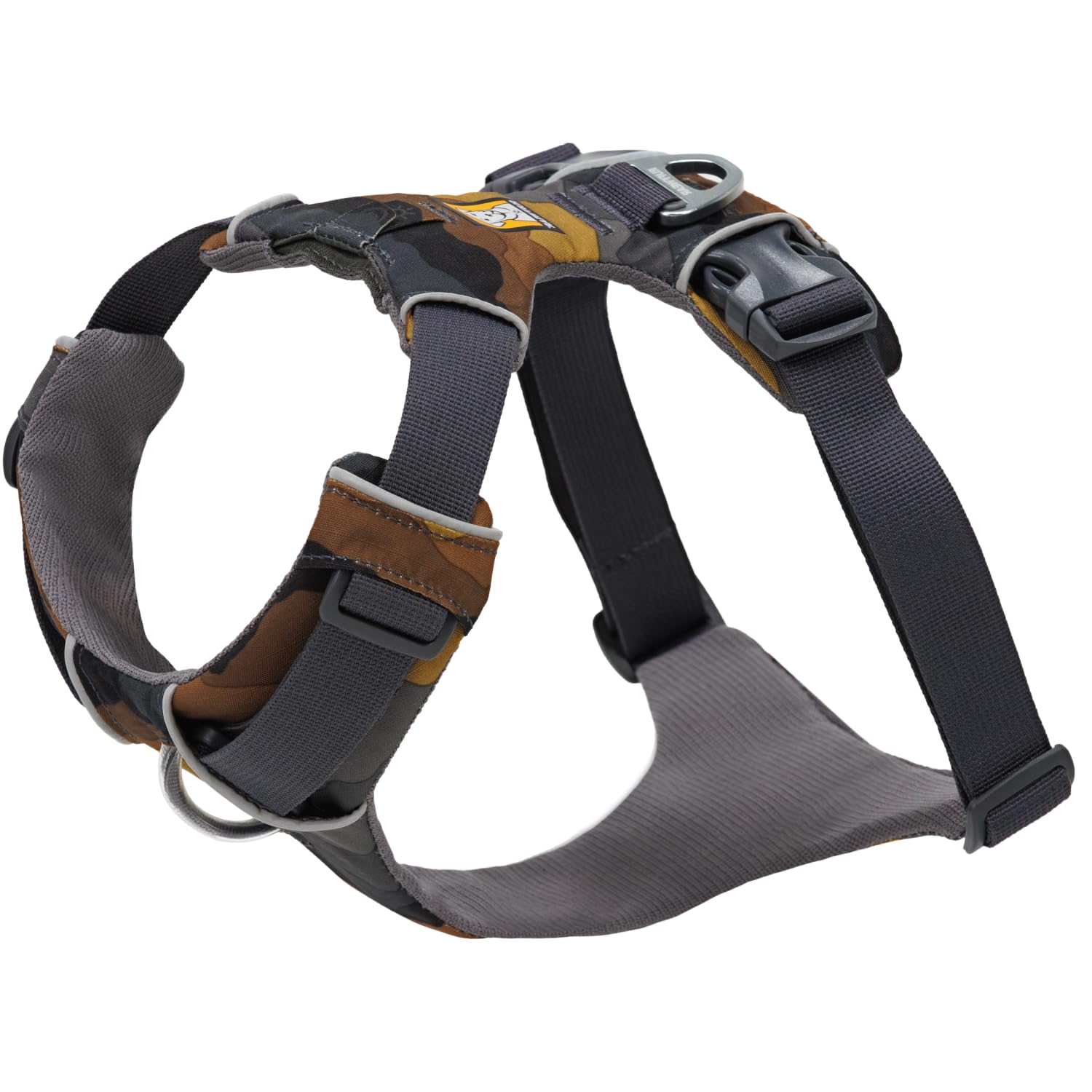
Best Dog Harnesses for Hiking of 2026

The worst place to discover your dog can back out of a harness is halfway up a granite slab with a drop behind you. I learned that with a dog who walked perfectly on city sidewalks and turned escape artist the second the trail tilted upward. A hiking harness has to hold a dog who's scrambling over roots, lunging at a chipmunk, or suddenly reversing on loose gravel, and it has to do it without rubbing a raw spot under the front legs by mile three. A good one spreads the pull across the chest instead of the throat, keeps its straps where you set them, and sits quietly enough that your dog forgets it's wearing anything.

Fit, not features, is what separates a harness that works from one that chafes — two dogs of the same weight can need completely different sizes, and no amount of padding fixes a strap that lands in the wrong place. My team and I hiked 13 harnesses over six months, from flat rail-trails to rocky scrambles, and the differences showed up fast. The picks below are the ones that stayed put.

1

Best Overall

Ruffwear Front Range Harness

93 /100
Angler Score Outstanding

Key details

Weight
5.92 oz
Padding
Closed-cell foam
Adjustment Points
4
Leash Attachments
2 (back V-ring, chest webbing)
Check Details on Amazon

The Front Range is the harness we recommend when the hike is the point, not just the walk. The closed-cell foam in the chest and belly panels is the detail that separates it from the budget vests here: it cushions the parts that take pressure on a long climb, and it doesn't add much bulk. Four points of adjustment let you fit the neck and chest separately, which is what you want on a deep-chested dog or a narrow-shouldered one. We also like the dedicated Beacon loop; clipping a light there keeps it off the leash ring and out of the way.

The leash setup is flexible without being fussy. The aluminum V-ring on the back is our default for relaxed trail miles, while the reinforced webbing at the chest gives you a front attachment for a dog that pulls on descents. It isn't a magic no-pull fix, but the front point takes the edge off without twisting the harness sideways. Reflective trim is there for early starts and late finishes, and the whole thing weighs just under six ounces, so it packs down small when you stop for lunch.

Fit is the one thing to get right. The four-point adjustment gives you a lot of range, but it rewards careful measuring rather than guesswork—check the chest and neck, then watch the dog walk and turn before you commit. We also treat the premium price as part of the decision: this is the harness we choose for long days and rough ground, not the one we leave in the car for quick neighborhood loops.

Pros

  • Foam padding cushions long climbs
  • Four-point adjustment fits odd shapes
  • Front and back leash options
  • Light enough to pack

Cons

  • ⚠️ Can be backed out of if fit is loose
Our verdict

The Front Range is our default hiking harness for padded comfort, four-point fit, and composed trail control.

Check Latest Price
2

Best Budget Tactical

AUROTH Tactical Dog Harness

93 /100
Angler Score Outstanding

Key details

Size
M(Neck:16-22",Chest:22-33"),35-50 lbs
Handle
Top handle
Gear Carry
MOLLE strips
Leash Attachments
2 metal points
Check Details on Amazon

The AUROTH is the harness that makes a tactical vest feel like a sensible budget buy. For the money, you get MOLLE strips on both sides, a top handle, two metal leash points, and four adjustment sliders—the kind of layout that usually costs more. We like the handle for helping a dog over a log or holding them steady at a trailhead, and the front clip gives you a no-pull option without giving up the back clip for relaxed miles.

The padding and reflective trim are welcome at this end of the range, and the camo finish looks less like a costume than some tactical vests. We like the MOLLE strips most: you can add a small pouch or clip a collapsible bowl without carrying a separate pack.

The build is good for day hikes and backup duty, but we keep it out of remote multi-day trips. For a budget harness that carries a little gear, it earns its place.

Pros

  • MOLLE strips carry small trail gear
  • Top handle helps on rough ground
  • Two metal leash points
  • Budget-friendly tactical layout

Cons

  • ⚠️ Plastic buckles are the weak point
Our verdict

We reach for the AUROTH when we want MOLLE gear loops and a handle on a budget.

Check Latest Price
3

Best for Hard Pullers

ICEFANG Tactical Dog Harness

95 /100
Angler Score Outstanding

Key details

Weight
1.98 lb
Buckles
6 (2 metal, 4 plastic)
Gear Carry
MOLLE panels
Leash Clips
3
Check Details on Amazon

Three leash clips is the first thing that sets the ICEFANG apart. You get a front V-ring near the neck, a back ring for relaxed walking, and a third attachment that gives you options when a dog is lunging or needs short control. The six buckles—two metal, four plastic—make it easy to put on a wriggly dog without pulling anything over the head. We appreciate the metal buckles at the stress points; they're the parts that take the load when a dog hits the end of the leash.

The 0.9 kg weight is the trade-off. This is a lot of harness for a summer day hike, and on a small or heat-sensitive dog you feel the bulk. But for a strong dog on rugged ground, the padding, handle, and MOLLE panels earn their keep. We like the handle for holding a dog steady at a stream crossing, and the MOLLE strips let you add a small first-aid pouch or ID panel without a separate pack.

The secure fit is good but not automatic, and we check the adjustment before a rough route and again after a water crossing. We choose the ICEFANG when the trail is steep, the dog is strong, and the extra weight buys control we can feel. For a casual neighborhood walk, it is more harness than you need.

Pros

  • Three leash clips for control
  • Metal buckles at stress points
  • MOLLE panels carry gear
  • Top handle for steadying

Cons

  • ⚠️ Straps can loosen with use
Our verdict

For strong dogs and gear-heavy hikes, we accept the ICEFANG's extra weight for three leash points and metal buckles.

Check Latest Price
4

Best Trail Kit

Beebiepet Tactical Dog Harness

93 /100
Angler Score Outstanding

Key details

Weight
1.63 lb
Gear Carry
MOLLE strips
Leash Clips
2
Included Leash
5 ft
Check Details on Amazon

A harness that comes with a matching leash and an ID tag is a nice shortcut for a new hiking kit. The Beebiepet includes a five-foot leash with a foam handle, plus MOLLE strips, a top handle, and four-point adjustment.

We like the ID tag because it's a simple backup if the dog slips a collar on the trail, and the leash is sturdy enough to use as your main trail leash rather than a spare. The harness is built for large dogs, with a 0.74 kg weight and reinforced stitching.

The front clip gives you a no-pull option, but this is more of a control harness than a training tool; expect it to take the edge off a strong puller, not stop one. The padded handle is comfortable to hold when you need to keep a dog close at a trailhead, and the MOLLE strips are useful for a small pouch or a folded bowl.

The chest fit is generous, so measure before you order. For a big dog and a ready-made kit, we think it's a smart first hiking harness.

Pros

  • Includes a five-foot leash
  • ID tag adds a backup
  • MOLLE strips carry small gear
  • Top handle helps on trail

Cons

  • Large size only
Our verdict

We like the Beebiepet as a ready-to-go trail kit: the included leash and ID tag make it easy to start hiking.

Check Latest Price
5

Best Budget for Large Dogs

Eagloo No-Pull Dog Harness

91 /100
Angler Score Outstanding

Key details

Handle
Top handle
Weight
8.6 oz
Chest Range
15–35.4 in
Leash Rings
2 (front and back)
Check Details on Amazon

The Eagloo's 15-to-35.4-inch chest range is the reason it's here: it covers a lot of large-dog shapes without stepping up to a premium price. Two leash rings—front for pull control, back for relaxed walking—and a top handle give you the basics for a trail day. We like the padded air mesh for warm-weather hikes; it's breathable and the edges are soft against the coat.

The 8.6-ounce weight is light enough to forget in a pack, and the four adjustment sliders let you take up slack at the neck and chest. The front ring is the one we use on a dog that pulls on descents, while the back ring is better for easy miles. Reflective strips are there for low light, and the handle is useful for holding a dog steady while you check a map or cross a road.

The long-term picture is less settled, and this is a budget harness for moderate pullers rather than a hard-core control tool. For a moderate puller on day hikes, the fit and price make it an easy budget choice.

Pros

  • Broad chest range fits large dogs
  • Front and back leash rings
  • Padded air mesh for warm weather
  • Light enough for day hikes

Cons

  • ⚠️ Straps can loosen under hard pulling
Our verdict

The Eagloo earns our budget nod for large dogs when a broad chest range and two leash rings matter most.

Check Latest Price
6

Best Lightweight Trail Harness

PoyPet Reflective No-Pull Harness

93 /100
Angler Score Outstanding

Key details

Weight
6.56 oz
Material
Oxford and air mesh
Leash Rings
2 (front and back)
Adjustment Points
4
Check Details on Amazon

At 6.56 ounces, the PoyPet is the harness we pack when we want a trail-ready vest without bulk. Four adjustment points let you fit the neck and chest separately, and the padded handle is there for a quick grab. The front and back metal D-rings give you a no-pull option and a relaxed-walk option, which is more flexibility than most budget vests offer.

We like the scratch-resistant Oxford outer and quick-dry mesh for muddy trails; it wipes down more easily than a soft vest and doesn't hold onto grit. The reflective stitching is a nice touch for early starts, and the padding sits flat enough that the harness doesn't feel like a life jacket.

For a light day hike with a moderate puller, the PoyPet is a lot of harness for the money. We keep it for trails where we want low bulk and easy cleanup, not for a dog that needs maximum control on steep ground.

Pros

  • Light at 6.56 ounces
  • Four-way adjustment
  • Front and back metal D-rings
  • Wipe-clean Oxford shell

Cons

  • Sizing runs inconsistent
Our verdict

We grab the PoyPet for light day hikes where four-way adjustment and a wipe-clean shell matter more than tactical bulk.

Check Latest Price
7

Small Trail Dogs

OneTigris Tactical Dog Harness

93 /100
Angler Score Outstanding

Key details

Size
XX-Small
Handle
Top handle
Warranty
1 year
Gear Carry
MOLLE and hook-and-loop panels
Check Details on Amazon

The OneTigris is one of the few tactical harnesses here cut for a small dog—this is the XX-Small, with a 10-to-14-inch neck and a 13-to-18-inch chest. It's built from 1000D nylon with a top handle, four quick-release buckles, MOLLE strips, and hook-and-loop panels. We like the handle for lifting a small dog over a log or into a car, and the 1-year warranty is a confidence signal at this price.

The hook-and-loop panel at the top is sized for ID badges, which is a nice trail-town touch, and the MOLLE strips let you add a tiny pouch without much bulk. The 1000D nylon is the real draw if your trails are brushy and you want a shell that resists snags.

For a small dog that carries its own water and ID, it's a tough little harness. The single leash attachment sits on the back, so this is a walking harness rather than a no-pull setup.

Pros

  • 1000D nylon resists brush
  • MOLLE and ID panels
  • Top handle helps with lifts
  • One-year warranty

Cons

  • Back-only leash attachment
Our verdict

We recommend the OneTigris for small dogs that need a tough, gear-friendly harness, provided you measure the XX-Small carefully.

Check Latest Price

How We Tested Hiking Harnesses on Real Trails

We started by pulling more than 40 harnesses from brand catalogs and trail reviews, then cut anything with plastic load-bearing buckles, thin webbing across the chest, or a size range that skipped the dogs most likely to need one — broad-chested Labs, narrow-chested sighthound mixes, and short-legged stocky dogs. That left 13, which we bought ourselves and fitted to dogs from about 18 to 90 pounds.

Testing ran six months and happened on actual trails: weekday morning greenway loops, weekend climbs with 1,500 feet of gain, muddy bushwhacks, creek crossings, and the drive home afterward. We put each harness on and took it off with cold hands, timed how long it took, and noted whether the adjusters had slipped by the end of the hike or the rear strap had crept toward the tail. After every outing we checked the padding under the front legs to see whether it was still lying flat or had rolled into a rope, and we watched for whether a dog balked when the harness came out on day 20 the way it hadn't on day one.

Two tests told us the most. We clipped a leash to the back ring and pulled gently sideways to see if the harness rotated around the ribcage — the good ones stayed centered. Then we cued each dog to back up while a helper applied light backward pressure, which is how a dog slips out on a descent, and the ones with a third strap or a longer chest panel held. We inspected stitching at every load point before and after, watched for metal rings sawing through webbing, and machine-washed the muddy ones to see what came out looking the same. Tallying price against buckles, webbing, and stitching, several of the cheaper harnesses beat ones costing twice as much.

How to Choose a Dog Harness for Hiking

Fit Comes Before Features

Start with the tape measure, not the breed label. A hiking harness needs a snug chest fit and a neck opening that doesn't press on the throat; if you can pull the chest panel several inches away from the dog's body, it's too loose. Four points of adjustment are worth paying for on a deep-chested or narrow-shouldered dog because they let you separate neck and chest. Check the fit with the dog walking, turning, and backing up—that's when a loose harness shows itself.

Control on the Trail

A front clip is the most useful control feature for hiking because it redirects a pull sideways instead of letting the dog lean into the leash. It is not a training shortcut, and a determined puller can still pull in one. A back clip is better for relaxed miles and long descents where you want the dog to move freely. A top handle is worth having on rough ground: it gives you a way to hold a dog steady at a stream crossing or help them over a log.

Comfort for Long Miles

Padding matters most where the harness crosses the chest and under the belly, especially on a dog that wears it for hours. Closed-cell foam, like the Ruffwear's, holds its shape better than a thin mesh strip, but it also adds a little bulk. Weight is the other side: a 6-ounce vest disappears in a pack, while a 0.9 kg tactical harness is a different commitment. On a hot hike, breathable mesh and a quick-dry shell are worth more than extra padding you don't need.

Durability, Visibility, and Gear

Look at the buckles, stitching, and webbing before the color. Plastic buckles are the first thing to fail on a budget harness, so check whether the load-bearing points are metal. Reflective trim is a small feature that matters on early starts and short winter days. If you want the dog to carry a bowl or a small first-aid pouch, MOLLE strips are useful, but keep the load light; a harness is not a backpack. A wipe-clean shell makes muddy hikes easier to clean up after.

Frequently Asked Questions

Final Verdict

The Ruffwear Front Range is the harness we recommend first for hiking. Its foam padding, four-point fit, and two leash options make it the most composed choice for long days, and it stays light enough to pack. If you want budget tactical gear loops, the AUROTH is the one we reach for; for a hard puller, the ICEFANG's three clips and metal buckles justify the extra weight.

For a small dog, measure into the OneTigris rather than sizing down a large harness. The right pick still comes down to fit: check the chest and neck, then watch the dog walk and turn before you commit.