
Best Fly Fishing Rods of 2026

Fly fishing has a reputation for being expensive and fussy, and most of that comes from the gear rather than the fish. The rod takes all the credit, but the outfit is what makes or breaks a first season: a line that shoots instead of tangling, a reel drag that holds instead of slipping, a case that keeps four sections from becoming three. Get those pieces right and a modest setup casts beautifully. Get them wrong and an expensive rod still fights you on every back cast.

Over the past eight months my team and I have fished 12 rods and complete outfits, everything from bare rods to kits that arrive with line, leader, and flies already in the box. We cast them on narrow brook-trout creeks, wider tailwaters, and one memorably windy reservoir that made every flaw obvious within an hour. If you're new to this, here's the thing nobody tells you: a 9-foot 5-weight handles most freshwater fishing in the country, and the line matters more than the blank it's attached to. The picks below are sorted by who they actually suit.

1

Best Overall

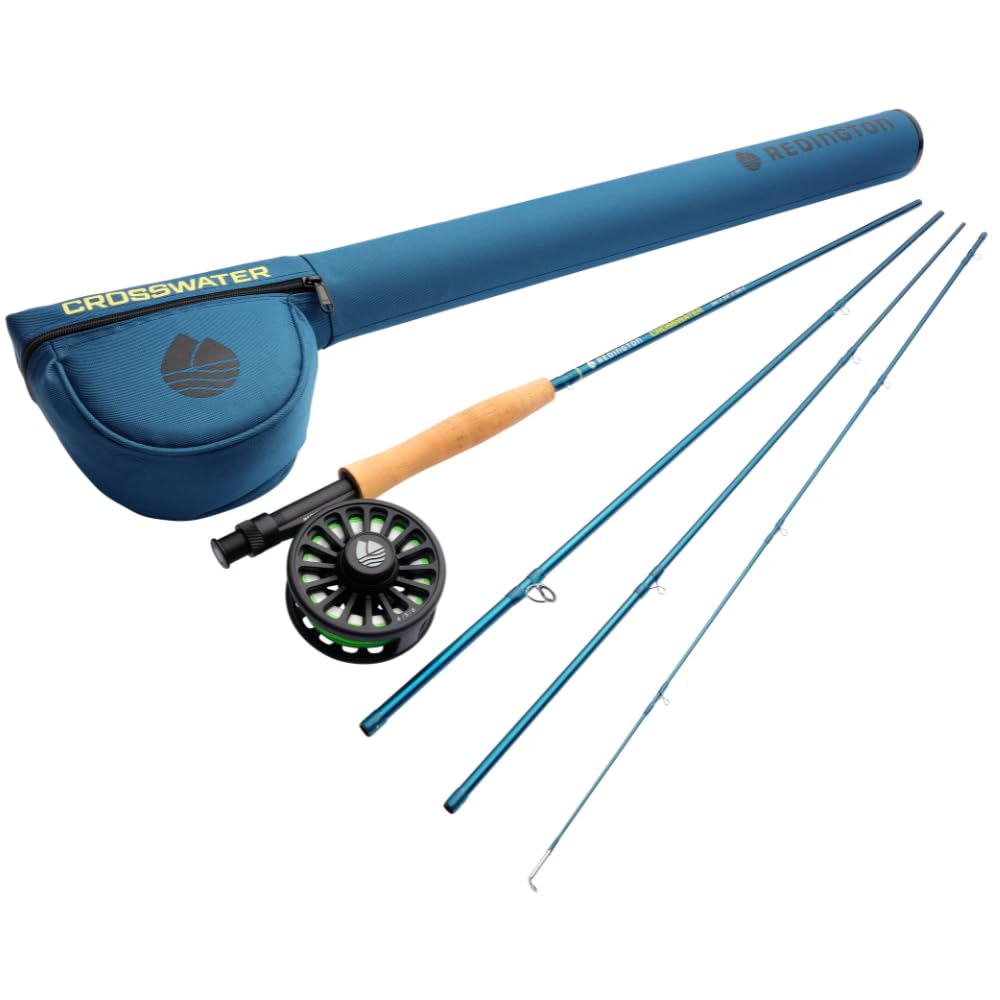
Redington Crosswater Outfit

89 /100
Angler Score Excellent

Key details

Action
Medium-fast
Pieces
4
Rod Length
9 feet
Line Weight
WF5F
Check Details on Amazon

The Crosswater outfit takes the guesswork out of a first trout setup: a 9-foot 5-weight rod, a matched disc-drag reel, and a weight-forward floating line arrive together in a zippered case. That is the combination we want most anglers to start with, because a 5-weight is broad enough for trout streams, small rivers, and the occasional pond, and the four-piece rod packs down without turning travel into a project.

The medium-fast graphite blank is forgiving enough for a learning cast but still has enough backbone for a decent loop in a breeze. We like the disc drag for the occasional larger fish, and the pre-spooled line means you can be on the water without matching components yourself. The included line is the weak link: it can curl and tangle, and a smoother weight-forward line is the first upgrade worth making.

The zippered case is a practical touch, not a throwaway. It holds the rod and reel together and protects the blank between trips. We also appreciate that the outfit uses a standard 5-weight line, so replacing it later is straightforward rather than a hunt for a proprietary match.

Our advice is to keep the rod in its case between trips and treat the ferrules gently. The Crosswater is not the cheapest way to start, but it is the most coherent package here for an angler who wants one purchase and a clear path to the water.

Pros

  • Matched rod, reel, line, and leader
  • Versatile 9-foot 5-weight for trout
  • Four-piece rod with zippered travel case

Cons

  • Tip failures can sideline the rod
Our verdict

We recommend the Crosswater to anyone who wants a matched 5-weight trout outfit that arrives ready to fish, with only the line as an early upgrade.
Check Latest Price
2

Best Value Complete Kit

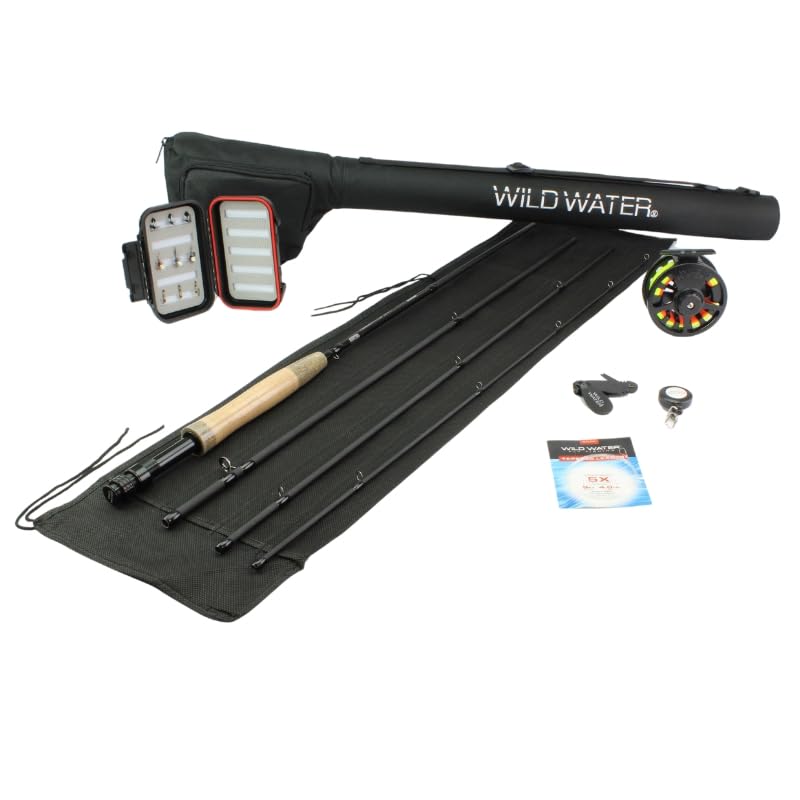
Wild Water Standard Combo

92 /100
Angler Score Outstanding

Key details

Pieces
4
Rod Length
9 feet
Rod Weight
4.4 oz
Line Weight
5 weight
Check Details on Amazon

Wild Water's kit is the one we hand to someone who has never held a fly rod and wants to be on the water this weekend. The 9-foot 5/6-weight rod, die-cast aluminum reel, line, leader, fly box, and nine flies arrive together, and the whole package fits into a nylon case with a 32-inch rod tube.

What we appreciate most is how complete it feels without becoming bulky. The 4.4-ounce graphite blank is light in hand, the cork grip is comfortable for a long morning, and the case has room for the rod and reel without making you dismantle everything. The reel is basic but serviceable, and the fly box is a useful extra rather than a token.

The trade-off is longevity. This is a first-season outfit, not a lifetime rod, and the reel is basic even by starter standards. Neither issue makes the kit useless, but they are why we treat it as a way to learn the sport before spending more.

Add a few local flies and keep the rod in its case between trips; the kit asks very little of you beyond that.

Pros

  • Complete kit with case, flies, and fly box
  • Light 4.4-ounce 9-foot rod
  • Simple 5/6-weight setup for trout and panfish

Cons

  • Rod tip failures can end a trip
  • Reel seat can be fussy to tighten
Our verdict

Wild Water is our value pick for a beginner who wants a complete, lightweight outfit without assembling a dozen separate purchases.

Check Latest Price
3

Best for Small Streams

Redington Classic Trout

90 /100
Angler Score Outstanding

Key details

Action
Moderate
Pieces
4
Rod Length
8 feet 6 inches
Line Weight
4
Check Details on Amazon

A moderate-action 4-weight is a specialized tool, not the rod most beginners grab first. The Classic Trout is built for small streams: an 8-foot-6 four-piece blank, alignment dots, a rosewood reel seat, and a divided nylon tube.

The moderate action is the reason to choose it. It loads with a relaxed stroke, which suits short casts, tight loops, and dry flies on small streams better than a fast rod that demands perfect timing. The light blank is comfortable for a long day, and the alignment dots make setup quick.

We like the Classic Trout most for anglers who already have a reel and line and want a dedicated small-stream rod. It is delicate and accurate without feeling fragile in the hand, and the 4-weight is happiest on small water rather than big rivers or wind. The rod tube and four-piece layout make it easy to keep in the truck for a quick stop, and the moderate action rewards a calm cast rather than a powerful one.

Pros

  • Moderate action suits short, delicate casts
  • Light 8-foot-6 blank reduces fatigue
  • Four pieces with alignment dots and tube

Cons

  • Rod only; reel and line sold separately
  • Tip failures can occur
Our verdict

We recommend the Classic Trout to small-stream anglers who want a forgiving 4-weight rod and already own a reel and line.

Check Latest Price
4

Best Small-Water Craftsmanship

Moonshine Drifter II

88 /100
Angler Score Excellent

Key details

Action
Moderate-fast
Extra Tip
Included
Rod Length
7 feet 6 inches
Line Weight
3wt
Check Details on Amazon

Two tip sections is the detail that makes the Drifter II worth a look before you even cast it. Break a tip on a car door or a clumsy backcast and you are not sidelined for the trip; the spare goes on and the rod keeps working.

The rest of the rod is built for small water. The 7-foot-6 3-weight is light and quick in close, the moderate-fast action loads with a short stroke, and the cork handle and copper accents give it a finished look. The SiC stripping guides and alignment dots are the kind of details that usually show up on pricier rods.

We like the Drifter II for the angler who values a quiet morning on a small creek more than covering big water. The 3-weight limits fly size and wind, and the lifetime warranty replacement carries a fee, so it is not a free pass. The spare tip is the practical insurance that makes the risk easier to accept.

The five-compartment tube keeps the sections organized, and the rod is a handsome, specific tool rather than an all-rounder.

Pros

  • Spare tip included
  • Light 3-weight for small streams
  • Lifetime warranty support

Cons

  • 3-weight limits fly size and wind
  • Warranty replacement carries a fee
Our verdict

We recommend the Drifter II to small-water anglers who want a light, handsome 3-weight with a spare tip and a lifetime warranty behind it.

Check Latest Price
5

Best Budget Rod Only

Maxcatch Premier

87 /100
Angler Score Excellent

Key details

Pieces
4
Material
IM8 carbon
Rod Length
9 feet
Line Weight
5
Check Details on Amazon

The Premier is a 9-foot 5-weight four-piece rod built on an IM8 carbon blank, and it arrives without a reel, line, or fly box. That rod-only format is the point: if you already own a reel and line, this is the least expensive way here to get a proper 5-weight blank.

We like the fast action for casters who have some timing. It generates distance without feeling like a broomstick, and the cork handle and aluminum reel seat are comfortable, secure details at this level. The four-piece layout makes it easy to stash in a pack or keep in the truck.

The alignment dots can be slightly off, so line up the guides by eye before you cast. Otherwise, the Premier keeps its focus on the blank, and the four-piece build makes it a sensible second rod or travel backup.

For a first build where you choose your own reel and line, the Premier makes sense. It is not the rod to buy if you want a matched outfit in one box, but it is a smart way to spend on the blank.

Pros

  • Fast 5-weight blank for distance
  • Cork handle and aluminum reel seat
  • Four-piece travel-friendly build

Cons

  • Rod only; reel and line not included
  • One-year warranty is limited
  • Tip failures can occur
Our verdict

We recommend the Premier to casters who already have a reel and line and want a fast 5-weight rod without paying for a full outfit.

Check Latest Price
6

Ponds and Kids

Wakeman Fly Combo

88 /100
Angler Score Excellent

Key details

Pieces
3
Material
Fiberglass
Rod Length
8 feet
Line Weight
6
Check Details on Amazon

An 8-foot three-piece fiberglass rod with an EVA handle and a travel case, the Wakeman is aimed at the simplest kind of fly fishing: ponds, panfish, and short casts. It is not trying to be a precision trout rod, and that is exactly why it has a place here.

Fiberglass is heavier and slower than graphite, but it is forgiving, and the EVA handle is comfortable in wet hands. The reel is basic, the case keeps the rod and reel together, and the three-piece layout is simple to put together. The included line is short at 45 feet and lacks loops, so plan on replacing it with a weight-forward line and backing.

We like the Wakeman for a kid, a guest, or a backup rod that may get knocked around. It is not the rod for big water or fussy dry-fly work, so a beginner will need some help. For a few pond trips and a low commitment, it earns its keep.

The fiberglass blank also takes a bit of the sting out of a clumsy cast, which matters when someone is learning. Keep expectations modest and the line fresh, and it does the simple job it was built for.

Pros

  • Inexpensive complete fiberglass outfit
  • EVA handle is comfortable in wet hands
  • Travel case keeps rod and reel together

Cons

  • Setup instructions are minimal
  • Fiberglass is heavy and slow
Our verdict

We recommend the Wakeman as a low-cost first outfit for kids, ponds, and backup duty, as long as you expect to replace the line.

Check Latest Price

How We Tested Fly Fishing Rods and Outfits

We built the shortlist by pulling together what a beginner or improving angler realistically shops for, both bare rods and complete outfits, across the entry and mid-range tiers. Spec sheets got read for length, line weight, action, piece count, reel type, and what was actually included, and anything that arrived without a travel case or couldn't be had in a 5- or 6-weight was cut early. We kept both the established rod houses and the smaller direct-to-consumer names in the mix, and no rod was eliminated on cost alone.

Each of the 12 rods and outfits got the same first day. I unboxed it on the tailgate of my truck, timed how long it took to put the sections together and thread the line, and noted whether the ferrules seated cleanly or needed a second push. Then fifty casts on grass before it ever touched water, watching for tip wobble, how much effort a short cast took, and whether the line shot through the guides or bunched up. The travel case got judged the same way: whether all four sections plus the reel fit without a fight, and whether it survived being tossed in the truck bed.

On the water, we fished small creeks where roll casts and accuracy at 20 feet matter more than distance, and bigger tailwaters where we could actually lean into a longer line. Line quality separated the field fast, since some factory lines coiled off the spool in stubborn loops and others lay flat from the first cast, and we checked whether each one floated after an hour of stripping. To judge drag, I set it light and pulled line off by hand to feel how smoothly it started, then tightened it and repeated the test with a fish on. Durability got checked the unglamorous way: knocked ferrules, cork handles left wet in a hot car, and guides that snagged a knot when the line ran out.

How to Choose a Fly Fishing Rod

Start With Line Weight and Length

For one rod to cover trout streams, small rivers, and the occasional pond, a 9-foot 5-weight is the safest default in this set. It casts a range of flies, handles a breeze better than a lighter rod, and remains the standard for good reason. A 4-weight 8-foot-6 such as the Classic Trout slows things down for small dries and tight casts, while a 3-weight 7-foot-6 like the Drifter II is a specialist for tiny water. If you chase bass or throw bigger flies, step up to a 6- or 7-weight rather than asking a 5-weight to do everything.

Outfit or Rod Only?

A complete outfit removes the matching problem: the rod, reel, line, and leader are chosen to work together, and you can be on the water without a separate shopping list. That convenience is why the Crosswater and Wild Water kits earn their places. A rod-only purchase makes more sense when you already own a reel and line, or when you want to choose those pieces yourself. Before buying an outfit, check that the included line is a usable weight-forward line; a short or loopless line is the first thing to replace.

Match Action to Your Casting

Moderate action is more forgiving: the rod loads with a slower stroke, which suits beginners and short casts on small streams. Fast action rewards timing and generates more distance, but it can feel stiff if your cast is still developing. We lean toward moderate action for a first small-stream rod and fast action for an experienced caster who needs punch in the wind. The Classic Trout is the moderate choice here; the Premier is the fast one.

Packability Is More Than Piece Count

A four-piece rod breaks down into a shorter tube than a three-piece rod of the same length, but the packed length still depends on the rod. Check the case length before you plan to carry it in a pack or travel with it. The zippered case on the Crosswater and the tube on the Classic Trout both protect the blank, but neither is a guarantee that the rod fits an overhead bin. Measure the tube, not the rod, when travel space is tight.

Budget for Durability and a Better Line

Budget rods in this set share the same weak point: tips and ferrules can fail, especially when a rod is overworked or handled carelessly. A warranty or a spare tip is worth more than a cosmetic upgrade. The Drifter II's extra tip is the clearest example of that insurance. The other place to spend is the fly line. A smooth weight-forward line makes a bigger difference to casting than a small step up in rod price, and it is the first upgrade we make on a budget outfit.

Frequently Asked Questions

Final Verdict

Start with the Redington Crosswater outfit if you want one matched 5-weight that arrives ready to fish. It is the most coherent package here for a new or returning angler, and the line is the only piece we plan to upgrade early. If the budget is tighter, the Wild Water kit gets you on the water with a case and flies; if small streams are the whole point, the Classic Trout is the rod we choose.