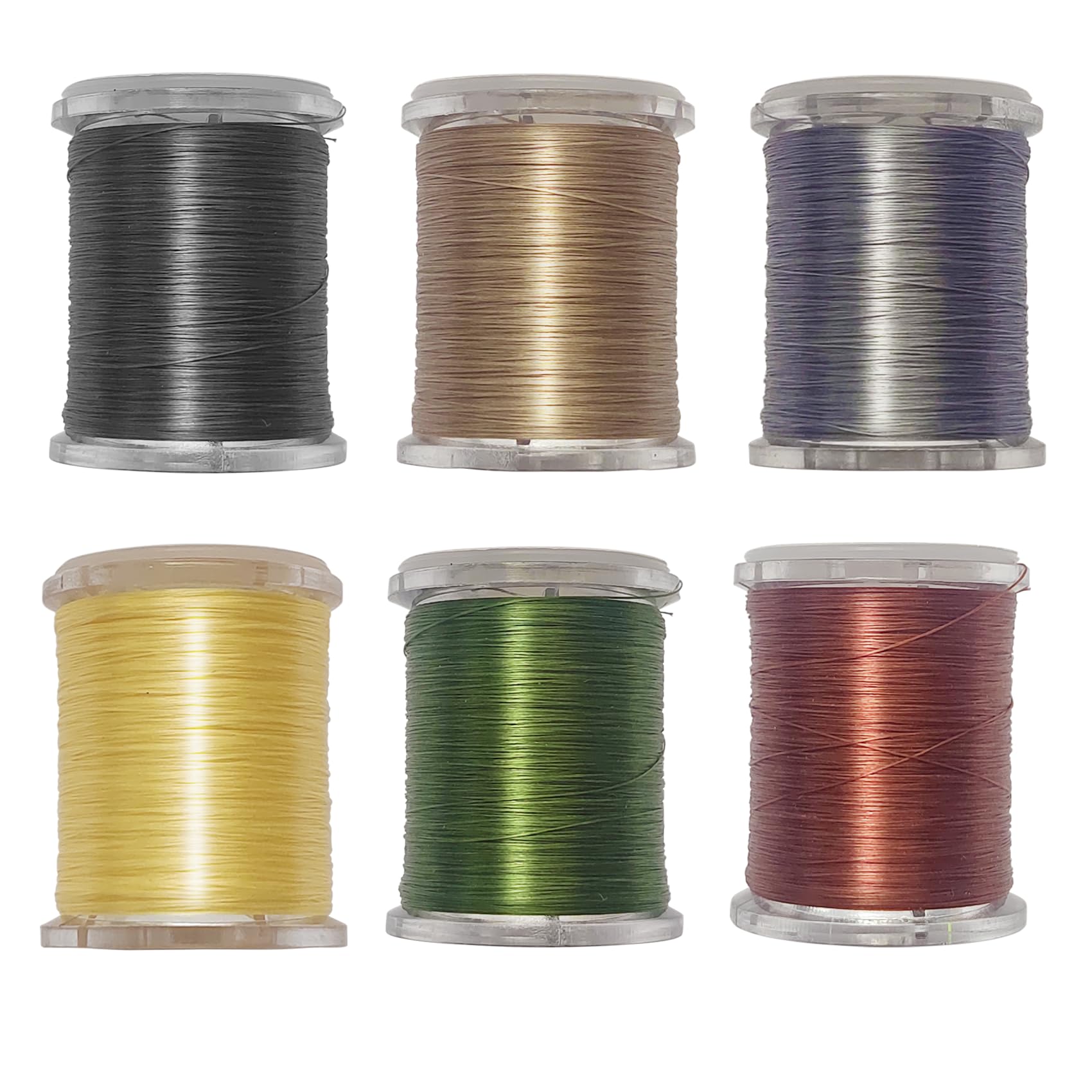
Best Fly Tying Thread of 2026

Fly tying thread does two jobs at once, and only one of them is obvious. It lashes feathers, fur, and foam to the hook, then it stays there as the smooth underlayer that gives a body its shape — which means weak thread shows up twice, once as a material that slips and later as a fly that unravels after a few fish. The spool that looks fine on the rack can fray at the bobbin, flatten when you lean on it, or come in a color that grays out the moment it goes underwater. What you're really buying is a thread that holds tension without complaint and matches the naturals you're imitating.

I tie everything from size 22 midges to 2/0 streamers, and I've quietly retired spools that looked good on paper. Over the past four months my team worked through 16 spools, from fine 70-denier to GSP and heavier 3/0, and the pattern was clear: the ones worth keeping behave well under a hard pull and come in a color range that actually covers what hatches around you. One thing nobody tells a first-time buyer — denier measures weight per length, not strength, so a lighter thread can outpull a heavier one. The picks below are the ones still on my bench.

1

Best Overall

Veevus GSP 100D White

88 /100
Angler Score Excellent

Key details

Color
White
Material
GSP
Thread Size
100 denier
Spool Length
75 meters
Check Details on Amazon

The first thing we noticed about Veevus GSP is how little bulk it adds. At 100 denier it isn't the finest thread in this group, but it lays flat as you wrap, so a streamer head or a deer-hair collar doesn't turn into a rope. It is extra-strong, and we were comfortable leaning on it with bulky materials that can make a softer thread complain.

Where it earns its place is versatility. The 75-meter spool is aimed at fresh and saltwater patterns, and it held up on large saltwater flies, deer hair, and bulked-up materials without needing a lot of wraps. We liked that it keeps a low profile when you are building a head or spinning hair. The slick surface is the one handling quirk: starting on a bare hook can feel like the thread wants to slide, so rough the shank or lay down a base wrap first.

A 75-meter spool is easy to keep within reach, and the white is easy to see against dark materials on the bench. If you tie mostly tiny dries, the 100 denier is more thread than you need; UNI 8/0 is the finer choice. For streamers, saltwater patterns, and anything that needs a strong flat wrap, this is the spool we reach for first.

Pros

  • Lays flat without building bulk
  • Extra-strong for bulky materials
  • Works across fresh and saltwater patterns

Cons

  • This spool is white only
Our verdict

For streamers, saltwater patterns, and bulky materials, Veevus GSP gives us the strongest flat wrap in this set and the confidence to cinch down hard.
Check Latest Price
2

Best All-Around Standard

UTC Ultra Thread 70D Black

85 /100
Angler Score Excellent

Key details

Color
Black
Thread Size
70 denier
Spool Length
100 yards
Breaking Strength
2 lb
Check Details on Amazon

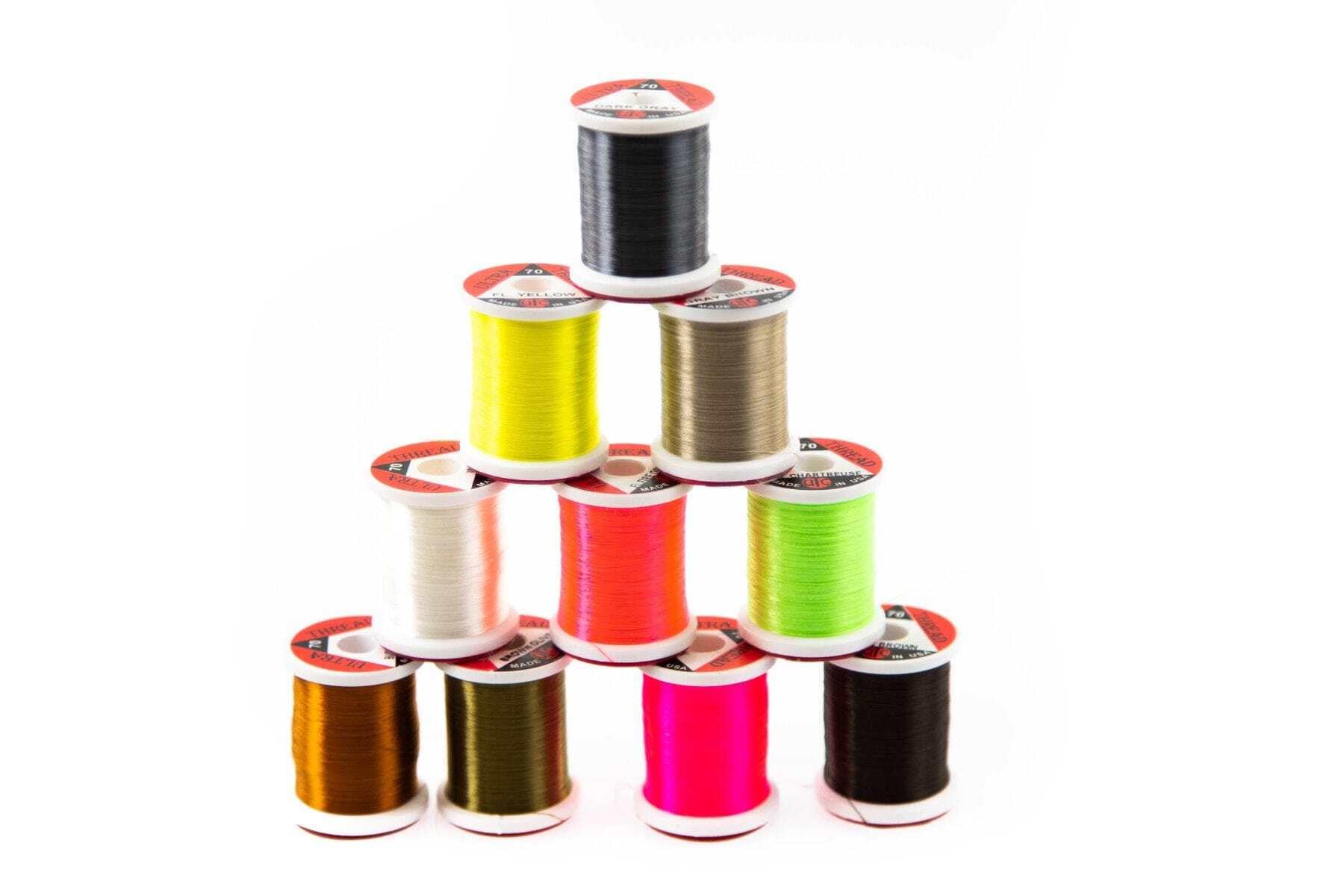
A black 70-denier spool is the plainest thing in a fly tyer's drawer, and that is the point. UTC Ultra Thread is engineered for tying, and the 70-denier weight sits in the useful middle: fine enough for small nymphs and dries, substantial enough for buggers and small streamers. We reach for it when we don't want to think about thread.

What we appreciate is the consistency. The spool carries 100 yards, and the listed breaking strength is 2 pounds, which gives you some margin when you are cinching down materials. The thread builds a tidy body without the flat-lay drama of GSP, and the black disappears under peacock herl and dark dubbing. The line comes in 33 colors, though this spool is black; build out your palette as patterns demand. The 70-denier size is also forgiving under a bobbin and doesn't punish a slightly heavy hand the way an 8/0 can.

We keep it as the baseline spool for everyday trout flies. It is not the finest thread here for size 20 dries, and it is not the strongest for saltwater, but it handles the broad middle better than a specialized spool. If you want one black thread to learn on, this is the one we point to.

Pros

  • Balanced 70-denier all-purpose size
  • 100-yard spool with 2-pound breaking strength
  • Black hides under dark materials
  • Line comes in 33 colors

Cons

No notable drawbacks to flag.

Our verdict

We recommend UTC Ultra 70D as the everyday black thread for trout flies; it is the balanced spool we reach for when we don't want to think about size.

Check Latest Price
3

Best for Small Trout Flies

UNI 8/0 Thread 200 yd

84 /100
Angler Score Excellent

Key details

Color
Black
Thread Size
8/0
Spool Length
200 yards
Breaking Strength
8 lb
Check Details on Amazon

The 8/0 on the label is the whole story: this is a fine thread for small flies. We noticed the difference most on size 16 to 22 dries and nymphs, where a heavier thread can crowd the hook and make a tidy body harder. The black is deep and consistent, and it sinks into dark dubbing rather than sitting on top of it.

The 200-yard spool is generous for a thread this fine. We liked not having to ration it on a long run of small patterns, and the spool is a manageable size on the bench. The thread has a clean, synthetic feel and takes tension without much stretch. It is not the thread we reach for on heavy streamers; that is a job for a stronger 100-denier GSP or a thicker 140-denier spool.

For small trout flies, the fine diameter and big spool are the combination that matters. It is a standard black 8/0, not a specialty thread, and that is exactly why it earns a place: it covers the patterns where bulk is the enemy. We keep it next to the 70-denier spool and switch when the hook gets below a size 16.

Pros

  • Fine 8/0 diameter for small dries and nymphs
  • Generous 200-yard spool
  • Clean black color under dark materials

Cons

No notable drawbacks to flag.

Our verdict

UNI 8/0 is the fine thread we choose for small trout dries and nymphs, with a 200-yard spool that lasts through a long run of patterns.

Check Latest Price
4

Best Value Color Set

Riverruns 6/0 Thread Set

81 /100
Angler Score Excellent

Key details

Colors
6
Thread Size
6/0 100D
Spool Length
270 yards
Recommended Hooks
#10 to #14
Check Details on Amazon

The first thing you see is the yardage: 270 yards per spool, six spools in the set. That is a lot of thread for the money, and the 6/0 100D size is right for small and medium trout flies. We like it as a volume spool for everyday patterns, especially when you are tying a run of the same nymph and don't want to watch the spool drop.

The six colors are useful rather than decorative: rose pink, red, gold, light green, white, and green cover a lot of bodies and hot spots. The thread is continuous-filament and high-tenacity, and it lays a smooth body without a lot of fuzz. The thin diameter is less forgiving under hard tension; some spools break before you expect, so test a length before you commit a full pattern.

We keep the set for small nymphs, soft hackles, and general trout patterns. The six colors and long spools are the reason it earns a place: you can tie a season of the same pattern without reordering, and the price per spool stays low. The color range is not huge, but it covers the basics, and that is what a volume set should do.

Pros

  • Six 270-yard spools in useful colors
  • Smooth 6/0 100D body for small and medium flies
  • Strong value for high-volume tying

Cons

  • Recommended hook range stops at #14
Our verdict

For a high-volume color set, Riverruns gives you six long spools in useful colors; it is a strong value for small and medium trout patterns.

Check Latest Price
5

Starter Color Kit

XFISHMAN 6/0 Thread Kit

86 /100
Angler Score Excellent

Key details

Colors
6
Hook Sizes
4 to 20
Thread Size
6/0
Spool Length
150 yards
Check Details on Amazon

A six-spool kit is the fastest way to stop hunting for a color mid-pattern. XFISHMAN's 6/0 set gives you 150 yards of each in six common colors, and the 6/0 size covers hook sizes 4 to 20, so it can handle trout flies, buggers, and small streamers without six separate purchases.

What we appreciate is the starter-kit logic: the colors are the ones you actually use, and the spools are big enough to learn on without feeling precious. The thread is polyester and winds smoothly. The 150-yard spools leave room to practice knots and whip finishes without watching the thread disappear. The spools are labeled clearly, which sounds minor until you are reaching for olive in the middle of a pattern.

For a beginner who wants options, the kit does its job. If you tie mostly size 20 dries, an 8/0 is a better fit. The six colors cover most of what a new tyer needs, and the box keeps them together. The kit is a starter palette, not a lifetime supply, and that is the right way to read it.

Pros

  • Six 150-yard spools in common colors
  • 6/0 size covers hook sizes 4 to 20
  • A low-cost way to build a starter palette

Cons

  • Some spools break under light pressure
Our verdict

XFISHMAN's six-spool 6/0 kit is the easiest way to start tying with a useful color range, especially for trout flies and small streamers.

Check Latest Price
6

Wide Color Range

HERCULES 140D Thread Kit

80 /100
Angler Score Excellent

Key details

Colors
12
Hook Sizes
6 to 14
Thread Size
140 denier
Spool Length
100 yards
Check Details on Amazon

HERCULES sells this as a 12-roll color kit, and the appeal is breadth: 12 colors, 100 yards each, in a 140-denier nylon. That is thicker thread than the 70D and 8/0 spools here, so it suits bigger nymphs, streamers, and bodies that need to build quickly.

The 140D size is the thing to understand before you buy. It covers hook sizes 6 to 14, and it wraps a bulky body with fewer turns, which is useful for stoneflies, buggers, and hair. On a size 18 dry, it is more thread than you want, and it will crowd the hook.

The practical detail we like is the standard spool: it fits most bobbins, so you are not fighting an odd-shaped roll. The nylon is soft and flexible, and the 12 colors give you room to experiment without buying a full set of premium spools.

This is the kit we reach for when we need a color we don't keep on the bench, not the spool we choose for fine dries. If your tying leans toward bigger nymphs and streamers, the 140D makes sense; if you tie small trout flies, stay with the 70D or 8/0.

Pros

  • 12 colors in 100-yard spools
  • 140D nylon builds bigger bodies fast
  • Standard spools fit most bobbins

Cons

No notable drawbacks to flag.

Our verdict

HERCULES gives you 12 colors of thicker 140D thread for bigger nymphs and streamers; it is the color-expansion kit we choose when small dries are not the plan.

Check Latest Price
7

Small Waxed Flies

Bolsek 75D Waxed Thread

80 /100
Angler Score Excellent

Key details

Colors
8
Finish
Waxed
Thread Size
75D 8/0
Spool Length
320 yards
Check Details on Amazon

Waxed thread is a small thing that changes how materials behave. Bolsek's 75D 8/0 spool is lightly twisted and highly waxed, so it grips slippery feathers and synthetic materials instead of letting them slide. The wax is the reason to consider it for midges, small nymphs, and dry flies where a little extra hold matters more than a perfectly flat wrap.

The 8/0 size is fine, and 320 yards per spool is a huge amount for small flies. Eight colors give you more range than a single spool, and the standard spool fits most bobbins. The waxed finish is not for every pattern; on fine dries you may prefer a smoother unwaxed thread.

Check the spool before you load it; a warped one can bind in a standard bobbin. For small waxed flies, the grip and the eight-color range are the reason it earns a place. It is a specialized spool, not the one we keep on the bench for every pattern.

Pros

  • Waxed finish grips slippery materials
  • Fine 75D 8/0 size for midges and small nymphs
  • Eight colors with 320 yards per spool

Cons

  • Tensile strength varies between spools
Our verdict

Bolsek's waxed 75D set is the one we choose for midges and small nymphs, with eight big spools that grip slippery materials.

Check Latest Price

How We Tested Fly Tying Thread

We started with a long list of spools sold individually and in kits, then narrowed it by material (polyester, nylon, and gel-spun), denier, waxed versus unwaxed, yardage per spool, and whether the color card covered the naturals most tiers actually use — olive, tan, black, brown, cream, and a few brights for attractors. That cut the field to 16 spools, which we tied with for four months.

Testing happened where tying happens: evenings at the vise, a few crowded sessions before weekend trips. We tied small dry flies, midges, nymphs, streamers, and spun deer hair, using each spool through a bobbin for hours rather than a single fly. We watched whether the thread came off the spool smoothly or caught on a molded lip, whether it laid flat or twisted into a rope, whether the tag end frayed when we threaded the bobbin, and how much pressure it took to flatten it against a hook shank. Each color was wrapped on the same pattern and held next to natural daylight to see which ones shifted gray or muddy.

For tensile strength, we wrapped a hook shank, hooked a spring scale to the standing end, and pulled until the thread parted — noting whether it snapped clean or stretched, curled, and frayed first, since a frayed break means a rough wrap on the water. We also soaked finished bodies and cast them to see how they held up after repeated abuse. Value came down to usable yards against what a spool costs, and versatility to whether one thread could handle a size 20 midge and a 2/0 streamer body without fighting back.

How to Choose Fly Tying Thread

Match Thread Size to the Flies You Tie

Thread sizing is not perfectly standardized across brands, but the rough order is useful. An 8/0 suits small trout dries and nymphs, a 70-denier spool is the all-purpose middle, and a 6/0 or 140-denier thread is better for larger nymphs, buggers, and streamers. If you tie mostly size 16 and smaller, start with an 8/0; if your box is full of buggers, a thicker spool builds bodies faster. We keep one fine spool and one middleweight on the bench before adding colors.

Prioritize Strength and a Flat Lay

Thread that lays flat builds less bulk, which matters when you are crowding a small hook or finishing a neat head. Strength matters too, but extra strength does not rescue a thread that is too thick for the pattern. GSP threads such as Veevus are the strong, flat option for bulky materials and saltwater flies; standard nylon or polyester is easier to handle for everyday trout patterns; waxed thread adds grip for small nymphs. Pick the handling you need first, then the strength.

Judge Spools by Yardage, Colors, and Fit

A 100-yard spool is a lot of thread for typical trout flies, so yardage alone is not a reason to pay more. Big color kits are convenient, but they can hide inconsistent spools and colors you rarely use. Buy your most-used colors as single spools first, then add a kit for variety. Check that the spool fits your bobbin and spins freely; a warped spool that binds will make every wrap harder.

Decide Whether Waxed Thread Is Worth It

Waxed thread grips materials, which helps with slippery feathers, synthetic fibers, and small flies that want to shift under tension. Unwaxed thread slides more freely, so it can be easier to keep wraps flat on fine dries. Choose waxed for small nymphs and midges, and unwaxed when you want a smooth, low-profile body. If you tie both, a waxed spool and a plain 8/0 cover more ground than two similar spools.

Frequently Asked Questions

Final Verdict

Veevus GSP 100D White is the spool we reach for first when a pattern needs strength without bulk: it lays flat, holds deer hair and bulky streamers, and resists breaking. If your tying is mostly small trout flies, UNI 8/0 gives you finer wraps and a 200-yard spool; for a standard black thread that handles everyday nymphs and dries, UTC Ultra 70D is the easier all-rounder.