
Best Ice Fishing Tip-Ups of 2026

Anyone who has stood on a frozen lake knows the real enemy isn't the cold—it's the waiting. A tip-up turns that waiting into a system: set your line, walk away, and let a flag tell you when a fish is on. But a cheap one will freeze up, tip over in the wind, or pop a flag for a perch that stole your minnow—so the right tip-up is the one that keeps your bait in the strike zone and your hands out of the slush.

Over the past two ice seasons, my team and I have fished with 14 different tip-ups, from bare-bones wood models to insulated thermal designs. The pattern is clear: functionality, stability, and ice protection matter more than a fancy paint job—and the best values are the ones that get the small details right. One thing first-timers don't realize is that a tip-up's base matters as much as its spool; a wide, grippy base keeps the whole rig from sliding across the ice when a fish runs. The picks below are the ones that held up when the temperature dropped and the wind picked up.

1

Best Overall

Frabill Pro Thermal 1660

88 /100
Angler Score Excellent

Key details

Storage
5- to 6-gallon bucket
Hole Coverage
10 inches
Spool Service
Re-greasable shaft
Trip Settings
Light and heavy
Check Details on Amazon

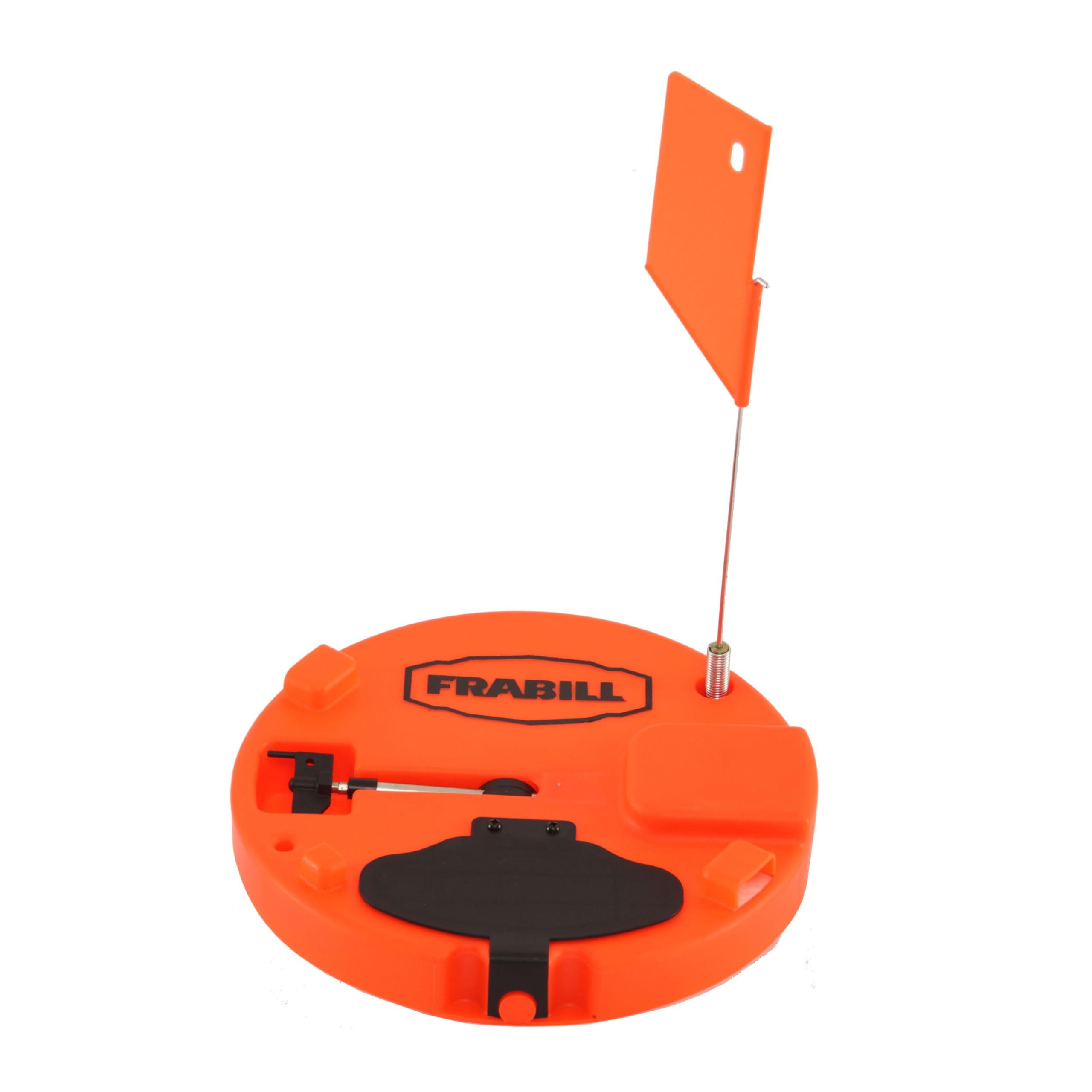
Start with the lid. Frabill builds the Pro Thermal around an insulated cover that sits over the hole, and by February that cover is the thing you notice most: a hole that stays open is a bait that keeps swimming and a line that isn't frozen into the ice. It spans a 10-inch hole, which covers the augers most of us drill.

What we think separates it from the other spool rigs here is that nothing about it feels like an afterthought. The trip adjusts between a light and a heavy setting, so a small shiner for perch doesn't get the same tension as a big pike bait. The shaft comes pre-lubed with a sub-zero grease and is built shaft-in-shaft, which means you can pull it apart and re-grease it when it starts to drag instead of replacing the whole rig. We paid attention to that detail, because a shaft that turns freely is the entire job of a tip-up.

The flag rewards a deliberate set. With the spring under tension, the down shaft can rotate as you lower the arm into place, and a gust at the wrong moment trips it — the first windy set of the season is worth a second look before you walk away. Storage is where it quietly wins: the 10.2-by-10.1-inch base stacks a little over two inches thick and drops into a 5- to 6-gallon bucket alongside your skimmer and bait.

One caution about a spread: it's sold as a single tip-up, so four holes means four purchases. And this is a hand-line rig, with no rod holder in the base — if having a rod in your hand is the part you love, the iFish below is the better fit. If you want a hole that stays open and a flag you can trust, this is the one that comes out of the sled first.

Pros

  • Insulated cover slows freeze-up over the hole
  • Light and heavy trip settings
  • Shaft can be re-greased for more seasons
  • Packs into a 5- to 6-gallon bucket

Cons

  • Sold as one tip-up, so a spread adds up
Our verdict

Our pick for most ice anglers: the insulated cover keeps a hole fishable, the trip adjusts for panfish or pike, and the spool can be re-greased rather than replaced.

Check Latest Price
2

Best Traditional Tip-Up

Beaver Dam The Original

88 /100
Angler Score Excellent

Key details

Origin
Beaver Dam, Wisconsin
Package Weight
1.7 lb
Package Dimensions
23.6 x 4.1 x 3.1 inches
Check Details on Amazon

Beaver Dam has been hand-assembling this rail tip-up in Wisconsin for 50 years, and what that history buys you is a plain, clear-bodied rig with a spool, a flag, and very little else. We like it for the same reason we like a good wooden ladder: there's nothing on it a cold morning can confuse. Set the flag, drop the bait, and the rig does the rest of the work.

The maker's claim is freeze proof, wind proof, and fool proof, and the wind half is the one that matters. A flag that pops in a gust costs you more than a walk across the ice — you start second-guessing every set for the rest of the day. A simple rail with tight joints is the right thing to design around, because wind is the enemy a spool rig can't hide from.

Plan around the length. It packs about two feet long and doesn't fold, so it rides in a sled or a bucket rather than a pack. In exchange there's nothing to assemble at the hole, and there's something satisfying about gear you can look at and understand: if a spool or a flag arm ever needs attention, the problem is right there in front of you.

Pros

  • Handcrafted and assembled in Wisconsin
  • Fifty years of the same basic design

Cons

  • Packs two feet long with no folding
Our verdict

This is the traditionalist's tip-up: hand-built in Wisconsin, dead simple to set, and unchanged for 50 years because it works.

Check Latest Price
3

Best for Rod-And-Reel Anglers

iFish Pro 2.0

83 /100
Angler Score Excellent

Key details

Base
Insulated
Weight
6 lb
Fits Rod Size
42 inches
Trigger Settings
Light, medium, heavy
Check Details on Amazon

The Pro 2.0 isn't a spool you hand-line. It's a frame that holds your own rod and reel over the hole and throws a flag when a fish takes, which changes the feel of tip-up fishing completely: the bait still sits under a flag, but when that flag goes up you're lifting a rod you already know, with your reel's drag set the way you like it. It fits rods up to 42 inches, so measure your ice rods before you commit.

Three trigger settings — light, medium, and heavy — are what we care about most here. Match the setting to the bait and a flag means something again, instead of sending you across the ice to check an untouched minnow. The wind deflector works the same problem from the other side, shielding the trigger from the gusts that turn a quiet spread into a series of sprints.

Where it makes the most sense is inside a shack. The insulated base is built to sit over catch covers in a shelter, so you're stationary, the rod stays rigged, and a reset takes seconds. The slip-stop setup lets you re-jig and change depth without lifting the frame, and on a morning when your hands are already cold, that is worth more than it sounds.

Pros

  • Three trigger settings reduce false flags
  • Wind deflector shields the trigger
  • Insulated base fits over catch covers
  • Fights fish on your own rod and reel

Cons

  • Six pounds per unit before you add a rod
Our verdict

If you want to fight fish on your own rod, this is the tip-up to buy: three trigger settings and a wind deflector do work a spool rig can't.

Check Latest Price
4

Best Two-Pack

SF Foldable Tip-Up 2-Pack

82 /100
Angler Score Excellent

Key details

Frame
Folding iron frame
Pack Size
2 pack
Package Dimensions
17.44 x 5.43 x 4.29 inches
Check Details on Amazon

Two complete tip-ups in a package measuring 17.44 by 5.43 by 4.29 inches is the whole pitch here, and it's why this set made the list: a two-hole spread you can carry in one hand. Both rigs fold flat, the pair weighs 0.73 kg, and they drop into a sled or a bucket without a fight with the rest of your gear.

The trigger is a flexible metal arm built to release on light takes, and the flag is a bright orange that reads against snow — a small thing until you're squinting across three hundred yards of white. The frame is iron, and it's built to unfold in seconds at the hole, which is the sort of job you don't want taking your gloves off.

What we like about the pair is the arithmetic. Two rigs let you fish two depths, two baits, or two spots at once, and that is how you learn a lake — the earliest tip-up seasons are mostly an experiment in where the fish sit. If you're putting together a first spread, start here. If you already own a bucketful and want one good rig instead, the Frabill is the better single purchase.

Pros

  • Two tip-ups per pack
  • Folds flat for packing
  • Bright orange flag stands out on snow

Cons

  • Plastic spools instead of metal
Our verdict

The pair to buy when you want two holes covered without much outlay: it folds flat, packs small, and the orange flags are easy to pick out.

Check Latest Price

How We Tested the Best Ice Fishing Tip-Ups

We started by pulling every tip-up we could find that was actually available in fishing shops and online, then filtered by price, base style, spool material, and whether the manufacturer claimed freeze-proof or insulated construction. That left us with 14 models, which we fished over two full ice seasons on lakes and ponds. We set them up before sunrise, checked them through the day, and left some out overnight to see how they handled a hard freeze.

On the ice, we timed how long it took to set each tip-up with gloves on and whether the trip mechanism fired on a light bite or needed a solid pull. We watched how the spool spun when a fish ran, whether line paid out smoothly or caught on the frame, and how much slush built up in the hole after an hour. We also noted how each base sat on bare ice versus snow—whether it stayed put in a gust or skated across the surface—and tested ice protection by leaving tip-ups out overnight in single-digit temperatures to see if the spool or hole cover froze solid.

After each trip, we inspected every tip-up for loose screws, cracked plastic, and rust, and noted which ones still felt solid after a season of being tossed in a sled. The ones that made our list shared a few traits: a base that gripped, a spool that spun freely in the cold, and a flag that tripped when it should—not before, not after. We also compared how each tip-up was built against what it cost, because an inexpensive model that lasts three seasons is a better value than a pricier one that freezes up in January. We'll keep fishing with them and update this guide if anything changes.

How to Choose an Ice Fishing Tip-Up

Spool Rig or Rod Holder

Traditional tip-ups hold line on a spool and you fight the fish hand over hand. Rod-holding designs such as the iFish Pro 2.0 clamp your own rod and reel over the hole and trip a flag when a fish takes. The spool is cheaper per hole and simpler to repair; the rod holder feels like fishing.

The trap is the arithmetic of a rod-holding spread. Every hole needs its own rod, reel, and line, so four holes means four outfits. Count your ice rods before you commit to that style, and expect to fish fewer holes if you go that way.

Freeze-Up and Hole Coverage

An insulated cover over the hole is the most useful piece of winter hardware on a tip-up, and it's the reason the Frabill 1660 leads this list: its lid spans a 10-inch hole and keeps slush from sealing the bait in.

Match the cover to your auger. A 10-inch cover over an 8-inch hole leaves useful margin, while a cover narrower than your hole does nothing at all. Banked snow insulates from the outside, and fishing inside a shelter makes the whole question smaller.

Triggers, Wind, and False Flags

Adjustable trips are the difference between a flag that means a fish and a flag that means a gust. Light, medium, and heavy settings let you match tension to bait size — light for a small shiner, heavy for a big pike bait — while wind deflectors and tight-fitting rails attack the same problem from the other direction.

When a flag goes up and the minnow is untouched, tighten the trip a notch and set the rig with its back to the wind before you change anything else.

How Many to Carry, and How Far

Pack count, weight, and packed length decide whether a spread is fun or a chore. Four rod-holding tip-ups at six pounds each, plus four rods, is a sled-load; a folding spool rig packs into 17 inches and disappears into a bucket. A 23-inch rail tip-up doesn't fold at all, so it rides in a sled rather than a pack.

Be honest about the walk out. Light rigs pay for themselves on a long pull across a lake, and the fifth tip-up stops being worth carrying.

Frequently Asked Questions

Final Verdict

If you're buying one tip-up, make it the Frabill 1660. It handles the two things that decide a day on the ice — a hole that stays open and a flag that means a fish — and it's built to be serviced instead of replaced.

The exception is the shelter fisherman who wants a rod in hand. The iFish Pro 2.0's trigger settings, wind deflector, and insulated base justify the extra weight in that setting; on a long walk to a remote hole, they don't.