Best Overall

Fiblink 1-Piece Offshore Trolling Rod
Key details
- Guides
- Stainless steel roller
- Pieces
- 1
- Line Class
- 80-120 lb
- Rod Length
- 6 feet
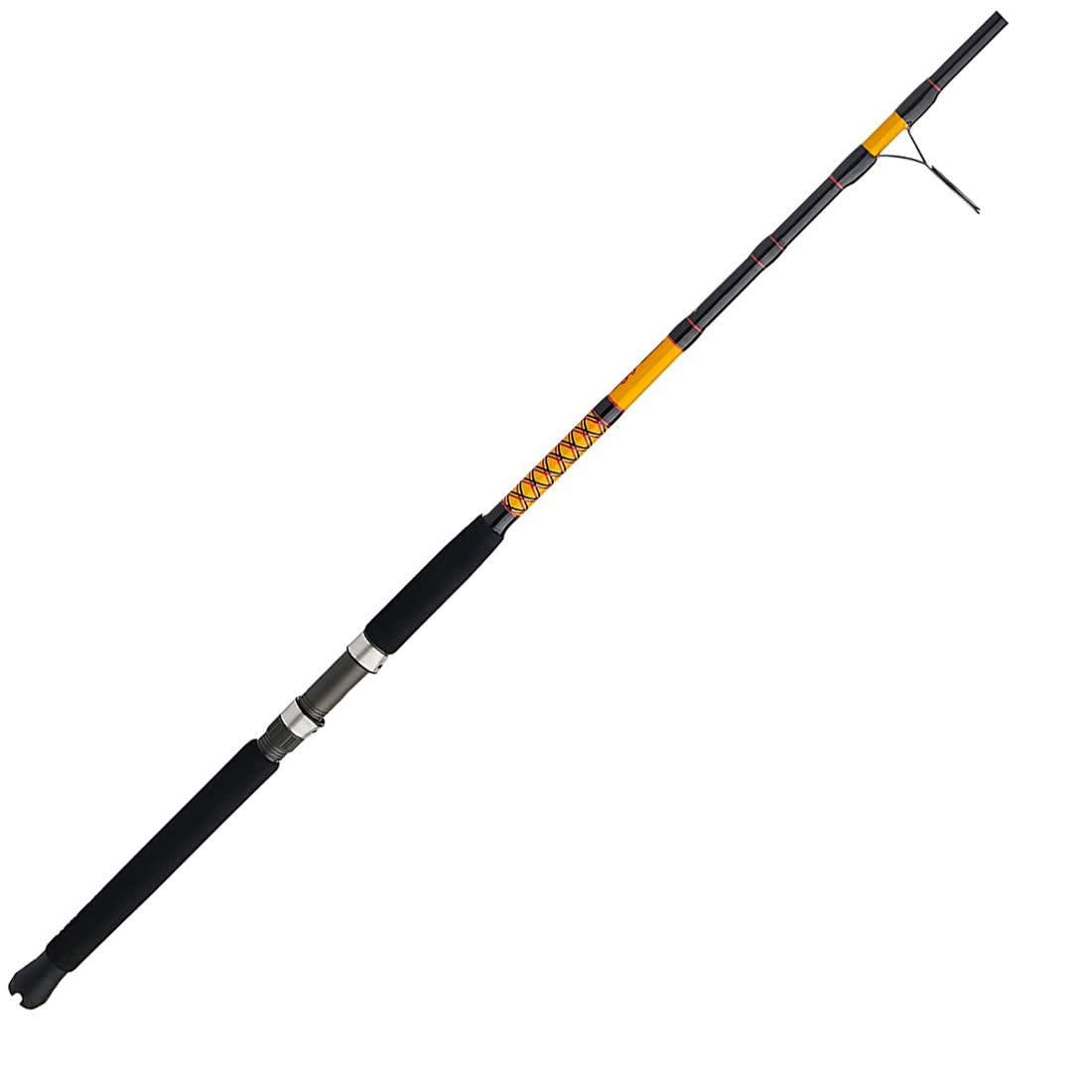
One piece, six feet, 80 to 120 pounds of line class: this is the shape of a working trolling rod, and it's the one we point a boat owner to first. There's no ferrule to seat, check, or twist back into line halfway through a fight, which is the whole argument for giving up the convenience of a two-piece blank. On a boat with a rod locker, that trade is worth making every time. If the rod has to ride in a car trunk or live in a closet, it isn't, and our three-piece pick further down is the honest answer.
The hardware is what earns the recommendation. Stainless steel roller guides give heavy trolling line a low-friction path when a fish takes a long run against the drag, and rollers are why a heavy conventional rod doesn't chew up monofilament on the second or third run. The reel seat is aluminum with tapered hoods above and below, so a reel sits down hard and stays put, and metal is the right call on a rod that will spend its life wet and salty. Fiblink bills the blank as an IGFA tournament trolling rod; read that as a description of the class it's built to rather than a certificate, because tournament legality comes down to your line, leader and terminal tackle as much as the rod.
E-glass and graphite together give it the stiff, deep-bending feel we want under a heavy drag, and the camo EVA grips stay grippy when wet and hose off clean; the camouflage is a matter of taste and doesn't change how the rod fishes. Six feet is a fighting length, not a casting one: it gives you leverage in a holder or against a harness and gives up distance on a cast. The rod bag it arrives in matters more than it sounds, because a one-piece blank this long spends half its life traveling to and from the boat, and a bag is what keeps the guides straight on the way.
Pros
- Roller guides cut friction on long trolling runs
- Aluminum reel seat holds up to salt water
- One-piece blank has no joint to work loose
- Straight butt works in a holder or a harness
Cons
- One-piece blank won't fit a trunk or short locker
- Six-foot length limits casting distance
The rod we point a boat owner to first: an 80-120 lb class blank with roller guides, a metal seat and a straight butt that works in a holder or against a harness.