Best Polarized Sunglasses of 2026

Polarized lenses work by filtering out the horizontal light waves that bounce off water, asphalt, and the hood of your car — the ones that turn a bright afternoon into a squint. But "polarized" on the label doesn't tell you much by itself. Two pairs can both promise UV400 and feel completely different after an hour: one slides down your nose, the other leaves red marks behind your ears. What you actually want is a pair that kills glare, stays put through a sweaty walk, and doesn't look like an afterthought in photos.

Here's what nobody tells a first-time buyer: darker isn't automatically better. A very dark lens is lovely at noon on open water and maddening at dusk or under tree cover. My team and I have spent the past five months wearing 18 pairs through commutes, weekend hikes, and long drives into a setting sun, and the differences that mattered were rarely the ones printed on the box. The picks below earned their place.

1

Best Overall

KALIYADI Matte 3-Pack

93 /100
Angler Score Outstanding

Key details

Lenses
Polarized color mirror, UV blocking
Included
Soft pouch and cloth per pair
Frame Finish
Matte
Pairs Included
3
Check Details on Amazon

Three pairs, three pouches, three cloths — the format is the reason this set sits at the top of our list rather than any single lens figure. Sunglasses get lost, sat on, and borrowed, and a three-pack turns all of that into a shrug instead of a purchase. The matte frames and color-mirror lenses don't look like something handed out at a trade show, and the polarization is genuine: glare off wet asphalt and flat water drops away, and shadows stop hiding the rocks under the surface.

On the face they're light and neutral enough for a long drive, with no pressure behind the ears and no pinch at the bridge, and the medium tint handles most days. If you want a lens that goes near-black at noon in August, this isn't it — we wanted another notch of darkness on open water. The fit also runs a touch narrow, so a wide head will feel the arms before a narrow one does.

Two hardware details matter more than the price suggests. The pouches are soft rather than rigid, so nothing in the set protects a lens from a tackle box landing on it, and the hinge is the part that gives first if the pair rides loose in a pocket. Keep them in the pouch and the arms stay tight. If you'd rather have one pair you keep for years than three you can afford to lose, the SUNGAIT just below is the better buy.

Pros

  • Three pairs, each with its own pouch and cloth
  • Polarization that visibly cuts glare on water
  • Matte frames that look better than the price

Cons

  • Tint is lighter than heavy-glare days call for
  • Soft pouches only, no rigid case
Our verdict

Our default for almost anyone: three polarized pairs, each with its own pouch and cloth, so a decent pair is always in the car, the tackle box, or on your face.

Check Latest Price
2

Best Single Pair

SUNGAIT Rectangular

91 /100
Angler Score Outstanding

Key details

Frame
Ultra-lightweight rectangular
Lenses
Polarized UV400
Included
Carry case and mini screwdriver
Listed Weight
0.88 oz
Check Details on Amazon

SUNGAIT lists this pair at 0.88 ounces, and that figure tells you most of what the first hour is like: after a while you stop noticing the frame on your nose and behind your ears. Nothing about the rectangular shape is loudly fashionable, which is exactly why it works with a cap, a hood, and a rain jacket.

Build quality is where this pair separates itself from the multi-packs. The frame feels solid rather than hollow, the lens is clean with almost no distortion, and the nose piece adjusts instead of just sitting there. Of the single pairs in this set it's the one we reach for when the light gets difficult — flat glare on a grey river, low sun coming through trees — because it doesn't add any smearing of its own.

The catch is size. The lenses arrive smaller than the product photos suggest, and the rectangular cut leaves a gap at the corners where side light gets in, which is a real difference from a wrap frame on a boat. If you have a wide face or you're staring into low sun all afternoon, the DUCO or the Joopin will serve you better. For driving, walking, and everyday wear, this is the pair we keep coming back to.

Pros

  • Featherweight enough to forget you're wearing it
  • Clean, low-distortion lens with real clarity
  • Frame feels solid rather than hollow
  • Comes with a carry case and mini screwdriver

Cons

  • Lenses run small, with light leaks at the corners
Our verdict

If you want one pair instead of a drawerful, this is the best-built single pair we recommend — light enough to forget and clear enough to trust on the water.

Check Latest Price
3

Best for Sports

DUCO 8177

91 /100
Angler Score Outstanding

Key details

Frame
Metal with adjustable nose pads
Lenses
Polarized UV protection
Included
Hard case, pouch, cloth, screwdrivers
Listed Weight
1.59 oz
Check Details on Amazon

The box tells you what kind of product this is: a hard shell case with a D-ring, a pouch, a cloth, and a pair of screwdrivers. That isn't padding. The DUCO's metal frame has real screws and adjustable nose pads, so it's the one pair here you can actually tighten and tune, and we like that for fishing, where a frame that shifts on a sweaty nose is worse than no frame at all.

At 1.59 ounces it carries more weight than the plastic picks, and you feel it at the end of a long day. What you get in return is a frame that holds its shape and a wrap profile that closes off light coming in from the sides. Glare control is good rather than spectacular — competent on grey water, a touch behind the darker lenses here under hard midday sun.

Two things to check before you lean on them. The temple tips dig in on some head shapes, and the nose-pad screws work loose over a season, which is precisely why the screwdriver is in the box. A quarter turn every few weeks keeps the DUCO the most adjustable pair in this set.

Pros

  • Hard case with a D-ring that survives a boat bag
  • Metal frame with nose pads you can actually tune
  • Wrap shape blocks light from the sides

Cons

  • Heavier on the face than the plastic picks
  • Temple tips can dig in on some heads
Our verdict

A metal wrap with adjustable nose pads and a hard case — the pair we hand to anyone who fishes hard and needs the fit to stay put.

Check Latest Price
4

Best for Running

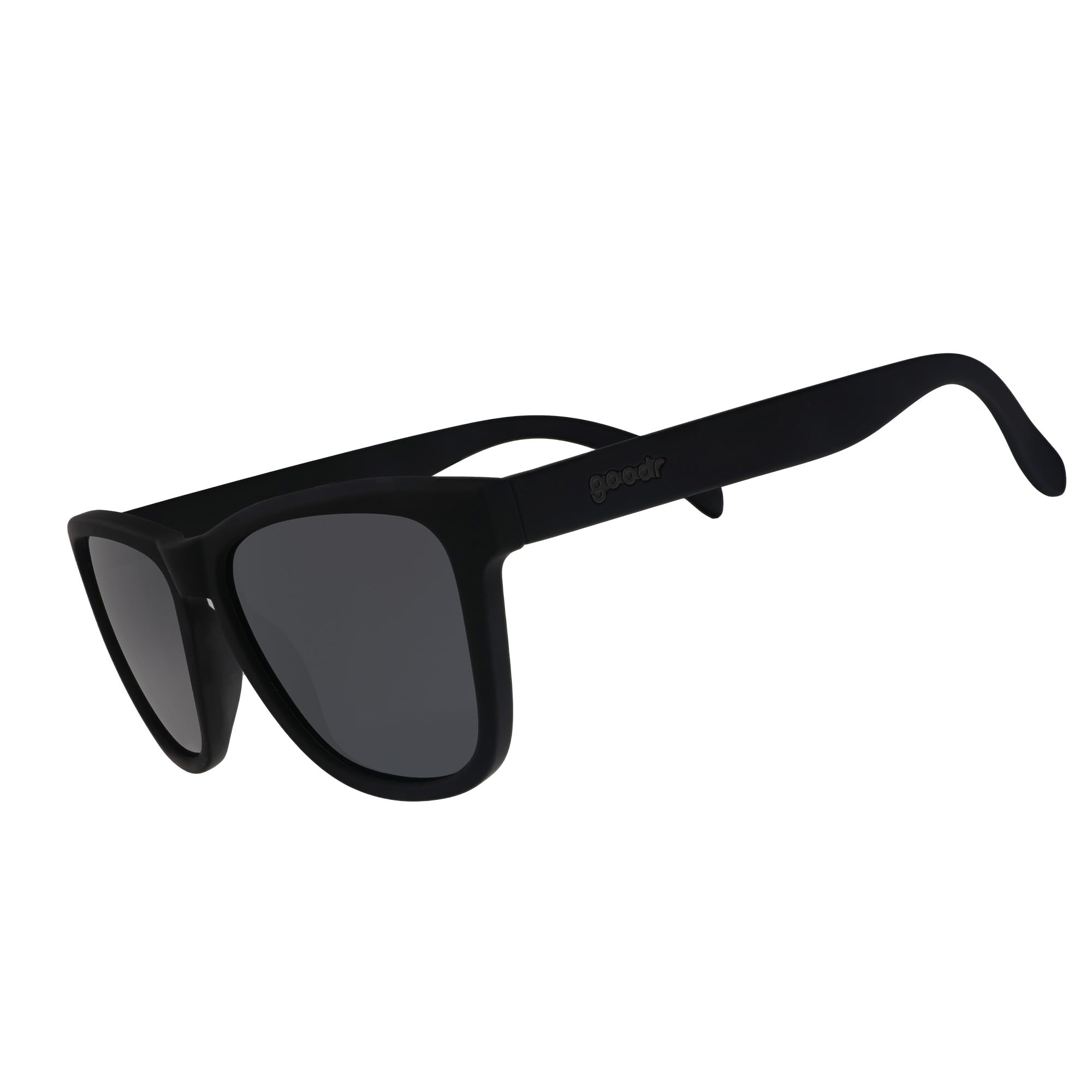
goodr OG

91 /100
Angler Score Outstanding

Key details

Frame
Lightweight, low-profile
Model
OG
Lenses
Polarized
Check Details on Amazon

Sweat is where most sunglasses fail. A pair that slides down your nose on a climb is a pair you stop wearing, and no amount of lens quality fixes that. The OG is built around the problem: a snug, low-profile frame that sits close to the face and doesn't shift when you move.

They're also light enough to forget on a long outing, and the colorways are playful enough that you don't look like you borrowed them from a cycling team. Lens clarity is good for a running pair, and the polarized filter does enough work on bright roads and open water to justify carrying them instead of a fashion pair.

We keep coming back to them for anything bouncy — trail runs, a windy boat, a ride where a loose frame is maddening. They're the pair that made us stop thinking about sunglasses mid-activity, which is about the highest thing we can say for active eyewear.

Pros

  • Stays put through sweat and bounce
  • Light enough to forget on a long run
  • Colorways that don't look like team kit

Cons

  • Lens coating scratches and peels with hard use
Our verdict

Buy these if your sunglasses end up pushed up on your head mid-run — the OG grips, stays light, and lets you forget you're wearing anything.

Check Latest Price
5

Best Oversized Coverage

Joopin Oversized

91 /100
Angler Score Outstanding

Key details

Shape
Oversized
Lenses
Polarized, dark tint
Listed Dimensions
6.69 x 1.57 x 1.97 inches
Check Details on Amazon

Light doesn't only come through the lens. On open water it comes around the frame, off your cheeks, and in at the temple, and that's the leak a small frame can't fix. Joopin's oversized shape closes it: the listing puts the frame at 6.69 inches across with a deep lens, so coverage starts near the eyebrow and ends around the cheekbone.

The tint is dark — darker than most of this set — and that's the point. Sun off white sand, a boat's wake, or a highway at four in the afternoon stops being a squint, and the polarized filter handles the reflected glare on top. They're comfortable for long stretches too, with nothing pinching behind the ears after an hour.

The size cuts both ways. On a narrow face the frame rests on the cheeks and looks borrowed, and the coverage you wanted becomes a nuisance you keep adjusting. The arms are also thin for a frame this wide, and the hinge is the part to watch if you're rough with them.

For driving into low sun or watching a flat on a bright lake, this is the pair from this set we hand over first. Just go in clear-eyed about what it is: maximum coverage, not a delicate little frame.

Pros

  • Oversized lens blocks light at the cheeks
  • Genuinely dark tint for full sun
  • Comfortable behind the ears for hours

Cons

  • Thin arms make the hinge the weak point
Our verdict

The pick for bright open water and light-sensitive eyes: a big dark lens that blocks what comes in around a smaller frame.

Check Latest Price
6

Best Style for the Money

SOJOS SJ2050

91 /100
Angler Score Outstanding

Key details

Shape
Square
Lenses
Polarized UV400
Listed Weight
3.53 oz
Check Details on Amazon

Some sunglasses are bought for the boat and some for the rest of the day. The square SOJOS is firmly in the second camp: flat brow, thick arms, the shape that has been on every street-style page for years. It looks considerably more considered than most of this set, which is not a small thing when the pair is on your face from the parking lot to the dock.

We rate it the best-looking pair here for everyday wear, and the construction backs the look up — the hinges feel tight, the frame doesn't flex like a toy, and the lens is clean rather than milky at the edges. For something that spends more time on a patio than on a boat, that's the right balance to strike.

The shape is the thing to get right. It runs wide, which flatters a broad face and swallows a narrow one, so compare the frame width against a pair you already like before you commit. And if your outdoor time is mostly fishing into hard midday sun rather than driving and walking around town, the darker Joopin will serve you better.

Pros

  • Square frame that looks far more expensive
  • Hinges and frame feel tight, not flimsy
  • Clean polarized lens with crisp vision

Cons

  • Tint is light for staring into midday sun
Our verdict

The pair to buy when you want sunglasses that look considered — a square frame that reads expensive, with a lens that holds up better than the price suggests.

Check Latest Price
7

Best Multi-Pair for the Boat

KALIYADI Sport 3-Pack

91 /100
Angler Score Outstanding

Key details

Lenses
Polarized UV protection
Included
Pouch and cloth per pair
Intended Use
Driving, fishing, golf
Pairs Included
3
Check Details on Amazon

A boat bag eats sunglasses. They get sat on, sprayed, borrowed by a buddy who forgot his, and dropped between the seats. The argument for this KALIYADI set is that it turns all of that into a non-event: three pairs, three pouches, three cloths, all light enough that you stop noticing them by mid-morning.

The shapes are sportier than the matte set that tops our list — closer to the face, with more wrap — and the lens colors lean toward contrast tints that help pick out structure in moving water. Comfort is the strongest thing about them: they hug behind the ears without pressing, which is why they stay on for a six-hour stretch instead of coming off at lunch.

Three pairs also solve a problem that has nothing to do with optics: the friend who forgot his, the passenger who needs a spare, the pair that lives in the dry bag. That's the role this set fills better than anything else here, and it's why ours lives in the boat bag rather than going back in a drawer.

Pros

  • Three pairs with pouches for boat and truck
  • Light, no-pressure fit behind the ears
  • Contrast lens colors help in moving water

Cons

  • Lenses scratch and edge coatings chip
Our verdict

Three light wrap-style pairs to keep on the boat, in the truck, and in the pack — the set we hand out without wincing.

Check Latest Price
8

Backup Pairs

DEMIKOS Retro Mirror

91 /100
Angler Score Outstanding

Key details

Frame
Plastic, full frame
Lenses
Polarized, UV protection coating
Bridge Width
15 millimeters
Check Details on Amazon

There's a category of sunglasses you buy the way you buy lighters: in multiples, expecting to lose them. The DEMIKOS set is that, and it's the cheapest way into a genuinely polarized lens in this group rather than a dark piece of plastic with a sticker on it.

The mirrors are the fun part — grey, ice blue, and red lenses in a square retro frame — and the polarization does real work on water and asphalt. The plastic frame is full-coverage and light, the fit handles a decent range of faces, and the black lens doesn't skew colors much, which matters more than the mirror finish does.

What you give up is precision. The lenses scratch if you look at them wrong, they can pop out of the frame when you clean them roughly, and the fit is approximate rather than tuned to anything in particular. None of that matters in a glovebox, where the alternative is squinting.

We keep a set in the truck and hand them out, and that's the right frame of mind for them: backups and beaters, not the pair you trust for a full day of glare on the flats. For that job, spend up.

Pros

  • Three polarized mirrored pairs
  • Wide fit that suits a range of faces
  • Mirror lenses without much color skew

Cons

  • Lenses scratch easily and can pop out
Our verdict

Three mirrored pairs for the truck, the camp box, and the friend who forgot his — the backups you won't grieve over.

Check Latest Price

How We Tested 18 Pairs of Polarized Sunglasses

We started with a few hundred listings and worked backward from the reviews, reading the one- and two-star complaints before we looked at the praise. Anything without a stated UV400 rating, anything vague about how the lens was actually polarized, and anything offered in only one size got cut. That left 18 pairs, which we bought ourselves and rotated among five testers with different face shapes, nose bridges, and hat-wearing habits. Testing ran five months.

Every pair went through the same ordinary week: a commute with the sun dead ahead, a long highway drive at dusk, a weekend hike, an afternoon of yard work, and a stretch of poolside sitting. We noted how heavy the tint felt under tree cover, whether glare off wet asphalt genuinely vanished, and how long our eyes took to adjust walking from a bright sidewalk into a shop. We also held each lens up to a laptop screen and rotated it — a truly polarized lens darkens at one angle and clears at another, and a couple of pairs failed that check outright.

Fit and comfort we measured rather than guessed: temple width against head width, whether the frames slid when we bent to tie a shoe, and whether nose pads left marks after an hour of wear. For durability, we opened and closed each hinge 50 times, then tossed every pair loose into a tote with keys and a metal water bottle for a week and inspected the lenses under a desk lamp for scuffs. Value settled itself last, in month five, when we asked which pairs we were still reaching for.

How to Choose Polarized Sunglasses

Polarization Is a Glare Filter, Not a Tint

A polarized lens blocks light bouncing off flat surfaces at a particular angle — water, wet asphalt, a car hood, a snowfield. That's why it cuts glare instead of just making the world darker, and why a dark lens without polarization can leave you squinting into the same hot spot all afternoon. Tint and polarization are separate things, and UV protection is a third: a black lens with no UV block is worse than a clear one, because your pupil opens wider behind it. Every pair here states both a polarized lens and UV blocking; if a listing can't say both plainly, keep looking.

You can check a pair in about ten seconds. Hold two lenses in front of a bright screen or the sky and rotate one 90 degrees — if the overlap goes noticeably darker, both are polarized. A single lens held up to an LCD screen will dim or black it out at one angle. Do that the day the box arrives, while the return window is still open.

Fit Decides Whether They Ever Get Worn

Three points decide it: the bridge, where a frame either rests or slides; the temples, which should touch without pressing; and the overall width against your face. Too narrow and you get a headache behind the ears by mid-afternoon; too wide and the pair slides the moment you sweat. This is the dimension no spec sheet settles for you, and it's the one that most often turns a good pair into a glovebox ornament.

If you own a pair that fits, measure the frame front — the widest point across the lenses — and match it. Adjustable nose pads, like the ones on the DUCO, buy you some tuning, and a wrap shape forgives a slightly loose temple. Check the return policy before you commit, because fit is the one thing you can't fix later.

Match the Lens to the Light You're Actually In

A lens that's too dark is a genuine problem in flat light, rain, and dawn: you end up pushing the glasses up on your head exactly when the glare is worst. Grey and green-grey tints keep colors honest, which is why they suit driving; brown and copper tints lift contrast in low light; mirrored finishes shave off extra light from water and snow but show every fingerprint.

For most fishing, a medium-to-dark grey or copper lens in a frame with some wrap is the useful compromise — dark enough for open water at noon, clear enough to read a bank in the rain. If you fish into low sun all afternoon or your eyes water in full sun, buy coverage first: the oversized Joopin blocks the light a small frame lets in around the edges.

Budget for Breakage, and Buy the Case You'll Use

Hardly anything in this category dies of old age. It dies at the hinge, at the nose piece, in a pocket with a set of keys, or in a car hot enough to make a coating flake. That's the honest case for a multi-pack: three adequate pairs you can lose beat one good pair you're afraid to take on the boat. Spend more and the extra money mostly goes into hinges, coatings, and consistency rather than into seeing better.

Whatever you buy, keep it in the case. A soft pouch stops scratches and nothing else, while a hard shell is what saves a lens when the tackle box slides across the seat. Rinse salt and sunscreen off with fresh water before you wipe — grinding either into the coating is how a lens goes cloudy in a single season.

Frequently Asked Questions

Final Verdict

The KALIYADI matte set is what we tell most people to buy, and the reason isn't the lens — it's that three polarized pairs with pouches mean one is always in the car, one in the boat bag, and one on your face. If you want a single pair to keep for years instead, the SUNGAIT is the better-made choice and light enough to forget you're wearing it.

And if your outdoor time is spent running or pedaling rather than sitting still, the goodr OG is the one that stays put. Start there, and only spend more when you know which of those three you are.