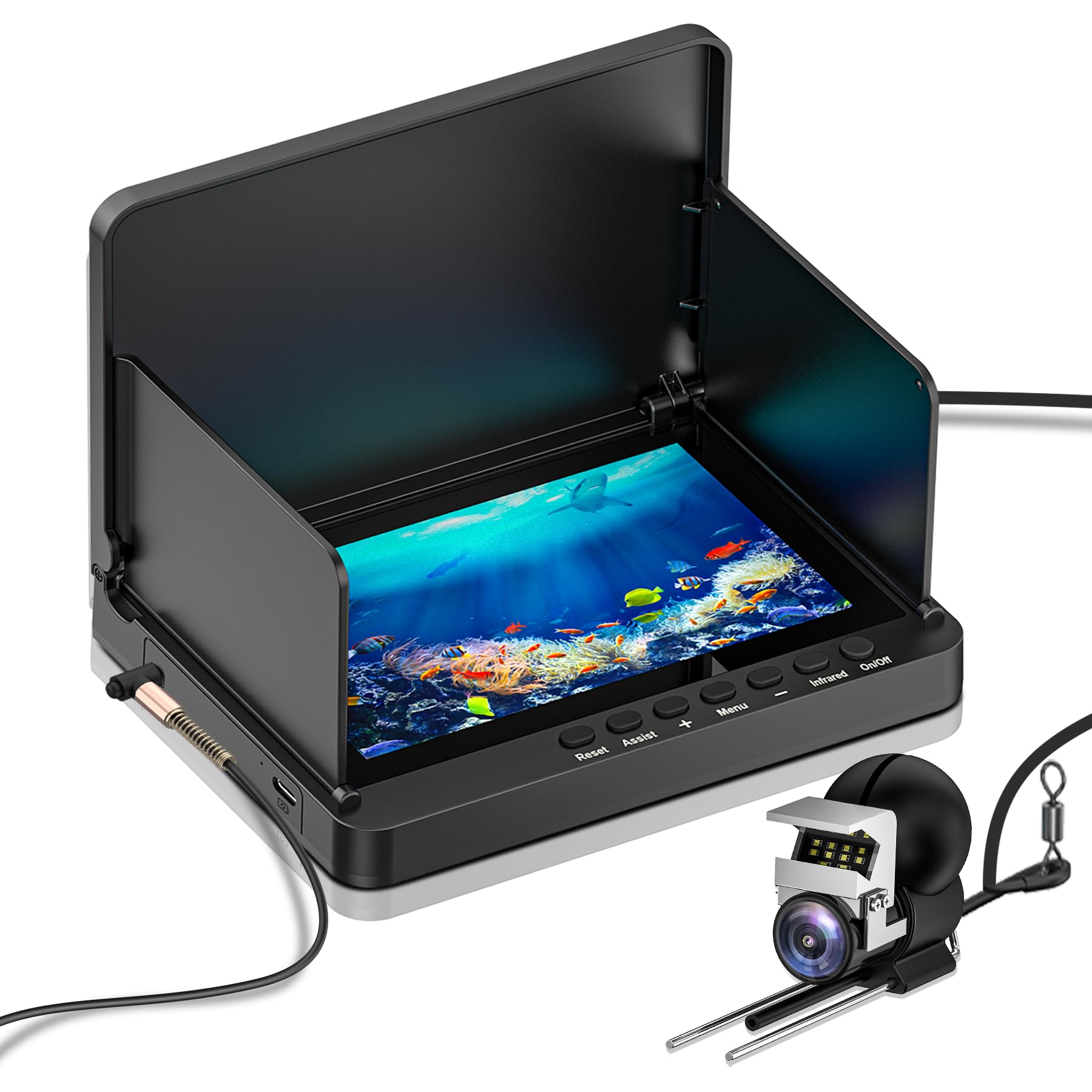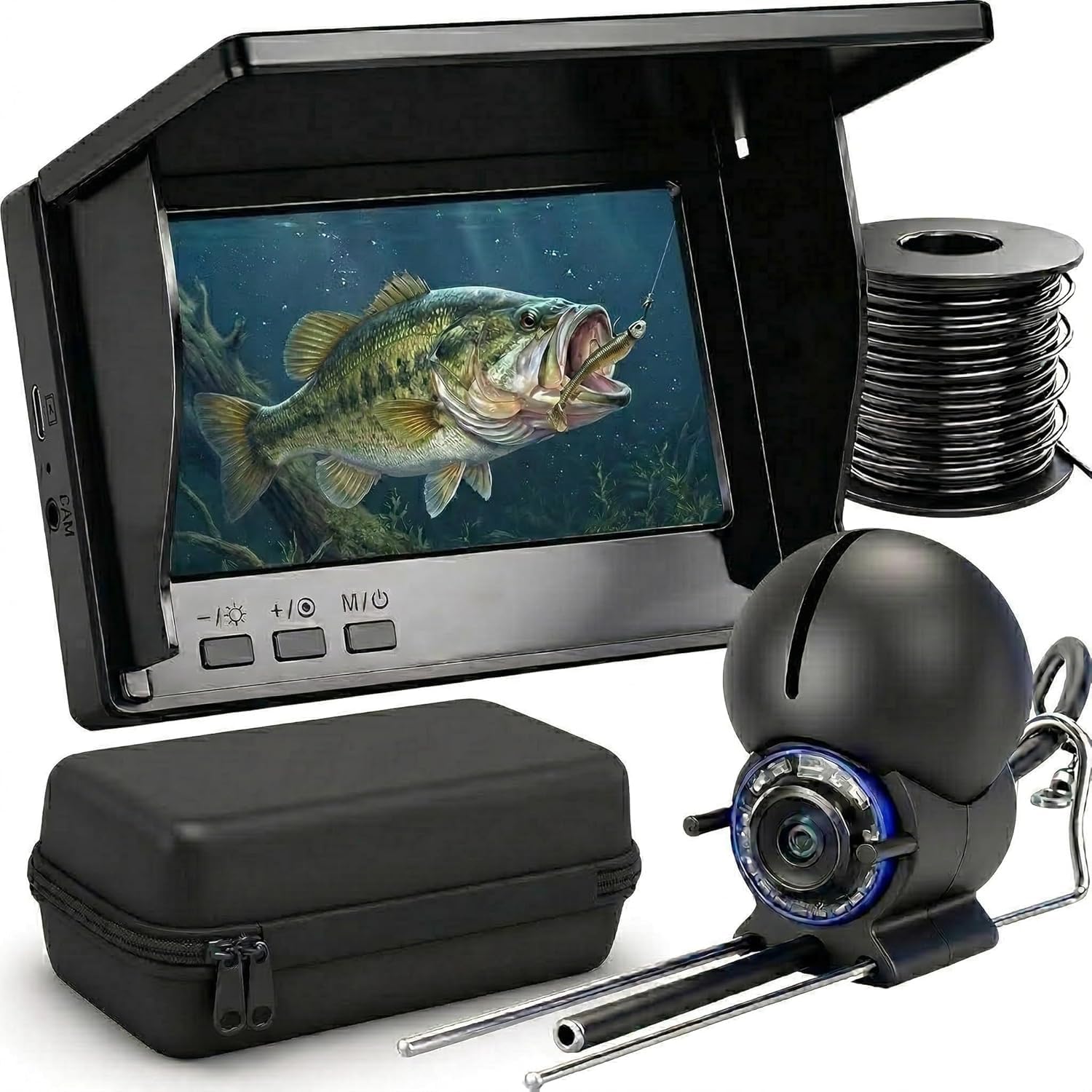
Best Underwater Fishing Cameras of 2026

Sonar tells you something is down there. It won't tell you whether that mark is a walleye, a sunken branch, or your own jig swinging past the transducer. Dropping a camera down the hole — or over the side of a kayak — settles the question in about four seconds, and once you've watched a fish actually commit to your bait, staring at a blank flasher loses its charm. An underwater fishing camera turns guesswork into a picture you can act on: bottom composition, structure, and how the fish are reacting to what you're offering.

Cheap ones make you squint at a washed-out gray rectangle, and I've owned one of those. Over the past six months my team and I have fished 11 underwater cameras, from small budget models up to 7-inch screen units, on ice in January and off docks and kayaks once the lakes opened up. Picture quality is the headline, but battery life, whether you can read the screen in noon sun, and how much cable fuss you're willing to tolerate are what decided which ones we kept reaching for. The picks below are the ones that earned a permanent spot in the bucket.

1

Best Overall

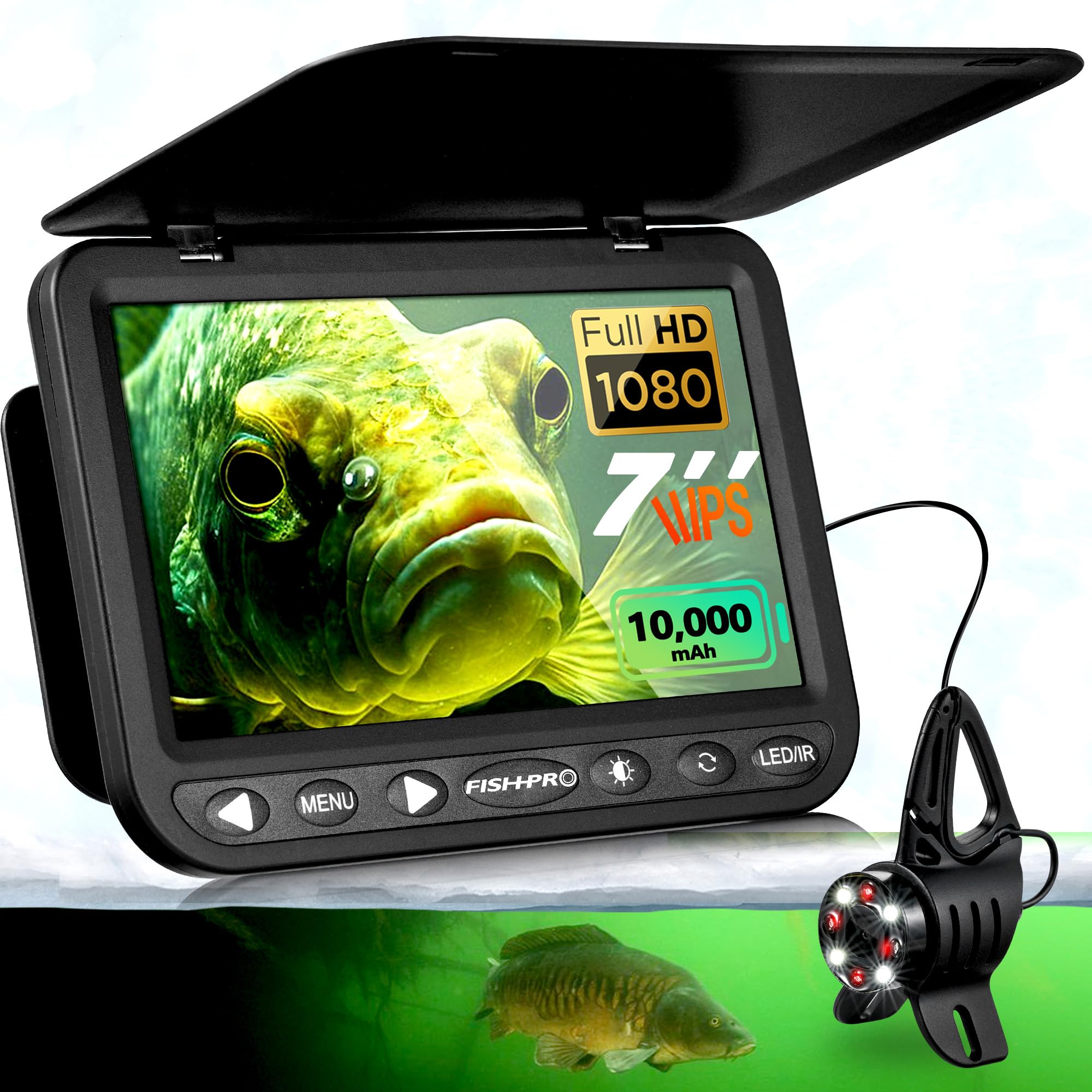
FishPro 7-Inch

90 /100
Angler Score Outstanding

Key details

Cable
82 ft
Screen
7 in IPS
Battery
10,000 mAh
Run Time
Up to 20 hrs
Check Details on Amazon

The 7-inch IPS screen is the first thing that separates this FishPro from the smaller cameras here, and it is the one we reach for when we want to read structure without squinting. The display is bright, the menu is simple, and the magnetic spool lets us carry the monitor to a bucket while the spool stays at the hole. That sounds like a small convenience until you are resetting a jig with cold hands.

Battery life is the other reason it leads this set. The 10,000 mAh battery is the largest here, with a listed runtime of up to 20 hours, and USB-C charging means you can top it up from the same cable you use for a phone or a power bank. On a long ice day, that capacity matters more than a slightly sharper image.

The 82-foot cable gives you enough line for most lake and ice work, and the angled fin and two weights help keep the camera pointed where you want it. We also appreciate the separate IR and white LED modes: the white light brings back color in dark water, while IR keeps fish silhouettes visible without the same glare. A camera does not make muddy water clear, but having both light options makes a real difference from dusk into night.

What seals it is the complete kit. The monitor, camera, spool, charger, case, and mounts all arrive together, and there is no app or pairing step to slow you down. That is what we want from a camera that lives in a sled or boat bag: one less thing to assemble when the fish are moving.

Pros

  • Largest screen and battery in this set
  • 82-foot cable with magnetic spool
  • Dual IR and white LED lighting
  • Complete kit with case and mounts

Cons

  • Premium price compared with the other picks
Our verdict

For most anglers, this is the one we reach for: the 7-inch IPS screen, 82-foot cable, and long battery make it the most complete kit here.

Check Latest Price
2

Best Big-Screen Value

Eyoyo 7-Inch

86 /100
Angler Score Excellent

Key details

Screen
7 in TFT with sun visor
Battery
4,500 mAh
Run Time
Up to 8 hrs
Resolution
1000TVL
Check Details on Amazon

A 7-inch screen without a premium price tag is the reason to look at this Eyoyo, and the sun visor is more than a throw-in. On bright ice or open water, the shade keeps the TFT panel readable when smaller monitors wash out. The 1000TVL picture is not the highest resolution here, but color and clarity are strong enough to pick out fish, weeds, and bottom structure.

We think it is the best big-screen value in this set because it gives you the larger view without the top-tier layout or footprint. The 4,500 mAh battery is rated for up to eight hours, and the controls are simple enough to learn without the manual. The monitor, battery box, cable wheel, and carrying case are all part of the package.

The 12 infrared lights do their best work in low light, and the 92-degree lens is narrow enough to keep the image from feeling stretched. This is a camera for anglers who want to watch a jig and a fish rather than scan a whole flat. The two-year warranty is a useful cushion for a camera that spends its life in a wet bucket.

Pros

  • Large 7-inch screen with sun visor
  • Simple controls and eight-hour rated battery
  • Two-year warranty

Cons

  • Cable tangles easily
  • Battery can fail to hold a charge
Our verdict

We recommend it when you want a big 7-inch screen for less than the premium picks, and its simple controls make it easy to live with.

Check Latest Price
3

Best Compact Ice Camera

FishPro 4.3-Inch

85 /100
Angler Score Excellent

Key details

Cable
65 ft magnetic spool
Screen
4.3 in IPS
Battery
5,000 mAh
Resolution
1000TVL
Check Details on Amazon

The magnetic spool is the detail that makes this little FishPro feel bigger than its 4.3-inch screen. You can leave the spool at the hole and carry the monitor to your bucket or shanty window without dragging the whole rig. That is the kind of small freedom that matters when you are moving between holes alone.

We think the 4.3-inch IPS panel is the right size for a one-person setup: it is crisp enough to read a jig and bright enough to use without a hood, and the 1000TVL image has the natural color we want for spotting fish rather than just shadows.

The 5,000 mAh battery and USB-C charging keep the kit simple, and the 45- and 90-degree mounts let you aim the camera without propping it on a tackle box. Two small weights are included, which is one less thing to improvise from the tackle tray.

It costs more than the budget 4.3-inch cameras here, and that premium buys the magnetic spool, the IPS panel, and a kit that packs into a small case. If you fish shallow ice and want a compact setup that goes from bag to hole quickly, the extra outlay is easier to justify than it looks.

Pros

  • Magnetic spool separates monitor from cable
  • Bright 4.3-inch IPS screen
  • USB-C charging and simple setup
  • Includes angle mounts and weights

Cons

  • 65 ft cable is short for deep water
Our verdict

Our pick for a one-person ice setup: the compact 4.3-inch monitor, magnetic spool, and clear IPS screen make it easy to carry and deploy.

Check Latest Price
4

Best Midrange Run Time

ZXBVSU 5-Inch

85 /100
Angler Score Excellent

Key details

Lens
220° wide angle
Cable
100 ft
Screen
5 in IPS
Battery
6,000 mAh
Check Details on Amazon

The 100-foot cable is the headline, but the 5-inch IPS screen is what makes this ZXBVSU easier to live with than the 4.3-inch budget cameras. It gives you a little more image to read without turning the kit into a two-handed job.

The 6,000 mAh battery is rated for up to nine hours, and the 220-degree lens shows more of the bottom around the camera than a narrower lens. That wide view is useful when a fish circles the bait or when you are trying to read a weed edge. The IP68 camera and 100-foot cable are built for wet, cold work, and the kit arrives with a carrying case.

We think this is the best balance of screen, cable, and battery in this set. The 220-degree lens keeps more of the scene in view, and that is the trade we prefer for scouting. You get enough screen to read a jig without the bulk of the 7-inch models.

The kit packs into a case that fits a sled or daypack, and the controls are simple enough to learn on the ice. For an angler who splits time between a boat and the ice, that easy transport is the quiet advantage.

Pros

  • 100-foot cable with a 5-inch IPS screen
  • Nine-hour rated battery
  • 220-degree wide-angle lens
  • IP68 waterproof build and carrying case

Cons

  • Screen is smaller than the 7-inch options
Our verdict

The 5-inch screen and 100-foot cable strike a useful middle ground, and the 6,000 mAh battery keeps it running through a long day.

Check Latest Price
5

Best Budget Long Cable

ZXBVSU 4.3-Inch

85 /100
Angler Score Excellent

Key details

Lens
195° wide angle
Cable
100 ft
Screen
4.3 in LCD
Battery
5,000 mAh
Check Details on Amazon

The 100-foot cable is the feature that makes this budget ZXBVSU worth a look; few cameras at this end of the set give you that much line. The 195-degree lens also shows a wider slice of the bottom than the narrow-angle models here, which helps when you are trying to find structure rather than just watch a single spot.

The 5,000 mAh battery is rated for up to eight hours, and the 12 infrared lights switch the view to black-and-white when the light drops. The monitor and camera are plug-and-play, with no app or pairing step. A compact case keeps the cable and screen together between spots.

We think it is the budget pick to choose when depth matters more than screen size. The 4.3-inch screen is easy to ignore once you are watching fish, and the wide lens does more for the view than a few extra pixels would.

What we appreciate most is the simplicity: lower it, switch it on, and you are watching. The cable load rating is high enough for snags and steady pulls, and the whole kit stows without taking over a gear bag.

Pros

  • 100-foot cable in a budget kit
  • 195-degree wide-angle lens
  • Simple plug-and-play setup
  • 5,000 mAh battery rated for eight hours

Cons

  • LCD panel rather than IPS
Our verdict

Budget-minded anglers who need 100 feet of cable get the essentials here, with a wide lens and simple setup.

Check Latest Price
6

Best Wide-Angle Budget Pick

SUNMORN 4.3-Inch

80 /100
Angler Score Excellent

Key details

Lens
220° wide angle
Cable
50 ft
Screen
4.3 in IPS
Battery
6,000 mAh
Check Details on Amazon

The 220-degree lens is why this SUNMORN earns a place: it shows more of the bottom around the camera than the narrower models here, which helps when you are scouting a weed edge or watching a fish circle a bait. We think it is the wide-angle pick for shallow water, and the 4.3-inch IPS screen is bright enough to use without hiding under a jacket.

The 6,000 mAh battery is rated for more than eight hours, and the sun visor is a useful addition on open ice. The infrared lights handle low light, while the 66-pound cable load rating gives you some margin when the camera snags or the boat drifts.

The padded case and compact monitor make it easy to carry, and the wide view means you can set it down and still see a fair amount of the scene without fussing with the angle. That is a nice match for kayak and dock fishing, where you want a quick look rather than a full camera station.

It is a camera for quick looks around structure, and the wide lens and long battery make it more useful than its modest screen suggests. The padded case and simple controls mean it can live in a kayak or dock box without a lot of ceremony.

Pros

  • 220-degree wide-angle lens
  • 6,000 mAh battery rated for eight-plus hours
  • Sun visor and padded case
  • 66-pound cable load rating

Cons

  • 50 ft cable limits deep-water use
Our verdict

If your water is shallow and you want a wide look around structure, this 220-degree lens is the reason to choose it.

Check Latest Price
7

Shallow-Water Starter

TMACTIME 4.3-Inch

85 /100
Angler Score Excellent

Key details

Cable
15 m
Screen
4.3 in LCD
Battery
5,000 mAh
Run Time
Up to 10 hrs
Check Details on Amazon

At 0.48 kg, this TMACTIME is the lightest kit here, and that is the detail that makes it easy to toss in a bucket or backpack for a pond session. The 4.3-inch LCD is not the brightest screen in the group, but the whole package is small enough to carry without thinking about it.

The 5,000 mAh battery is rated for up to 10 hours, which is impressive for a camera this size and makes it a good match for a full day on the ice. Six infrared lights handle low light, and the IP68 camera and cable are rated for 15 meters of depth and a 100 kg load.

Setup is about as simple as it gets: plug the camera into the monitor and start watching. There is no app, no pairing, and no separate battery box to juggle. The 1080p image is clear enough for checking bottom composition and watching fish approach a bait, and the compact monitor fits on a small bucket lid.

We think it is the right first camera for shallow ponds, docks, and ice where 15 meters is plenty. What makes it worth buying is the combination of low weight and long run time, not the screen or the cable length. The included monitor and camera are ready to go out of the box, which is exactly what a starter kit should be.

Pros

  • Light 0.48 kg kit
  • 10-hour rated battery
  • IP68 camera and cable
  • Simple plug-and-play setup

Cons

  • 15 m cable limits deeper lake use
Our verdict

A light, affordable starter camera for shallow ponds and ice, with a 10-hour battery that covers a full day.

Check Latest Price

How We Tested 11 Underwater Fishing Cameras, on Ice and Open Water

We started with a long list of roughly 40 underwater fishing cameras and cut it down on the things that actually separate them: stated resolution and sensor quality, cable length and how the spool is built, battery capacity, screen size and panel type, and whether the listing spelled out a waterproof rating instead of hinting at one. That left 11 units, which we fished with for six months, starting in ice season and continuing into open water.

Picture quality came first, because it's the whole point. We lowered each camera over the same rock pile and weed edge in 15 to 25 feet of water and judged whether we could tell a fish from a branch, whether colors held or went gray, and how badly the image fell apart in stained water. Every unit also got a noon test on a bright day: could we read the screen without throwing a jacket over our heads? Night vision got its own trip after dark, watching how far the IR lights actually reached.

For battery life we ran each camera continuously from a full charge and logged real hours against the claim, noting whether the picture faded or the unit simply quit. Ease of use went to a friend who'd never touched one — we handed it over with the instructions and said nothing, then timed setup and noted where he got stuck. Menu layouts and thin manuals tripped up more cameras than weak hardware did. Cable management we judged by re-spooling 65 to 100 feet of line in the cold, where tangles and uneven winding show up fast. Stability meant setting the monitor on a bucket lid in wind to see which ones tipped, and watching whether current rolled the camera off its mark. Value was the final question: what the extra money bought in picture, not in packaging.

How to Choose an Underwater Fishing Camera

Start with the depth you fish

Every system is limited by its cable, not by the camera's lens. A 50-foot cable is fine for shallow ice, ponds, and docks; a 100-foot cable gives you more margin in deep reservoirs and steep shorelines. The 15-meter TMACTIME is a pond and shallow-ice tool, while the 100-foot ZXBVSU models are the deep-water choices here. Check the depth you actually fish before you fall for a bigger screen.

Match the screen to how you fish

Screen size is a trade between detail and portability. A 4.3-inch monitor fits in a jacket pocket and leaves more room in a sled, while a 7-inch display is easier to read when you are watching a small jig. Panel type matters too: IPS screens keep their color and contrast at an angle, and a sun visor is worth having on bright ice. If you mostly stand over one hole, the bigger screen earns its bulk; if you move often, the smaller one wins.

Plan for battery and cold

Battery capacity is listed in mAh, but runtime is the number that matters. The largest packs here are rated up to 20 hours, while the smaller ones land around eight to ten. Cold weather can shorten any of those figures, so charge the night before and keep a USB power bank handy for models with USB-C charging. We prioritize a larger battery over a brighter screen when the temperature drops.

Understand lighting and water clarity

Infrared lighting turns the view black-and-white and helps you see fish silhouettes after dark; white LEDs bring back color but can glare and pick up floating debris. Neither replaces clear water. In muddy or stained water, keep the camera closer to the bottom and expect a shorter useful range. A model with both IR and LED gives you more options, but the water in front of the lens still sets the limit.

Do not overlook the spool and case

The cable is the part you handle most, and a tangled spool can turn a quick check into a chore. Magnetic spools let you separate the monitor from the cable wheel, which is a real advantage in a one-person shelter. A hard or padded case protects the screen and keeps the cable contained. We place more value on a manageable spool than on a few extra pixels, because that is the part you deal with every trip.

Frequently Asked Questions

Final Verdict

If you want one camera that handles the widest range of water and conditions, choose the FishPro 7-inch. Its 7-inch IPS screen, 82-foot cable, and 10,000 mAh battery make it the most complete kit here, and the magnetic spool is the detail that makes moving around the hole easier. The Eyoyo is the big-screen alternative when you want to spend less, while the FishPro 4.3-inch is the compact pick for a one-person ice setup. Match the cable to your depth first; the screen and battery are easier to choose after that.