Best Camping Frying Pans of 2026

Camp breakfast is the reward for sleeping on the ground, and the fastest way to ruin it is a pan that burns the eggs in one hot ring while the rest of the surface stays cool. Camp stoves throw a small, uneven flame, so a skillet that behaves perfectly on your kitchen range can scorch and stick the moment you set it on a burner in the open air. What you actually want is a pan that spreads heat across the base, holds it when you lift the pan off the flame, and wipes clean with a rag, because there is no sink for a mile.

I've eaten my share of ash-flavored eggs learning that. Over eight months my team and I cooked on 12 camping frying pans — featherweight nonstick, pre-seasoned cast iron, and carbon steel — and the cooking surface decided more than any brand name did: cast iron and carbon steel got better with every trip but rust fast if they get packed away damp, while nonstick was effortless from the first morning and scratches the moment someone reaches for metal tongs. Size trips people up too, since a pan wider than your burner mostly just relocates the hot spot. The ones worth packing are below.

1

Best Overall

Fire-Maple 7.6-Inch Camping Pan

90 /100
Angler Score Outstanding

Key details

Weight
9.2 oz
Diameter
7.6 inches
Packed Size
7.8 x 7.6 x 2.2 inches
Heat Sources
Stove, camp burner, campfire
Check Details on Amazon

At 9.2 ounces, this is the pan that earns a place in a pack that's already too heavy, and folded down to 7.8 by 7.6 by 2.2 inches it slides in beside a stove and a fuel canister instead of riding on top of them. What we care about more than the weight is the base: Fire-Maple builds it thicker than most camp frypans, and a heavier bottom is the difference between browned potatoes and a pale, scorched center over a concentrated burner.

For most camp cooks this is the pan to buy. The coating releases eggs and pancakes on a film of oil rather than a pool of it, which matters when the washing-up water is rationed, and the stainless handle locks out straight so the pan sits steady while you work a spatula underneath.

The joint is the one part worth fussing over. Folding handles are what make a camp pan packable, and they're also the first thing to stiffen once grit works its way in, so rinse it out and let it dry open rather than folded.

Seven and a half inches is a one-or-two-person pan — three eggs and an onion, or two sausages at a time — and 900 milliliters takes a small one-pan dinner. It's rated for a stove, a camp burner, or a fire, which makes it the only pan here that covers both a pocket stove and a campfire at under a pound.

Pros

  • 9.2 ounces with a flat-folding handle
  • Thicker base than typical camp frypans
  • Nonstick surface wipes clean with little water
  • Rated for stove, camp burner, or campfire

Cons

  • 7.6-inch surface feeds one or two people
  • Coating limits it to a low flame and soft utensils
Our verdict

Our pick for most campers: light enough for a pack, steady on a pocket stove, and coated so breakfast wipes out with a splash of water.

Check Latest Price
2

Best for Jetboil Owners

Jetboil Summit Skillet

94 /100
Angler Score Outstanding

Key details

Weight
10.6 oz
Surface
Ceramic nonstick
Dimensions
8 x 8.5 x 1.9 inches
Works With
Jetboil stoves and pot support
Check Details on Amazon

The best idea in this skillet is the turner that clips into the handle. A spatula is the thing camp cooks forget, and here it travels attached to the pan you're already carrying, angled to fit the corners. That's why it's our pick for anyone already cooking on a Jetboil system: the tool and the pan are one object in the pack.

At 10.6 ounces it comes in close to our top pick on weight while offering more cooking surface — 8 by 8.5 inches, rectangular, so it uses the footprint of a burner rather than a circle of it. The ceramic coating is the slickest of the pans here; pancakes and eggs release with almost no fat, and the surface wipes clean with a splash.

The catch is the ecosystem. Jetboil designs this around its own stoves and pot support, and the rectangular base is meant to sit on that support rather than straddle a wide three-legged burner, so if your stove is a different brand, set the pan on it before you commit — a base that rocks is worse than no pan at all. The 1.9-inch walls are deep for a skillet, too: good for a simmer that has to survive being carried to the site, less good when you're trying to get a spatula under a fried egg.

Pros

  • Turner nests into the handle
  • 10.6 ounces with an 8-by-8.5 surface
  • Ceramic nonstick releases eggs and pancakes

Cons

  • Built around Jetboil stoves and pot support
  • 1.9-inch walls make flipping fiddlier
Our verdict

The pan we hand to anyone who already owns a Jetboil — wide, slick enough that cleanup is a rinse, and carrying its own turner.

Check Latest Price
3

Best for Campfire Cooking

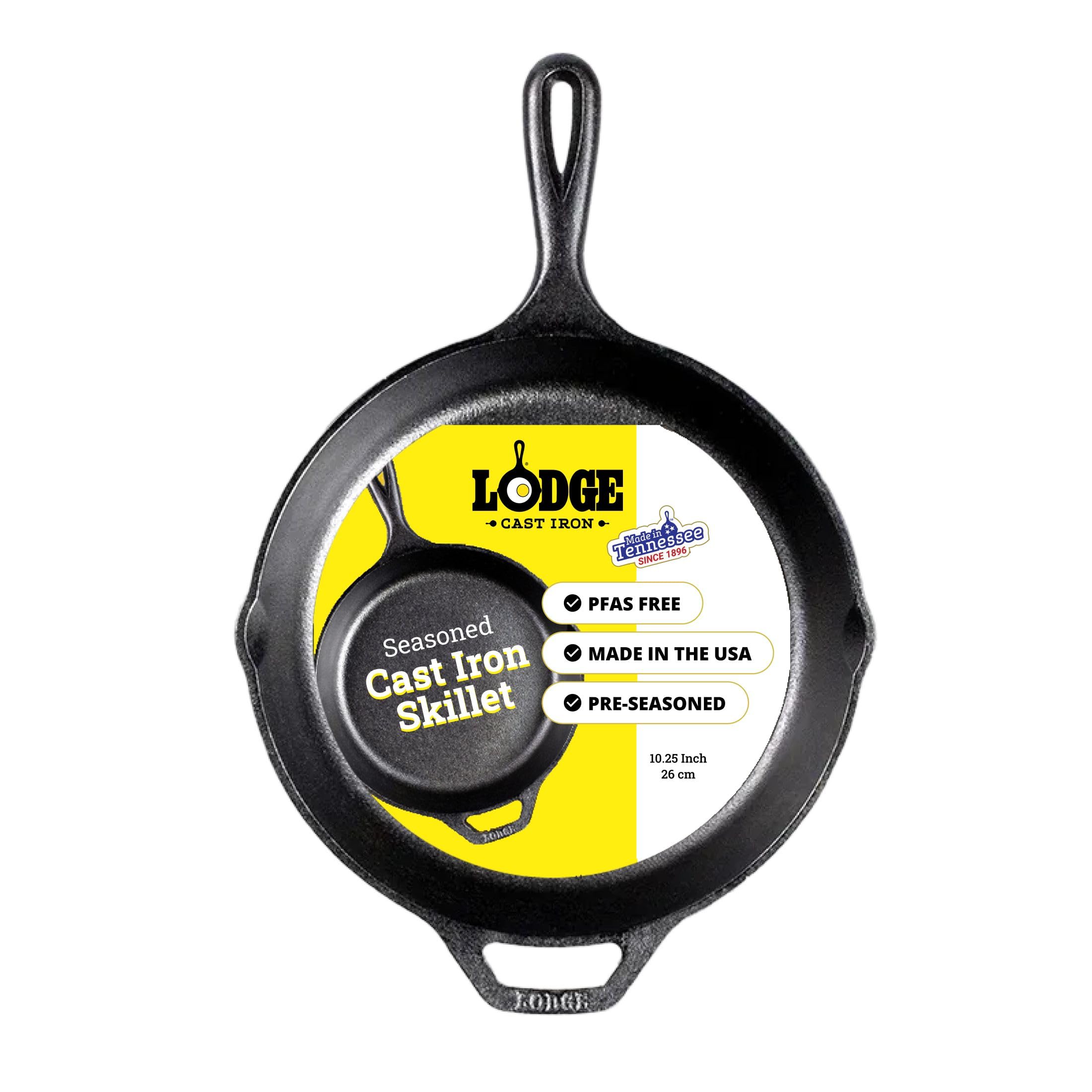
Lodge 10.25-Inch Cast Iron Skillet

93 /100
Angler Score Outstanding

Key details

Weight
5.4 lb
Diameter
10.25 inches
Material
Pre-seasoned cast iron
Oven Safe To
500 °F
Check Details on Amazon

Set this pan on a bed of coals and it keeps handing heat back. That stored heat is the whole argument for cast iron at a campsite: load it with potatoes and onions and the temperature doesn't collapse the way it does in thin aluminum, so you get browning instead of a steam bath.

Ten and a quarter inches across, pre-seasoned, oven safe to 500°F, and rated for the stove, the grill, and the fire. It weighs 5.4 pounds — nobody is carrying that far, though it's nothing in the back of a truck — and the teardrop handle gives you something to hold onto with a glove on.

The appeal for us is how little it asks over a weekend: no coating to blister, nothing to baby with a plastic spatula, and a lifetime warranty behind a slab of iron with no moving parts. Its one real enemy is moisture — put it away damp and it spots — so wipe it, warm it briefly, and rub in a little oil before it goes back in the vehicle.

Pre-seasoned doesn't mean nonstick in the coated-pan sense. The first breakfasts will want a generous slick of fat and a little patience, and eggs start releasing cleanly once the surface has darkened and smoothed, which usually takes a couple of weekends of real cooking. If you want slide-out eggs on the first morning, this isn't that pan. If you want the same pan in ten years, it is.

Pros

  • Holds heat for browning over coals
  • No coating to scratch or replace
  • Pre-seasoned and oven safe to 500°F
  • Lifetime manufacturer warranty

Cons

  • 5.4 pounds keeps it in the vehicle
Our verdict

For coals and a truck bed, this is the pan we reach for — nothing else here browns food over a fire so reliably or takes so much abuse.

Check Latest Price
4

Best Step Up From Cast Iron

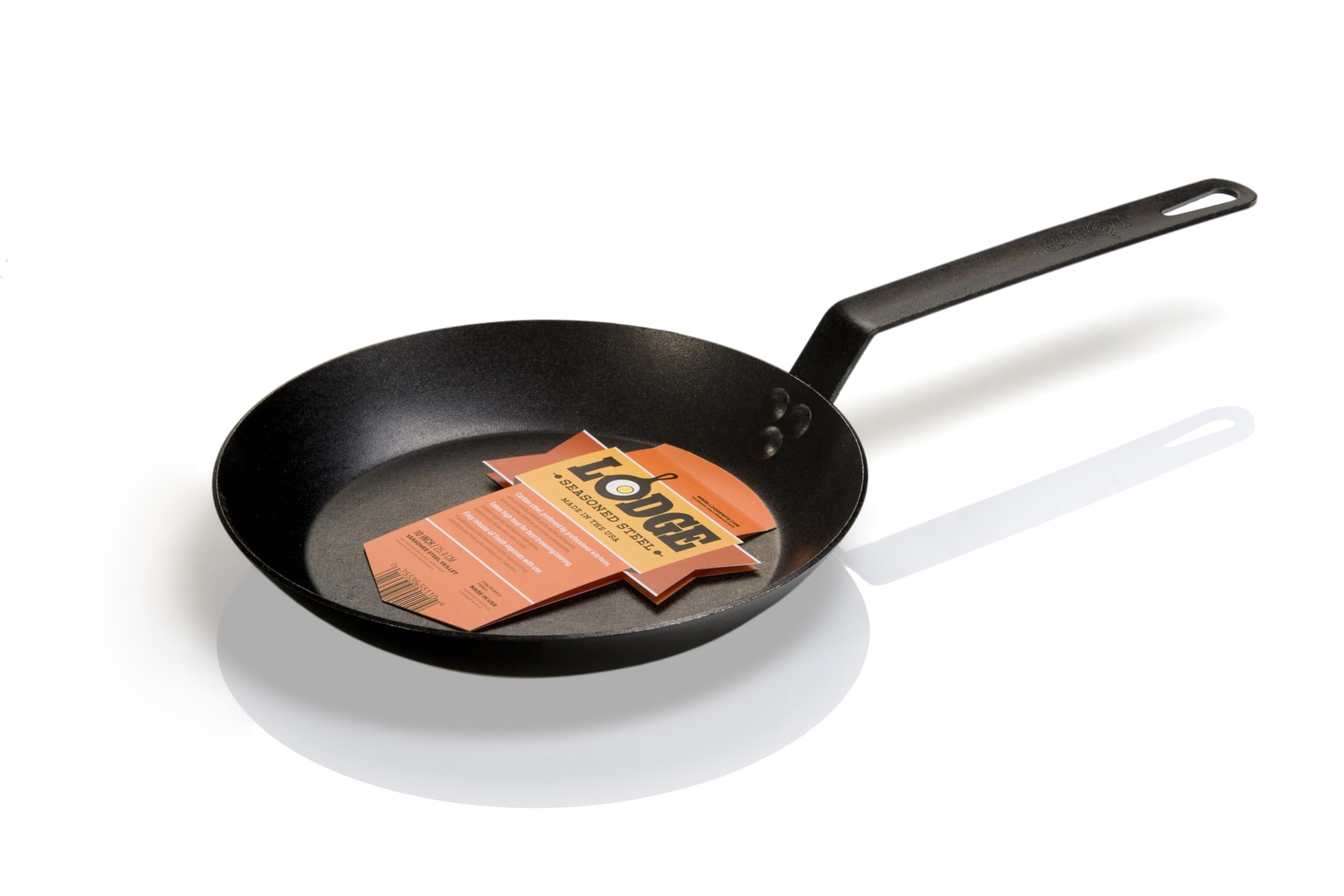
Lodge 10-Inch Carbon Steel Skillet

88 /100
Angler Score Excellent

Key details

Weight
3.1 lb
Diameter
10 inches
Material
Pre-seasoned carbon steel
Oven Safe To
500 °F
Check Details on Amazon

3.44 kilograms, or about 7.6 pounds, is the first thing to know about this 12-inch skillet. It's a two-handed pan, and on a campsite that means lifting it off the fire, carrying it to the wash basin, and setting it down again without scorching your forearms.

What the weight buys is real estate: twelve inches of cast iron takes a full pack of sausages or onions for four without crowding, and it holds heat the way cast iron should, so a batch of burgers doesn't drop the temperature when it goes in. Pre-seasoned, oven safe to 450°F, and happy on a fire or a grate.

The finish is where it loses ground to the Lodge pan above. The factory seasoning is thin and patchy, and eggs, fish, and anything starchy will stick until you've cooked enough fatty meals to build it up — a few weekends, not a few minutes. Once it's there it behaves, and the iron underneath is sound.

We think of this as the chuck-box pan: it lives in the vehicle, comes out for a crowd, and doesn't shift around the fire grate while you're stirring. Budget money buys a lot of cooking surface here. What it doesn't buy is a pan you'll want to carry anywhere.

Pros

  • 12 inches of cooking surface
  • Cast iron heat retention
  • Pre-seasoned and fire ready
  • Oven safe to 450°F

Cons

  • Factory seasoning is thin and food sticks at first
  • 7.6 pounds needs two hands
Our verdict

Feed four or more from a vehicle and this delivers a lot of cast iron for the money — just plan on two hands and a slow-building seasoning.

Check Latest Price
5

Group Cooking

Merten & Storck 12-Inch Carbon Steel

86 /100
Angler Score Excellent

Key details

Weight
3.31 lb
Diameter
12 inches
Material
Pre-seasoned carbon steel
Oven Safe To
600 °F
Check Details on Amazon

Twelve inches of cooking surface and a 600°F oven rating make this the pan we reach for when four people want breakfast: six eggs at once, a whole pan of onions, sausages for the table. At 1.5 kilograms it's under half the weight of the 12-inch cast iron below, which is the difference between a pan you move with one hand and one you move with two.

Carbon steel behaves differently from cast iron on a small burner, and that's the part to plan around. Less mass means the pan follows the flame instead of ignoring it, but on a camp stove with a narrow ring the middle of a 12-inch pan gets hot well before the rim does — keep the food moving and rotate the pan rather than trusting the whole surface to be ready.

Where it gives ground to the Lodge carbon steel is the seasoning. The factory coat is inconsistent and wears faster than a cast iron pan's, so plan on a few fatty meals before eggs behave, and expect the surface to look uneven in the meantime. Metal utensils are fine on it, which is more than the coated pans here can say.

The other thing to weigh is cost, since this is the most expensive pan in this group and the premium buys surface area and an oven rating rather than better cooking. If you feed a crowd out of a vehicle, that trade makes sense. If you're cooking for two, the 10-inch Lodge does the same job for noticeably less.

Pros

  • 12-inch surface handles group cooking
  • Oven safe to 600°F
  • Under half the weight of 12-inch cast iron
  • Metal utensils are safe on it

Cons

  • Factory seasoning is inconsistent and short-lived
Our verdict

Buy it for the surface area and the high heat: a 12-inch pan that sears like cast iron and doesn't need two hands to lift.

Check Latest Price

How We Tested the Best Camping Frying Pans

We started by pulling every camping skillet we could find from outdoor retailers, co-op shelves, and the cookware aisle, then cut the list by diameter, packed weight, handle length, and whether the pan actually sat level on a canister stove. Twelve made the cut for eight months of testing, a mix of bare and pre-seasoned cast iron, carbon steel, and nonstick aluminum.

Testing happened where these pans really live: a two-burner stove on a picnic table, a canister stove balanced on a flat rock, a bed of fire-ring coals, and, for a baseline, my kitchen range. I browned pancakes and watched where the color landed — an even gold circle meant the base was spreading heat, a dark center with pale edges meant it wasn't. I scrambled eggs in butter and noted whether they slid or cemented themselves to the middle, then cooked bacon, a hash of potatoes and onions, and a steak in each pan to see how it handled both a hard sear and a slow sweat.

Cleanup told us as much as cooking did. At the campsite we wiped each pan with a paper towel and a splash of water and counted the passes it took before the surface came clean, and we deliberately left the carbon steel and cast iron out damp overnight to see what had bloomed by morning. We stacked pans with the rest of the gear, used metal tongs and spatulas where the maker allowed it, and packed each one beside a fuel canister and a stuff sack to check the size claims against reality. Factory seasoning got judged on the first morning, not on the box, and we weighed price against how many seasons each pan looked likely to survive. The ones still living in my garage earned the space.

How to Choose a Camping Frying Pan

Weight and Packed Size Come First

Sort the pans by the trip rather than by the spec sheet. Anything under about 12 ounces disappears into a pack and is worth the loss of cooking surface; three pounds is a pan you carry from a trailhead to a site a mile in; five pounds and up belongs in a vehicle. Watch the word compact in a listing, because it often describes something that fits a car trunk rather than a pack's widest compartment. Measure that compartment before you buy, and remember a folding handle only saves space if it locks firmly when open.

Match the Pan to Your Heat Source

Canister stove, fire grate, or open coals decides more than the pan's material does. Coated aluminum is a stove tool: over a fire, keep the flames low and under the base, because a flame that licks the sides will blister the coating. Bare cast iron and carbon steel are the ones that can sit on coals. On a narrow camp burner, a wide pan also concentrates heat in the middle, so a 12-inch skillet over a pocket stove is a hot ring and a warm rim. Buy for your worst heat source, not your best.

Nonstick Coating or Bare Metal

The choice is convenience now versus longevity later. A coating gives you eggs that slide out and a surface that wipes clean when you're washing up in a quart of water, but it has a lifespan, it won't take metal utensils, and high heat shortens it. Bare cast iron and carbon steel are effectively permanent, and they can be scraped, scoured, and set in a fire, but they ask for oil, a dry store, and a seasoning curve. Rust is the failure mode for both: a pan packed away damp will spot, so dry it on the heat and oil it before it goes in the truck.

Size and Shape for the People You Feed

Seven to eight inches is a solo or two-person pan; ten inches handles two or three; twelve inches is for four or more and needs a grate wide enough to hold it. Depth matters as much as diameter — shallow walls make flipping easy, while deeper ones keep a simmer from sloshing on the walk over and let a pan double as a small pot. On handles, a long fixed one keeps your hand back from the flames; a folding one saves pack space and puts your knuckles closer to the fire.

Frequently Asked Questions

Final Verdict

Buy the Fire-Maple if you want one pan that goes in a pack, sits on a pocket stove, and handles a campfire without complaint. At 9.2 ounces it's the easiest pan here to justify carrying, and the thick base means breakfast browns rather than scorches.

Cook over coals or out of a vehicle and the Lodge cast iron is the better pan — nothing here matches it for browning over a fire. If there's already a Jetboil in your kit, the Summit Skillet makes the most of it.