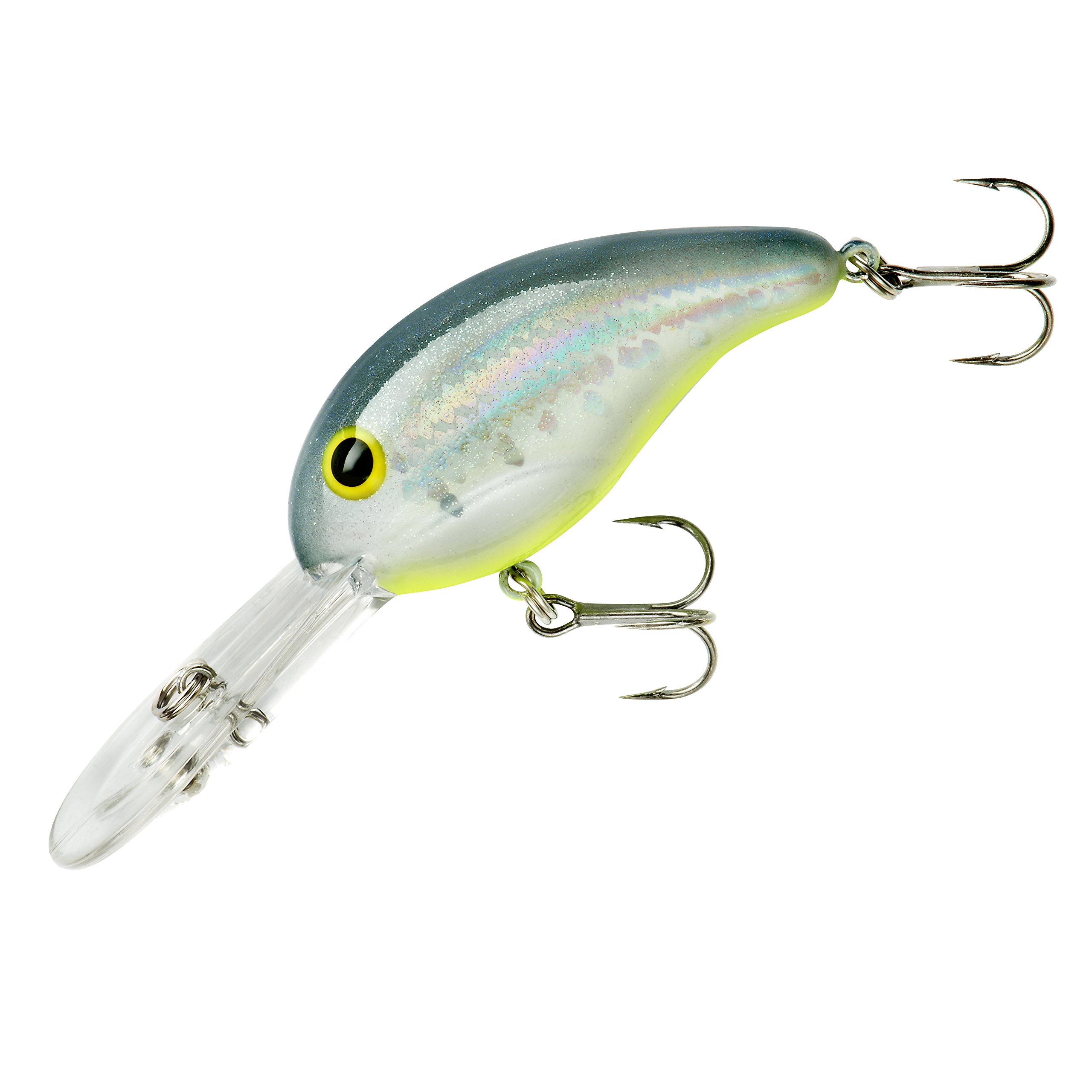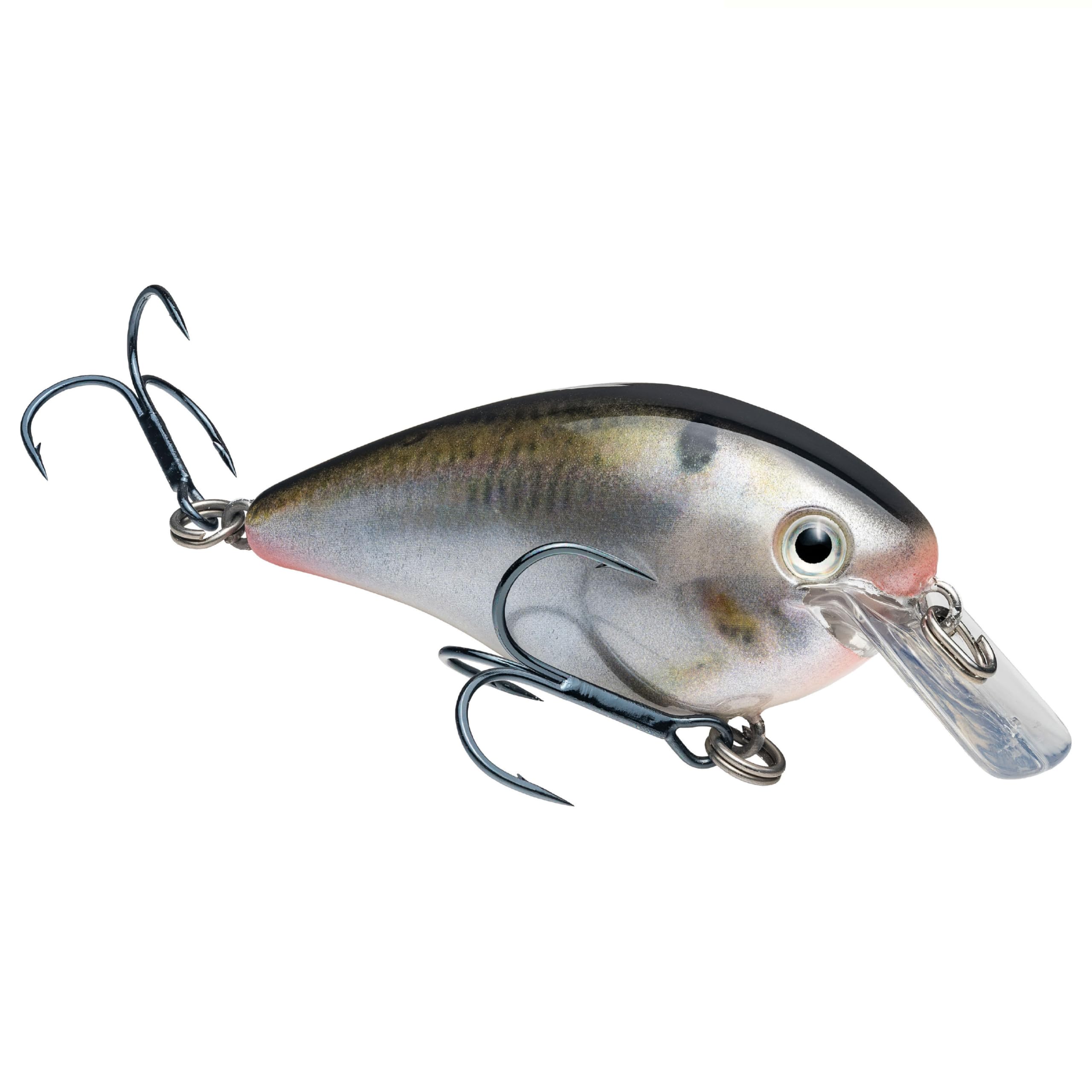
Best Crankbaits of 2026

A crankbait's job is simple and a little ridiculous: convince a bass that a painted hunk of plastic is worth the calories. It does that with a lip, a wobble, and a ticking you feel through the rod before you see anything — and two baits that look identical on the peg can dive at different angles, hunt sideways, or blow out the second you lean on the handle.

I've spent plenty of mornings grinding crankbaits over gravel points, and this spring and summer my team and I fished 18 of them on reservoirs, farm ponds, and one windy stretch of river. The pattern held across every one: price buys a nicer paint job, not more fish, and what actually matters is whether a bait tracks straight, floats up when you pause, and comes with hooks worth setting. If you can feel what it's doing down there, you can fish it; if you can't, you're just casting. The picks below earned their place by catching fish, not by looking good in the tray.

1

Best Overall

Strike King KVD 1.5 Hard Knock

93 /100
Angler Score Outstanding

Key details

Sound
Silent, no rattle
Weight
3/8 ounce
Hook Size
Size 3 treble
Diving Depth
3 to 5 feet
Check Details on Amazon

A crankbait that runs three to five feet with a flat bill on the front of it is the most useful single bait a bass angler can own, and the KVD 1.5 Hard Knock is the one we tie on first. The square lip is the whole point: it kicks off rock, stumps and dock pilings instead of wedging into them, so you can cast at cover rather than beside it. At 3/8 ounce it loads a baitcaster into wind, and the size 3 trebles are scaled to a body small enough that a bass commits rather than swipes.

The silence surprised us more than anything. There's no rattle chamber in this one, and on bright, calm days over pressured water that absence is the feature — the bait comes through with a tight shimmy and nothing else, which is the presentation cold, clear water responds to. The finish deserves credit too: the chip-resistant coating came through repeated contact with rock and pilings looking better than we expected for a bait this size.

Where it gives ground to the deep divers here is reach. Three to five feet is the entire window, so on a hot summer day when bass are sitting on a 12-foot break, this bait is passing over their heads. That isn't a flaw so much as the job description. It owns the bank, the flat and the laydown; the Flicker Shad and the Bandit take over when you need to get down.

The strike, in our experience, comes a beat after the bait ricochets, so the point is to steer it into something. Cast past the target, reel down until you feel the bill ticking bottom or wood, then keep the rod tip low and grind. That ricochet is the entire reason the bill is square, and it's the part of this bait no product photo shows you.

Pros

  • Deflects off rock and wood instead of snagging
  • Silent body suits pressured and cold-water fish
  • Casts well on baitcasting tackle at 3/8 ounce
  • Chip-resistant finish holds its color

Cons

  • Bill can snap on a hard hit against rock
Our verdict

Our default crankbait for bass in shallow cover: the flat bill deflects off rock and wood, and the silent body still gets bit in cold, clear water.

Check Latest Price
2

Best for Trolling

Berkley Flicker Shad

93 /100
Angler Score Outstanding

Key details

Hooks
Size 6 Fusion19
Weight
5/16 ounce
Body Length
2 3/4 inches
Diving Depth
11 to 13 feet
Check Details on Amazon

Trolling is where the Flicker Shad earns its keep. The 5/16-ounce body is rated to run 11 to 13 feet, deep enough to work the first break on most reservoirs and shallow enough that you aren't plowing bottom through every turn. The weight-transfer design shows up on the water: for a bait this light it loads a rod and travels a long way when you let line out behind the boat.

It's the best trolling crankbait in this group, and the profile is why. At 2 3/4 inches it's built to look like a shad — slender, with a tight swim rather than a wide roll — and that's a shape predatory fish see a great deal of. The size 6 Fusion19 trebles are sticky sharp and matched to the body, so a fish that swipes short still finds hook.

It is not a shallow-cover bait. Cast or trolled over flats and open water it's in its element; throw it at a laydown and you'll spend the afternoon retying. The KVD and the Bandit handle that work, and this one handles the water past the boat ramp.

One thing to check before you order: the style field on this listing says Shallow, and it isn't. The 5/16-ounce Flicker Shad is the 11-to-13-foot version, and the same family comes in a genuinely shallow model that fishes completely different water. Read the depth rating rather than the name on the pack.

Pros

  • Covers 11 to 13 feet behind a boat
  • Casts long for a 5/16-ounce bait
  • Sharp Fusion19 hooks sized to the body
  • Shad profile and tight swim

Cons

  • Light hooks for big fish on a hard drag
Our verdict

If you troll, this is the crankbait to tie on: it hunts at 11 to 13 feet, casts long for its weight, and comes with sharp Fusion19 hooks.

Check Latest Price
3

Best Lipless Crankbait

Strike King Red Eyed Shad

92 /100
Angler Score Outstanding

Key details

Type
Lipless, sinking
Hooks
Size 3 treble
Sound
Free-floating rattles
Weight
1/2 ounce
Check Details on Amazon

Take the lip off a crankbait and you get a different tool. The Red Eyed Shad is a half-ounce chunk of plastic with no bill and no fixed diving depth: it sinks on the pause, and you decide how deep it fishes by counting it down before you start the retrieve. That makes it the bait for open water, rock piles and suspended fish, a job none of the billed baits here do well.

It's also the loudest bait in this group. Free-floating rattles knock around inside the body, and in stained water or a stiff chop that's exactly what you want — fish find it by sound before they ever see it. The retrieve that makes it work is a rip and a fall: snap it up, let it flutter down on a semi-tight line, and stay ready, because the strike tends to come on the drop rather than the lift.

Against the other lipless options, this is the one we keep in the boat bag. It covers water fast when you're hunting fish rather than working them, it comes through rock without hanging the way a billed bait will, and the Sexy Shad pattern is a convincing baitfish match in most water colors. Weeds are the exception — trebles dangling under a sinking body find every strand. Over rock and shell it's the first bait out; over a weedy flat, leave it in the box.

Pros

  • Any depth, chosen by counting it down
  • Loud rattles call fish in stained water
  • Casts well and covers water fast

Cons

  • Paint chips after repeated rock contact
Our verdict

For open water and rock, the Red Eyed Shad is the lipless bait we trust — a half ounce of loud rattle you can count down to any depth.

Check Latest Price
4

Best in Cold Water

Rapala Shad Rap 07

91 /100
Angler Score Outstanding

Key details

Weight
5/16 ounce
Material
Balsa wood
Body Length
2 3/4 inches
Running Depth
5 to 11 feet
Check Details on Amazon

Late fall and early spring are when a crankbait earns its reputation, and that's when the Shad Rap 07 comes out of the box. Balsa is the reason. The body is light and buoyant enough that the bait keeps wobbling at a crawl, so you can fish it slower than a plastic bait without the action going dead.

That's what makes it our cold-water pick. The tight wobble is subtle next to the wide hunting action of the squarebills here — you feel it more in the rod tip than in the hand — and subtle is what a pressured bass wants when the water is in the forties. It's the bait we tie on when nothing else is drawing a reaction.

The numbers sit it in a working range rather than one depth: 2 3/4 inches, 5/16 ounce, rated 5 to 11 feet on the retrieve. Balsa is also the catch. It dents and chips where a plastic bait would shrug off a rock, and a real crack changes how the bait floats, so fish it along cover rather than into it. In exchange you get the buoyancy that makes the whole thing work.

Fish it with the rod tip low and a slow, steady reel. This is one of the few baits here where speeding up is the wrong answer — if the wobble stops, you've picked up a weed, not a fish.

Pros

  • Keeps its action at the slowest retrieve
  • One bait covers 5 to 11 feet
  • Works when fish are cold and inactive

Cons

  • 5/16 ounce is light for casting into wind
Our verdict

Balsa makes the difference: the Shad Rap 07 keeps its tight wobble at the slowest retrieve, which is why it's our pick when the water is cold and fish won't chase.

Check Latest Price
5

Best for Casting Mid-Depth

Bandit BDT

92 /100
Angler Score Outstanding

Key details

Body
Butyrate with lead weights
Weight
1/4 ounce
Body Length
2 inches
Diving Depth
12 feet
Check Details on Amazon

The Bandit BDT is the bait we throw when the fish are past the bank but off the bottom — twelve feet down over a point, a ledge or the outside edge of a flat. It gets there on a cast rather than a troll, and that's the difference between fishing a crankbait and dragging one behind the boat.

The body is butyrate with lead weights molded inside, and those weights do something a hollow plastic bait can't: they knock out a dull thud on the retrieve. It's lower and less metallic than the rattling baits here, closer to a baitfish bumping structure than a dinner bell, and on fish that have heard plenty of rattles the difference is worth having. The lip is molded in rather than glued on, so the bait tracks straight from the first cast.

Depth is rated at 12 feet on 10-pound line, and the line spec is half the claim. Run heavier fluorocarbon and the bait rides higher and lands shorter; run 10 and it digs to the number. That's true of every crankbait here, but it matters more with this one, because a specific depth band is its entire job.

Two things to know before you buy. It isn't a grass bait — the lip loads up in weeds, and the lipless Red Eyed Shad handles that water far better. And at 2 inches it's the smallest billed crankbait in this group, an advantage when the shad are young-of-the-year and a limitation when you're trying to show big fish a big meal.

Pros

  • Reaches 12 feet on a cast
  • Molded-in lip runs true out of the package
  • Dull lead-weighted thud instead of a rattle

Cons

  • Bill can break off under a hard load
Our verdict

The Bandit BDT is the bait we throw when fish sit past the bank but off the bottom, reaching 12 feet on a cast without a trolling setup.

Check Latest Price
6

Holding Six Feet

Rapala Dives-To 06

92 /100
Angler Score Outstanding

Key details

Hooks
Two, size 5
Weight
3/8 ounce
Body Length
2 inches
Running Depth
6 feet
Check Details on Amazon

Six feet doesn't sound like much until you've spent a morning watching fish sit at exactly that depth and refuse everything running above them. The Dives-To 06 is built for that morning: a 2-inch balsa bait rated to run six feet, and the name is the pitch — it goes where it says and stays there.

Three-eighths of an ounce gets it down quickly on a cast, and the two size 5 hooks sit where a short-striking fish finds them. The body is shaped like a bluegill rather than a shad, a different silhouette from most of this group and one worth having when bluegill are on the menu.

We treat it as a precision bait rather than a search bait. When you've found fish on a break, or you're casting to a specific rock line, the DT06 puts the lure in that band and keeps it there cast after cast without you thinking about it. The trade is that six feet is all you get — the Shad Rap's 5-to-11 range covers more water when you're still looking.

Where it beats a generic shad bait is the finish. The Bluegill pattern is convincing in the water, and in lakes with a real bluegill population that's a better argument than another chrome bait in the box.

Pros

  • Dives fast and holds six feet
  • Heavy enough to cast into wind
  • Bluegill profile rather than another shad

Cons

  • Fixed six-foot rating leaves no room to fish deeper
Our verdict

Six feet, every cast: the Dives-To 06 is a precision bait for fish holding on a specific break, and its bluegill profile is the reason to choose it.

Check Latest Price
7

Starter Lipless Box

TRUSCEND Lipless Crankbait 3-Pack

88 /100
Angler Score Excellent

Key details

Count
3 lures
Length
2.4in (6cm)
Weight
0.35 oz
Hook Type
Treble
Check Details on Amazon

The math is the appeal: three lipless crankbaits in one box, in three colors, at a per-bait cost below anything else in this group. At 2.4 inches and 0.35 ounce they're small — small enough for a spinning rod and for crappie and perch, and still big enough for a bass to eat.

They sink, and that's worth saying plainly. These are slow sinkers, so in shallow water they stay in the top couple of feet unless you add a split shot, and the retrieve that gets them working is a steady drag with the rod tip down. Count one down for a second or two before you start reeling and it behaves like any other lipless bait; expect it to rise and you'll spend the morning confused.

What they do well is vibrate. A lipless bait has to be felt before it's seen, and these buzz hard for their size — the tail keeps moving at speeds where a small billed bait would go slack. The finishes are the sleeper feature: the fluorescent patterns show up at dawn, dusk and after dark, which is exactly when a natural color disappears.

Where we temper the enthusiasm is the hardware. The joints and the light trebles are the parts that can give, and a snapped joint or a straightened hook ends that bait's day. Fill a box with them, hand them to a kid, keep them in the kayak for water you don't want to feed good baits to. Just don't tie one on for the fish of the season.

Pros

  • Three baits for less than most single lures here
  • Strong vibration for a small body
  • Fluorescent finishes extend low-light fishing

Cons

  • Joints can snap under a hard load
  • Light trebles sized for panfish, not big fish
Our verdict

Three small lipless baits in one box make this the cheapest way into lipless fishing, as long as you're chasing panfish and pond bass rather than big fish.

Check Latest Price

How We Tested Crankbaits in Real Fishing Conditions

We started with roughly 60 lures — the standards that hang in every tackle shop plus a stack of budget baits with heavy review volume — then cut the field by dive depth, body size, hook and split-ring quality, and price, so no bargain bait got judged against a premium one. That left 18 crankbaits, fished over five months across a mix of water and cover.

Every bait got water time in the same three settings: dawn-to-noon trips from a boat on a rocky reservoir, paddle sessions on a farm pond, and bank casting at a local lake after work. We worked them over gravel points, banged them into dock pilings, ripped them through weed edges, and trolled them along a channel break. Before any of that, we swam each one beside the boat in clear water at slow, medium, and wide-open speeds to watch how it tracked, whether it hunted, and where it blew out.

What we noted: whether the paint chipped after a morning of rock contact, whether pike teeth split a lip seam or opened a split ring, and whether a bait rose when we paused or sat sullen in the water column. We logged how many fish each one put in the boat, how many stayed hooked to the net, and whether bass were pinned in the roof of the mouth or just nipped at the rear treble. We also counted follows, since a bait that draws bass without getting eaten tells you a lot about finish and flash. By season's end, the bargains that held up were the ones that came with hooks worth sharpening rather than replacing.

How to Choose a Crankbait

Start With Depth, Not Color

Fish from the bank and most of your water is inside eight feet, which makes a 3-to-5-foot squarebill like the KVD 1.5 Hard Knock far more useful than a 13-foot diver you can't get down without a boat. From a boat, or on a troll, the deeper baits come into their own and the shallow ones pass over the fish.

One trap comes with every depth rating: they're quoted on a specific line test. The Bandit BDT's 12 feet is a 10-pound-line figure, and heavier fluorocarbon lifts the bait and shortens the cast. Fish 15- or 17-pound line and expect every bait here to run shallower than the box promises.

Read the Bill

Bill shape tells you where a bait belongs. A flat, square bill kicks off rock, wood and dock pilings, so it's the one to cast at cover rather than past it, and that deflection is often what triggers the strike. A rounded or curved bill digs harder and gets deep faster, which suits points, ledges and shell beds where there's nothing to bounce off.

No bill is the third option. A lipless bait like the Red Eyed Shad sinks, so you pick the depth on every cast by counting it down, and it can be worked vertically in a way a billed bait can't. Shallow cover calls for a squarebill; rock and open water call for lipless. Most serious boxes end up holding both.

Balsa, Plastic and Sound

Balsa is buoyant and lively, and it keeps wobbling at speeds where a plastic bait goes dead, which is exactly why the Rapala Shad Rap earns a place when the water is cold. Plastic is tougher, casts better into wind and can carry a rattle chamber. Neither is better; they're tools for different water temperatures.

Then there's sound. Rattling baits call fish in from a distance in stained water or a chop, while silent ones suit clear, calm, pressured conditions where a rattle is one more reason to refuse. Two of each beats six of one.

Match the Lure to Your Rod and Line

Lure weight decides tackle. Anything around 3/8 ounce and up — the KVD, the Red Eyed Shad, the Dives-To — loads a medium baitcaster and punches into wind. Baits at 5/16 ounce and under are spinning-rod territory unless your thumb is better than ours.

Line is the other half of the equation. Fluorocarbon gets a crankbait down and holds it there; monofilament floats it back up and costs you depth. If a bait sits at the top of your rod's rating, change the rod rather than the bait and you'll cast further and hang up less.

Frequently Asked Questions

Final Verdict

Start with the KVD 1.5 Hard Knock. A square bill, a 3-to-5-foot window and a silent body make it the most useful single crankbait here for bass in shallow cover, and it's the one we'd hand to an angler building a box from scratch.

Your water decides the rest. The Berkley Flicker Shad when you're trolling 11 to 13 feet, the Bandit BDT when you want 12 feet on a cast, and the Red Eyed Shad when fish are suspended over rock. Buy the shallow bait first and add depth as you learn your lake.