Best Downrigger Weights of 2026

A downrigger weight does one job in the worst conditions on the boat: it drags your line down to where the fish are and holds it there while the hull rolls and the cable hums. Get the shape or the weight wrong and you feel it in the rods — the line bows back, the release pops early, and you're fishing at 40 feet when you meant to be at 80. A good one keeps your bait at the depth you set and tracks straight behind the boat.

I've trolled the same handful of lakes and a few coastal runs for years, and the weights that survive are rarely the shiniest ones on the rack. My team and I have run a dozen of them over the past seven months, from small pancakes to heavy finned balls, and the differences show up fast once you're clipping one on at dawn. First-time buyers rarely expect it, but the vinyl coating does more work than the shape — a thin one starts peeling at the scuff points within a season.

1

Best Overall

Extreme Max Coated Keel Weight

93 /100
Angler Score Outstanding

Key details

Body
Cast iron, polyethylene coated
Style
Keel
Water
Freshwater and saltwater
Weight
8 lbs (4 to 12 lbs available)
Check Details on Amazon

The keel is the part to notice. A flat blade running the length of this 8-pound cast iron ball keeps it tracking straight behind the boat and stops it rolling across the deck when you set it down — a detail that stops feeling small on a lumpy morning with two lines out. Extreme Max casts the body in iron, coats the whole thing in polyethylene, and offers the same shape from 4 to 12 pounds.

That coating earns its keep at the transom. Swinging the ball aboard is when most weights scratch a boat, and the polyethylene takes the contact instead of the gelcoat; it also muffles the clatter when the weight lands in the boat. For the same eight pounds of iron, it runs well under the name-brand balls in this group.

Eight pounds is a compromise, though, and a deliberate one. It is the right all-rounder for most freshwater trolling, but a fast troll or a ball fished deep lets it plane back and run shallower than the rigger counter reads — that is the day to switch to the 12-pound version of the same weight. Shallow work with light tackle does not need the extra iron.

Straight tracking, a hull-friendly finish, and the lowest cost per pound in this guide are what make it our default for most boats and most days. Eight pounds is also light enough to crank up by hand all afternoon, and when you are resetting lines for the tenth time that matters more than any figure on the box.

Pros

  • Keel body tracks straight and will not roll on deck
  • Polyethylene coating protects gelcoat on the retrieve
  • Lowest cost per pound of the picks here
  • Sizes from 4 to 12 lbs in the same shape

Cons

  • Coating can thin where the cable rubs the eyelet
Our verdict

Our default for most trolling: an 8-pound coated keel that tracks straight, protects the hull, and costs less per pound than anything else here.

Check Latest Price
2

Best for Deep Water

Extreme Max Ball-with-Fin 12 lb

91 /100
Angler Score Outstanding

Key details

Body
Cast iron, polyethylene coated
Style
Ball with fin
Weight
12 lbs (4 to 15 lbs available)
Recommended Use
Bottom and deep-water fishing
Check Details on Amazon

Blowback is the reason to size up. Pay out a long line at trolling speed and a light ball climbs and trails behind the boat, so the lure rides shallower than the number on the rigger reads. Twelve pounds of cast iron resists that, and the fin molded into the tail of this one is there to keep it pointing straight while it does.

Extreme Max coats it in the same polyethylene as the keel weight and offers the shape from 4 to 15 pounds, so there is a lighter option if 12 is more than your rigger wants to haul. In the water the fin does its job: the ball runs behind the cable rather than corkscrewing around it, which keeps the release sitting where you set it.

Deep water, fast trolls, and big open water are where this earns its place, and it is the weight we put out when the fish are marked down deep and the boat will not hold a slow speed. What it costs you is your arm: cranking 12 pounds back up by hand, line after line, is real work. On a manual rigger in shallow water, the 8-pound top pick does the same job with less of it.

Pros

  • Holds depth at speed and on long setbacks
  • Molded fin keeps it tracking straight behind the cable
  • Coated body protects the hull on the retrieve
  • Available from 4 to 15 lbs

Cons

  • Coating can arrive thin and lift around the eyelets
Our verdict

Buy this one for deep, fast trolling: 12 pounds of coated iron, with a fin that keeps it tracking while a lighter ball climbs.

Check Latest Price
3

Best for Shallow Water

Cannon 4 lb Flash Weight

92 /100
Angler Score Outstanding

Key details

Style
Tapered keel with fin
Weight
4 lb
Coating
Black vinyl
Reflective Tape
Prism tape on fin
Check Details on Amazon

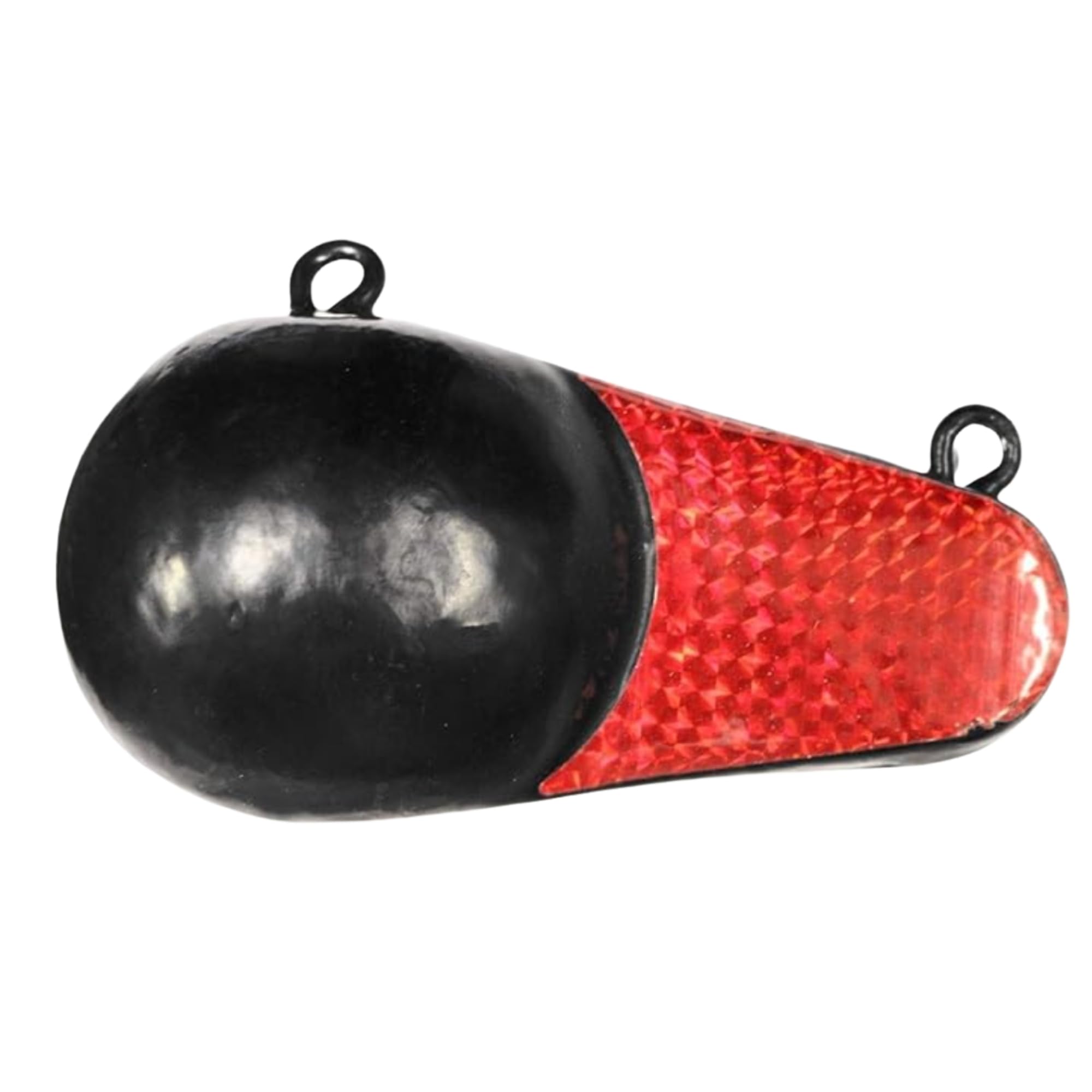
Shallow water and small boats are where this one makes sense, and the build is the reason to pay for it: a 4-pound tapered keel, a black vinyl coating that holds up trip after trip, and prism tape on the fin that flashes as the ball comes up. It is the most finished weight in this group, and it looks it.

Four pounds is the point and the limitation. It swings less when you are netting a fish, it is easy to crank, and it will not strain light tackle or a hand-held rigger — but it is the first ball here to blow back when you pick up speed or drop deep. Keep it for shallow structure, small lakes, and days when the fish are high in the column.

We think it repays the premium in the water: the taper tracks true at slow and moderate trolls, and the vinyl does not scuff the hull when you swing it aboard. Cannon covers it with a one-year limited warranty, and four pounds means you can fish a downrigger from a boat that has no business carrying a 12-pound ball on a manual rigger.

Pros

  • Tapered body tracks true at slow and moderate trolls
  • Vinyl coating holds up and protects the hull
  • Light enough for a hand-cranked rigger
  • Reflective prism tape on the fin

Cons

  • Most expensive per pound in this group
Our verdict

For shallow trolling from a small boat, this is the cleanest little ball here: a vinyl finish that lasts and a taper that tracks straight.

Check Latest Price
4

Best Anti-Twist Tracking

MarineNow Oval Fin Weight

87 /100
Angler Score Excellent

Key details

Style
Oval with fin
Water
Freshwater and saltwater
Weight
10 lb
Coating
Protective vinyl
Check Details on Amazon

Twist in the cable is what the oval-with-fin shape is built to kill. As the ball moves through the water, the fin holds it on line instead of letting it spin, and a cable that is not twisting keeps your release and your lure where you set them. MarineNow casts the body in iron, dips it in vinyl, and finishes this one at 10 pounds.

Two things make it worth its place. The fin is there to hold a straight line, and the slim oval profile is meant to tow with less drag than a round ball of the same weight — which is why it is our choice when the cable is twisting at speed. The vinyl jacket is thick enough to keep the hull safe on the retrieve.

The weak spot is cosmetic but irritating: the reflective sticker lifts after a trip or two in the water, and the ball looks shop-worn long before it wears out. Peel it off and you still have a well-shaped 10-pounder that tracks straight. The tape is the first thing to go, not the weight.

Pros

  • Fin resists cable twist at trolling speed
  • Slim oval tows with less drag than a round ball
  • Vinyl jacket protects the hull on the retrieve
  • 10 lbs suits deeper sets than the top pick

Cons

  • Reflective tape peels off early
Our verdict

Our pick when cable twist is spoiling the spread: a finned oval that tracks straight and tows light for its weight.

Check Latest Price
5

Salmon Trolling

PacificReef Coated Ball 8 lb

88 /100
Angler Score Excellent

Key details

Style
Coated ball
Weight
8 lbs (4 to 15 lbs available)
Coating
Protective vinyl
Warranty
12 months
Check Details on Amazon

There is nothing complicated here, and that is the appeal: an 8-pound cast iron ball in a vinyl jacket, offered from 4 to 15 pounds, with a 12-month manufacturer warranty behind it. What holds it back is where it sits in this group — it asks more than our top pick while doing the same job at the same weight.

The finish is the good part. The vinyl is thick enough to keep the hull safe on the retrieve, and the oval body is stable at ordinary trolling speeds — it is the kind of ball you clip on and stop thinking about. Salmon and trout trolling is what PacificReef builds it for, and nothing about the shape argues with that.

Where it lands: we have not turned up a reason to doubt the weight itself, and the warranty is a genuine comfort at this price. It is simply outclassed on value by the Extreme Max, so we point most people there and save this one for anyone who wants the vinyl finish and the coverage. Its 15-pound top size is worth a look if you want one ball for big water.

Pros

  • Thick vinyl jacket protects the hull
  • Stable oval body at trolling speed
  • 12-month manufacturer warranty
  • Sizes from 4 to 15 lbs

Cons

  • Costs more than our top pick at the same weight
Our verdict

A well-finished coated ball with a year of warranty, but at this price the top pick is the smarter buy at the same weight.

Check Latest Price
6

Dredge Fishing

Tackle Room Dredge Weight

81 /100
Angler Score Excellent

Key details

Style
Finned drop
Weight
6 lbs (4 to 10 lbs available)
Coating
Uncoated reclaimed lead
Eyelets
Brass, rated 600 lbs +
Check Details on Amazon

Bare lead, made in the USA from reclaimed stock, with a finned drop shape and brass eyelets rated at 600 pounds. It comes in 4, 6, 8, and 10 pounds, and this one is the 6.

Uncoated is the whole point for some anglers: nothing to peel, nothing to chip, nothing between the iron and the water. The trade is that bare lead marks gelcoat and leaves your hands grey, so it wants a towel and a tray rather than a bare seat cushion.

What sells us on it is the hardware. Those brass eyelets are the only attachment in this group with a published rating, and the fins dig in to keep a dredge pulling straight and down. For everyday downrigger work with a bait behind it, the coated picks here are easier company; the 6-pound size is the middle of the range and the one that suits most dredge work without loading a manual rigger.

Pros

  • Brass eyelets rated at 600 lbs +
  • No coating to peel or chip
  • Made in USA from reclaimed lead
  • Fins help keep a dredge down and straight

Cons

  • Bare lead marks gelcoat and greys your hands
Our verdict

For dredge duty, or for anyone who wants bare lead with nothing to peel, this finned 6-pounder has the best hardware here.

Check Latest Price
7

Heavy-Current Trolling

PacificReef Pancake 15 lb

81 /100
Angler Score Excellent

Key details

Style
Pancake
Weight
15 lbs (6 to 15 lbs available)
Coating
Protective vinyl
Warranty
12 months
Check Details on Amazon

Flat is the whole idea. A pancake weight lies against the water instead of punching through it, so it swings less side to side than a round ball of the same weight and it sits flat on the deck between drops instead of rolling under the seat. This is the heaviest weight in this guide at 15 pounds, coated in vinyl and backed by a 12-month warranty.

Deep water with current is where a pancake earns its keep, and 15 pounds is enough to keep the cable steep when a round ball starts laying back. It is the one we tie on for a long setback in moving water, and the flat body comes up without the pendulum swing of a round ball at the transom.

Fifteen pounds is a lot of ball to manage, too. It is heavy to lift over the gunnel, it loads a manual rigger, and it takes a firm hand on the brake when you let it down. If your rigger is hand-cranked and your depths are modest, the 12-pound finned ball is the friendlier weight to live with.

Which of the two you want comes down to the water you fish. The pancake is the one for current and long setbacks; the finned ball gives up three pounds and is the easier all-rounder because of it.

Pros

  • Flat body swings less than a round ball
  • 15 lbs holds depth in current
  • Vinyl coating protects the hull
  • 12-month warranty

Cons

  • Reflective sticker lifts quickly
  • Often ships in one to two months
Our verdict

A 15-pound pancake for deep, current-heavy trolling: it lies flat, swings less than a round ball, and holds depth when a ball shape starts laying back.

Check Latest Price

How We Tested a Dozen Downrigger Weights

We started with research, not boats. We pulled every weight that came in several sizes from 4 to 15 pounds, had a molded eyelet or a reinforced attachment point rather than a bare drilled hole, and sold at a price a weekend troller wouldn't argue with. Coating, fin versus keel versus pancake shape, and finish quality narrowed that pool to a dozen candidates.

Those dozen weights rode on real cables for seven months, on freshwater lakes and a few coastal saltwater runs. Each one was weighed on a kitchen scale to see how close it landed to its stated number, then trolled at two to three miles an hour while we watched the cable angle on sonar to judge blowback. We noted whether the fin or keel kept the ball tracking straight instead of wandering, and how cleanly it released from the clip.

At the dock, every weight got hosed down and inspected at the nose, the eyelet, and the widest point — the three places coating fails first. We checked the size stickers after a month of saltwater to see whether the edges lifted, bumped each weight against a dock mat to see how the vinyl took a routine knock, and handled them bare to judge whether edges stayed smooth. Value came down to coating thickness and hardware against price, since a cheap weight that sheds its coating in a season costs more than it saves.

How to Choose a Downrigger Weight

Match the Weight to Depth and Speed

Blowback is the whole argument. A ball on a long cable at trolling speed planes upward and trails behind the boat, so the depth on the counter and the depth at the lure stop agreeing. More weight is the direct fix: 4 to 6 pounds suits shallow sets, small boats, light tackle, and hand-cranked riggers; 8 pounds is the all-rounder most freshwater trollers settle on; 10 to 15 pounds is for deep water, fast trolls, and current.

If you buy only one weight, buy the 8-pounder and learn where it stops holding. If you troll deep or fast regularly, a second, heavier ball will do more for your fishing than any accessory you can bolt to the rigger. Weight is also work — every extra pound comes back up on the crank.

Pick a Shape for How You Troll

Keel weights track straight and resist rolling on deck. Pancakes lie flat and plane less, which suits deep, current-heavy trolling. Finned balls and finned ovals aim to stop the cable twisting on the way down and up. A plain round ball is the simplest and usually the least expensive, and it swings the most.

A fin only helps while it is straight. Bend one against the gunnel or the lip of a cooler and the weight starts pulling to one side, so run a thumb down the fin before the season and again after a rough day.

Coating: What It Protects, and Where It Fails

Polyethylene and vinyl coatings are there to keep a swinging ball off your gelcoat and your knuckles, and they quiet the clatter on deck. The wear point is almost always the eyelet, where the cable rubs the coating thin, and reflective tape lifts long before the vinyl does. Neither affects how the weight fishes; both change how it looks in year three.

Uncoated reclaimed lead costs less and has nothing to peel, but it marks gelcoat and greys your hands — a towel and a tray handle most of that. A coated weight is not a soft weight, either: drop it on concrete or bounce it off rocky bottom and it chips.

Check the Hardware Before the Season

The eyelet is the part that fails, and it is the part worth inspecting. Brass rings with a published rating tell you more than a bare steel eye with no figure at all, and a weight that arrives with a bent or flattened eye should go back rather than onto the cable.

Run a finger over the eyelet after a day on rocky bottom. A sharp edge there is a reason to stop using the weight, not something to fix on the water.

Frequently Asked Questions

Final Verdict

The Extreme Max keel weight is where most anglers should start. It tracks straight, the polyethylene coating keeps the hull out of the argument, and it is the least expensive weight per pound in this guide — which leaves room for a second, heavier ball.

For deep water and fast trolls, make that second ball the 12-pound Extreme Max with the fin. And if your trolling is shallow water from a small boat, clip on the Cannon 4-pounder and keep the big iron at home.