Best Trolling Weights of 2026

Snagging bottom is the cost of doing business in trolling, and losing a weight to structure is merely annoying. What actually wrecks a pass is a sinker that wanders off to one side, spins your line into a corkscrew, or reads as six ounces when it says eight, throwing off every depth calculation you've built around your line counter. The right trolling weight runs straight and predictably, holds in the strike zone where you put it, and lets you feel bottom without donating a rig to it every hour.

I've fished trolling weights long enough to know the clip matters as much as the lead — a snap weight with weak pads slips at speed and sends your bait riding high all afternoon. Over the past six months, my crew and I ran 14 weights behind planer boards, off downriggers, and on three-way rigs, from torpedo sinkers to bottom bouncers and no-snag dragging sticks. Stated weight, size increments, tracking, snag behavior, and line grip separated the keepers from the rest, and only a handful earned a permanent spot in the boat.

1

Best Overall

Dr.Fish Inline Trolling Sinkers

91 /100
Angler Score Outstanding

Key details

Material
Electrolytic lead
Attachment
Inline steel eyelets
Pack Count
5 sinkers
Weight Options
1 oz to 8 oz
Check Details on Amazon

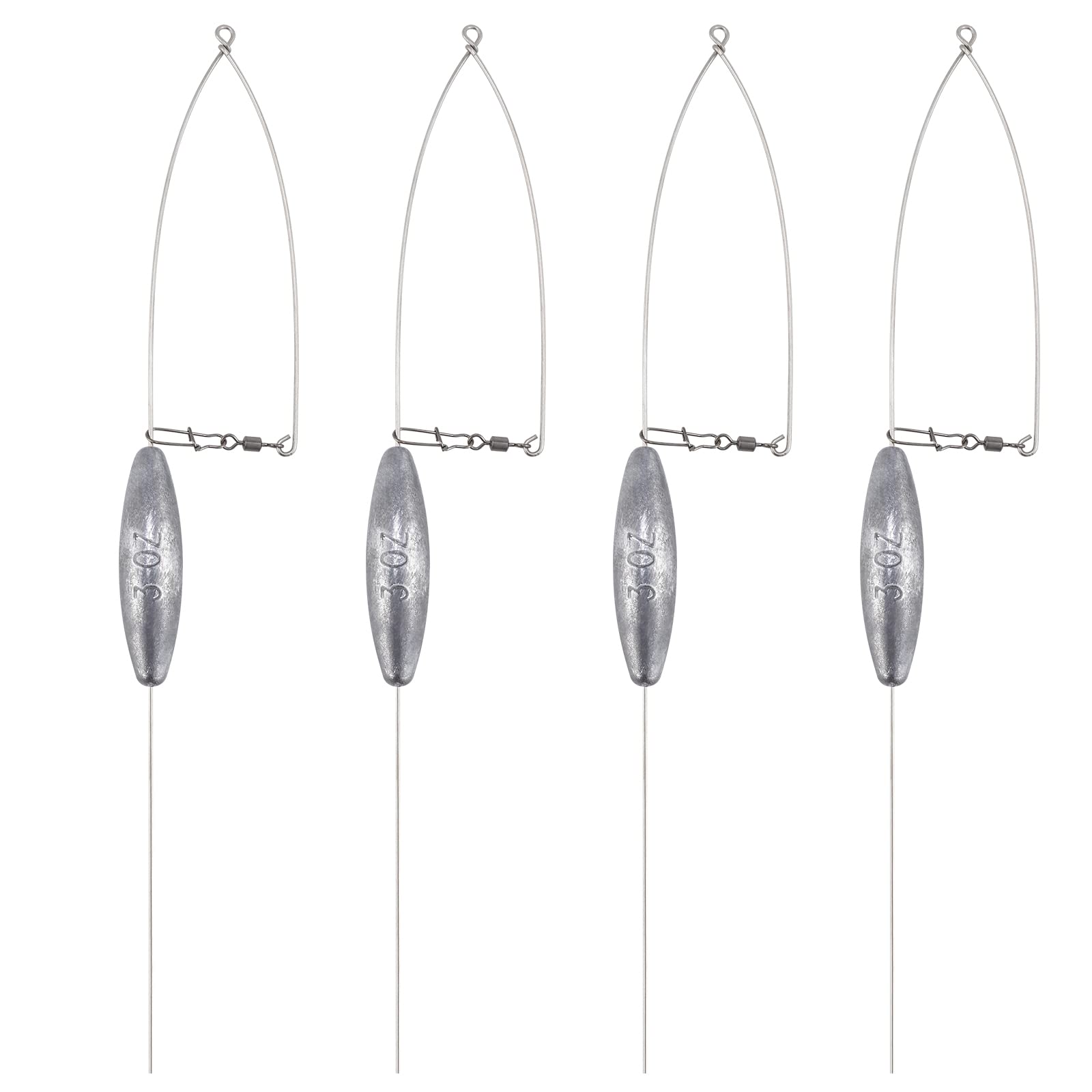
Of everything here, this is the pack we hand a new troller first. Dr.Fish sells these in five-sinker packs across a 1 to 8 ounce range, so you choose the weight your water calls for and get spares in that same size. The shape is a slender oval with a steel eyelet at each end — main line in one end, leader out the other — and that is the entire rig.

What we watch for in an inline sinker is drag. A fat weight fights the water and tows your bait off line at speed; this one is streamlined enough that the lure still swims. The steel eyelets carry that load all day, which is exactly the part that gives out first on cheaper sinkers.

Eight ounces is the ceiling, and it's an honest one. If you're chasing fish deep at speed you want the BLUEWING below; for the walleye, salmon, and trout depths most of us troll, the range is right.

What earns it the top spot is how little there is to go wrong. No clips to lose, no wire arm to bend, nothing to adjust over the side — tie it in and fish. A swivel ahead of it is still worth adding if your baits spin.

Pros

  • Five sinkers per pack in your chosen weight
  • Streamlined body keeps drag low at trolling speed
  • Steel eyelets at both ends carry the load
  • Covers 1 to 8 ounces across sizes

Cons

  • 8-ounce ceiling limits deep, fast trolling
Our verdict

We recommend the Dr.Fish inline pack to almost any troller: five sinkers in the size you pick, from 1 to 8 ounces, with steel eyelets and a body that doesn't drag your bait off line.

Check Latest Price
2

Best Downrigger Weight

Cannon 10 lb Downrigger Weight

92 /100
Angler Score Outstanding

Key details

Size
10 lb
Shape
Bullet with keel fin
Finish
Reflective prism tape
Coating
Black vinyl
Check Details on Amazon

The black vinyl coating is the first thing you notice on this ball, and it's the reason to buy one. Bare lead scuffs gelcoat and marks whatever it touches in the boat; this has a smooth skin over the lead plus a keel fin that keeps it tracking behind the boat instead of spinning on the cable.

We trust a finned ball on a downrigger cable more than a plain round one. Straight tracking is what keeps your cables from twisting and your depth reading honest, and the reflective prism tape down the sides gives you something to watch when the ball rises into view.

The trade-off is drag. That fin is surface area, and surface area is what blowback is made of, so a slender torpedo of the same weight runs deeper at the same speed. Fishing the top 40 feet at normal downrigger speed, it doesn't matter; fishing deep and fast, it does.

None of that matters without a downrigger, which is the real condition on this recommendation. Bolted to the boat, this ball is the obvious buy; without one, the same money buys a lot of inline weights and a clip or two.

Pros

  • Vinyl coating protects the boat and the ball
  • Keel fin tracks straight and resists cable twist
  • Reflective prism tape adds visibility
  • 10 pounds is a standard downrigger size

Cons

  • Premium price for a single weight
Our verdict

If a downrigger is already on your boat, this coated 10-pound ball is the one to hang on it: it tracks straight and protects the hull. Without a rigger, your money buys more elsewhere.

Check Latest Price
3

Best for Snaggy Cover

Catfish Sumo Slip Stick Weights

91 /100
Angler Score Outstanding

Key details

Size
2 oz
Shape
Curved stick
Length
10 inches
Pack Count
5 weights, 5 snaps
Check Details on Amazon

Ten inches of curved lead with a slick skin looks odd until you drag one through a stump field. The curve makes the weight roll up and over cover rather than wedge into it, and the smooth exterior slides past brush, rock, and trees instead of hanging on.

That's the entire case for it, and we think it's a strong one if you fish rivers, flats, or reservoir timber where a straight sinker costs you a rig on every pass. It's a dragging and drifting weight — bump it along behind the boat or let the current walk it — and it does that without constant retying.

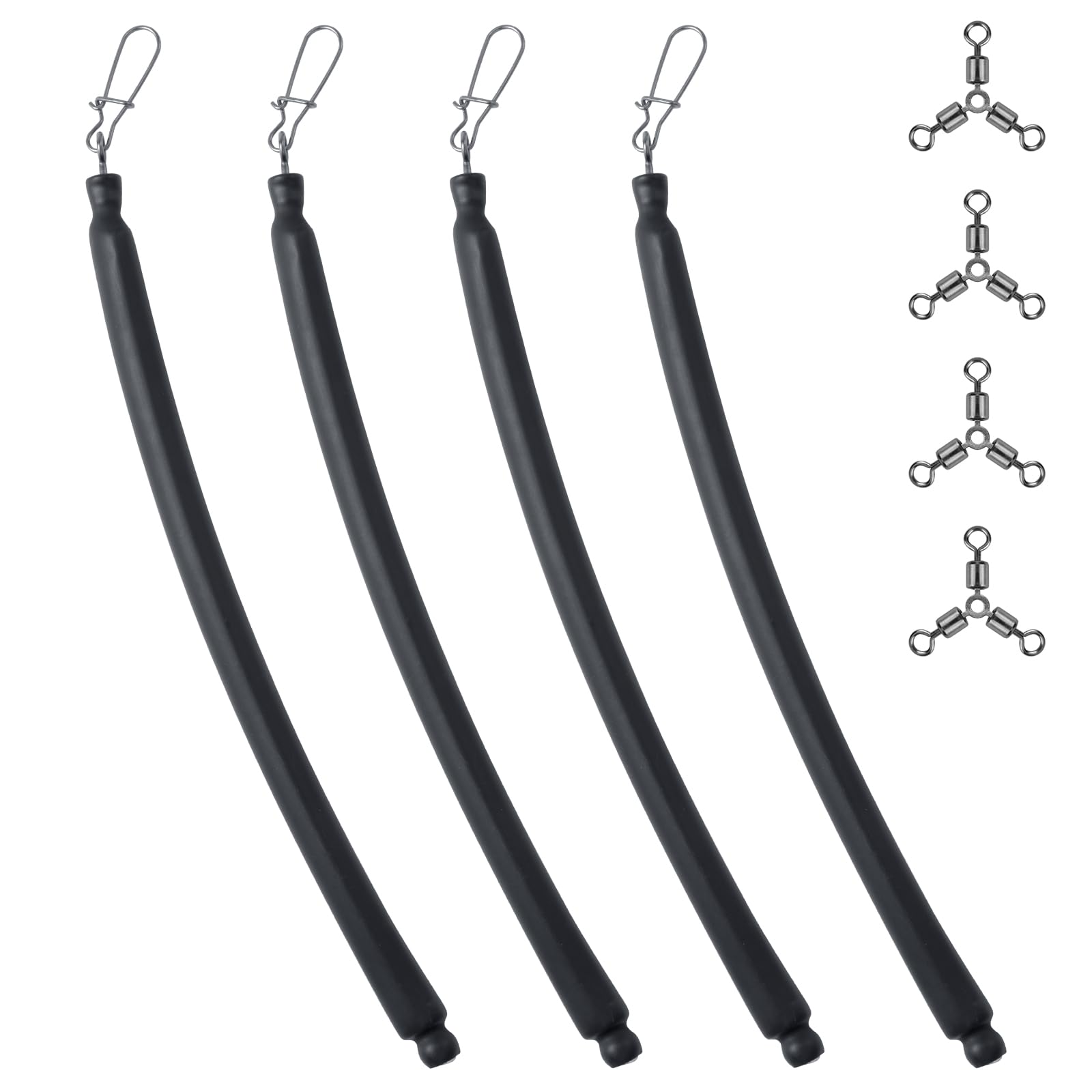
The five-pack arrives with removable snaps already on each weight. Clip them to a three-way swivel, or pull the snap and run the weight on a sinker slider. We like that the hardware shows up installed; the snap is also the single connection between your line and the lead, so it's the part to look at after a hard hang.

Two ounces is light, and that's the boundary worth knowing. This is built for slow presentations over shallow to mid-depth cover, not for pulling a bait down deep at trolling speed. The fish it's aimed at are the ones sitting in water you would otherwise skip.

Pros

  • Curved, slick body slides past stumps and rock
  • Removable snaps come already fitted
  • Five weights per pack softens snag losses
  • Ten-inch body is long enough to roll over cover

Cons

  • 2-ounce size suits slow dragging, not fast trolling
Our verdict

Our pick for rivers, flats, and timber: the curved body slides over cover instead of wedging into it, so you fish the snags rather than re-rigging them all afternoon.

Check Latest Price
4

Best for Deep Water

BLUEWING Torpedo Sinker

88 /100
Angler Score Excellent

Key details

Eyelets
Filed and polished
Pack Count
3 sinkers
Construction
Through-wire, double ring
Weight Options
2 oz to 48 oz
Check Details on Amazon

The Dr.Fish pack stops at 8 ounces. This one doesn't. BLUEWING lists torpedo sinkers from 2 ounces up to 48, so when you need real depth at real speed — deep water, heavy current, big baits — this is the inline weight we tie on.

The construction is what sells it. The wire runs through the body and rings out at both ends instead of stopping at a cast-in eyelet, so the pull is carried by wire rather than by the lead's grip on a loop. At 4 ounces and up, that's the difference between a weight that lasts seasons and one that leaves on a strike.

The eyelets and edges are filed and polished, and the finish is meant to cut abrasion on your line. We care about that more as the weight climbs, because a rough eyelet under heavy load will chew through a leader.

The heavy sizes are genuinely heavy. A 16- or 24-ounce torpedo wants a stout rod and heavier line to fish properly, and stepping up from a 2-ounce inline is a tackle change as much as a weight change.

Pros

  • Through-wire rings at both ends carry the load
  • Range runs from 2 to 48 ounces
  • Polished eyelets reduce line abrasion

Cons

  • No warranty coverage listed
  • Sold three to a pack in a single size
Our verdict

When 8 ounces won't get you there, the BLUEWING's through-wire torpedoes go to 48 and hold up under the load. Deep, fast trolling is what this one is for.

Check Latest Price
5

Best for High-Speed Trolling

Tackle Room 16 oz Trolling Weight

90 /100
Angler Score Outstanding

Key details

Size
16 oz
Rigging
36-inch thru-cable
Hardware
Ball-bearing snap swivel
Material
Reclaimed lead
Check Details on Amazon

If you're pulling lures at high speed for wahoo, the weight isn't a detail — it's the rig. This one arrives built: a 16-ounce bullet with a 36-inch cable running through it, crimps at both ends, and a ball-bearing snap swivel on top. Nothing to assemble at the dock.

The thru-cable is the point. Instead of an eyelet cast into the lead, the wire runs the length of the weight and takes the load at both ends, so a strike pulls on cable rather than on the lead's grip on a loop. The swivel up top keeps a spinning bait from twisting your line, which at trolling speed it will.

It's made from reclaimed lead and rigged in the USA, with the wire, crimps, and swivel already assembled and ready to clip onto the main line.

For the kind of trolling this is built for, we prefer one wired weight to five cast sinkers, because the failure point moves from an eyelet to a crimp — and a crimp you can look at. Check the wire, the crimps, and the snap before a trip, and go up a size if the wire feels light for the strike you're expecting.

Pros

  • 36-inch thru-cable takes the load off the lead
  • Ball-bearing snap swivel resists line twist
  • Comes pre-rigged and ready to clip on
  • 16 ounces holds depth at high speed

Cons

  • One weight per order, no spares
Our verdict

For high-speed offshore trolling we prefer this pre-rigged 16-ounce weight to any cast sinker: the thru-cable takes the load and the swivel fights twist.

Check Latest Price
6

Best Bottom Bouncer

Dr.Fish Bottom Bouncer

86 /100
Angler Score Excellent

Key details

Snap
Stainless steel
Frame
Stainless wire, brass swivel
Pack Count
4 bouncers
Weights Included
1/2 oz, 1 oz, 2 oz, 3 oz
Check Details on Amazon

A bottom bouncer isn't a weight you clip on and forget — it's a rig, and it only earns its keep when your bait is supposed to be down there ticking the bottom. This one is built the traditional way: lead on a stainless wire arm, a brass swivel at the bend, and a snap at the end for your leader.

Tie the main line to the center, run a leader off the snap, and the arm stands the weight up so the bait trails just above the rocks. The bottom of the frame ticks and stutters along, kicking the lure, and the shape lets the whole thing slide over rock and weed instead of burying in it. Dr.Fish rates it for 10 to 35 feet, which is the band where most walleye fishing happens anyway.

Four weights come in the pack — a half ounce, 1, 2, and 3 — and that spread is the best part. Drop to the light one over soft flats, step up when the wind builds or the fish sit deeper; the whole range arrives in one purchase.

Three ounces is the ceiling, though, and that's the limit worth naming: fast water or deeper than about 35 feet asks for more weight than this pack carries. The wire is also the part that takes the abuse, so check the bend after a hard hang.

Pros

  • Four weights from 1/2 to 3 ounces
  • Wire arm keeps the bait just off bottom
  • Brass swivel and stainless snap resist corrosion
  • Rated for 10 to 35 feet of trolling

Cons

  • 3-ounce maximum limits fast or deep water
Our verdict

Our bottom-bouncer pick for walleye and anything else that sits over rock: four weights, a wire arm that ticks bottom, and a bait that rides just above it.

Check Latest Price
7

River Drifting

kaleodam Dragging Weights

91 /100
Angler Score Outstanding

Key details

Size
2 oz
Rattle
Internal metal beads
Warranty
2 years
Pack Count
4 weights, snaps included
Check Details on Amazon

Rattles are the one thing these weights do that nothing else here does, and they're also the one thing we can't vouch for. Metal beads sit inside the body and knock together as the weight bounces along bottom, which is meant to call catfish in. Whether it does is a debate anglers have been having for years.

What isn't in doubt is the shape. The curved, slick body slides past brush, rock, and stumps, and the removable snaps come already fitted, so you can clip to a three-way swivel or strip the snap off for a sinker slider. Four to a pack, and each one behaves the way a dragging weight should.

Where these earn their place is drifting. The curve keeps the weight moving over cover instead of stalling in it, the snaps make rig changes quick, and losing one to a stump doesn't end the day. A two-year warranty backs them, which is more than most terminal tackle comes with.

The catch is size. This version is 2 ounces, so it's for slow drifting and dragging rather than fast trolling or deep water. If you want one pack that covers a range of depths, the Catfish Sumo or the Dr.Fish inline pack gives you more room to move.

Pros

  • Four weights with snaps already attached
  • Curved body slips over snags
  • Internal beads rattle along the bottom
  • Two-year warranty

Cons

  • 2-ounce size is for slow presentations only
Our verdict

A solid drifting pick: four curved weights with snaps already on and rattles inside, at a price that makes losing one to a stump a lot easier to take.

Check Latest Price
8

Adding Weight Mid-Line

Bimini Pro Snap Weights

86 /100
Angler Score Excellent

Key details

Length
1 7/8 inch
Hardware
Split rings installed
Clip Count
10 clips
Line Capacity
Up to 8 oz of weight
Check Details on Amazon

If you already own a drawer of weights and want them in a trolling spread without buying another set of sinkers, a snap-weight clip is the flexible way to do it. These are the clips: ten red pads with split rings already installed, each rated to hold up to 8 ounces of weight against the line.

The idea is simple enough. Pinch the line into the pad, clip on your weight, and let it run down toward the lure; the clip lets go under tension so a hooked fish isn't dragging the hardware around. In practice the grip and the release are the entire product, and everything else is packaging.

Ten to a pack covers several rods plus spares, and the split rings save you a step when you're rigging before daylight. The clip is built to shrug off corrosion, which matters if these live in a boat locker between trips.

We rate the grip above the release. Set one on your line, pull hard, and watch whether the pad creeps before you trust it with a bait — ten seconds of that tells you more than any spec sheet. It's also the priciest hardware here, which only makes sense if you'll actually use the flexibility of clipping weight on and off mid-line.

Pros

  • Holds up to 8 ounces of clipped-on weight
  • Ten clips per pack with split rings fitted
  • Corrosion-resistant clip for boat storage

Cons

  • Clips only
Our verdict

Worth it if you want to add weight mid-line without buying more sinkers: ten clips that hold up to 8 ounces and let go when you're fighting a fish.

Check Latest Price

How We Tested Trolling Weights, From Planer Boards to River Channels

Testing started with a spreadsheet and a lot of reading. We pulled every trolling weight we could find with enough size increments to be useful — inline torpedo sinkers, through-wire bullet weights, snap weights with clip pads, downrigger balls, bottom bouncers, and flexible no-snag dragging sticks — then cut anything that jumped more than a couple of ounces between sizes, cost conspicuously more per ounce than the field, or had hardware we couldn't trust. That left 14 weights, which we fished from early spring through early fall, six months total.

It isn't a lab test, because trolling isn't a lab. Most mornings we ran lake flats behind planer boards at 1.5 to 2.2 mph and watched which weights trailed straight back and which swung out to the side. Other days we dragged river channels in current, ticking bottom over rock and gravel with three-way rigs and counting how often each weight hung up. Every sinker went on a kitchen scale the day it arrived and again midseason to check the stated weight, and we noted how far off our depth math ended up when a size was wrong.

We clicked line in and out of every snap pad 50 times in a single morning, looking for flat spots, creep, and false releases. Fingernails ran around through-wire loops for gaps and burrs, and each swivel was roll-tested under load to be sure it turned instead of binding. After every trip we checked how the finish was holding up, since chipped paint is the first thing that becomes a rusty weight in the bottom of a tackle box. Anything that starts slipping pads or seizing swivels in season two will come off this list.

How to Choose Trolling Weights

Match Weight to Speed Before Anything Else

A trolling weight doesn't drop straight down and stay there. As speed builds, the line, the weight, and the lure all push water, and the whole rig planes upward behind the boat. That's why the sinker that scrapes bottom at an idle can run well above the fish once you open the throttle.

If you can't reach the zone, cut speed first, then line diameter, then add weight. Stepping up a size loads the rod and drags harder through the water, so it's better to buy the weight that suits the speed you actually like to run. The Dr.Fish inline pack covers the band most walleye and salmon trolling lives in; the BLUEWING goes far heavier for the days when nothing else will do.

Pick the Attachment Style Before the Size

Inline sinkers thread into the line and take a minute to change. Snap weights clip on and off mid-line so you can adjust depth without re-rigging. Bottom bouncers hold a bait within inches of the bottom at slow speed. Downrigger balls hang on a cable and give the most precise depth control of all — if the rigger is already on the boat.

Choose by how you fish rather than by what weighs most. Here's the trap: a snap weight is a clip, not a weight, so budget for the lead separately. Buy clips when you already own sinkers and want flexibility; buy inline weights when you want one simple connection and nothing to lose over the side.

Swivels and Wire Decide How Long It Lasts

Trolled baits spin, and a spinning bait turns a sinker into a line-twisting machine. A swivel at one end fixes most of it; swivels at both ends are better. The other thing to look at is how the line attaches: a loop cast or bent into the top of the weight is fine for light duty, while wire that runs through the body and rings out at both ends carries heavy loads properly.

If your sinker has no swivel, add a small ball-bearing one above it. On anything over a few ounces, favor through-wire construction — a pulled eyelet costs you the weight and the fish in the same moment.

Buy in Packs and Expect to Lose Some

Any weight you drag through rock, timber, or oyster shell will eventually stay there. That's the argument for packs of four or five rather than singles: the second weight costs far less than the lost rig and the retie. Open-water trolling is gentler, and one good heavy weight can last seasons.

Finish matters too. Vinyl coating on a heavy ball protects gelcoat and lockers, and a coated weight means less bare lead against your hands. Wash up after rigging regardless, and check your local rules if you fish waters with lead restrictions.

Frequently Asked Questions

Final Verdict

Start with the Dr.Fish inline sinkers. You get five in the weight you choose, steel eyelets at both ends, a body that doesn't tow your bait sideways, and a range from 1 to 8 ounces that covers the depths most trolling actually happens in. It's the least complicated way to be in the strike zone.

If a downrigger is bolted to your boat, the Cannon 10-pound ball tracks straighter and protects the hull better than anything else here. If 8 ounces isn't enough for the water you fish, the BLUEWING goes as heavy as you need. Buy for the water you actually fish, not for the heaviest thing on the shelf.