Best Fishing Zingers of 2026

Every piece of gear on a fishing vest is one clumsy reach away from the bottom of the river. A zinger is the small, unglamorous retractable tether that stands between your forceps and a watery grave: pin it to a D-ring, pull out your nippers, let go, and the cord draws them home. The catch is that a bad one doesn't fail on day one. It fails in week six, mid-drift, with your clippers somewhere downstream and your hand still reaching for them.

Over the past four months, my team and I have clipped 16 zingers to vests, hip packs, and belt loops to find the ones that actually hold. The lesson that surprised me most is that harder retraction isn't better — too much spring tension yanks a tool out of your hand at the worst moment and wears the cord faster. What you want is an even pull, a sturdy attachment point, a housing that survives being knelt on, and a tool that sits exactly where your hand expects it without a glance. The picks below cover the full range, from a plain multi-pack to a saltwater-friendly swivel model.

1

Best Overall

HOOK-EZE Zinger 3-Pack

89 /100
Angler Score Excellent

Key details

Attachment
Detachable carabiner
Cord Length
22 in
Cord Strength
14.6 lb
Retraction Force
2.6 oz
Check Details on Amazon

Spring rate is the whole argument for a zinger, and 2.6 ounces is the number that makes the HOOK-EZE pack our default for a vest. That is enough pull to bring nippers, forceps, or a floatant bottle back to your chest every time, without so much tension that the cord snaps out of your fingers. Three arrive in one pack, which settles the other question: which tool gets one.

The cord is 22 inches of polyester rated to 6.6 kg of breaking strength, and the gap between those two figures tells you what to expect in use. The tether is not the part that gives out under a normal load; the spring is the limit. Small tools — nippers, hemostats, a bottle of floatant, a line clipper — sit comfortably inside it, and that is most of what actually hangs off a fishing vest.

We paid close attention to the hardware at each end, because that is where budget zingers usually cut corners. The top is a stainless clip that is meant to survive saltwater, and the detachable carabiner means you can move one of the three from vest to backpack to belt loop without unthreading anything. The case is plastic, the split ring is copper, and the whole thing reads as gear rather than a giveaway.

Against the single retractors below, this is the plainer object — a clip where the Fishpond has a pin mount, plastic where it has aluminum — and refinement is not what a vest full of tools needs. Rig all three and you stop rationing: the nippers, the forceps, and the floatant each get their own line back to your chest.

Pros

  • Holds nippers, forceps, and floatant without sagging
  • Detachable carabiner moves between vest and pack
  • Stainless clip and spring for saltwater
  • Three per pack rigs a whole vest

Cons

  • Less reach than the Booms and SAMSFX tethers
Our verdict

This is the pack we recommend to most anglers: a spring rate that suits vest-sized tools, saltwater-safe hardware, and three tethers for less than one premium retractor.

Check Latest Price
2

Best for Long Reach

Booms Fishing RG1 3-Pack

91 /100
Angler Score Outstanding

Key details

Spring
Coated stainless steel
Cord Length
28 in
Cord Material
Nylon
Retraction Force
2.6 oz
Check Details on Amazon

Twenty-eight inches is the longest cord on any retractor here, and reach is the reason the Booms RG1 earns a place. Clip it high on a vest and the extra six inches over a 22-inch tether lets you pull a nipper out of a hip pocket or bring forceps across a boat seat without shifting your feet. If you have ever unclipped something to reach where you actually needed it, that is the difference you are buying.

The spring is rated at 2.6 ounces, the same as our top pick, and that is where the longer cord costs you. There is simply more line for the reel to take back, and with a heavier tool on the end — full-size pliers, a big hemostat — the cord can pay out faster than the spring recovers it. Keep the RG1 on light gear and it behaves; load it with something that has mass and you will be pulling line back by hand.

Build is honest: a coated stainless spring for corrosion resistance, a copper split ring, and a plastic case with a smooth epoxy logo. Three in the pack covers a vest, a boat bag, and a wading jacket, which is more useful than one nicer retractor if you fish from more than one platform.

Pros

  • 28-inch cord reaches deep pockets and boat seats
  • Same 2.6-ounce pull as the top pick
  • Coated stainless spring resists corrosion
  • Three per pack for multi-boat anglers

Cons

  • Chunky plastic case crowds a loaded vest
Our verdict

Buy the RG1 for reach: 28 inches of cord gets a tool out of a deep pocket, as long as you keep it on nippers, floatant, and small forceps rather than pliers.

Check Latest Price
3

Best for a Single Tool

Fishpond Swivel Retractor

90 /100
Angler Score Outstanding

Key details

Body
Anodized aluminum
Mount
Push-button pin
Swivel
360 degrees
Retractor Coil
UV-protected polyurethane
Check Details on Amazon

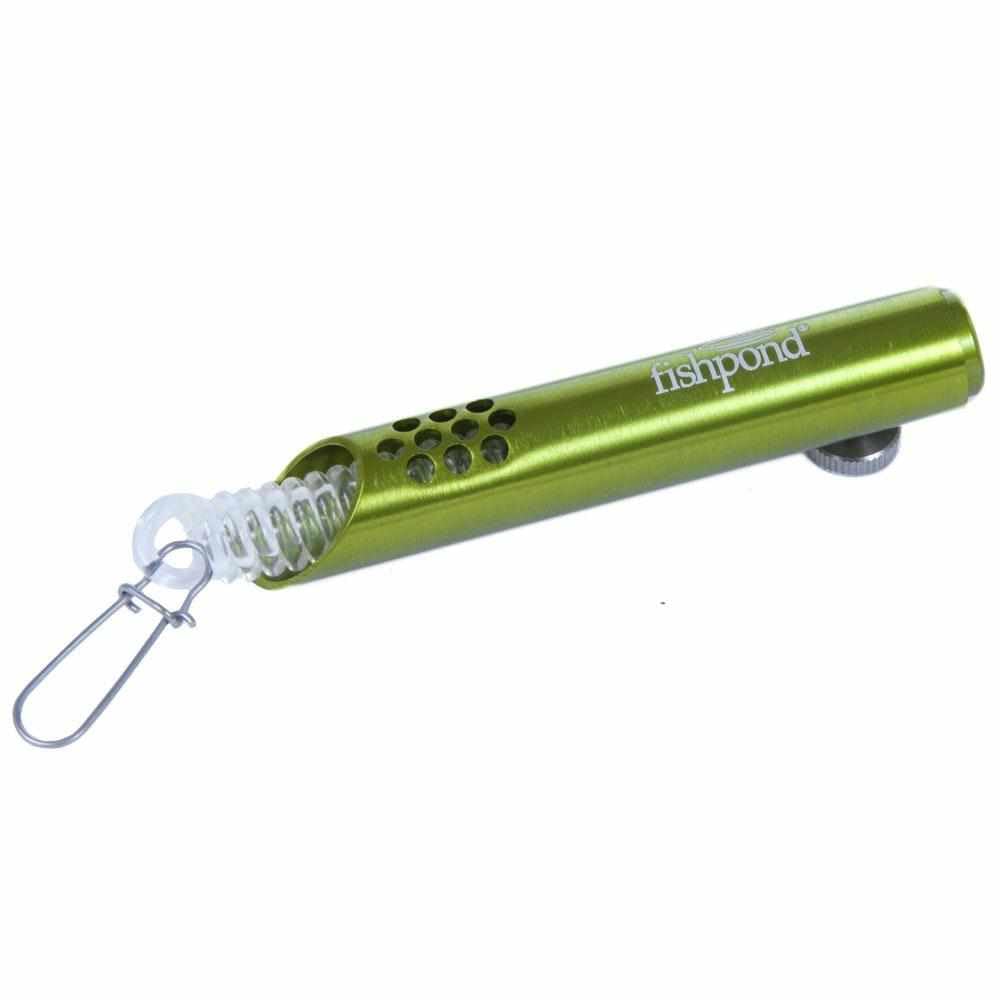
The Fishpond does not clip on, it pins on. A push-button pin mount fixes it to a vest or a bag, and the body swivels a full 360 degrees so the tool turns with you instead of winding the cord into a spiral. On a tool you reach for every few minutes — forceps, clippers, a hook file — that swivel is the difference between a tether that hangs flat and one that kinks itself into knots.

This is the one here that feels like a piece of gear rather than an accessory. The body is anodized aluminum, the retractor coil is UV-protected polyurethane, and the finish is non-glare so it does not flash in the sun. We think it is worth the premium when you are buying one tether for one tool and want the thing on your vest to be the nicest thing on it.

It does commit you, though. A pin mount lives on one garment, so moving it between vest and pack is a two-handed job rather than a one-second clip, and there is no published pull rating to check against a heavy tool — go by the weight of what you plan to hang. What it will not do is rig a vest: three of these cost more than any pack in this guide, and one is usually enough.

Pros

  • 360-degree swivel keeps the tool from twisting
  • Anodized aluminum body with a non-glare finish
  • Pin mount holds firm on one garment

Cons

  • One retractor at a premium price
Our verdict

We think it is worth the premium if one tool lives in your hand all day: the swivel mount keeps the cord flat and the aluminum body feels like gear.

Check Latest Price
4

Best Compact Pick

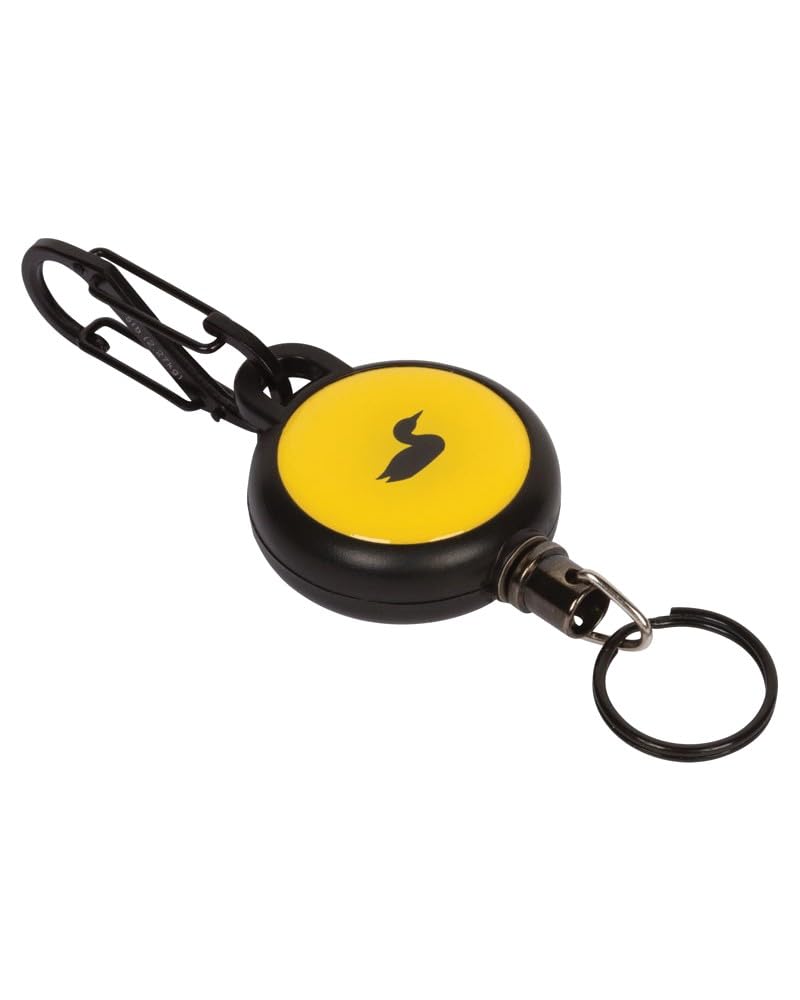
Loon Rogue Zinger

87 /100
Angler Score Excellent

Key details

Weight
0.8 oz
Attachment
Nite Ize S-Biner
Cord Length
22 in
Cord Material
Steel cable
Check Details on Amazon

Cable instead of cord is the reason the Loon Rogue made this list. Twenty-two inches of steel cable does not fray where it leaves the case, does not soak up salt water the way a woven tether can, and does not mind a hook point riding next to it in a pocket. For saltwater, or for anyone who has watched a nylon tether go fuzzy over a season, that is the detail that decides it.

Attachment is a Nite Ize S-Biner, which is a better answer than a plain split ring: it opens with one hand, goes over a D-ring or a pack strap, and comes off just as fast when you want to move it. At 22.68 grams the whole thing disappears on a vest, and the compact body sits flat against your chest instead of swinging out of the way of your hands.

Twenty-two inches is on the short side for digging something out of a pack, so treat this as a chest-tool tether rather than a boat-bag one. What you are paying for is the cable, the S-Biner, and a body with nothing to untangle — and on a salt flat, that is money well spent.

Pros

  • Steel cable shrugs off abrasion and hook points
  • Nite Ize S-Biner clips on one-handed
  • Compact and light on a vest

Cons

  • Sold singly, so a full vest costs more
Our verdict

This is the tether we want on a salt flat or around bare hooks, where a steel cable and a one-hand S-Biner matter more than cord length or pack value.

Check Latest Price
5

Nippers and Floatant

SAMSFX Carabiner Zinger 3-Pack

89 /100
Angler Score Excellent

Key details

Tool Clip
360-degree rotating
Case Finish
Gun-black
Cord Length
24 in
Retraction Force
1.5 oz
Check Details on Amazon

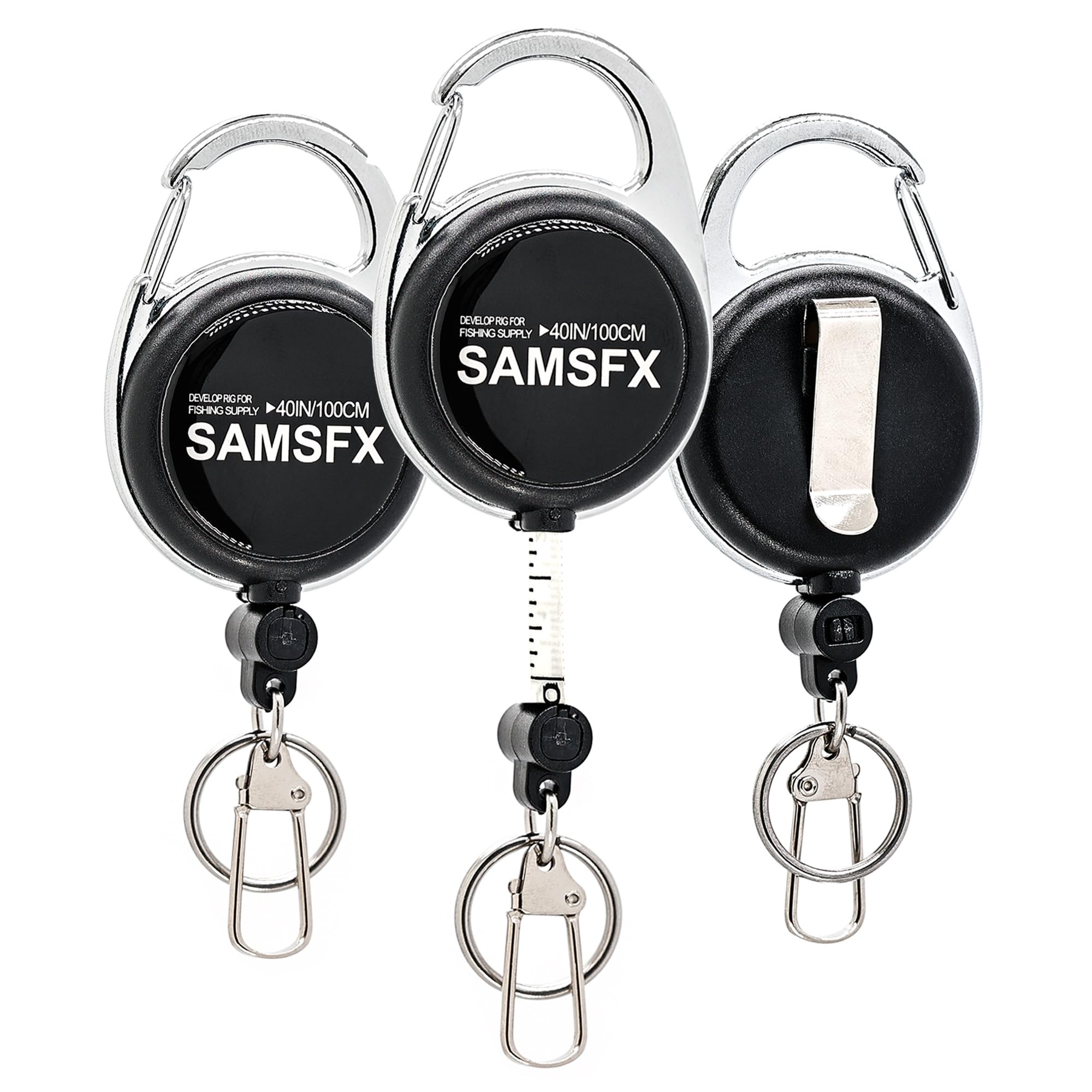
Rigging a kayak or a first vest is where a pack like this earns its keep. Three carabiner-style zingers arrive together, each with a wide-opening hook that goes over a strap, a D-ring, or a belt loop without threading anything on, and each with 24 inches of nylon tether.

The clip at the tool end rotates a full 360 degrees, which is the detail we appreciate most: a nipper hanging from it spins free instead of winding the cord into a spiral every time you let go. The case has a gun-black finish and a two-sided epoxy logo, and it looks like more money than it costs.

What holds these back is the spring. At 1.5 ounces it is the lightest pull in this guide, and light means nippers, floatant, and scissors — not pliers, and not a water bottle. Buy them for the small stuff and they will do the job three times over; hand them something with real mass and the cord can pay out and stay out.

Pros

  • Rotating tool clip stops the cord winding up
  • Carabiner hooks open wide over straps
  • Three in the pack for a first vest

Cons

  • Nylon tether rather than steel cable
Our verdict

A sensible first pack for a kayak or a new vest: three quick-clipping zingers with rotating tool clips, as long as you only hang light gear from them.

Check Latest Price
6

Measuring Fish

SAMSFX Zinger with 40-Inch Ruler

84 /100
Angler Score Excellent

Key details

Mount
Belt clip and split ring
Body Size
10 x 4.0 cm / 3.9 x 1.6 in
Ruler Length
40 in
Retraction Force
1.5 oz
Check Details on Amazon

A 40-inch ruler built into the body is the reason this one exists. Pull the tape, lay it along a fish, and you know whether it clears the slot before you go looking for a board or a phone; let it go and it winds back into the case. For catch-and-release water with a size limit, that is a genuinely useful thing to have hanging off a vest.

The rest of it is sensible: a compact body, a belt clip on the back, and a stainless split ring with a plated copper buckle, so it can ride on a vest, a pack, or a belt. The tape is dual-scale, which saves you converting in your head while a fish is flipping in the net.

Our take is that this is a specialist, and a good one. It does two jobs, and it does the measuring job better than the tethering one, which is fine if measuring is what brings you to it. If the tool you keep dropping is a pair of pliers, look at the packs above instead.

Pros

  • Built-in 40-inch tape measures fish fast
  • Belt clip and split ring for vest or pack
  • Compact body on a crowded vest

Cons

  • Ruler tape can tear with hard use
  • 1.5-ounce pull is for light tools only
Our verdict

We think it earns a place on slot-limit water: the 40-inch tape is the point, and the retraction is fine for nippers and floatant.

Check Latest Price

How We Tested the Best Fishing Zingers

We started by gathering every zinger sold as a standalone unit or in a multi-pack and comparing the things that actually separate them: retraction force, cord length, what the attachment end really is — pin, carabiner, or split ring — and housing material. Reviews that mentioned cords fraying within a month or clips bending open carried a lot of weight, and anything with a pattern of those complaints got cut. That left 16 zingers, which we bought at retail and used for four months.

They lived on wader straps, vest D-rings, and hip-pack webbing through small trout streams, a few windy days on a boat, and a handful of off-water weeks clipped to a garage shelf. We counted pulls on a normal outing — a busy morning is easily 60 — and after every trip we bent the cord sideways at the exit port looking for fraying, felt whether the retraction had gone soft or grabby, and yanked the clip to confirm it still held a D-ring.

Sturdiness got its own round of abuse: we hung the heaviest tool we'd realistically carry from each one, dropped them on gravel, and left a couple clipped to a deck rail through three weeks of sun and rain. We also pulled each cord against a small luggage scale and timed how fast it reeled back, since a zinger that snaps back too hard is as irritating as one that never returns. Value came down to cost per usable unit in a pack, and ease of use to whether we could work it one-handed with cold, wet fingers.

How to Choose a Fishing Zinger

Match the Pull Rating to the Tool

Retraction force is the pull a zinger's spring puts on whatever hangs from it, and in this group it runs from 1.5 ounces to 2.6 ounces. Nippers, forceps, floatant, and a line clipper sit comfortably inside that range. A full-size pair of fishing pliers does not, and that mismatch is where most disappointment starts: the tool wins the argument and the cord pays out instead of reeling back.

Not every retractor publishes a rating, so heft the tool in your hand before you commit and be honest about which end of the range it sits on. When two zingers look otherwise equal, take the stronger spring.

Cord, Cable, and Salt

A tether spends its life in a pocket next to hook points and forceps, so material matters as much as length. Nylon and polyester cord is soft, quiet, and slightly stretchy, which feels good to pull but leaves it open to fraying where it leaves the case. Steel cable, as on the Loon Rogue, ignores that abrasion and doesn't hold salt water in a weave.

Whichever you pick, look for a stainless spring and a stainless or plated clip. Those are the parts that seize first after a saltwater trip, and the case hides them until they do.

Clips, Split Rings, and Pin Mounts

How a zinger attaches decides how you will use it. A split ring or snap hook at the top lets you move one from vest to pack to belt loop in a second, which is the practical argument for the three-packs. A push-button pin mount, like the one on the Fishpond, fixes to a single garment and swivels, so the tool turns instead of twisting the cord.

The pin mount suits one tool you reach for constantly; the clip suits an angler who swaps gear between bags. At the tool end, hang from a split ring rather than knotting the cord, so the tether leaves the case straight.

How Many Tethers You Actually Need

Three-packs look like the obvious buy, and mostly they are: nippers, forceps, and a floatant bottle each want their own line, and a spare costs very little. The catch is clutter. Every zinger adds a case and a hook to a strap that already carries a pin mount and a tool holder, and the one that gets in the way is the one that stays in the truck.

If you carry a single tool, one compact retractor is the smarter buy. If you are rigging a vest from scratch, buy the pack and put the spare on a wading jacket.

Frequently Asked Questions

Final Verdict

Start with the HOOK-EZE three-pack. It is the best balance in this group of spring rate, saltwater-ready hardware, and price, and three tethers is roughly what a vest actually needs. Spend more on the Fishpond Swivel Retractor only when you want one beautifully made tether for a single tool you reach for constantly and can live with a fixed pin mount.

If a steel cable or a built-in ruler solves a specific problem on your water, the Loon Rogue and the SAMSFX ruler version are the ones to look at.