Best Fly Tying Chenille of 2026

Chenille is short fibers trapped in a twisted core, and that core has one job: carry them into the water. Those fibers are what pulse and breathe on a woolly bugger or a streamer, and their length, the tightness of the twist, and the amount of flash mixed in decide whether a fly swims or just slides. The right pack hands you that control; the wrong one takes it back somewhere around the third wrap, when the body goes bald and the collar collapses.

I've got a drawer of regretted chenille — packs that dusted the bench with fuzz, or tied up a shade duller than the listing photo — and I suspect most tyers do. My team and I tied with 18 packs over about four months to find the ones that don't do that, and the split came down to usable yards per dollar rather than sticker price. Color range matters more than you'd expect, too: a kit that covers buggers through mop flies saves a whole season of one-off orders. The picks below are the ones that stayed on my bench.

1

Best Overall

Tigofly Rayon Chenille 10-Pack

83 /100
Angler Score Excellent

Key details

Type
Rayon
Colors
10
Length Per Card
5 m (5.5 yards)
Strand Diameter
3/16 inch (4.8 mm)
Check Details on Amazon

Three-sixteenths of an inch — about 4.8 mm — is the chenille size that does most of the work on a tying bench. It is thick enough to build a woolly bugger body in a couple of turns and thin enough not to swallow the hook gap on a size 8, which is why most bugger and streamer patterns are built around it. The Tigofly cards sit right at that size.

That is why this is the set we recommend first, and the color list matters as much as the diameter. Ten cards at 5 meters each — olive, black, brown, ginger, red, purple, flo-green, gold, white, pink — and every one of them is a shade that turns up in buggers, leeches, streamers, and jig collars. There is no filler in the set, which is rare in a multi-color pack.

What you trade for that spread is length per color. Five meters is a working supply, not a lifetime one: a season of buggers will empty the olive and black long before you touch the purple, so plan on a spare card of each when you restock. We mind that far less than we mind a fat spool of a color we never wrap.

The boundary is hook size. Below about a size 14 this strand is too much material, and if a pattern depends on sparkle you want the tinsel card instead. From size 8 buggers up through jig collars, this is the one we keep reaching for.

Pros

  • True 4.8 mm strand builds a bugger body fast
  • Ten colors that match actual patterns
  • 55 total yards across the ten cards
  • Rayon wraps tight and holds a rib

Cons

  • Standard rayon only, with no flash or UV
Our verdict

Our default pick: a 4.8 mm rayon strand in ten colors that match real patterns, so buggers, leeches, and jig collars come out the size you intended.

Check Latest Price
2

Best Budget

BBTO 12-Piece Chenille Set

81 /100
Angler Score Excellent

Key details

Size
Medium
Pieces
12
Total Length
65.64 yards
Length Per Piece
5 meters/ 5.47 yards
Check Details on Amazon

Sixty-five yards of chenille across twelve cards is a lot of body material for the money, and that is the entire case for the BBTO set. It is the cheapest way here to fill a chenille drawer with usable colors, and the medium strand is soft in the hand, wraps without fighting back, and holds together on the hook instead of shredding into loose fiber.

The palette is practical rather than exciting: black, white, brown, green, red, yellow, orange, blue, gray, and pink across the twelve cards. Nothing exotic, and nothing you will stare at wondering what to tie with it. For practice flies, jig collars, and the two or three colors you burn through in a month, that is exactly right.

Where it is thinner than the specialist cards is in character rather than diameter: no flash, no UV mottle, no long mop fibers, just plain honest chenille that wraps a clean body. That is the right trade for a drawer you are stocking from scratch, and it is why we hand this set to people who have not yet decided what they like to tie.

Pros

  • 65.64 yards across twelve colors
  • Soft, thick strand that resists breaking
  • Lowest-cost way here to fill a drawer

Cons

  • Diameter described only as medium
Our verdict

The volume buy: twelve workable colors and 65 yards for the least money here, with a medium strand that suits most buggers and jigs.

Check Latest Price
3

Best Crystal Flash Variety

Tigofly Tinsel Chenille 24-Card

82 /100
Angler Score Excellent

Key details

Width
7 mm (9/32 inch)
Colors
24
Total Length
240 meters
Length Per Card
10 meters (11 yards)
Check Details on Amazon

Twenty-four cards, ten meters apiece — 240 meters of tinsel chenille in twenty-four colors, which is more flash than most tiers get through in several seasons. Each strand measures about 7 mm across, roughly 9/32 inch, so one wrap covers a surprising amount of hook shank.

What that width buys is speed. A sparkling streamer body or a flash-ribbed bugger goes on in two wraps, and the mylar core picks up light in off-color water where plain rayon goes flat. What it does not buy is fuzz: tinsel chenille is as much flash as fiber, so a body built only from this reads thin and sparse. Wrap a standard chenille base first and run a strand of this over the top for the glint.

Used that way, twenty-four colors in one order is the real argument — you can match a streamer to the light without buying a dozen separate cards. We keep it beside the standard chenille rather than instead of it, and it earns its place through the fall when the water colors up. If you tie nothing but matte buggers you do not need this card; if anything in your box carries flash, it saves you an order.

Pros

  • 24 colors and 240 meters in one order
  • 7 mm width covers shank in one or two wraps
  • Mylar flash shows up in stained water

Cons

  • Strands run thin next to standard chenille
Our verdict

Twenty-four colors and 240 meters of flash for streamer and jig boxes, provided you wrap it over a standard chenille base.

Check Latest Price
4

Best Mop Chenille

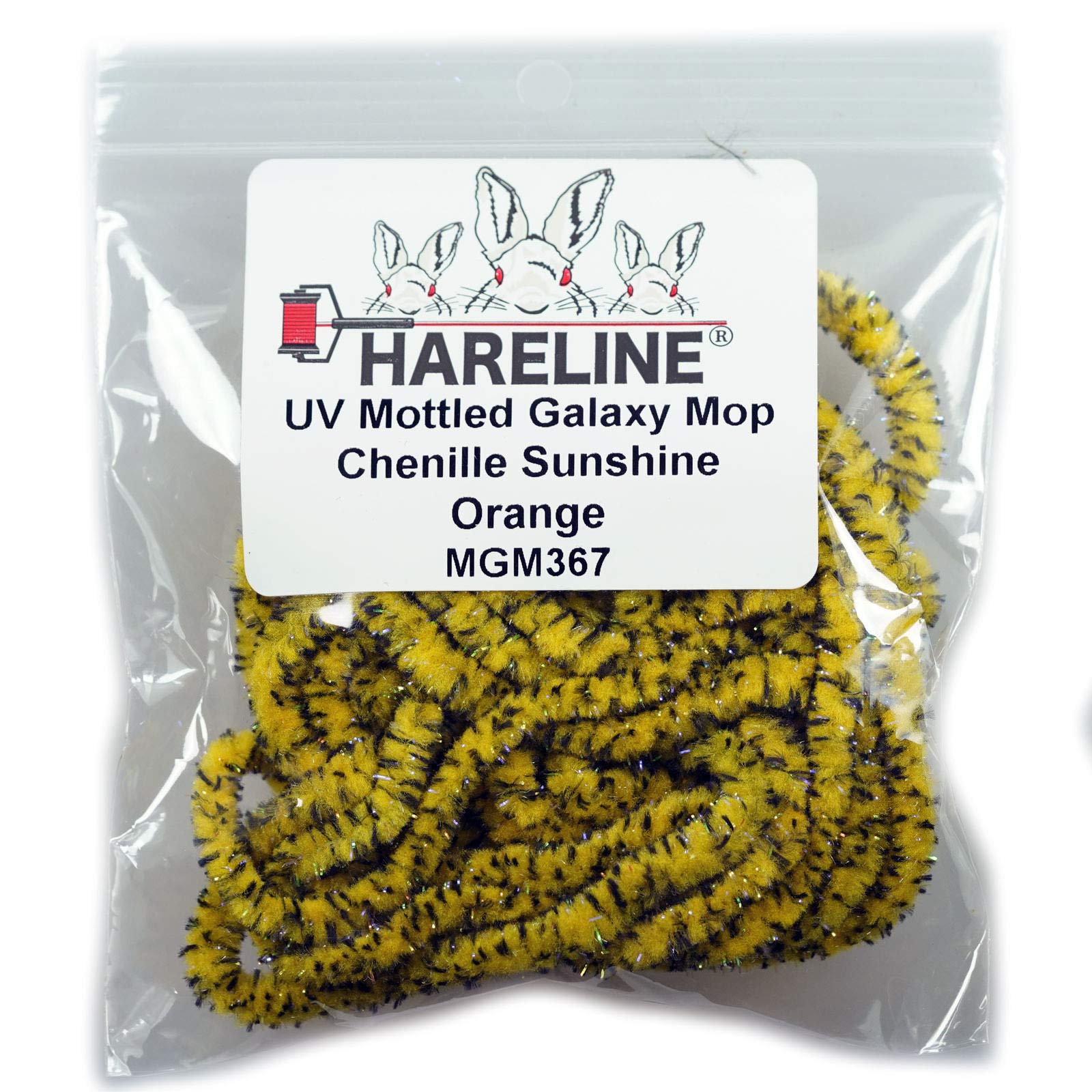
Hareline UV Mottled Galaxy Mop Chenille

91 /100
Angler Score Outstanding

Key details

Color
Sunshine Orange
Fiber
UV mottled mop
Length
4 yards
Check Details on Amazon

Mop chenille does something the standard strands cannot: its long, loose fibers keep moving in the water long after the wrap stops. Hareline's card is four yards of mottled, UV-enhanced fiber in Sunshine Orange, and it is the pick we reach for when a pattern needs movement instead of a smooth silhouette — mop flies first, but also oversized attractor streamers.

Four yards sounds short next to a 55-meter set until you count what a mop fly uses. These patterns eat a stub of fiber rather than a wrapped body, so a single card ties a lot of flies, and the mottled orange has a depth that a flat dyed shade does not. That mottling is the whole reason to pay for this card instead of raiding a multi-color set.

The limits are built in: one color, one card, four yards, and no way to buy it as part of a palette. That is fine if mop flies are already in your box, and it is the wrong place to start if they are not — a single orange card is a specific tool, not a foundation. Where it earns its keep is the stretch of season when the fly has to breathe and nothing in the standard drawer will do it.

Pros

  • Long loose fibers give real underwater movement
  • UV-enhanced mottled orange reads bright
  • Four yards covers plenty of mop flies

Cons

  • One card in a single color
Our verdict

One card of mottled, UV-bright orange for mop flies and big attractors — the material to buy when a pattern needs movement, not a smooth body.

Check Latest Price
5

Best Starter Kit

LURELINK 16-Color Chenille Kit

78 /100
Angler Score Very Good

Key details

Colors
16
Pieces
16
Material
Polyester
Check Details on Amazon

If the chenille drawer is empty, sixteen colors in a single order beats guessing at three cards. The LURELINK set covers the standard palette plus the brights in polyester chenille, and it is aimed squarely at the tier who is still building a bench — the set that arrives before anyone knows what they like to tie.

Polyester is a sensible fiber for that job: it takes dye evenly, keeps its color, and wraps with enough grip to stay where you put it. The strand runs thick, noticeably thicker than the Tigofly rayon, which is a feature on a size 6 streamer and a nuisance on a size 16 nymph.

That thickness is the honest limitation of the set. If your patterns run small this will frustrate you; if they are buggers, leeches, and jig collars, the bulk is exactly what you want. A few of the sixteen shades will also sit untouched, since the brights earn their place on jig collars more than on trout streamers.

What tips it for a beginner is the forgiveness: a fat strand stays where you wrap it and unwinds cleanly if you change your mind, which matters more in the first month than a millimeter of precision. Once your patterns get small, this set becomes the jig-and-bugger supply and a finer card takes over the nymphs.

Pros

  • Sixteen colors in a single order
  • Polyester holds dye and wraps with grip
  • Thick strand is forgiving to wrap

Cons

  • Thicker strand than small nymph patterns want
  • Costs more than the 12-color sets here
Our verdict

Sixteen colors in one order make this the quickest way to fill an empty chenille drawer, with a thick strand that suits big flies and beginner hands.

Check Latest Price
6

Black Bugger Bodies

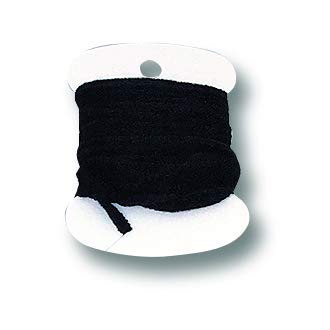
Creative Angler Black Rayon Chenille

83 /100
Angler Score Excellent

Key details

Size
Medium
Color
Black
Length
2 yards
Material
Rayon
Check Details on Amazon

Black is the color a chenille drawer empties first. It is the body on most buggers, the collar on a leech, and the shade that makes a flash strand look brighter than it is, which is why a dedicated card of it saves you picking through a set every time you sit down to tie.

Creative Angler's card is exactly that: medium rayon, dyed deep black, wound as a single spool. Rayon is the classic bugger fiber for good reason — it wraps tight, takes a rib cleanly, and holds a slimmer profile than the thick polyester strands here — and buying it in one color rather than a set means you are never short of the shade you use most. Keep it beside whatever set you own and replace it when it runs low.

Pros

  • Medium rayon in a deep, workhorse black
  • Single-color card with no set to buy
  • Slimmer wrap than the thick polyester strands

Cons

  • Only 2 yards per spool
Our verdict

The refill we buy without thinking: medium rayon in deep black, the color every bugger, leech, and streamer seems to start with.

Check Latest Price
7

Small Nymphs

Hareline Fine Chenille, Olive

80 /100
Angler Score Excellent

Key details

Size
Fine
Color
Olive
Pack Count
1
Check Details on Amazon

A 4.8 mm strand is too much material for a size 16 nymph; the hook disappears into the body. Fine chenille is the fix, and Hareline's olive card is the version we keep on the bench: slim enough that a small hook still looks like an insect rather than a pipe cleaner.

Fine chenille is a different tool, not a smaller version of the same one. It is for tapered abdomens, scud backs, and collars, where you want a slender profile and a couple of turns rather than bulk. Olive covers more of those patterns than any other single shade — scuds, small buggers, and the abdomen on a dozen nymphs.

We keep it next to the medium sets rather than instead of them: buy the Tigofly or Creative Angler strands for anything size 12 and up, and reach for this when the pattern shrinks. One card lasts a long time at nymph sizes, so the single-color format costs you less than it looks.

Pros

  • Fine strand keeps small hooks proportionate
  • Olive covers scuds, nymphs, and small buggers

Cons

  • Wraps flat, so round bodies take extra turns
Our verdict

The card to add once your patterns drop below a size 14 — fine olive chenille that keeps a small hook looking slim.

Check Latest Price

How We Tested Fly Tying Chenille, at the Vise and on the Water

We started with every chenille we could find that tyers actually reorder, then filtered on fiber content, yardage per pack, shade range, and price per yard. Anything sold in a single shade with no fiber information on the label got cut, and so did listings whose photos looked more like a yarn aisle than a fly shop.

Eighteen packs made it to the bench, and we tied with them from early spring into midsummer — woolly buggers and streamers at the vise on weeknights, mop flies and small jig patterns on weekend mornings before a few hours on the water.

Wrap and fray: we wound a body on a size 8 hook and counted wraps until the core showed through or fibers started shedding, then trimmed the collar short and wrapped again to see whether a bald patch opened up. Color under the lamp: each shade went onto a white card under daylight, under a tungsten bench lamp, and beside the seller's photo, since chenille photographs brighter than it ties. Yardage that behaves: we spooled out a measured length and watched whether it kinked, twisted back on itself, or dropped flash every time we pulled a strand. Dye and durability: fibers from each pack were soaked in a cup, pressed to a paper towel, and left on a truck dashboard for a week to see whether sun and water moved the color. We also divided price by usable yards, because six short hanks and a spool that lasts all season are not the same purchase.

How to Choose Fly Tying Chenille

Match the Strand to the Hook You Tie Most

This is the choice that decides whether a card earns its space. A medium strand — around 3/16 inch, or 4.8 mm — builds a woolly bugger, a leech, or a jig collar in a couple of turns and stays proportionate on hooks from roughly size 12 up to size 4. Below a size 14 that same strand swamps the shank, so nymph and scud bodies want a fine chenille that wraps slim.

If most of your box is buggers, leeches, and streamers, buy medium and don't agonize over millimeters. Add a fine card once the nymph box starts filling up and the medium strand starts looking clumsy on small hooks.

Know What Each Chenille Type Does

Standard chenille — rayon or polyester — is the fuzzy, matte material that builds a body. Crystal flash or tinsel chenille twists a mylar strand into the fiber, so it is as much flash as fuzz: treat it as a top layer over a standard body rather than a substitute for one. Mop chenille carries longer, looser fibers for movement instead of a smooth silhouette, and UV mottled versions are made to read brighter in low light.

Buy the type for the pattern rather than the other way round. Buggers and leeches want standard, sparkle streamers want flash, mop flies want mop.

Read the Yardage Per Color, Not the Card Count

A 24-card set and a 10-card set can hold wildly different amounts of material, and sellers lead with whichever number is biggest. Look at meters or yards per color instead: five meters a color across ten shades is a working supply, while a huge headline total split across two dozen thin cards disappears faster than the number suggests.

Strand width matters in the same way. Seven-millimeter tinsel covers shank quickly and makes a thin card go further; a fine chenille takes more wraps for the same body. We check length per color first and the total second.

Buy the Colors You Fish, Then the Rainbow

Olive, black, brown, and ginger do most of the work on trout patterns, with one flash shade for streamers and a couple of brights for jig collars. A multi-color set is the least expensive way to put that palette on the bench in one order.

The two or three shades you burn through fastest — black above all — are worth buying as single cards so you are never short of the color you actually wrap. Novelty colors are fine to own and rarely worth buying first.

Frequently Asked Questions

Final Verdict

We point most people to the Tigofly rayon set. A known 4.8 mm strand, ten colors that actually get used, and enough length per card to tie through a season of buggers make it the least wasteful way to buy a material this cheap.

Two changes move the pick. If small nymphs are most of your tying, buy the Hareline fine card in olive instead of a multi-color set. If you are outfitting a bench from nothing, the LURELINK 16-color kit is the broader starting point, with a finer card to follow later.