Best Hot Tents of 2026

A wood stove turns a tent into something else: a dry place to sit at 15 degrees, socks steaming on a line overhead, coffee that stays hot. It also creates a moisture problem — warm air hits cold fabric from the inside, and by morning everything you own feels damp unless the shelter vents well and the stove jack is built for real heat. That balance is what I went looking for. Over eight months we pitched 10 hot tents in everything from muddy November basecamps to a wind-scoured February ridge.

What surprised me was how much the small things decided it: whether one person could raise the shelter alone in gloves, whether the door zipped without snagging, whether the fabric felt like it would survive a season of freeze and thaw. Stated capacity runs optimistic across the board — a tent sold for four is generous for two adults plus a stove and gear. Build quality and value matter more than brochure photos on something you'll keep for years. The picks below are the ones still standing.

1

Best Overall

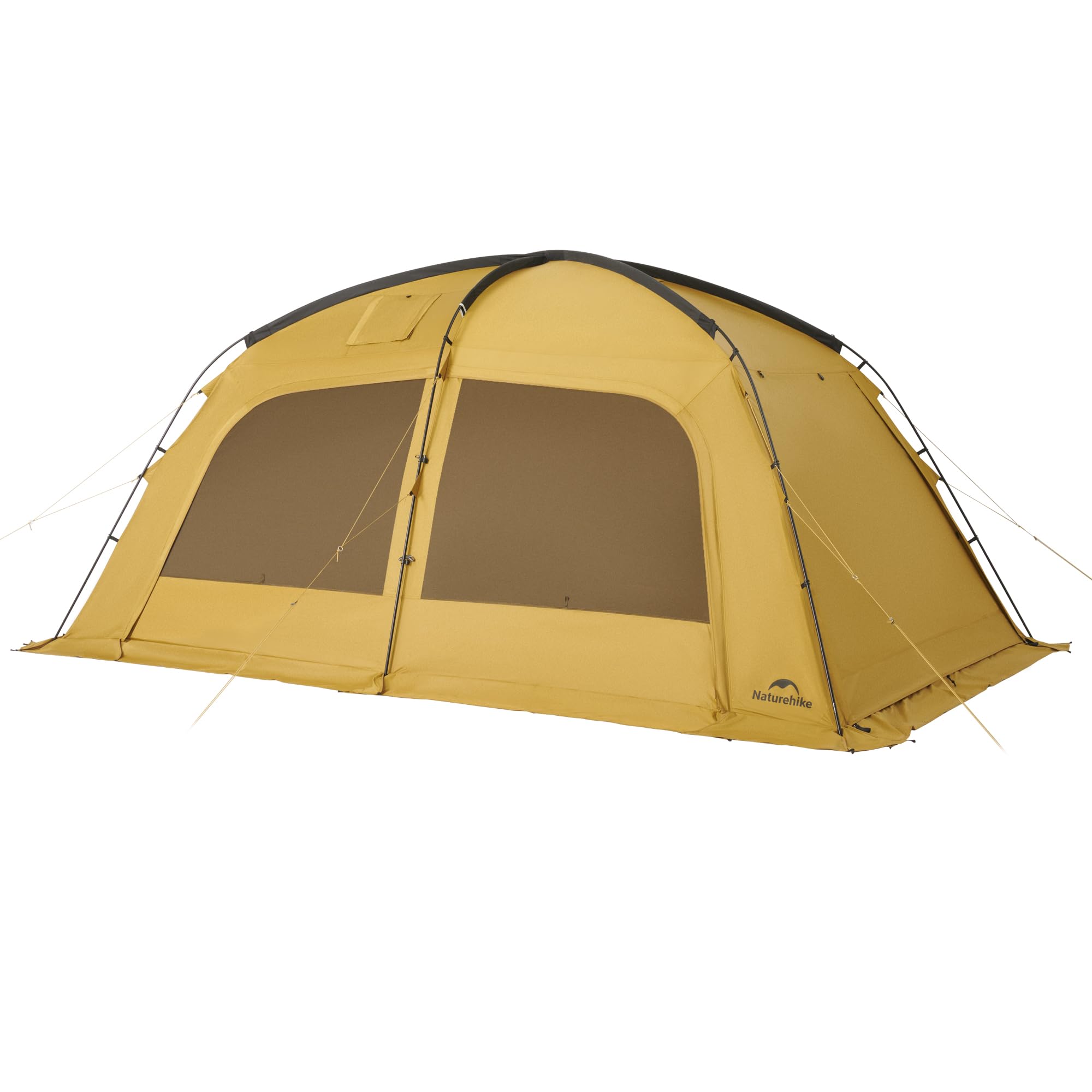
Naturehike Dune Hot Tent

89 /100
Angler Score Excellent

Key details

Sleeps
4 person
Floor Area
132.05 square feet
Peak Height
81.1 inches
Packed Weight
27.6 lb
Check Details on Amazon

The Dune's 132-square-foot floor and 81-inch peak are the numbers that matter: two campers can stand up, pull on boots, and set up cots without turning the sleeping area into a changing room. The inner tent and front room can be pitched in several ways, and the separate zones give wet gear and the stove a place of their own. Four windows and six doors also help it breathe better than a sealed four-season box.

What makes it our top pick is how completely it commits to car camping. The four-season shell, 10000mm waterproof rating, and stove jack give it a real cold-weather role, while the two-room layout keeps the fire and the sleeping bags apart. This is a tent you pitch once and live in, not one you move every night.

We also think the extra canopy configurations are worth understanding before you buy: they add versatility, but they are not the same as the base shelter. The Dune is at its best when you set up a proper camp and let the stove do the work. If your trips involve a trailhead and a short walk, this is the one we recommend.

Pros

  • Two-room layout separates stove and sleeping space
  • 132 square feet and an 81-inch peak
  • Four-season shell with 10000mm waterproofing
  • Multiple setup modes add flexibility

Cons

  • Packed weight limits it to car camping
Our verdict

For car-camping families who want a stand-up shelter with a real stove room, the Dune is our top pick because it pairs a huge two-room layout with a four-season shell.
Check Latest Price
2

Best Group Tipi

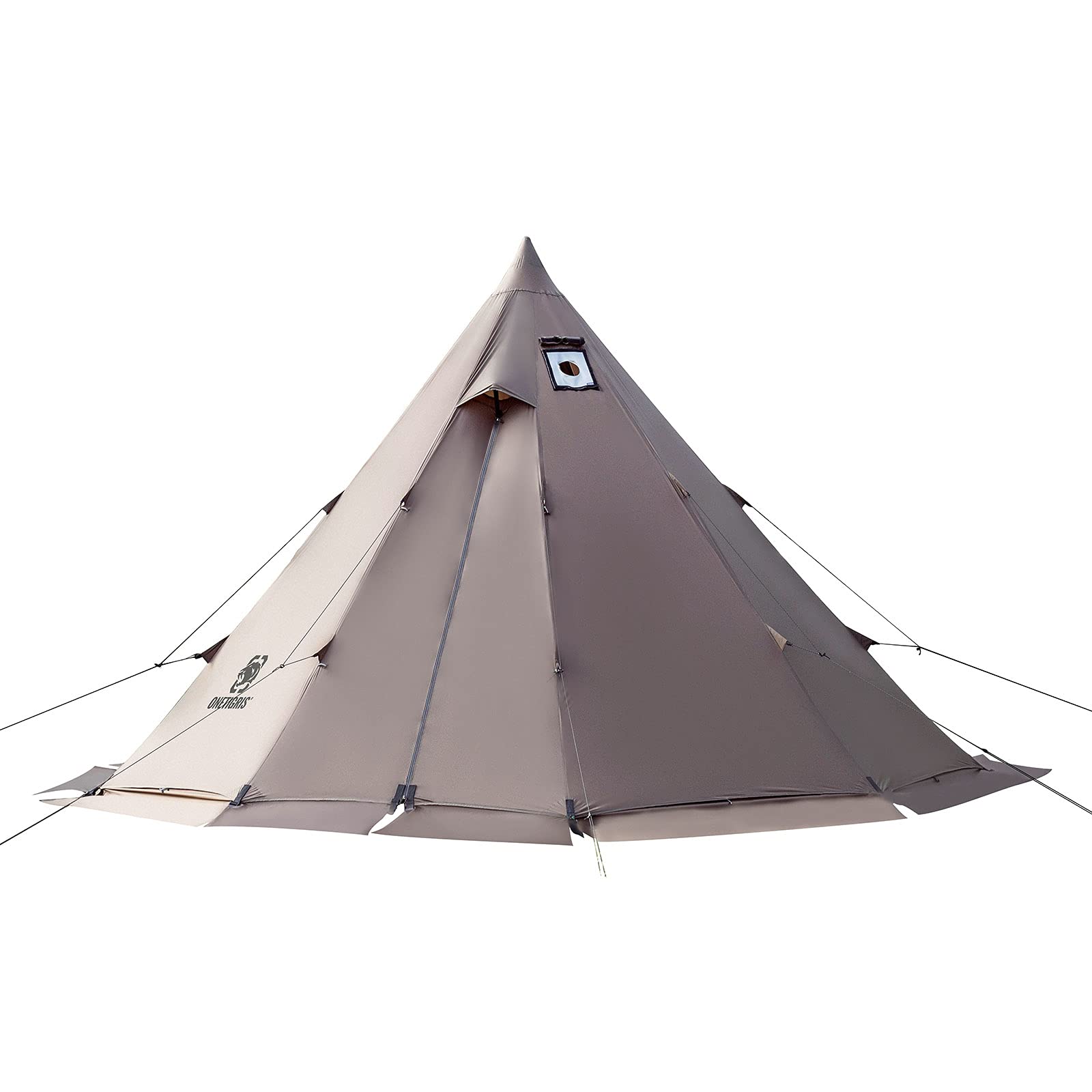
OneTigris Rock Fortress

88 /100
Angler Score Excellent

Key details

Sleeps
6 person
Diameter
12.4 feet
Peak Height
7.8 feet
Packed Weight
9.2 lb
Check Details on Amazon

A tipi is the shape we trust when the wind picks up, and the Rock Fortress is the strongest example in this group. The 12.4-foot diameter gives a small group room to sit and sleep around a stove, the 7.8-foot peak lets most people stand in the center, and the snow skirt helps hold heat where it matters.

At 9.2 pounds, it is light enough for a short carry or a motorcycle camp, and the single-pole pitch is simple once the guylines are laid out. The hexagonal footprint sheds wind well, but it also means the usable floor shrinks around the edges; two cots and a stove fill it quickly, and a third person is a squeeze. The center pole is the only thing standing between you and a faceplant, so pitch it on level ground.

The hardware is the part we check first. The included guyline cord is the weak link, and the top seam deserves a look before a snowy trip. The single-wall nylon keeps the packed size manageable, but it is not a tent for a deep-winter expedition without a careful site. For a group that wants a weather-ready shelter without a cabin's weight, it is a smart choice.

Pros

  • Wind-shedding tipi shape
  • 12.4-foot diameter and 7.8-foot peak
  • 9.2-pound packed weight
  • Snow skirt and 3000mm fabric

Cons

  • Sloped walls can deflect under snow load
Our verdict

If your group wants a weather-ready tipi that pitches with one pole, the Rock Fortress is the one we reach for, provided you do not need wall-to-wall standing room.

Check Latest Price
3

Best Two-Person Basecamp

Naturehike Massif Hot Tent

83 /100
Angler Score Excellent

Key details

Sleeps
2 person
Floor Area
89.13 square feet
Peak Height
43.3 inches
Packed Weight
10.5 lb
Check Details on Amazon

The Massif's best trick is the layout: a two-person inner tent, a separate hall, and a vestibule for the stove. That means you can heat the shelter without putting the stove next to your sleeping bag, and wet gear has somewhere to drip that is not your floor. The 89-square-foot floor area is generous for two, and the aluminum poles feel more substantial than the fiberglass frames on some cabins here.

The catch is height. At 43.3 inches at the peak, this is a crouch-and-sit tent, not a stand-up cabin. That is a fair trade for a shelter that packs to 10.5 pounds and pitches with four poles, but it does make getting dressed in the morning a negotiation. The snow skirt and 3000mm fly help in wind, though the tent can let moisture in during a long, driving rain, so seam-seal the fly and pitch it tight.

For two campers who want a compact basecamp with a real stove room, the Massif is the pick we keep coming back to. It gives up the Dune's standing height and floor area, but it is far easier to move and still feels like a proper winter shelter. If you sleep on the ground and do not need a family room, this is the sweet spot.

Pros

  • Separate inner room and stove vestibule
  • 89 square feet for two campers
  • 10.5-pound packed weight
  • Aluminum poles and snow skirt

Cons

  • Peak height forces crouching
Our verdict

For two campers who want a separate sleeping room and a stove vestibule without a huge footprint, the Massif is the smart pick.

Check Latest Price
4

Best for Hammock Camping

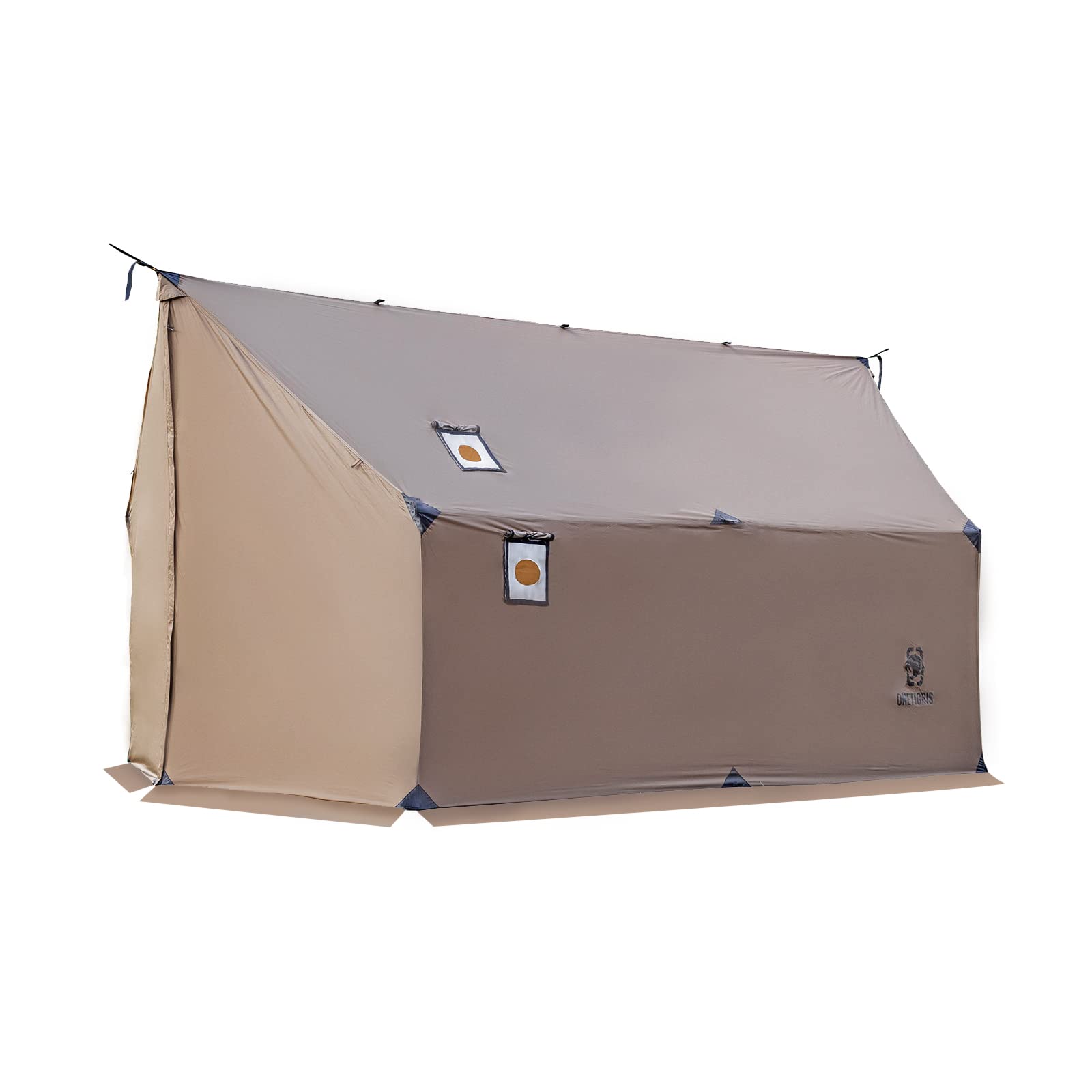
OneTigris Tegimen Hammock Hot Tent

87 /100
Angler Score Excellent

Key details

Floor Area
86.9 square feet
Peak Height
6.2 feet
Packed Weight
6.8 lb
Waterproof Rating
3000 mm
Check Details on Amazon

The Tegimen is not a tent that happens to fit a hammock; it is built around one. The 12.5-by-6.6-foot footprint gives you 86.9 square feet, enough for a hammock, a small stove, and a place to stand and change. At 6.8 pounds, it is the lightest shelter in this group that still has a real stove jack and a snow skirt.

The trade-off is the pitch. No poles are included, so you need trees, a ridge line, or your own poles, and the shape depends on what you find. The hammock-friendly doors and open shape worked well for us, but it is not freestanding and it will not save a site with no anchors.

In cold weather, the 3000mm fabric and stove jack do the important work, and the snow skirt helps hold heat around the bottom. Water resistance is the caveat: the nylon can wet out in sustained rain, so seam-seal it and choose a sheltered pitch. The fabric is also light enough that stove sparks can burn pinholes, so keep the pipe clear and use a spark arrestor.

What makes it our hammock pick is the combination of low weight, real winter features, and a price that leaves room for a stove. If you sleep on the ground, the Rock Fortress is simpler; if you sleep in a hammock, this is the one we choose.

Pros

  • Hammock-first layout with 86.9 square feet
  • 6.8-pound packed weight
  • 3000mm fabric and stove jack
  • Snow skirt helps retain heat

Cons

  • Needs trees or your own poles
Our verdict

For hammock campers who want to keep hanging through winter, the Tegimen is the hot tent we trust, just bring your own poles or pick trees.

Check Latest Price
5

Best Compact Cabin

POMOLY Chalet 70

84 /100
Angler Score Excellent

Key details

Sleeps
2 person
Floor Area
54 square feet
Peak Height
59.1 inches
Waterproof Rating
2500 mm
Check Details on Amazon

The Chalet 70 is the low, two-pole cabin we reach for when the trip is more about packing light than standing up. Its frame goes up quickly, the 70D ripstop polyester has a 2500mm waterproof rating, and the stove jack sits where you want it without turning the whole tent into a stove room.

The 54-square-foot floor and 59-inch peak tell the real story: this is a one-person palace or a tight two-person shelter. Two twin air mattresses fit, but there is little room left for chairs and gear. The two doors and full mesh option appealed to us for warmer nights, though condensation can still build when the stove is low and the vents are closed. The cabin walls are easier to live with than a sloping tipi, and the two-pole frame is simple enough for one person.

Durability is the other thing we watch. The pole sleeves are the wear point, and the low cabin shape puts more stress on the frame in wind, so use the guylines and check the sleeves before a trip. For a solo camper or a close pair who want a small, packable cabin, it is an easy recommendation.

Pros

  • Quick two-pole pitch
  • 54 square feet for one or two
  • 2500mm waterproof fabric
  • Two doors and mesh option

Cons

  • Low 59-inch peak limits standing
Our verdict

If you want a small, packable cabin for one or two cold-weather campers, the Chalet 70 is the compact pick we recommend.

Check Latest Price
6

Best for Large Families

Night Cat 8-Person Hot Tent

83 /100
Angler Score Excellent

Key details

Sleeps
8 person
Floor Area
112 square feet
Peak Height
80 inches
Packed Weight
40 lb
Check Details on Amazon

The Night Cat's 14-by-8-foot footprint and 80-inch peak make it feel like a cabin: there is room to stand, set up a table, and keep the sleeping area separate from the living area. The inner tent sleeps four, while the front vestibule adds space for gear, cooking, and the stove jack. The one-room-one-living-room layout is the reason to choose it over a big dome.

What keeps it out of the top spot is the layout's compromise: the stove lives in the front vestibule, so heat has to travel into the inner tent. It is not the sauna-like warmth of a small tipi, but it keeps the chill off and gives a family a place to gather. The 8-person capacity is a sleeping rating, not an invitation to crowd eight people around a stove.

Setup is a two-person job, and the canopy adds steps and windage. The fabric and seams feel sturdy enough for a basecamp, and the tall walls keep the interior from feeling like a tunnel. We think the Night Cat makes the most sense for a family basecamp where the car is nearby and the tent stays put for a few nights. If you need to carry your shelter or pitch in a tight site, look at the Massif or Chalet instead.

Pros

  • 112 square feet and 80-inch peak
  • Separate four-person inner tent
  • Stove-ready front vestibule
  • Canopy adds living space

Cons

  • 40-pound packed weight
  • Stove heat must travel from the vestibule
Our verdict

For families who want a stove-ready living room with standing height, the Night Cat is the big-group pick we recommend.

Check Latest Price
7

Quick-Pitch Camping

WildFinder Inflatable Hot Tent

84 /100
Angler Score Excellent

Key details

Sleeps
6 person
Floor Area
68 square feet
Peak Height
79 inches
Packed Weight
31 lb
Check Details on Amazon

The WildFinder goes up with air, not poles. The PVC air beams inflate from the included high-pressure pump, and the 118-by-83-inch footprint gives you 68 square feet with a 79-inch peak. The big skylight is the feature that makes it feel different from a nylon cave, and the dual doors and mesh panels keep it bright and airy in mild weather.

The trade-off is that an inflatable tent lives or dies by its seams and valves. The 420D Oxford carries a PU3000mm rating, but the fabric can wick and seep in sustained rain, so a footprint and a tarp are smart insurance. The air beams can also lose pressure over a day, which means bringing the pump on longer trips. We like the idea of the skylight more than we like the privacy cover, which is one more thing to keep track of.

We think the WildFinder is a good quick-pitch basecamp for fair weather and short trips, not the shelter we choose for a week of wet snow. It is faster to pitch than a pole tent and much more pleasant to spend time in than a dark tunnel. If you want the convenience of air beams and can manage the weather caveats, it earns a place.

Pros

  • Quick air-beam pitch
  • 68 square feet with 79-inch peak
  • Large skylight and mesh ventilation
  • Stove jack for cold nights

Cons

  • Water can seep in sustained rain
  • Air beams can lose pressure over time
Our verdict

For campers who want a quick-pitch inflatable and can manage the weather caveats, the WildFinder earns a look.

Check Latest Price
8

Solo Winter Camping

POMOLY Stovehut 70

80 /100
Angler Score Excellent

Key details

Sleeps
1 person
Floor Area
35.5 square feet
Peak Height
49.2 inches
Packed Weight
6.7 lb
Check Details on Amazon

The Stovehut 70 is a solo A-frame that is barely more than a bedroll with a stove jack, and that is the point. The frame uses two tarp poles and two tent poles, and the stove sits in a vestibule that keeps the fire out of your sleeping space. With 35.5 square feet and a 49-inch peak, it is a solo shelter in the strict sense.

The compact size cuts both ways. You can sit up in the center, but you are not standing, and two people make it a squeeze. The three-door access and double-layer door are useful for bug season, but the low ceiling means every move is deliberate. The included stakes are the first thing to replace; they bend easily in hard ground.

Setup is fiddly the first time, especially without instructions, so pitch it in the yard before you rely on it. The 70D polyester has a 2500mm rating, which is enough for light rain but not a downpour; seam-seal it and pick a protected site. The stove vestibule is the feature that makes the tight floor plan work.

What we like most is the weight and the value. At 6.7 pounds, it is the lightest stove-ready shelter here, and it costs less than the cabins and tipis. It is not a basecamp for two, and it will not match the Dune in a storm, but for a solo winter overnighter it makes a lot of sense.

Pros

  • 6.7-pound packed weight
  • 35.5 square feet with stove vestibule
  • Three-door access and mesh door
  • Lower price than the cabins and tipis

Cons

  • Low 49-inch ceiling limits standing
  • Included stakes bend easily
Our verdict

For solo campers who want a tiny, packable hot tent and do not mind a low ceiling, the Stovehut 70 is the budget pick.

Check Latest Price

How We Tested Hot Tents Through a Cold Season

We started with research rather than a warehouse: a shortlist of roughly 40 tents that actually ship with a stove jack, then narrowed it by fabric weight, jack size and placement, floor area per person, packed weight, and price. Ten made the final field test, and each one stayed with us for the better part of eight months — some on weekend trips, some pitched in a backyard for weeks at a stretch through repeated freeze-thaw cycles.

Setup came first, because that's where cold hands lose patience. I timed every pitch solo, at dusk, wearing gloves, and noted where I fumbled: poles that wouldn't seat, a door that snagged on its own flap, guy lines too short to reach a stake. Standing inside, I laid out two adult sleeping pads plus a stove and a gear pile to see whether the claimed capacity held, and checked headroom at the stove corner — you should be able to feed the fire without kneeling in the doorway.

Weather testing was crude and useful. A hose on full for ten minutes along the seams and corners, then a check for damp patches on the inside; a night of steady rain; snow piled on the roof to see whether the fabric sagged toward the stovepipe; wind on an exposed ridge. With the stove lit overnight, we watched the walls for condensation — frost on the inner shell at dawn meant the vents weren't moving enough air. After each trip we re-inspected seams, zipper pulls, and jack stitching, and weighed the packed tent on a luggage scale to see how close reality came to the spec.

Appearance counted more than I expected; a shelter that pitches crooked or sags between poles looks tired by night forty. Value came down to how much fabric and floor space you got for the money, and whether it still looked and worked like new in month eight.

How to Choose a Hot Tent

Start with the stove jack

The stove jack is the part that makes a hot tent a hot tent. Check the jack's diameter against your stove pipe, confirm it is designed for the heat your stove produces, and look for a flap that closes snugly around the pipe. A spark arrestor and a short vertical run of pipe help keep sparks off the fabric. If the jack is undersized or the pipe sits off-center, the safest fix is a different tent, not a workaround.

Size the shelter to your standing room

Floor area gets the attention, but peak height decides whether the tent feels like a cabin or a crawl space. The Naturehike Dune gives you 81 inches at the peak, enough to stand and dress; the Massif is 43 inches, so you sit and crouch; the Chalet 70 is 59 inches, which suits a solo camper who wants a small footprint. Match the height to the trip: standing room is worth the weight for a basecamp, while a low shelter packs smaller and heats faster.

Match weight and packed size to the trip

A hot tent's packed weight tells you how far you can carry it. The Dune is a 27.6-pound car-camping shelter, the Night Cat is 40 pounds and wants a vehicle, while the Tegimen is 6.8 pounds and light enough for a pack. We treat anything much over 10 pounds as vehicle-supported unless the trip is short and the stove is shared.

Treat ventilation as part of the heating system

Condensation is the quiet enemy of a stove tent: warm, moist air hits cold fabric, and by morning the walls are wet. Mesh doors, two-way zippers, and a high vent help more than a thicker fabric. Synthetic tents dry faster, while canvas breathes well but takes longer to dry and needs more care. Keep a vent cracked even in cold weather, and choose a shelter with enough mesh to move air when the stove is low.

Read weather protection beyond the waterproof number

A hydrostatic rating is useful, but it does not cover seam quality, wind resistance, or snow load. Look for sealed seams, a snow skirt, reinforced guyline points, and a shape that sheds wind; a taut pitch matters as much as the fabric. The Dune's 10000mm shell and the Rock Fortress's 3000mm nylon sit at different price points, but both need a careful pitch. If you camp in sustained rain, plan to seam-seal the fly and bring a footprint.

Frequently Asked Questions

Final Verdict

The Dune is the hot tent we recommend first for car camping: its two-room layout, 81-inch peak, and four-season shell turn a cold campsite into a base you can live in. If you need to carry your shelter or pitch in a smaller footprint, the Massif is the two-person alternative.

For a group that wants a wind-shedding tipi, the Rock Fortress is the better shape. And if you sleep in a hammock, the Tegimen is the one we choose.