Best Ice Fishing Boots of 2026

The first hour on the ice is the good part: the auger, the quiet, the coffee steaming in the cold. Somewhere around hour three the magic wears off, and it's usually your feet that call the day — socks damp from slush that crept in over the cuff, toes numb from standing still, a sole that slides the moment you step off packed snow onto glare ice. A good pair of ice fishing boots handles all three, keeping you warm, dry, and upright through a full day of doing almost nothing.

Something I learned the hard way: temperature ratings assume you're moving, and ice fishing is mostly standing, kneeling, and sitting. Buy warmer than the number suggests, and leave room for a thick wool sock without squashing your toes, because circulation is what actually keeps feet warm. We put 14 pairs through a full season on the ice and in the slush around it, and the ones worth your money separated themselves fast — they're below.

1

Best Overall

MUCK Arctic Pro

95 /100
Angler Score Outstanding

Key details

Closure
Pull-on
Insulation
Insulated
Waterproofing
Waterproof
Check Details on Amazon

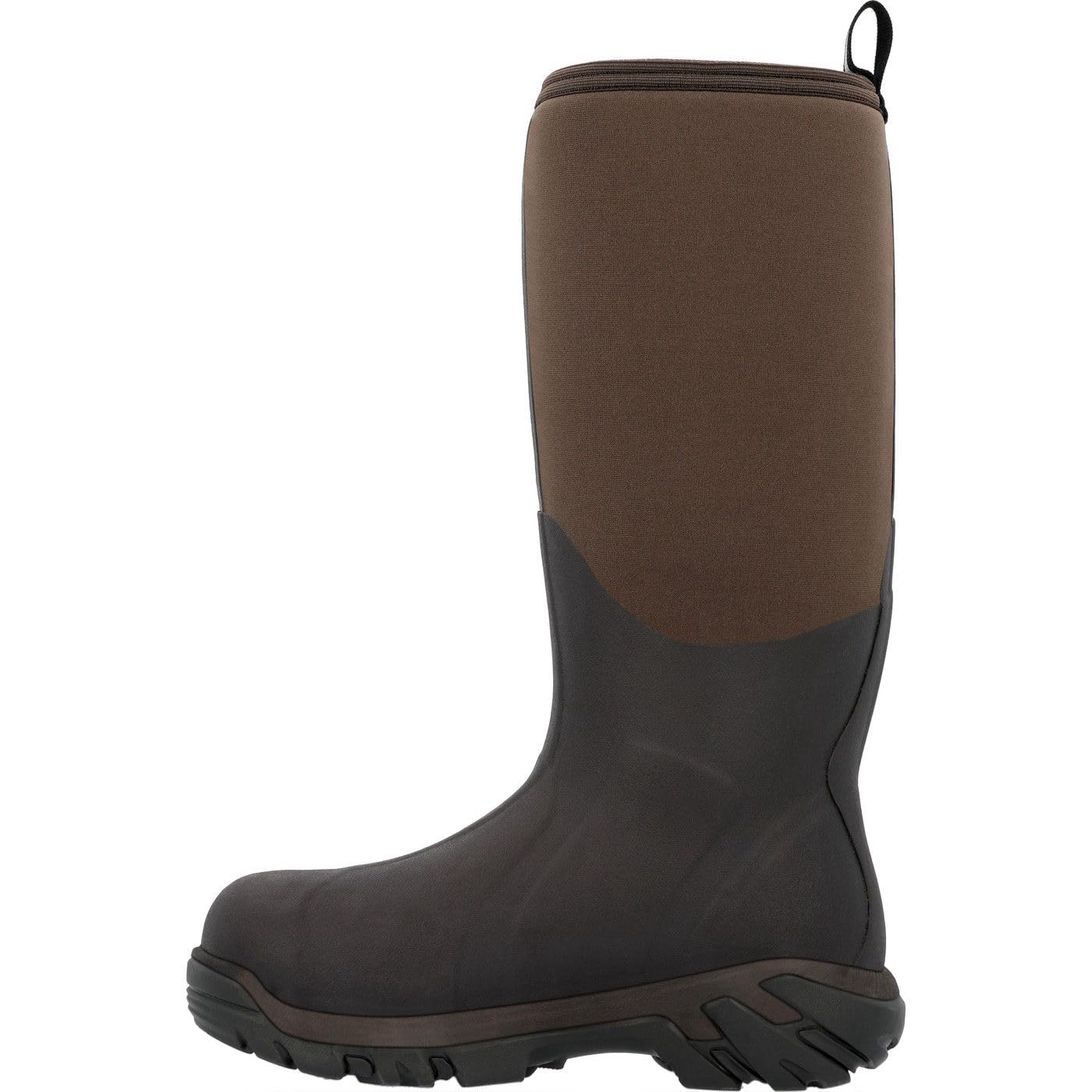
The Arctic Pro is the boot we want when the plan is to stand on ice for hours, not hustle down a trail. Its tall waterproof shell covers the ankle and lower calf, so slush at the hole and snow on the walk out hit the same barrier. The insulated pull-on design is the other part of the appeal: it goes on without a fight and comes off with a tug at the heel. We rate it first because it handles the whole ice-fishing day, not just the walk to the spot.

The fit is the one thing to get right. The Arctic Pro can feel roomy through the foot and snug around the upper shaft, which is a strange combination if you are between sizes. We paid attention to the calf opening because a pull-on boot has to clear a thick sock and a pant leg without pinching. If you have wide calves or wear a half size, try them with the socks you plan to fish in before you commit.

The listing gives a 6.5-pound package weight, which tells you this is not a featherweight pair; what you get in return is a tall, protected shell. For the walk-in angler, the Woody Max is the lighter Muck; for the sit-and-wait angler, the Arctic Pro is the one we want. The pull-on opening is the detail we appreciate most at the end of the day, when wet laces are the last thing you want to deal with.

Pros

  • Keeps feet warm and dry in slush and snow
  • Pull-on design is easy to get on and off
  • Tall shell handles deep snow and wet ice
  • Proven in real ice-fishing conditions

Cons

  • No laces to fine-tune the fit
Our verdict

We recommend the Arctic Pro as the default ice-fishing boot for anyone who wants a warm, waterproof pull-on that handles slush and deep snow.

Check Latest Price
2

Best for Wet, Slushy Ice

TIDEWE Rubber Work Boots

0 /100
Angler Score Fair

Key details

Toe
Reinforced
Insulation
6 mm neoprene
Comfort Rating
-4°F to 50°F
Shaft Circumference
13 inches
Check Details on Amazon

Wet slush is where the Tidewe makes its case. The full rubber-and-neoprene shell is built to shed water, and the 6 mm neoprene adds insulation while flexing with your foot. We like it for the messy part of ice fishing: the overflow around the hole, the slushy ramp, the walk back to the truck with wet snow coming over the toe. It is not the warmest boot here, but it is the one we trust to keep a wet day from turning into a cold one.

The comfort rating is listed at -4°F to 50°F, which is a useful range for ice season: cold enough for a January morning, warm enough for a muddy walk out in March. The reinforced toe is another detail we appreciate, because kicking ice chunks and clearing a hole is hard on a soft boot. The heel bump makes them easier to get off without bending, which matters when you are layered up.

The 13-inch shaft circumference is generous, and that is the number to check if you have muscular calves. The one longer-term question is the sole: separation at the heel has come up over time, so inspect the bond when they arrive and store them dry. We still rate the Tidewe highly for wet ice, but we treat the sole as the part to watch.

Pros

  • Full rubber shell sheds slush and overflow
  • 6 mm neoprene with a -4°F to 50°F rating
  • Reinforced toe and heel kick-off
  • Generous 13-inch calf opening

Cons

  • Sizing is inconsistent; check the chart
Our verdict

For wet, slushy ice, we reach for the Tidewe when we want a roomy rubber boot that sheds water and stays flexible.

Check Latest Price
3

Best for Women

Columbia Ice Maiden II

91 /100
Angler Score Outstanding

Key details

Style
Women's snow boot
Warmth
Insulated
Waterproofing
Waterproof
Check Details on Amazon

The Ice Maiden II is the women's-specific boot in this group, and that is not a token distinction. A unisex rubber boot can swallow a narrower foot or leave too much room at the heel, while this Columbia is cut for a woman's foot and comes in a wide width. We recommend it for the woman who wants a warm, comfortable snow boot for the walk out and the day on the ice, not a heavy work boot.

Warmth and water resistance are strong: the boot keeps feet dry in snow and slush, and the fit is comfortable enough for all-day wear. The appearance is a bonus, with a clean snow-boot shape that does not look out of place in town. We like that combination for a fishing day that starts with errands and ends on the ice.

The limitation is bare ice. On packed snow and cold pavement, the boot is at home; on glare ice, plan on a pair of cleats. That is not a knock unique to this Columbia, but it is worth saying because the name and the snow-boot look can make it seem more ice-ready than it is. The clean shape also works around town, which is more than we can say for most rubber boots.

Pros

  • Women's-specific fit, including a wide width
  • Warm and waterproof for snow and slush
  • Comfortable enough for all-day wear
  • Clean look that works around town

Cons

  • Sizing can run a little big
Our verdict

The Ice Maiden II is our pick for women who want a warm, comfortable snow boot for a day on the ice.

Check Latest Price
4

Best for Active Days

MUCK Woody Max

96 /100
Angler Score Outstanding

Key details

Warmth
Insulated
Closure
Pull-on
Waterproofing
Waterproof
Check Details on Amazon

The Woody Max is the Muck boot for the angler who walks in. It has the same pull-on, waterproof character as the Arctic Pro, but the hunting-boot cut and Mossy Oak upper make it feel at home in the marsh and the brush along the bank. We like it for scouting, moving between holes, and any day when the walk is longer than the sit.

Warmth is not an issue. The boot keeps feet warm in cold, wet conditions, and the no-lace opening is quick with gloves. The Woody Max is the lighter Muck in this group, and that matters if you are carrying a sled or breaking trail.

The trade-off is fit: the boot runs big for some people, so start with the size chart and leave room for wool socks. The camo pattern is a matter of taste, but the tall shaft is genuinely useful when you step off the packed path into a drift. The pull-on opening is the part we keep coming back to when the truck is a quarter mile away and the gloves are already wet.

Pros

  • Warm and waterproof in cold, wet conditions
  • Pull-on opening is quick with gloves
  • Lighter than the Arctic Pro for active days
  • Tall shaft keeps snow out

Cons

  • Durability concerns at the sole
Our verdict

We like the Woody Max for ice anglers who walk in and want a lighter, pull-on Muck for active days.

Check Latest Price
5

Deep Snow

Kamik Greenbay 4

91 /100
Angler Score Outstanding

Key details

Shaft
Tall
Closure
Slip-on
Waterproofing
Waterproof
Check Details on Amazon

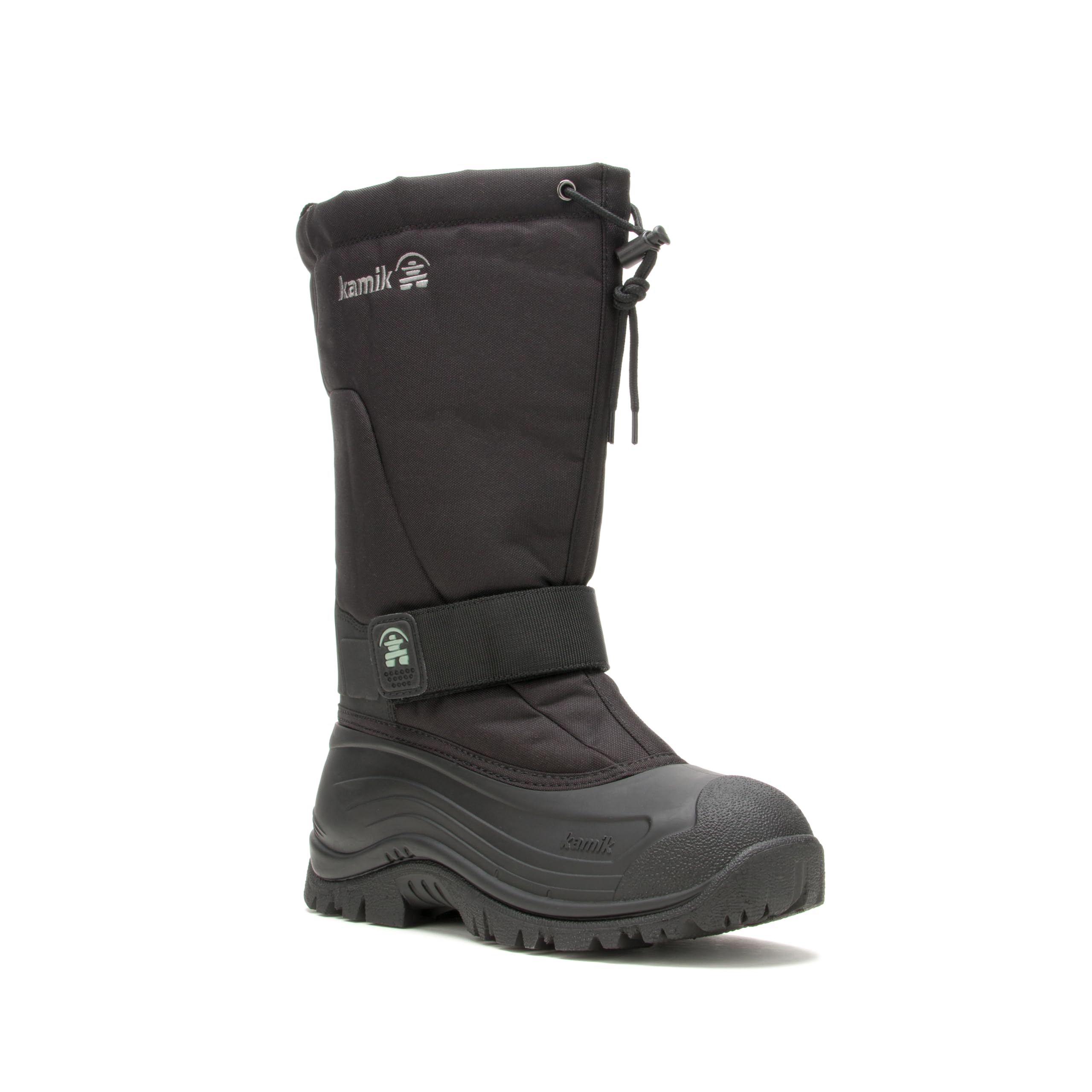
The Greenbay 4 is the tall, simple snow boot in this group. Its job is to keep snow out when you post-hole through a drift, and the tall shaft does that well. The slip-on shape is easy to get on and off with cold hands, and the boot is warm enough for a cold walk down to the lake. We rate it as a deep-snow specialist, not an all-day slush boot.

Warmth and snow resistance are the strengths. The boot keeps feet warm in cold weather, and snow does not come over the top easily. The value is good for a tall winter boot. The trade-off is water: it handles snow, but wet feet have happened in slush and rain, so it is not the boot we choose for standing water at the hole.

The fit is the other thing to sort out. It runs small and narrow for some people, so go up a size if you wear thick socks or have a wide foot. The boot rewards that care with a tall, secure shaft that keeps drifts out. That is the main thing to get right before you rely on it in deep snow.

Pros

  • Tall shaft keeps snow out
  • Warm and easy to pull on
  • Good value for a deep-snow boot

Cons

  • Buckle can fail
Our verdict

We rate the Greenbay 4 for the angler who wants a simple, warm pull-on for snowy walks.

Check Latest Price
6

Walking Out

NORTIV 8 Winter Snow Boots

91 /100
Angler Score Outstanding

Key details

Style
Hiking snow boot
Lining
Fur-lined
Toe Box
Roomy
Waterproofing
Waterproof
Check Details on Amazon

The NORTIV 8 is a hiking boot with winter insulation, not a rubber fishing boot, and that is the role it fills here. If the access is a long walk down a snowy road and you plan to stay active, it is the lighter, cheaper way in. We like it for the angler who moves between holes rather than sitting in one spot all day.

The roomy toe box is the detail that makes it comfortable with thick socks, and the fur lining feels warm as soon as you put it on. The laces let you snug the boot down, and the waterproof upper handles snow and wet trails. It is a hiking boot first, and that is how we use it.

The trade-off is the fit: it can feel narrow through the midfoot despite the roomy toe, so try it with your fishing socks. For the price, it is a strong second pair or a first pair for an active, budget-minded angler. It is also the pair we hand to a friend who wants to try ice fishing without committing to a full rubber boot.

Pros

  • Roomy toe box with a warm lining
  • Light and comfortable for the walk out
  • Budget-friendly
  • Waterproof upper handles snow and wet trails

Cons

  • Not built for standing in slush
Our verdict

Our budget pick is the NORTIV 8 for the walk out and active fishing, with a roomy toe box and a warm lining.

Check Latest Price

How We Tested the Best Ice Fishing Boots

We started with research, not boots: insulation type and grams, whether the waterproof layer was a molded rubber lower or a seam-sealed leather upper, lug depth and rubber compound on the outsole, whether the liner pulled out for drying, and published temperature ratings, which we treated as a starting point rather than gospel. Price mattered too — a boot at this price has to earn it. That filtering left 14 pairs, and we wore them for a full season, roughly November through April.

Everything happened where the boots actually live. We walked out to the shanty before sunrise on bare lake ice, drilled holes, and stood in the overflow slush that pools around them. We knelt to tend tip-ups, dragged sleds a mile down a plowed shoulder, sat in a heated shanty for hours, and stomped through roadside slush on the way back to the truck.

Warmth we judged the only way that counts: matched wool socks, a check every hour, and a note on whether toes were still comfortable at hour four with the truck thermometer reading single digits — and whether they stayed that way sitting still versus walking. For water resistance, we stood in a slush hole up to the ankle for fifteen minutes at a stretch, then checked socks at the seam, and we hosed each pair down and timed how long the liners took to dry overnight. Fit got the most scrutiny, because it decides everything else: we tried every pair with a thin sock and a heavy one, walked stairs to check for heel slip, and flagged any that pinched across the toes. At the end of the season we looked at seams, sole wear, and whether the insulation had packed down, and that record is what set the order below.

How to Choose Ice Fishing Boots

Warmth for Standing Still

Ice fishing is a standing sport, and that changes what warmth means. A boot that feels toasty on a walk can go cold once you stop moving, so look for insulation that wraps the whole foot and a shaft that covers the ankle. Leave room for a wool sock without cramming your toes. The Tidewe's -4°F to 50°F comfort rating is a useful starting point, but fit and sock choice decide whether you actually stay warm.

Waterproofing and Shaft Height

Slush at the hole and overflow on the ice are different from a snowy sidewalk. A full rubber or neoprene shell is the safer choice when you will stand in water; a lace-up snow boot is better for the walk out and active fishing. Shaft height matters more than a waterproof label alone: the water has to stay below the top of the boot when you step into a drift or a wet spot. Look for taped or seamless seams, and treat leather or fabric boots before the season.

Traction on Ice

Snow traction and ice traction are not the same thing. A deep lug pattern can bite through crust and packed snow, but it can skate on bare ice. Rubber that stays soft in cold temperatures helps, and a heel brake or a defined heel edge gives you something to dig in. Even the best winter boot is not a substitute for cleats on glare ice. If you fish early and late season, pack a pair of traction aids and check them before you walk out.

Fit, Sizing, and Getting Them On

Ice fishing boots should fit with the socks you plan to wear, not the thin socks you wear to the store. Sizing varies by brand and even within a line, so use the size chart and measure your calf if you are choosing a tall pull-on. A shaft that is too narrow will pinch over a thick sock; too wide and the boot feels sloppy on the walk. Pull-on boots are easier with gloves, while lace-up boots give a more adjustable fit. Half sizes are worth seeking out if you are between sizes.

Durability, Weight, and Value

Rubber boots fail at the seams and the sole bond, not usually in the middle of the upper. Check the heel and toe junction, and store the boots dry and out of the sun. Weight matters most on the walk in; a heavier boot can be fine for a short drag but tiring on a long trail. Spend more for a full rubber or neoprene shell if you fish wet ice often; a budget snow boot is enough for the walk out and active fishing. The right value is the boot that lasts several seasons, not the one that costs least today.

Frequently Asked Questions

Final Verdict

The Muck Arctic Pro is the pair we recommend first for ice fishing. The tall, waterproof coverage and warm pull-on design make a long, cold sit easier, and it handles slush, snow, and the walk out without asking you to change boots. If you fish wet slush and want a roomier rubber boot, choose the Tidewe. For women, the Columbia Ice Maiden II is the fit-first choice. Start with the Arctic Pro unless one of those specific needs pulls you elsewhere.