Best Ice Fishing Sleds of 2026

The walk out onto first ice isn't the hard part — it's the second trip back to the truck for the auger and the bucket. A sled worth owning turns that three-trip slog into one loaded pull, and the gap between a bargain-bin sheet of plastic and a properly molded hull shows up fast once the temperature drops. Cold pulls the flex out of cheap material, so a sled that felt fine in the driveway in November can crack on the first bitter morning in January.

I've hauled gear behind everything from a borrowed kid's toboggan to purpose-built haulers, and the lesson never changes: the rope matters more than the spec sheet suggests. A stiff rope that won't coil is miserable with mittens on, and a short one has you hunched over for a mile. Size is the other trap — a big tub swallows the whole kit, then turns into a two-person lift into the truck bed. We spent about six months dragging 12 of these, and the picks below kept earning their spot on the ice and off.

1

Best Overall

Beavertail Sport Sled

89 /100
Angler Score Excellent

Key details

Material
Polyethylene
Deck Size
44 x 22 x 9 in.
Tow Setup
Pull rope
Empty Weight
6 lb
Check Details on Amazon

A 44-inch tub with 9-inch walls is the size that makes sense for a one-person ice-fishing spread: long enough for an auger and a bucket, deep enough that a heater and rod case do not slide out on a rough pull. We like that the Beavertail is a simple polyethylene shell with nothing to assemble, and at 6 pounds it is easy to lift into a truck bed or drag over a snowbank. The lip around the top is the detail we keep coming back to. It is stiff enough to hook a bungee across a load, so you can strap down a bucket and a shelter bag without adding a lid or a cargo net.

On ice, the 22-inch width gives it a stable footprint, and the flat bottom slides without the nervous feel of a narrow toboggan. It tows best when you keep the weight low and centered. The included rope is the weak point: it is thin enough to pull into your hand on a long walk, and a longer strap or padded tow rope is the first change we make. That is a small fix on a sled that otherwise feels ready for the job.

For most one-person trips, the 44-inch deck holds the usual bucket, auger, heater, and a small shelter without feeling crowded. If you carry a two-person shelter, step up to the Trek 60; if you want a narrower tub for a car trunk, the Trek 45 is the obvious alternative.

Pros

  • Roomy 44 x 22-inch deck
  • Strong lip for bungee tie-downs
  • Light 6-pound shell
  • Slides easily on ice and snow

Cons

  • No published load rating
Our verdict

We recommend the Beavertail Sport for a one-person ice-fishing load: the 44-inch tub is roomy, the lip holds a bungee, and it weighs just 6 pounds.

Check Latest Price
2

Best Compact

Pelican Trek 45

86 /100
Angler Score Excellent

Key details

Volume
71 L
Dimensions
45.5 x 20 x 8 in.
Empty Weight
6 lb
Load Capacity
130 lb
Check Details on Amazon

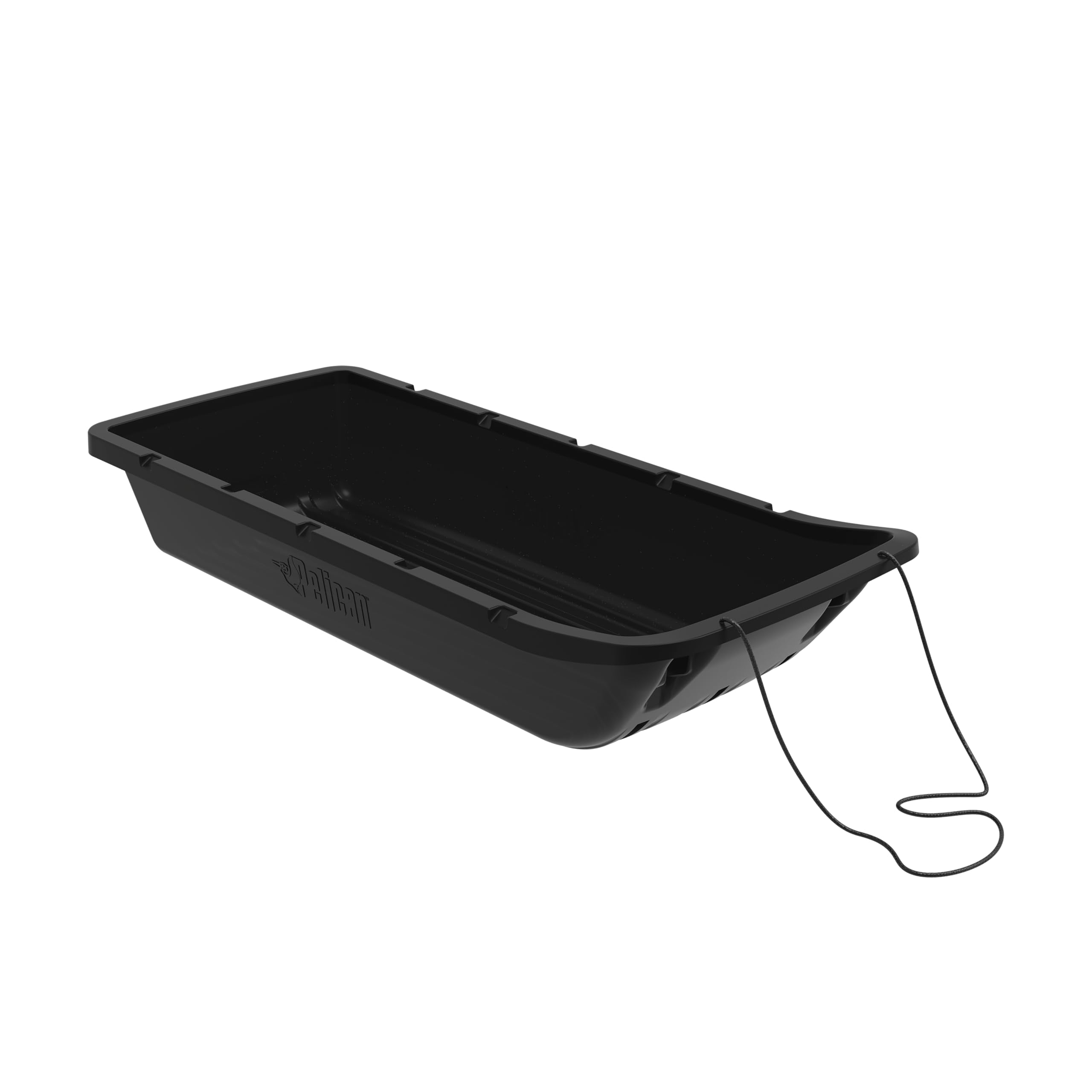
The Trek 45 is the compact, budget answer: 71 liters of volume and a 130-pound rating in a 45.5-inch shell that weighs 6 pounds. That is enough for a bucket, auger, heater, and a small shelter, and it is easy to lift into a car trunk or carry through a crowd. The molded HDPE runners are part of the shell rather than bolt-on skis, so there is nothing to lose in the snow.

The 130-pound rating leaves little margin for a loaded shelter and a full cooler, so keep the heavy items low and centered. For a one-person load that has to travel in a car, we think the Trek 45 is the right size; if you need to carry a two-person shelter, step up to the Trek 60. It is the sled we grab for a quick solo trip when the big tub stays in the garage. The molded runners help it track on ice, and the simple pull rope can be swapped for a longer strap if you want a more comfortable tow.

Pros

  • 130-pound load rating
  • 71-liter tub volume
  • Light 6-pound shell
  • Molded runners track straight

Cons

  • 20-inch width limits wide shelter bases
Our verdict

We recommend the Trek 45 for a compact, one-person ice-fishing load that has to fit in a car trunk and stay within its 130-pound rating.

Check Latest Price
3

Best for Large Loads

Pelican Trek 60

86 /100
Angler Score Excellent

Key details

Volume
152 L
Dimensions
60 x 25 x 12.5 in.
Empty Weight
12.5 lb
Load Capacity
260 lb
Check Details on Amazon

The Trek 60 is what you buy when the shelter is the load, not an afterthought. Its 152-liter tub is more than twice the volume of the Trek 45, and the 260-pound rating gives you room for a two-person flip-over, a heater, and a full bucket without guessing. The 12.5-inch walls are deep enough that gear stays put, and the bungee indentations around the rim give a cord a place to sit instead of sliding along a smooth lip.

The detail we did not expect to care about is the runners' wear indicator. Pelican puts a red layer under the white HDPE, so when the red starts showing through, you know it is time to replace the runners rather than discover the wear on the ice. That is the kind of maintenance cue that makes a long-lived sled easier to own.

At 12.5 pounds empty and 60 inches long, it is a two-hand carry and it takes up most of a trunk. That is the cost of the capacity. If you mostly fish alone and unload in a parking lot, the Trek 45 is easier; if you need the volume, the Trek 60 is the one that keeps a shelter and gear contained.

Pros

  • 260-pound load rating
  • 152-liter volume
  • Deep 12.5-inch walls
  • Runners show wear when red appears

Cons

  • Pricier than the compact picks
Our verdict

We recommend the Trek 60 for two-person shelter hauls and big gear loads, provided you have space to store a 60-inch sled and can lift 12.5 pounds empty.

Check Latest Price
4

Light Flat-Deck

ZFbuhuo 73-Inch Drag Sled

80 /100
Angler Score Excellent

Key details

Deck Size
73 x 23 in.
Empty Weight
2.65 lb
Load Capacity
330 lb
Material Thickness
0.05 in. HDPE
Check Details on Amazon

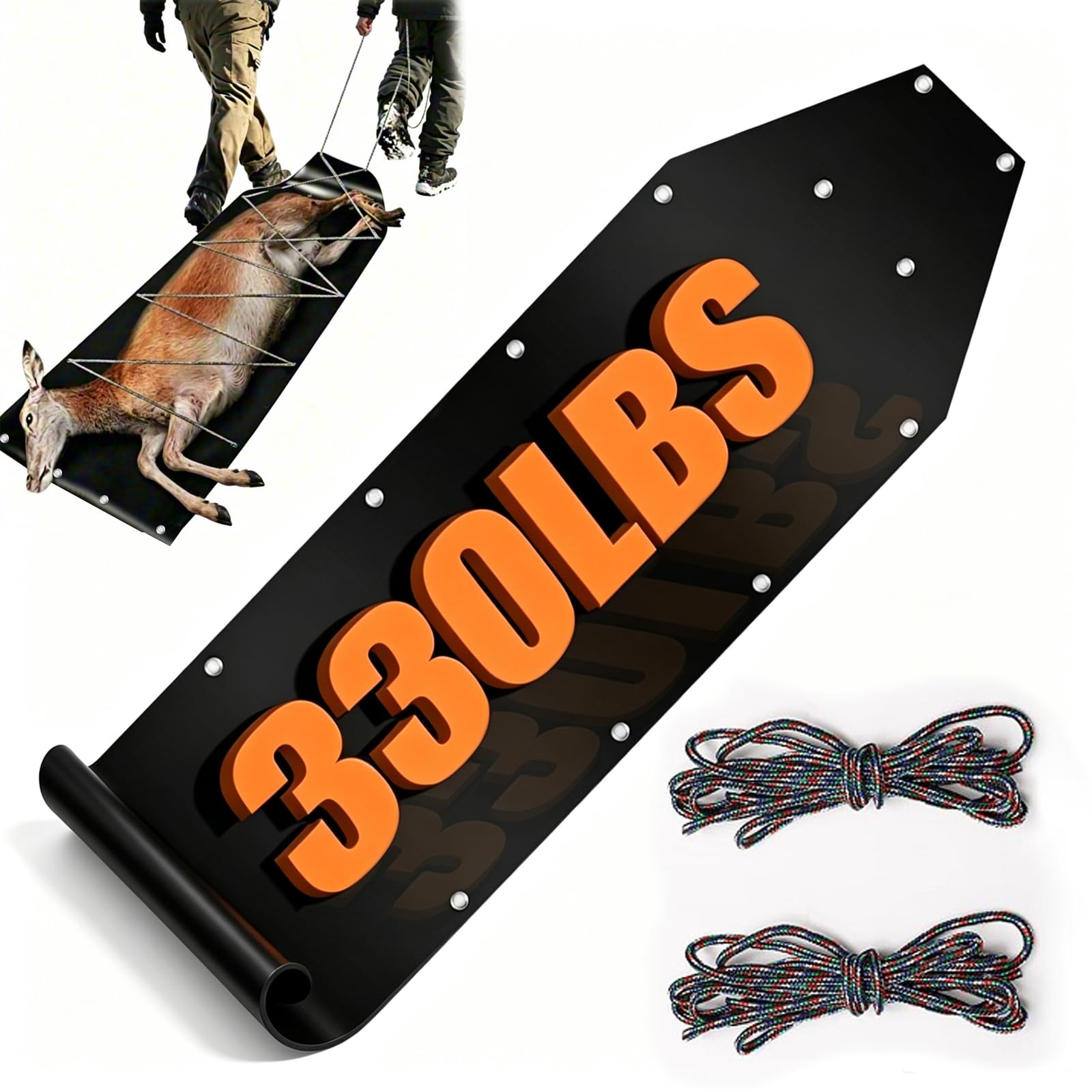
This is not a tub sled. The ZFbuhuo is a 73-inch sheet of HDPE with cables at the corners, and that shape is the whole point: long items like an auger, tip-ups, or a shelter pole bag lie flat instead of fighting a molded wall. At 2.65 pounds, it is the one here you can fold into a pack or hang on a wall. The 330-pound rating is generous for a sheet this thin, so treat it as a light-duty hauler.

The flat deck has no sides, so everything needs a strap. The side holes are cutouts rather than reinforced eyelets, and the cable end can catch and curl into the ground on rough ice or gravel. Replace the cable with a wide strap and keep the load long and light. The 0.05-inch HDPE is the thinnest material in this group, and that is the line between a cheap second sled and a primary gear tub.

Where it earns a place is as a spare: leave it in the truck for a friend's gear, use it to drag a deer or a load of firewood, or hang it flat in the garage when the season ends. It is not the sled we reach for when a heater and a shelter have to stay upright, but it is the one that disappears into the back seat and takes up almost no room when empty.

Pros

  • Long 73 x 23-inch flat deck
  • Light 2.65-pound sheet
  • 330-pound load rating
  • Packs down or hangs flat

Cons

  • No sides to contain gear
  • Thin 0.05-inch HDPE is light-duty
Our verdict

We recommend the ZFbuhuo as a cheap second sled for long, light loads and odd-shaped gear, not as the main tub for a full ice-fishing spread.

Check Latest Price

How We Tested Ice Fishing Sleds

We started by gathering every utility sled that claimed a real hauling capacity, then filtered by hull material — molded high-density polyethylene versus thinner sheet plastic — along with listed dimensions, how the tow rope was anchored, and whether the manufacturer pitched it as a four-season hauler. Anything with an attachment point that looked ready to tear out under load got cut, which left us with 12 sleds. We compared within size classes rather than across them, so a compact sled was never judged against a full-size tub.

Testing ran from first ice in December through the late-season slush in March, about six months of real trips. Each sled carried the same 60-pound kit — auger, bucket, tackle, tip-ups, and a heater — pulled a half mile over glare ice, through ankle-deep slush, and across refrozen crust that chews at a hull. We also dragged them over the gravel lot and up the boat ramp, because that is where plastic actually wears through. Every load-in was done solo, so we felt exactly where a sled turned awkward to lift into a truck bed.

The rope got its own scrutiny: we pulled with heavy mittens on to see which handles were grabbable, watched for kinking, and checked the anchor point for stress marks after each outing. Hulls were inspected after every trip for gouges, corner cracks, and flex that got worse in the cold. Off the ice, we used the same sleds for firewood, decoys, and hauling brush, and weighed what each one cost against how it looked by March — a sled that only works two months a year is a hard sell no matter how well it pulls.

How to Choose an Ice Fishing Sled

Start With the Load, Not the Length

An ice-fishing load is bulky before it is heavy: a shelter bag, auger, bucket, heater, and rods can fill a tub long before you approach a weight limit. A 130-pound rating is enough for most one-person gear, while a 260-pound rating leaves room for a two-person shelter and a full cooler. Measure your folded shelter and add the weight of the heaviest items you plan to carry. If you are close to the rating, size up; a sled that is straining at the lip is harder to pull and quicker to wear.

Choose a Tub for Gear, a Flat Deck for Long Loads

A molded tub is the default for ice fishing because the walls keep a heater, bucket, and loose tools from sliding out on a rough pull. A flat drag mat is lighter and packs smaller, and it is better for long items like an auger or a shelter pole bag, but everything has to be strapped down. We prefer a tub for a full spread and a flat deck as a second sled for odd loads. If you go flat, check that the tie-down holes are reinforced rather than simple cutouts.

Weigh the Empty Sled, Not Just the Load

An empty sled that is easy to lift is one you will actually use. Six pounds is easy to swing into a truck bed or carry through a parking lot; 12.5 pounds is a two-hand lift, and a 60-inch tub takes up most of a trunk. Think about the worst part of your trip—the unload at the landing, the carry over a snowbank, the storage in a garage. If you fish alone and move often, the lighter sled is worth the lost volume. If you need the volume, accept the bulk and plan for it.

Look at the Bottom and the Pull

Molded HDPE runners help a loaded sled track instead of wandering, and a slick bottom is more important than a fancy handle. We look for runners that are part of the shell, not bolt-on skis that can catch or disappear in the snow. The included pull rope is often the weakest part of the package; a longer strap or a padded tow rope makes a long walk easier on your hands. On the Trek 60, the runners also show a red wear layer when they are ready to replace.

Tie-Downs and Cold-Weather Durability

A stiff lip and a few bungee points do more for a gear sled than a lid. You want to strap a shelter and bucket so nothing shifts when you cross a ridge or step onto slush. Check that the lip is thick enough to hold a hook or cord, and that the tie-down holes are not sharp cutouts that will tear a strap. HDPE stays tough in cold, but thickness matters: a thin flat mat is for light loads, not a loaded shelter.

Frequently Asked Questions

Final Verdict

For most ice anglers, the Beavertail Sport is the one to buy: the 44-inch tub holds a one-person spread, the lip gives a bungee something to grab, and at 6 pounds it is easy to lift and pull. If your shelter is the main load, move up to the Pelican Trek 60; its 152-liter tub and 260-pound rating are worth the extra bulk. The Trek 45 remains the compact choice when 20 inches of width is enough.