Best Leather Boot Conditioners of 2026

Leather is skin, and it dries out the way yours does — slowly, then all at once, usually at the crease above the toe that nobody looks at until it cracks. A good conditioner feeds oils and waxes back into the hide, keeps slush and rain from soaking straight through, and can add years to a pair of boots that cost more than your phone. The catch is that the formulas that protect hardest are often the ones that darken leather most, and you do not want to find that out on a tan pair you love.

I have been conditioning the same work boots for years, and I have learned that technique matters as much as the tin: thin coats, warm leather, and time to soak in. Over the past six months, my team and I worked through 15 conditioners, balms, oils, and greases, judging how each one went on, how much grime it lifted, and what it did to the color underneath. Some tins earn their price and some do not — the ones that did are below.

1

Best Overall

Bick 4 Leather Conditioner

95 /100
Angler Score Outstanding

Key details

Form
Wax-free liquid
Size
16 fl oz
Cleans Too
Yes
Color Effect
Won't darken leather
Check Details on Amazon

Most conditioners ask a favor of you. They feed the leather and quietly turn tan a shade darker than the one you chose, which is why a lot of good boots sit in a closet untreated. Bick 4 is the product here sold as non-darkening, and that one property settles more buying decisions in this category than any ingredient list. We reach for it first on tan, burgundy, and light-colored boots, and on anything with contrast stitching that shows every shift.

Application is about as easy as the job gets. The liquid spreads thin with a cloth, works down into the welt and around the eyelets, and buffs to a low sheen rather than a polish, with nothing sticky left on the surface and almost no smell. It cleans while it conditions, so light dust and grime come up in the same pass. After a few pairs the routine stops feeling like a project: wipe, work it in, buff, put the boots back on.

Sixteen ounces is a serious amount of conditioner. We stopped rationing it and started treating bags, a leather couch, and a pair of work gloves from the same bottle. It's the bottle that lives on the bench rather than in a kit, because there's no reason to save it for best boots.

Pros

  • Conditions without shifting tan or burgundy color
  • Cleans light dirt in the same pass
  • Spreads thin and buffs without stickiness
  • 16-ounce bottle covers boots, bags, and furniture

Cons

  • Less weather protection than the wax and grease picks
Our verdict

The one we recommend first for most boots: it conditions, cleans as it goes, and leaves tan, burgundy, and light-colored leather the color it was.

Check Latest Price
2

Best for Wet Weather

Obenauf's Heavy Duty LP

96 /100
Angler Score Outstanding

Key details

Form
Beeswax paste
Size
8 oz
Water Resistance
Water, salt, and chemicals
Check Details on Amazon

The formula is beeswax, propolis, and natural oils, and you apply it with a fingertip: warm a little, then push it into the welt, around the eyelets, and along the crease where the boot breaks, which is exactly where water gets in first. Obenauf's Heavy Duty LP was created by wildland firefighters, and it behaves like a product built to survive a season outside rather than a season in a closet.

What the wax buys is weather resistance rather than a pretty finish. The maker lists water, salt, and chemical repellency alongside conditioning, and a brown work boot going into winter wants that combination far more than it wants shine. It softens stiff leather as it seals, too, so a pair that has been drying out in a garage comes back flexible instead of merely coated.

Work it in thin. A heavy coat sits on the surface and dries to a pale film in the stitching that has to be brushed out later, which is the one mistake this paste punishes. Applied properly, a tin lasts a couple of seasons of hard use and the boot underneath stays supple through wet months. When the forecast matters more than the finish, this is the tin we take.

Pros

  • Beeswax paste repels water, salt, and road chemicals
  • Softens stiff, dried-out leather as it seals
  • Works into welts, seams, and eyelets
  • A tin lasts a couple of seasons

Cons

  • Darkens tan and lighter leather
Our verdict

A beeswax paste for boots that meet rain, salt, and mud — it seals hardest and feeds deepest, at the cost of a darker color.

Check Latest Price
3

Best for Work Boots

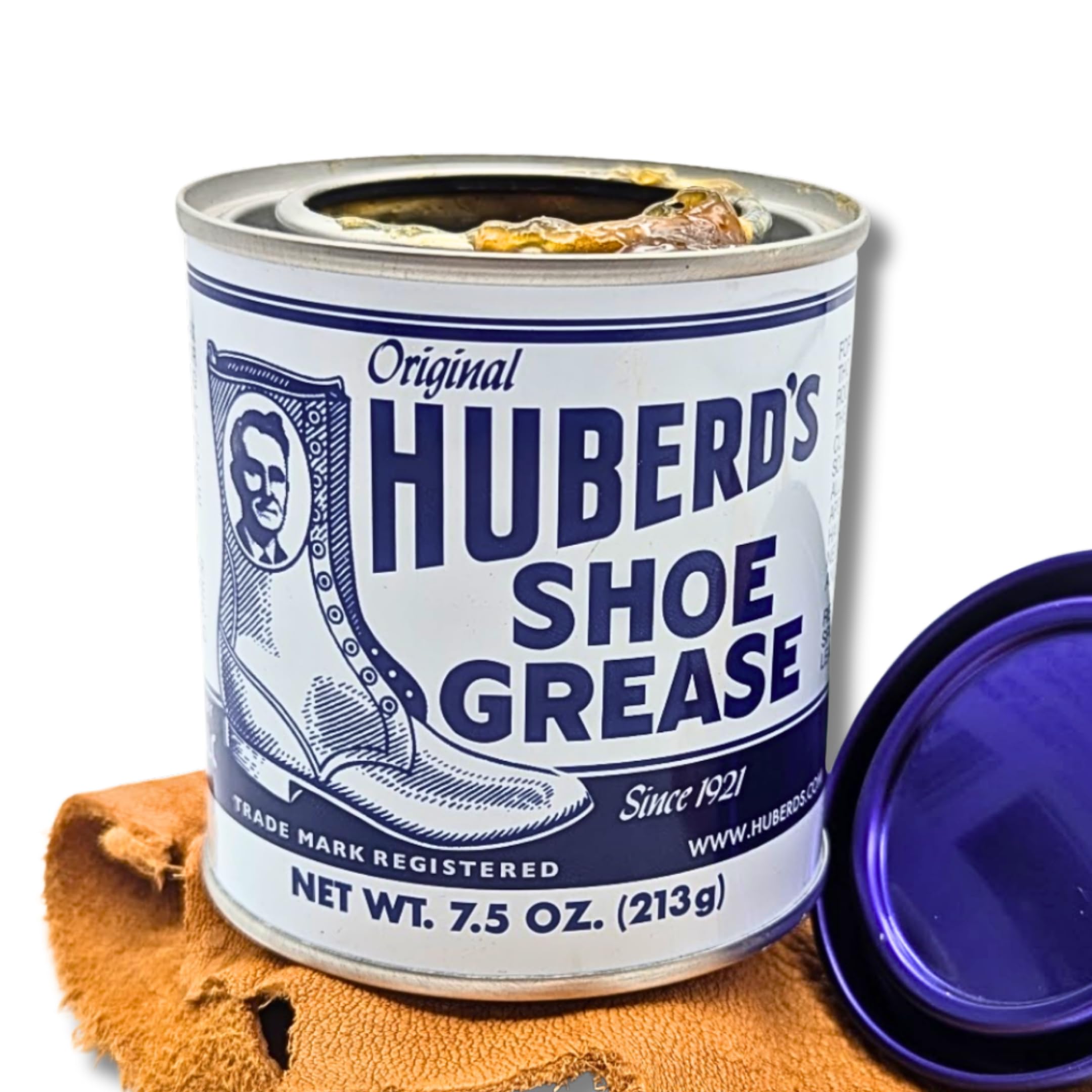
Huberd's Shoe Grease

95 /100
Angler Score Outstanding

Key details

Form
Pine tar and beeswax grease
Size
7.5 oz
Color Effect
Darkens most leather
Waterproofing
Rain, snow, and mud
Check Details on Amazon

The smell arrives before anything else: pine tar and woodsmoke, strong enough to announce itself across a mudroom and gone by the next morning. We like it. It's the honest smell of the two ingredients doing the work, and it tells you what kind of product this is before you've opened the tin properly. Huberd's has been making this grease since 1921 for loggers, hunters, and ranchers, and nobody has gentrified it since.

Warm leather takes it best. Leave the boots in the sun for a while, or work the grease in on a hot afternoon, and it melts into the grain instead of sitting on top of it. What's left is a waxy, faintly tacky surface that sheds rain, snow, and mud and keeps water from creeping through the seams. On a stiff new pair it softens faster than the thin liquids here, which makes it a break-in product as much as a weatherproofing one.

How far a tin goes is the quiet advantage. Thin coats on warm leather, a rag to lift the excess out of the seams, and 7.5 ounces lasts a couple of seasons of hard use. Two rounds a winter keep a work boot supple through the wet months, and the grease keeps working long after the surface feels dry to the touch.

Pros

  • Pine tar and beeswax seal out rain, snow, and mud
  • Melts into warm leather and softens new boots fast
  • 7.5-ounce tin lasts a couple of seasons
  • Also works on gloves, saddles, and holsters

Cons

  • Darkens light and tan leather sharply
Our verdict

For boots that work outdoors: pine tar and beeswax waterproof hard, soften stiff leather, and smell like a campfire for an hour.

Check Latest Price
4

Best Balm

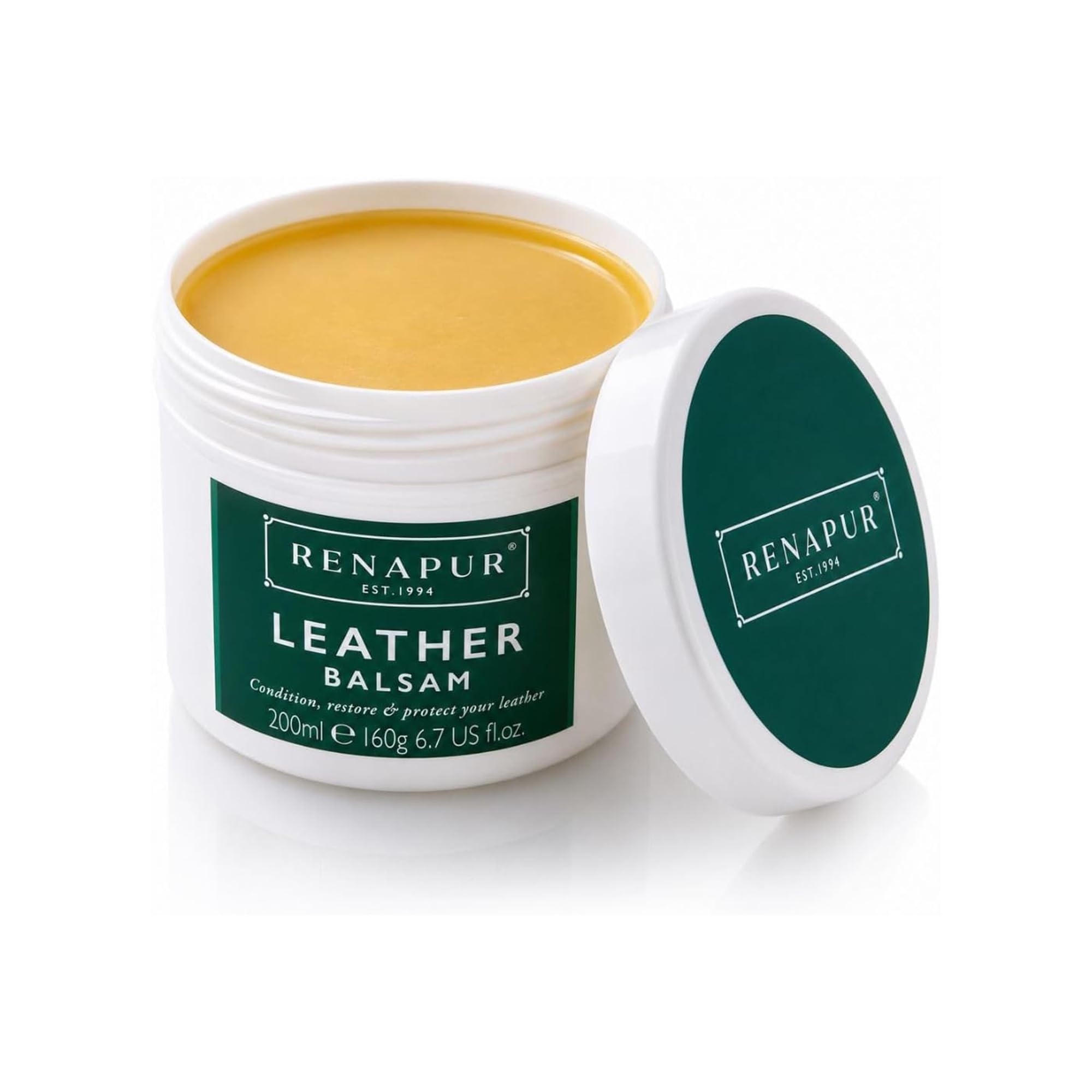
Renapur Leather Balsam

93 /100
Angler Score Outstanding

Key details

Form
Wax balm
Size
6.7 fl oz
Applicator
Sponge included
Color Effect
Color neutral
Check Details on Amazon

There's a sponge sitting inside the tub when you open Renapur, and it tells you most of what the balm is about: no rags, no gloves, no oil running down your wrist. Press the sponge into the wax, work it over the boot in small circles, put the lid back on. A pair takes a few minutes.

The formula is cosmetic-grade waxes and oils, and the texture sits closer to a soft cream than to a paste — it spreads and sinks in rather than sitting on the surface. The finish is a soft luster rather than a high shine, and a wax polish still sits happily on top if you want a mirror toe.

Water resistance is real but moderate. Treated leather beads water, which covers wet grass and a rainy walk to the truck, and it isn't a match for standing in a puddle all afternoon. The maker's coverage claims are generous; what we can say is that the pot is barely dented after a run of boots, a jacket, and a bag.

The reason to choose it over a grease is the color. Renapur is sold as color neutral and behaves that way — a boot looks slightly darker while the balm is still wet and reads normal once it's worked in, which is not something we can say for the mink oil or the pine tar. If you keep brown boots, black boots, and a leather jacket in the same closet and want one tub for all of them, this is the one.

Pros

  • Color-neutral balm suits brown and black boots
  • Sponge applicator included, no rags needed
  • Sinks in without a buffing step
  • Leaves a soft luster rather than a heavy shine

Cons

  • One of the smaller containers here
Our verdict

A color-neutral balm with its own sponge in the tub: the tidiest way to feed boots without gambling on the shade.

Check Latest Price
5

Best Budget

Sof Sole Mink Oil

95 /100
Angler Score Outstanding

Key details

Form
Mink oil
Container
Tin
Waterproofing
Yes
Check Details on Amazon

Mink oil is the old answer to wet feet, and this is the least expensive tin in the guide. It's also not a full leather-care system: there's no cleaner in it and no wax, just an oil that soaks into dry leather and pushes water back out. For a pair of brown boots that need exactly that, it's often all the job requires.

It goes on quickly with a cloth or a fingertip, sits for a few minutes, then buffs clear. Rain and slush bead on the surface afterwards, and the leather comes back supple rather than greasy. It's the tin we reach for when a pair has gone a whole season without attention and the weather is about to turn.

What the money buys is more than you'd expect: a tin that lasts, water beading on boots you were starting to think about replacing, and leather that feels like leather again. It's the right starting point for a first pair of work boots, a barn pair, or anyone who wants the job done without a shelf of products. If your boots are brown or black, start here and add a cleaner later.

Pros

  • Cheapest way to waterproof a pair of boots
  • Softens dry, stiff leather quickly
  • A tin goes a long way
  • Buffs to a low sheen with no residue

Cons

  • Darkens tan and lighter leather
Our verdict

The cheapest way into proper boot care: a mink oil that waterproofs, softens, and darkens brown leather in the process.

Check Latest Price
6

Best for Fine Leather

Saphir Renovator

96 /100
Angler Score Outstanding

Key details

Form
Cream
Type
Cleaner and conditioner
Finish
Soft luster
Check Details on Amazon

If your boots are Chelsea boots, dress boots, or anything in fine calf or shell cordovan, the question isn't how much conditioner you get for the money — it's whether the product will leave the surface looking worse than the leather deserves. Saphir's Renovator is built for that end of the market: a cream that cleans and conditions in one step and finishes to a soft luster instead of a coat of grease.

We treat it as the gentle option. A little on a cloth lifts grime and feeds the leather without leaving the surface tacky, and the shine it leaves is subtle enough that a wax polish still takes on top for a mirror toe. It's the one we reach for when the boots matter more than the budget.

Because it cleans as well as conditions, it does the work of two bottles on the shelf, and a small amount covers a pair. That's how a pricey jar earns a place in a kit built around boots you plan to keep for years rather than replace when they scuff.

Pros

  • Cleans and conditions in one cream
  • Leaves fine leather with a soft luster
  • A small amount covers a pair of boots
  • Suits calf, shell cordovan, and other fine hides

Cons

  • The most expensive product in this group
  • Strong scent that lingers on the cloth
Our verdict

For good dress boots and anything with a finish worth protecting: a cream that cleans and conditions without dulling the leather.

Check Latest Price
7

Best for Breaking In

Obenauf's Leather Oil

96 /100
Angler Score Outstanding

Key details

Form
Oil with beeswax
Size
16 fl oz
Applicator
Dauber cap
Check Details on Amazon

The cap has a wool dauber built into it, which sounds like a small thing until you've spent twenty minutes holding a rag, a bottle, and a boot at the same time. Tip it, dab it, work it into the creases and the tongue fold. No funnel, no poured puddle, no oil across your hands.

This is a break-in product more than a maintenance one. A new pair that feels like plywood around the ankle softens after a treatment, and because the oil carries beeswax and propolis with it, the leather stays fed rather than merely wet. Shortening the break-in on stiff new leather is exactly what the maker recommends it for, and it's the job we've had the best results with.

It goes on wet. The oil is thin enough to run, and a bottle tipped too far drips off the edge of the cap, so work over a rag or an old towel and keep the coats light. Give the boots a day before judging the finish; what looks oily at first has usually sunk in by morning.

For keeping a working pair in condition, a balm is easier to control. For the first two weeks of a new pair, this is what we use: the dauber puts oil exactly where the leather creases, the softening shows up fastest at the ankle and the tongue fold, and sixteen ounces covers several pairs at one treatment each.

Pros

  • Built-in dauber reaches creases and tongue folds
  • Softens stiff new boots quickly
  • Carries beeswax and propolis, not just oil
  • 16-ounce bottle covers several pairs

Cons

  • Darkens lighter leather
Our verdict

The oil for stiff new boots: the built-in dauber puts it exactly where the leather creases, and it softens fast.

Check Latest Price
8

Very Dry Leather

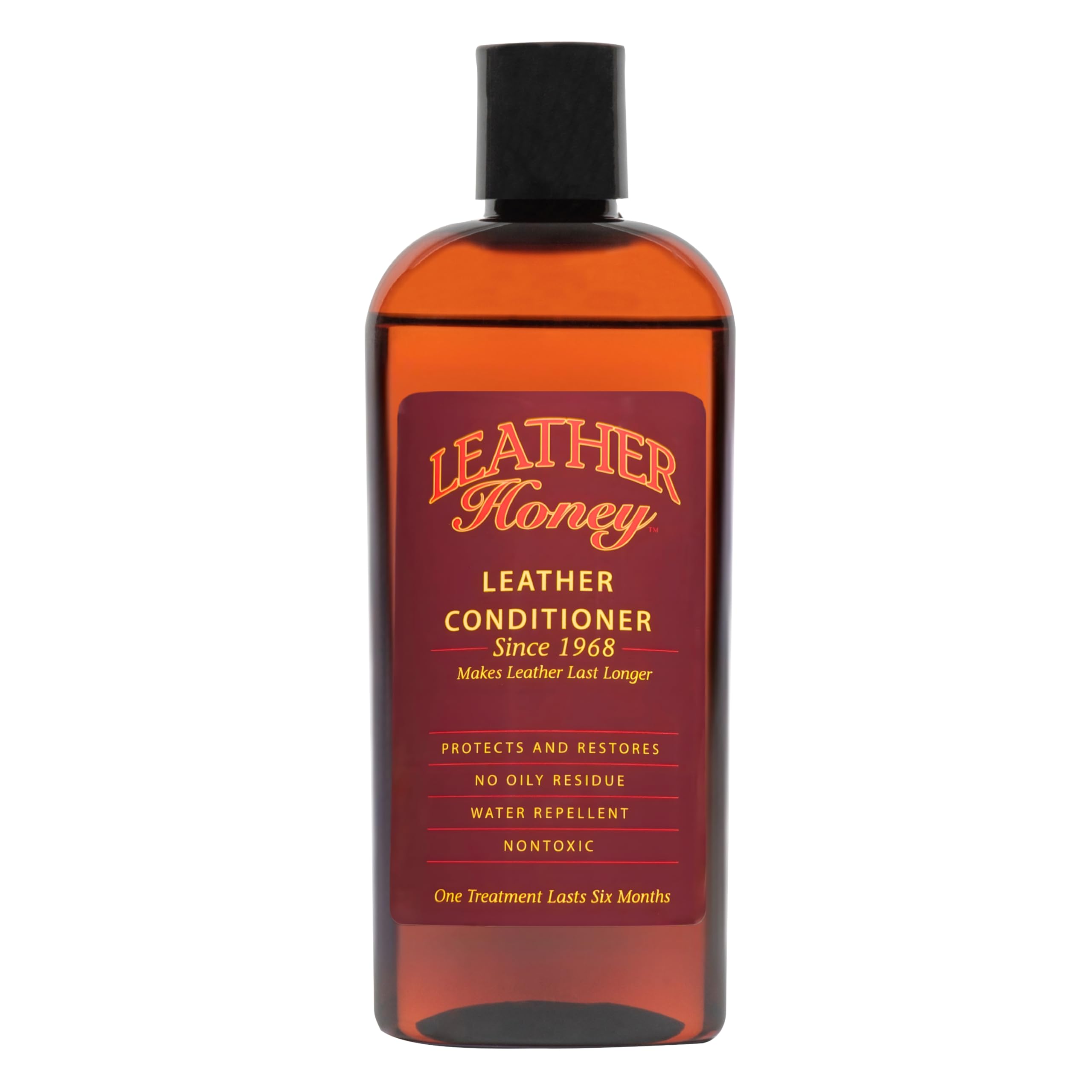
Leather Honey Conditioner

91 /100
Angler Score Outstanding

Key details

Form
Liquid
Size
8 fl oz
Scent
Unscented
Non-toxic
Yes
Check Details on Amazon

The first squeeze explains everything. Leather Honey comes out thick and slow, closer to syrup than to the thin liquids here, and that viscosity is the whole proposition: a small amount carries a lot of conditioning into leather that has dried out from the inside. We treat it as the heavy feeder in this group and use it far more sparingly than anything else on the shelf.

On neglected leather the change is obvious. A jacket that has been hanging in a dry room, or a pair of boots that spent a summer in a garage, come back supple, with a soft sheen rather than a shine. It's unscented and non-toxic, which matters when you're working it in with bare hands, and it's sold as water repellant once it has soaked in.

Technique matters more here than with anything else we tested. Warm a little between your fingers, spread it thin and even, and wipe off whatever hasn't sunk in after twenty minutes — thick patches are what leave the tacky film and the streaks. On a couch or a car seat, work in sections and keep the cloth moving. Done that way, one bottle covers a lot of leather.

Pros

  • Concentrated
  • Unscented and non-toxic for bare-hand use
  • Revives seriously dried-out leather
  • Water repellant once it has soaked in

Cons

  • Can darken light-colored leather
Our verdict

A concentrated conditioner for leather that's been left dry too long — thick, unscented, and best applied sparingly with warm hands.

Check Latest Price

How We Tested 15 Leather Boot Conditioners

We started by gathering everything sold specifically as a boot conditioner — balsams, oils, beeswax greases, and heavier pastes — then narrowed hard. That meant cutting products that are mostly polish or mostly solvent, dropping anything that only comes in a size you would never finish, and keeping a spread of budgets, formats, and leather types. The shortlist landed at 15, from old-line workwear labels to newer balm tins, and we lived with them for six months.

Testing happened on real boots, not leather scraps: a pair of brown Chelsea boots worn three days a week, work boots that came home with road salt and mud on them, and a few dried-out pairs that had sat unworn in closets. We brushed off loose dirt and wiped each pair down with a damp cloth first, watching whether the conditioner lifted the remaining grime or simply pushed it into the seams. Before the first application we scooped from each tin by hand and noted whether the stuff was greasy, waxy, grainy, or thin enough to run off a finger.

Then we applied it the way the label said — fingers, cloth, or brush — and timed how long the leather took to absorb a coat and how much buffing it needed before it stopped feeling tacky. Darkening got the closest look: we photographed the same stretch of tongue before and after in the same window light, then checked again a week later to see whether the color settled back or stayed put. We also dribbled water over a conditioned half and an untreated half to see where it beaded, and weighed each tin before the first coat and after the last to figure out what a single treatment actually costs. The pairs that came out on top are still in rotation.

How to Choose a Leather Boot Conditioner

Decide How Much Color Change You Can Live With

Oils, greases, mink oil, and pine tar all deepen leather as they soak in, and on tan or light brown boots that shift can be permanent. Dark brown and black boots absorb it with no visible harm. So the first question isn't which conditioner is strongest — it's what color your boots are and whether you can afford to lose a shade. Bick 4 is the wax-free liquid here that won't darken leather, and Renapur is the balm sold as color neutral; both are the choices for tan, burgundy, or contrast-stitched boots.

Test on a hidden patch first — inside the tongue, under the lace flap, behind the heel counter — and give it a day to settle. Whatever the label promises, a patch nobody sees is cheaper than a pair you stop wearing.

Match the Format to the Job

Liquids and creams (Bick 4, Leather Honey, Saphir) are maintenance products: they go on thin, lift light dirt, and suit boots you treat every month or two. Balms (Renapur) sit in between, feeding leather and leaving a little protection behind. Pastes and greases (Obenauf's Heavy Duty LP, Huberd's) are for weather, applied a few times a season to boots that get genuinely wet. Oils (Obenauf's Leather Oil, mink oil) are for the first weeks of a stiff new pair, when the leather needs to move more than it needs a finish.

Most people need two of these, not five: a maintenance product for regular care and a grease for the worst months. One of each costs far less than the boots it protects.

Weigh Weather Protection Separately From Conditioning

A conditioner feeds leather; a wax or grease builds a barrier on top of it. Thin, wax-free liquids restore suppleness but do little against standing water, and any waterproofing claim on a conditioner should be read as resistance rather than a promise. If your boots see wet grass, salted sidewalks, or mud daily, choose a grease and accept that it will darken. If they meet weather occasionally, condition well and top up before the wet season starts.

The trap is assuming a conditioner has you covered because the bottle mentions water somewhere. Check whether the product actually claims repellency or waterproofing — of the picks here, the greases do and the thin liquids mostly don't.

Apply Less Than You Think

Every product in this guide works better in thin coats. Over-application is what leaves sticky films, streaks, and pale residue dried into stitching, and it doesn't condition any deeper — the excess sits on the surface until you wipe it off. Warm the leather first, work a thin layer in, buff or wipe away the rest, and give the boots a day before you judge the result.

That's also why container size matters less than it looks. A 6.7-ounce pot and a 16-ounce bottle each last through years of treatments at a few coats a season, so you're buying the next several winters rather than one job.

Frequently Asked Questions

Final Verdict

Bick 4 is the bottle we recommend first, and the reason is narrow and practical: it conditions well and it doesn't change the color of the leather you bought. That covers most boots and most households, and the big bottle means you'll actually keep using it.

Two situations justify a second product. Boots that meet rain, salt, and mud every week want Obenauf's Heavy Duty LP or Huberd's Shoe Grease, and they should be dark to begin with. Boots whose color you can't gamble on at all want Renapur's balm and the sponge that comes with it.