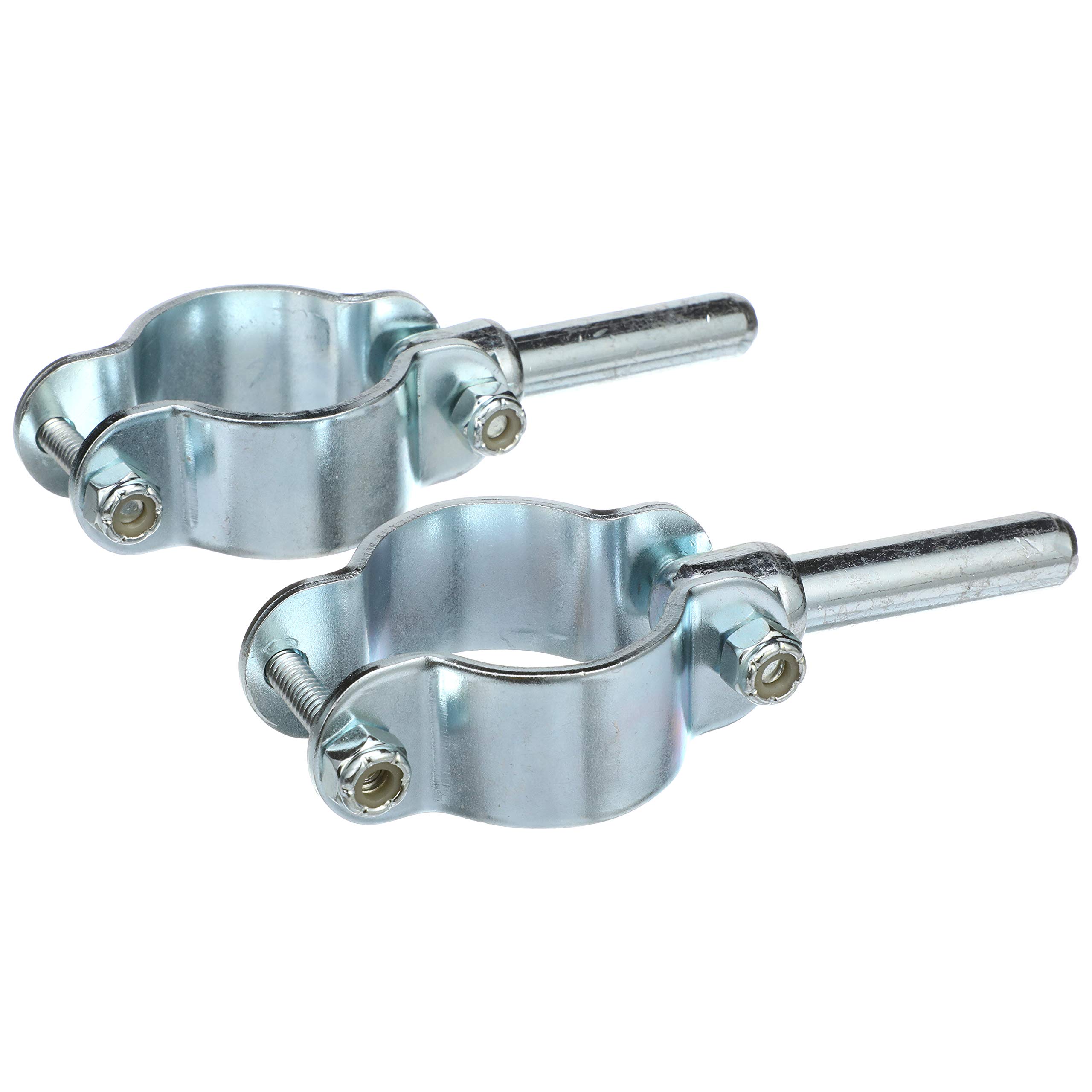
Best Oarlocks of 2026

Halfway across a lake with the wind pushing you toward a rocky shore is a bad time to find out your oarlock doesn't fit. The oar pops loose, you lunge for it, and the day is basically over. Oarlocks are the least glamorous hardware on any boat, which is why so many of us buy a pair without checking the two measurements that actually matter. A good set disappears into the background: the oar turns smoothly in the horn, stays at the angle you set, and doesn't rattle with every stroke.

Fit is the whole ballgame, and it cuts two ways — the shank has to seat in your oar socket, and the horn gap has to clear your oar shaft without so much slack that the oar swims. Saltwater is unforgiving, too; a plated lock that looks fine in fresh water can seize after a few weekends on the coast. My team and I spent four months rowing with 14 sets, from clamp-on styles to thole pins, and a few made rowing feel effortless while a couple ended up in the bottom of the gear box.

1

Best Overall

Smart Marine 316 SS Clamp-On Oarlocks

85 /100
Angler Score Excellent

Key details

Sold As
Pair
Material
316 stainless steel
Shank Size
1/2 in x 2 in
Oar Shaft Fit
1.34–1.8 in (34–46 mm)
Check Details on Amazon

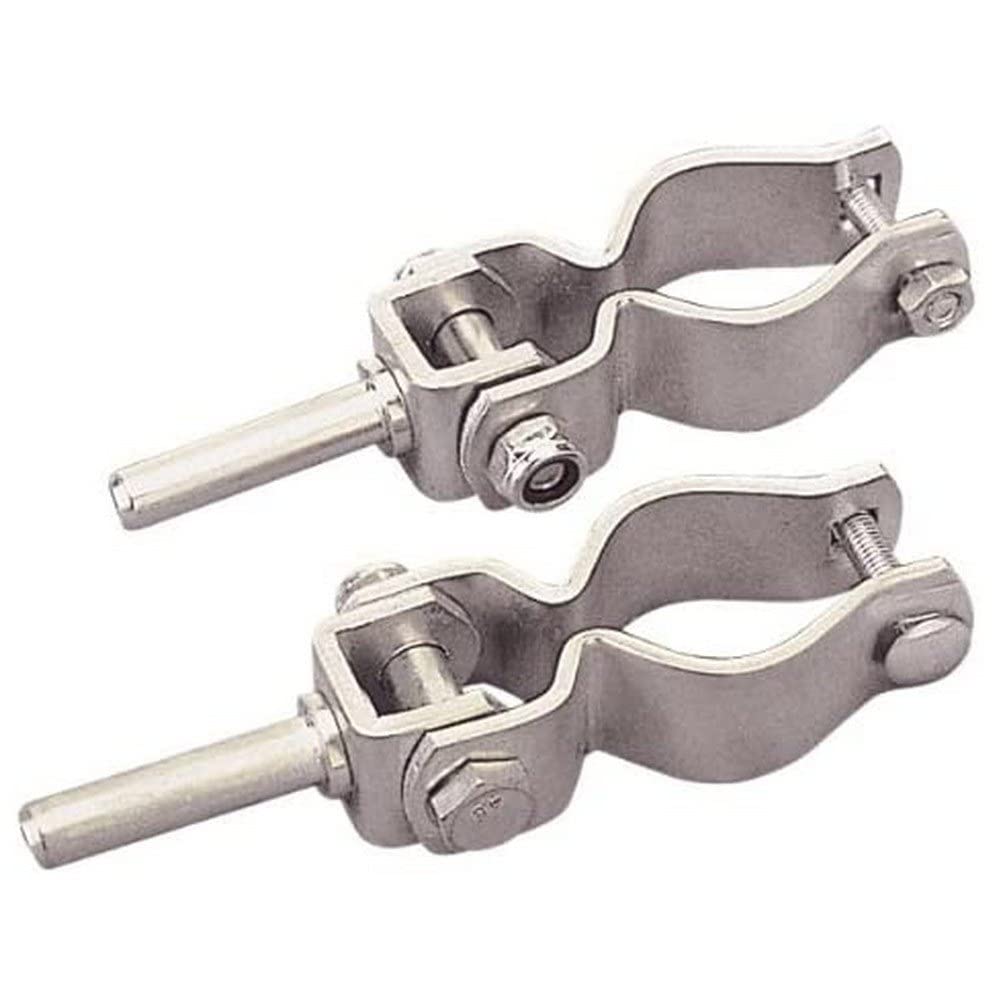
The number that decides whether a clamp-on oarlock is right for you is the oar diameter it will close on, and this pair states the widest range of the clamp-ons here: 1.34 to 1.8 inches, set by one bolt. That spread takes in the skinny shafts on a lot of inflatables as well as the fatter oars on a working dinghy, and it is the main reason this is the set we recommend first. The 316 stainless body settles the rest if the boat ever sees salt water.

The clamp is only half the design. Each oarlock carries a mounting plate that turns clockwise to lock it down in the socket and needs a counterclockwise turn to release, so it stays put when you ship the oars across a wake or leave them on a moored boat. Nothing gets drilled: the bolt closes on the shaft, and the half-inch pin drops straight into a standard socket.

Two things to sort out before the first trip. Metal tightens against your oar, so a varnished shaft will show a ring where the clamp sat, and if that is the oar you care about, the round Marinebaby pair is the better answer. And if your sockets take a keeper pin through the shank, none comes in the box; the twist-lock does that job while the oarlock is seated, but a pin is cheap insurance.

Pros

  • Adjustable clamp covers 1.34 to 1.8 inch oars
  • 316 stainless for saltwater rowing
  • Twist-lock keeps the oarlock on the socket
  • One bolt, no drilling required

Cons

  • Clamp bolt needs a wrench to readjust
  • Keeper pins are not included
Our verdict

These are the pair we fit first: the adjustable clamp spans the widest spread of oar shafts here, and the 316 stainless shrugs off salt water.

Check Latest Price
2

Best Budget

Attwood 9149-6 Rowboat Oar Locks

87 /100
Angler Score Excellent

Key details

Sold As
Pair
Material
Heavy-gauge zinc-plated steel
Shank Size
1/2 in
Installation
Clamp-on, no drilling
Check Details on Amazon

This is the least expensive pair in the group, and a cheap clamp-on is usually where corners show: thin steel that flexes, a bolt that will not hold a setting. Attwood's set does not read that way. The steel is heavy gauge under a bright zinc finish, the clamp closes with a single bolt, and there is nothing to drill.

We fit these to a dinghy without a second thought. One bolt per side and about a minute of work is the whole installation, and the half-inch shank is the size most aluminum rowboats and inflatables already carry, so there is no adapter to hunt down. For a trailer-launched boat and a short row out to a fishing spot, that is all the oarlock the job needs.

What it is not is a heavy-duty oarlock, and it does not pretend to be. If you row long distances or pull hard into wind, the Sea-Dog heavy-duty pair is the set to look at; for a small boat and short hops, these do the work and leave money for other gear.

Pros

  • Lowest price of any pair here
  • Single-bolt clamp-on, no drilling
  • Heavy-gauge steel with a bright zinc finish

Cons

  • Oar opening unspecified, so test-fit first
Our verdict

We keep a set of these for the dinghy because nothing else here costs so little and still installs in a minute with one bolt.

Check Latest Price
3

Best Heavy-Duty

Sea-Dog 582070-1 Heavy-Duty Oarlocks

89 /100
Angler Score Excellent

Key details

Weight
1.9 lb
Sold As
Pair
Material
Zinc-plated steel
Shank Size
1/2 in x 2 in
Check Details on Amazon

The set is listed at 1.9 pounds, and the weight is the first thing you notice: thick castings, a chunky clamp, a pin that is not going to bend. Nothing else in this group is built this heavily, and on an oarlock that matters more than it sounds.

That mass is why we put this pair on a boat that gets rowed hard, off a beach, into wind, with oars long enough to load the oarlock on every stroke. A clamp that flexes is a clamp that lets go, and this one holds its setting instead of backing off stroke by stroke. The half-inch by two-inch pin is the commonest socket size, so it drops into the same holes as the rest of these.

Two practical notes. The top bolt can run short on a thick oar, which takes a longer one from the hardware store and a check before you are on the water. And this is more oarlock than a pond boat needs, since a small dinghy rowed across a lake is served fine by the cheaper Attwood pair.

Pros

  • Heaviest build of the clamp-ons here
  • Holds its setting under hard pulling
  • Standard half-inch by two-inch pin

Cons

  • Zinc-plated steel at a premium price
Our verdict

The heaviest clamp-on in this set, and the one we put on a boat that gets rowed hard with long oars.

Check Latest Price
4

Best for Wooden Oars

Marinebaby 2-Inch Round Oarlocks

85 /100
Angler Score Excellent

Key details

Sold As
Pair
Material
316 stainless steel
Shank Size
1/2 in x 2-1/8 in
Oar Opening
2 in round
Check Details on Amazon

A round oarlock holds the oar differently from everything else here: nothing clamps to it. The shaft passes through a 2-inch ring on a half-inch shank, free to slide and feather, and only the ring touches the oar. For a varnished wooden shaft, the kind you would rather not put a bolt mark on, that is the design we reach for, and this pair does it in polished 316 stainless.

The stainless is the other half of the appeal. 316 is the grade that comes back from a saltwater mooring still looking like metal, and the mirror polish leaves less to snag and less to wipe down. The 2-inch inside diameter is the standard-oar size, so check your own shaft against it rather than assuming.

Check the socket too. The shank runs 2-1/8 inches, a little longer than the 2-inch pins on the clamp-on sets, so it needs a bore deep enough to swallow it. Measure the depth, not just the diameter, because on a boat with shallow sockets the oarlock sits proud and rocks on the gunwale instead of seating.

Pros

  • Nothing clamps to the oar's finish
  • 316 stainless with a mirror polish
  • Two-inch ring sized for standard oars

Cons

  • Oar sits loose and can lift in the open ring
Our verdict

For a varnished wooden oar we pick these: nothing clamps to the shaft, and the polished 316 stainless holds up in salt water.

Check Latest Price
5

Best Low-Maintenance Pick

Scotty Strongback Oar Locks

81 /100
Angler Score Excellent

Key details

Sold As
Pair
Material
Nylon over stainless steel core
Shank Size
1/2 in straight
Oar Opening
2-1/8 in
Check Details on Amazon

The body is molded nylon over a stainless steel core, which sounds like a compromise until you handle one. Nylon is slick against a socket, so the oarlock turns without the grainy grind of metal on metal, and it does not hand you a cold lump on a frosty morning.

Fit is conventional: a half-inch straight shank and a 2-1/8-inch inside dimension, so it takes the same sockets as the rest of this group and the same standard oars. The pack holds a pair.

We like these for a boat that lives outside or gets dunked in salt. The nylon shell takes the wear instead of the oar, there is no plating to flake, and the socket stays quiet on a still morning. The trade is real, though: nylon is the softest thing in the assembly, so a hard-used set will show it at the shank long before a stainless pair would, and if you row every day you want the metal. It is also the least traditional-looking oarlock here, which on a varnished lapstrake dinghy is worth a thought.

Pros

  • Nylon over a stainless core, so no rust
  • Quiet, low-friction in the socket
  • Standard 2-1/8-inch opening and half-inch shank

Cons

  • Nylon shell is the part that wears first
Our verdict

Quiet in the socket and free of rust, which is why we reach for these on a boat that lives outdoors.

Check Latest Price
6

Best for 5/8-Inch Sockets

Crooked Creek Trac Oar Locks

82 /100
Angler Score Excellent

Key details

Sold As
2 pack
Material
Zinc-plated steel
Shank Size
1/2 in or 5/8 in with bushing
Oar Shaft Fit
Up to 1-7/8 in
Check Details on Amazon

The reason to look at this set is the bushing in the package. It converts the half-inch shank to five-eighths, so one oarlock covers the two socket bores you are likely to meet, and if your boat has the larger holes it is the only pair here that drops in without hunting for an adapter.

The other end opens wider than most, taking oar shafts up to 1-7/8 inches, and it is zinc-plated steel under a black chromate finish with a single screw clamping it to the oar. The two halves are a matched set: you buy it because the bushing solves your socket, not because it is the thriftiest way to get clamps.

Where these earn their place is the middle of the range. A 1-1/2-inch oar in a five-eighths socket is the combination that leaves most sets out, and this one handles it with nothing extra to buy. On the diameters it grips, the clamp bites and stays put. The hardware around it is ordinary, though, and the screws are the weak point, so set them snug once and leave them alone rather than re-tightening every trip.

Pros

  • Bushing covers 1/2- and 5/8-inch sockets
  • Clamp opens to 1-7/8-inch oars
  • Black chromate over zinc-plated steel

Cons

  • Will not clamp down on oars near 1-1/4 inch
Our verdict

The one to buy if your boat's sockets take a 5/8-inch shank, since the included bushing covers both sizes and the clamp opens wide.

Check Latest Price
7

Spare Pairs

Sea-Dog 582060-1 Clamp-On Oarlocks

89 /100
Angler Score Excellent

Key details

Sold As
Pair
Material
Zinc-plated alloy steel
Shank Size
1/2 in x 2 in
Check Details on Amazon

The plainest oarlock in this guide, and the one most likely to already be in the boat you just bought: zinc-plated alloy steel, a half-inch by two-inch pin, one clamp bolt, sold as a pair.

The hardware is straightforward. Installation is a minute a side, and the half-inch pin is the size the sockets on most aluminum rowboats take, so it drops in without an adapter or a bushing.

What surprised us is the finish. Plated steel at this end of the range usually looks it, and a pair out of the pack reads bright and even, the sort of plating that makes the oarlocks look like they belong on the boat rather than like a stopgap.

Where this pair fits best is the boat used a few weekends a season, and the second set in the shed. The hardware is ordinary and the price reflects it; what you are not getting is the thickness of the heavy-duty Sea-Dog set or the salt-proof body of the Smart Marine.

Pros

  • Bright, even plating for the price tier
  • Simple single-bolt installation
  • Half-inch by two-inch pin fits common sockets

Cons

  • Will not close on narrower oar shafts
  • Jaw can crack under a hard pull
Our verdict

The plated clamp-on we reach for when the oars are on the fat side and the budget is modest; it looks better than it costs.

Check Latest Price
8

1-3/8-Inch Oars

Seachoice 70521 Clamp-On Oarlocks

84 /100
Angler Score Excellent

Key details

Sold As
Pair
Material
Zinc-plated steel
Shank Size
1/2 in x 2 in
Oar Opening
1-3/8 in inside diameter
Check Details on Amazon

A fixed 1-3/8-inch inside diameter is the whole story here. This is a sized oarlock rather than an adjustable one, and the opening is what we check first on any fixed-size design, because it either matches your shaft exactly or it does not fit at all.

The rest is proven and unexciting: zinc-plated steel, a single clamp bolt, a half-inch by two-inch pin, a pair in the pack. Installation is a minute a side and needs nothing but a wrench.

The plating is honest for the tier, a bright silver finish that wipes down clean. It is not stainless, so a set left aboard a saltwater boat will spot, and rinsing them with the rest of your gear gives the finish a fair chance.

Buy this pair when you have measured 1-3/8 inches and want the simplest thing that works. If the number does not match, do not force it: the Smart Marine pair covers that diameter and a good deal more on either side.

Pros

  • Sized for 1-3/8-inch oar shafts
  • Single-bolt installation
  • Low price for a plated pair

Cons

  • Fixed opening, no adjustment for other sizes
Our verdict

Buy this pair when your oars measure 1-3/8 inches and you want to spend as little as possible on a clamp that works.

Check Latest Price

How We Tested Oarlocks (and What Fit Really Means)

We pulled spec sheets on more than 40 oarlocks and cut the field on the things that rule a set out before it ever touches water: shank diameter, horn opening, material, and whether the clamp bites a gunwale or spins on it. Fit complaints came up again and again in customer reviews, so we measured every lock with calipers and checked it against three different oar sockets and four oar shafts.

That left 14 sets, which we rowed with over four months — on a calm lake before the wind picked up, on a tidal creek with current running against us, and from an inflatable dinghy where the oarlocks are the only thing keeping the boat straight. We rowed loaded boats into headwinds, feathered the blades through weeds, and deliberately let the oars swing wide to see whether a lock held its angle or slipped. After each session we hosed everything down, and the sets used in saltwater were left to dry without a rinse so we could watch for rust and siezed pins.

Installation got timed with a wrench and a screwdriver, because a clamp-on lock that needs two hands and a second person is a nuisance at the ramp. We noted whether the clamp crushed or distorted the rail when tightened, whether the lock wobbled after a morning of rowing, and how much play the horn had once the oar was seated. Sturdiness came down to plain abuse: dropping a set on gravel, over-tightening one on purpose, checking the pin for bend. Value for money got the last word — we weighed what each lock felt like after months of use against what it cost, and more than one cheap pair outlasted a pricier one.

How to Choose Oarlocks

Start With the Oar, Not the Boat

The clamp or the ring is the part that touches your oar, and the measurement that matters is the shaft diameter right where the oarlock sits, not the handle and not the blade end. Clamp-on designs work in a range: the Smart Marine pair closes from 1.34 to 1.8 inches, and the Crooked Creek clamp opens to 1-7/8. Round oarlocks do not adjust at all, so a 2-inch ring on a 1-5/8-inch oar leaves the shaft loose, while a fixed 1-3/8-inch opening like the Seachoice one will not take it at all.

Measure before you shop. On a tapered oar the diameter changes along the loom, so pick the spot where the oarlock will sit and measure there.

Match the Shank to the Socket

The other half of the fit is the pin that goes down into the boat. A half-inch shank, two inches long on most of these, is the common size on aluminum rowboats, jon boats and inflatables, and nearly every set here uses it. Five-eighths exists too, which is why the Crooked Creek pair ships with a bushing that converts one to the other. A small pin in a big socket rattles and wears the bore oval, and a shank longer than the socket is deep leaves the collar sitting proud so the oarlock rocks instead of pivoting.

Pull one oarlock and measure the bore and its depth. The trap is buying clamp-on oarlocks for a boat that has no sockets at all: clamps grip the oar, not the boat, and without a socket on the gunwale there is nothing to drop them into.

Clamp-On or Round

A clamp-on oarlock bolts to the oar itself, so oar and oarlock move as one piece in the socket. That gives you a repeatable oar position, since you set the clamp once and your hands land in the same place every trip, and the oar cannot slide out of the oarlock mid-stroke. The cost is a bolt tightened against your oar's finish, and a wrench if you want to move the balance point.

The round oarlock is the older shape: a ring on a shank. Nothing touches the oar's finish, and the oar is free to slide and feather, which is what most wooden-oar rowers want. The trade is that the oar can lift in the ring in a chop, and a second set of oars in a different diameter needs a second set of rings.

Match the Metal to the Water

Zinc-plated steel is the value option and it holds up fine in fresh water as long as the oarlocks come off the boat and dry. Salt changes the arithmetic: 316 stainless, the grade on the Smart Marine and Marinebaby sets, is what comes back from repeated dunkings still doing its job, and the difference in cost is smaller than replacing a plated set every few seasons. Molded nylon over a stainless core, as on the Scotty, is the third route: no rust bleeding onto a painted gunwale, no cold metal in your hand in April, and a quieter socket.

Be honest about where the boat lives. A trailer-launched jon boat on a reservoir does not need 316; a dinghy kept on a saltwater mooring does.

Frequently Asked Questions

Final Verdict

For most rowers the Smart Marine pair is the answer. The adjustable clamp covers the widest spread of oar shafts in this group, the 316 stainless survives salt water, and the twist-lock keeps the oarlock seated in the socket while you row.

If the oars are varnished wood and the boat already has sockets, take the round Marinebaby pair instead, because nothing clamps to the finish. And if the budget is the deciding vote, the Attwood set installs with the same single bolt for the least money here.