Best Permethrin Spray for Clothing of 2026

The tick I flicked off my sock after a June hike is the reason I now treat my hiking clothes instead of just myself. Permethrin isn't bug spray: it goes on the fabric, not your skin, and a treated shirt kills ticks and mosquitoes that land on it rather than waiting for them to reach an ankle or a waistband. It's the difference between hoping nothing crawls up your pant leg and knowing that fabric is doing the work.

My team and I spent four months with 14 sprays, from aerosols and trigger bottles to concentrates, treating hiking pants, socks, camp chairs, and a tent. What separates them isn't the active ingredient; it's how evenly the spray lands, whether the smell clears, how many washings the protection survives, and what you pay per treated outfit. Two things worth knowing before you buy: permethrin has to dry completely before it touches skin, and cats should stay away from anything still wet. The picks below are the ones that earned a permanent spot in my gear bin.

1

Best Overall

Sawyer SP618 Permethrin Aerosol

95 /100
Angler Score Outstanding

Key details

Fabric
Won't stain or damage fabrics
Format
18-ounce aerosol
Treats
About 4 outfits per can
Protection
Up to 6 weeks or 6 washings
Check Details on Amazon

An aerosol is the least fussy way to get permethrin onto fabric, and this is the can we reach for first. The mist is fine enough that a shirt front wets out evenly in a few passes instead of soaking one shoulder and missing the other, and it reaches the seams and cuffs where a tick actually crawls. We treated a cotton tee and a pair of hiking pants on a porch rail and left them overnight; both came out soft, unmarked, and free of smell by morning. The scent while the fabric is still wet is the only part we noticed, so treat in the evening rather than ten minutes before you leave.

The label makes the promise that matters: it bonds for up to six weeks or six washings, whichever comes first. Sweat and rain don't undo it; UV and washing-machine agitation do. That means the clock runs on how often you launder a garment and how much sun it sees, which for most people works out to one treatment per hiking shirt per season and one per hunting jacket per fall. Refresh before a long trip rather than trusting something you sprayed in June.

Volume is where it gives ground. An 18-ounce can treats about four outfits, so a family's worth of pants, shirts and socks runs through cans quickly. For one person's gear that's fine, and it's the cheapest way to find out whether you like treated clothing at all. Outfitting a closet, a tent and everybody's boots is a different job — the twin pack or the gallon handle that with less waste and fewer spent cans.

Pros

  • Even, fine mist that covers fabric quickly
  • Bonds for up to 6 weeks or 6 washings
  • Dries clear without staining or stiffening
  • Least expensive way into a treated wardrobe

Cons

  • One can treats only about four outfits
Our verdict

Our default pick: an even aerosol mist, up to six weeks or six washings of protection, and the least expensive start of anything here.

Check Latest Price
2

Best for a Season's Gear

Sawyer SP6572 Twin Pack Trigger Spray

93 /100
Angler Score Outstanding

Key details

Fabric
Won't stain or damage clothing or gear
Format
Twin pack, 24-ounce trigger spray
Use On
Shirts, pants, socks, boots, sleeping bags
Protection
Up to 6 weeks or 6 washings
Check Details on Amazon

A trigger spray gives you something an aerosol can't: control. You can flood a sock, a boot cuff or a collar and leave the rest of the garment alone, which matters because those are the places a tick actually reaches. The twin pack splits neatly — one bottle for the closet, one for the truck — and it carries the same bonding claim as every Sawyer bottle here, up to six weeks or six washings, along with the strongest tick protection in this set.

The pump is the weak link. Trigger bottles turn up with a plain screw cap instead of a nozzle, and triggers that sputter or shoot a stream rather than a mist. Open the box the day it lands rather than the night before a trip, and keep a spare spray bottle in the garage — decanting into a hardware-store sprayer takes a minute and gets you back to a proper mist.

Application is wetter than an aerosol, so give it time. We treat on a line outdoors in the morning and wear the next day; heavy cotton takes longer than a nylon shell. The payoff is that you decide how much lands on each garment, so a bottle goes further than a small fogger and you're not misting half the porch to reach one pant leg.

Pros

  • Trigger control for socks, cuffs and collars
  • Up to 6 weeks or 6 washings per treatment
  • Twin pack splits between closet and truck

Cons

  • Wetter spray that needs an overnight dry
Our verdict

Two big trigger bottles for a whole season of clothing and gear, and the strongest tick showing in this group — provided the nozzle in the box actually works.

Check Latest Price
3

Best Coverage per Bottle

Ranger Ready Permethrin Spray 2-Pack

90 /100
Angler Score Outstanding

Key details

Format
Two 24-ounce trigger bottles
Treats
About 7 outfits per bottle
Formula
0.5% permethrin, DEET-free
Protection
Up to 5 washings or 40 days
Check Details on Amazon

The mist is the first thing you notice. It's a fine trigger spray rather than a fog, so a shirt gets saturated without the whole porch getting treated too, and it dries clear on nylon — the rain shell and hiking pants we treated came out looking untouched. The formula is 0.5% permethrin, DEET-free, and the scent is close to nothing once the fabric is dry.

Seven outfits from one bottle is the number that decides it. Ranger Ready lists each 24-ounce bottle as enough for seven shirts, seven pairs of pants and seven pairs of socks, which is more fabric per bottle than anything else in this guide that states a figure — the Sawyer aerosol covers about four outfits. For a family packing for a week away, or one person treating a full week's kit plus a spare set, that yield is the entire argument.

Protection runs up to five washings or 40 days of sun, close enough to the six-week claim on the Sawyer bottles that nobody should choose between them on durability. Where it slips is tidiness: the triggers can weep, so double-bag the bottle if it's riding in a duffel or a checked bag, and store it upright between trips.

Pros

  • About seven outfits per 24-ounce bottle
  • Fine mist that covers without drenching
  • Dries clear on synthetics with minimal scent
  • Protection window matches the top pick

Cons

  • Sold only as a two-pack
Our verdict

The bottle we reach for when a whole trip's worth of clothes needs treating: about seven outfits per bottle and a fine mist that covers evenly.

Check Latest Price
4

Best Bulk Buy

InsectGuard Permethrin Gallon

90 /100
Angler Score Outstanding

Key details

Fabric
Won't stain clothing or gear
Format
1-gallon ready-to-use jug
Treats
Up to 40 outfits
Formula
0.5% permethrin, no dilution
Check Details on Amazon

A gallon sounds like overkill until you count the pile. The listing puts one jug at up to 40 complete outfits at the lowest cost per outfit of anything here, and it's ready-mix at 0.5%, so there's no diluting, no measuring and no second container of concentrate to lock away from the kids. For a family of four prepping for a week in the woods, or a camp arming a dozen hikers, this is the only format here that doesn't run dry halfway through the job.

Know what you're buying, though: a jug, not a spray bottle. You'll want your own sprayer or a shallow tray for dipping, and the nozzle is the weak point — jugs have arrived with nothing to spray with at all. Add a trigger sprayer to the order at the same time and you'll never think about it again.

On fabric it behaves like the rest: no staining, almost no smell once dry, and effective on clothing, tents, packs and boots. Plan on retreating after three or four washes rather than the six the Sawyer bottles claim. The label also covers indoor and space spraying for roaches, flies and bed bugs, which is more than a clothing treatment — store it high, and out of reach of kids and pets.

Pros

  • Treats up to 40 outfits per jug
  • Ready-mix 0.5% permethrin, no dilution
  • Won't stain clothing or outdoor gear

Cons

  • Jug format needs a separate sprayer
  • Shorter wash life than the Sawyer bottles
Our verdict

A gallon of ready-to-use permethrin that treats up to 40 outfits — the sane buy for a family, a camp or a scout troop that goes through gear.

Check Latest Price
5

Short Trips

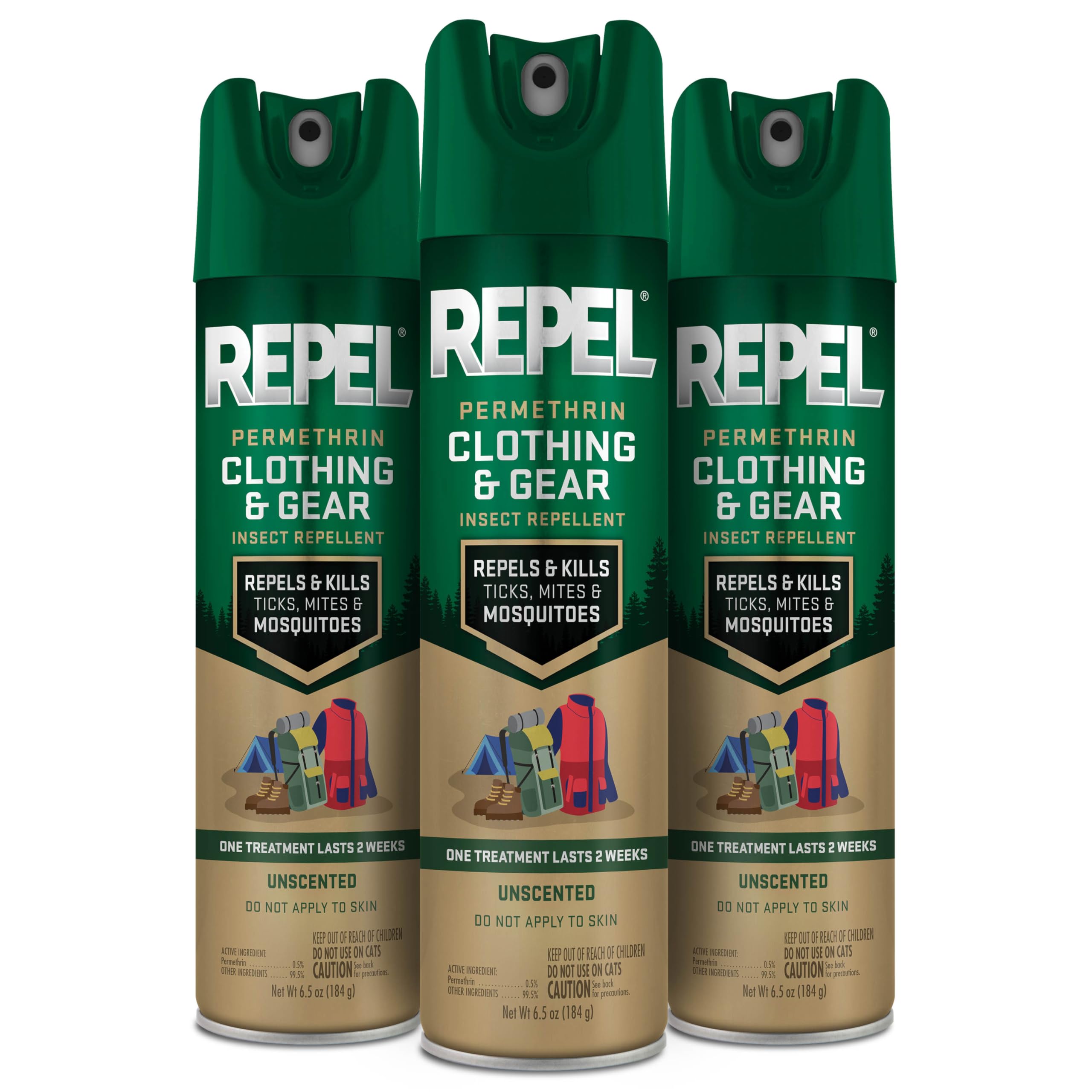
Repel Permethrin 3-Pack

92 /100
Angler Score Outstanding

Key details

Scent
Unscented
Format
Three 6.5-ounce bottles
Use On
Nets, tents, sleeping bags, backpacks
Protection
Up to two weeks
Check Details on Amazon

Two weeks is the shortest protection window in this group, and it's the honest way to read this three-pack: buy it for a trip, not for a wardrobe. Three 6.5-ounce bottles tuck into a duffel, a glove box or a tote of camp gear, and each one is small enough that you'll finish it rather than leaving half a bottle on a shelf until next summer.

Gear is where we got the most out of it. The label covers nets, tents, sleeping bags and backpacks as well as clothing, so a few minutes of work on a camp chair, a hat, a head net and a pack cover takes care of the surfaces you brush against all weekend. It's unscented, dries quickly, and left nothing visible on nylon.

The trigger is the frustration. These nozzles can spit air and foam before they settle into a spray, so prime one into the grass before you point it at a jacket. Once it's running, coverage is even enough for small items — and that two-week window is what keeps this a trip-sized buy rather than a season's supply.

Pros

  • Three small bottles that fit a trip kit
  • Labeled for tents, nets, packs and sleeping bags
  • Unscented and quick to dry

Cons

  • Only about two weeks of protection
Our verdict

Small bottles with the shortest protection window here — the right buy for one trip or a daypack, not for a season's wardrobe.

Check Latest Price
6

Small Loads, Weekends

Insect Shield Permethrin Aerosol

87 /100
Angler Score Excellent

Key details

Fabric
Dries odorless, won't damage fabric
Format
6-ounce aerosol
Formula
EPA-registered permethrin
Protection
Up to 60 days
Check Details on Amazon

Sixty days is the boldest number on any label in this guide, and a six-ounce aerosol is the smallest way to find out whether treated clothing earns a place in your routine. The can lists shirts, shorts, pants, shoes, socks, tents, netting and sleeping bags — a broader list than most — and it dries odorless on fabric.

Six ounces doesn't go far. A shirt, a pair of pants and a hat will noticeably lighten the can, and coverage is where this one loses points: the spray can come out in a straight line rather than a mist, which leaves dry patches unless you keep the can moving and work in overlapping passes.

What we like it for is a narrow job — refreshing a couple of items mid-season, treating a hat and a head net before a weekend, or keeping a small can in the truck for the shoes you wear in tall grass. For anything bigger, six ounces makes it slow work through a pile of laundry.

Pros

  • Up to 60 days of claimed protection
  • Dries odorless on fabric
  • Long list of treatable items

Cons

  • Six-ounce can covers only a few items
  • Spray can come out in a straight stream
Our verdict

The longest protection claim here in the smallest can — worth it for refreshing a couple of items before a trip, not for outfitting a closet.

Check Latest Price

How We Tested Permethrin Clothing Sprays

We started by pulling every permethrin clothing spray we could find, then cut the list down to formulas that were EPA-registered, listed their concentration, gave a clear dry time, and stated how many washings the protection should survive. That left 14 sprays, which my team and I used from early spring through midsummer, roughly four months. Each one got the same jobs: a week of hiking pants and socks, a couple of camp chairs, and one tent.

On a Saturday morning I'd hang clothes on a rack in the driveway, spray from about eight inches away, and watch how the fabric took it, noting a smooth, even darkening versus drips running down a pant leg or a trigger that sputtered and needed re-priming. I timed how long a full load took, checked whether the nozzle kept working upside down on a tent wall, and looked for tacky spots after four hours of drying, paying extra attention to cuffs, ankles, and waistbands where bites actually happen. I wore each treated shirt the next day and noted whether it smelled like anything. Then the clothes went into real use: trail runs, a camping weekend in tick country, evening yard work, and dog walks through tall grass, followed by a head-to-ankle tick check.

Longevity got the longest window. I washed treated items in cold water on a gentle cycle and marked when a spray's protection stopped lining up with the wash count on its label, and I kept a running cost per treated outfit so a cheap bottle that needed constant reapplication didn't get a free pass. Treated items stayed off the furniture and away from my cat until bone dry, and I read every label's skin-contact warning before anything went on a body or in a laundry basket.

How to Choose a Permethrin Spray for Clothing

Format is the choice you'll feel every time

An aerosol lays down a fine, even mist and reaches seams, cuffs and the inside of a boot without much technique; it's what we hand someone treating clothing for the first time. A trigger spray is more controlled and better for spot-treating socks and collars, but it wets fabric harder, so plan on an overnight dry. A jug is a refill, not an applicator — you supply the sprayer. The trap with small cans: six ounces is compact in a pack, not generous on a shirt.

Read the claim in washes, not weeks

The standard bond lasts up to six weeks or six washings, whichever comes first, and those two numbers usually fight each other. Sweat and rain don't strip it; ultraviolet light and the agitation of a washing machine do. That makes your laundry habits the real variable. A hiking shirt you wash after every weekend needs re-treating long before six weeks pass, while a hunting jacket worn twice a season may get through the fall on one application. Treat what you'll actually wear this season rather than the whole closet.

Work out cost per outfit

Bottle price tells you almost nothing. An 18-ounce aerosol treats about four outfits, a 24-ounce trigger about seven, and a gallon up to 40. Divide before you decide. A gallon is the cheapest fabric for the money when you're treating a family or a group, but only if you already own a sprayer and have somewhere to store it. For one person treating a shirt, pants and a pair of socks, a single can is the smarter buy.

Keep it off skin, and away from cats

These are fabric treatments. Permethrin goes on clothing, boots, packs and tents, never on skin, and the exposed strip at your ankle still needs a DEET or picaridin product. The other household rule is cats: permethrin is toxic to them while the fabric is wet, so hang treated items outdoors or in a garage a cat can't get into, and don't let one curl up on a damp jacket. Spray in the open air rather than a closed closet.

Frequently Asked Questions

Final Verdict

Start with the Sawyer SP618 aerosol. It's the least expensive way in, the mist covers a shirt evenly without soaking it, and the six-week or six-wash bond is the same protection the bigger bottles promise. Treat a shirt, a pair of pants and your socks, and see whether treated clothing earns a permanent place in your pack.

If the pile is bigger than one person, the format changes. Ranger Ready's two-pack treats about seven outfits per bottle for a trip's worth of clothes, and the InsectGuard gallon is the sane buy for a family, a camp or a tent, as long as you add your own sprayer.