Best Saltwater Spinning Reels of 2026

Saltwater is where good reels go bad quietly. A reel that spins like silk on the shop floor can feel like a coffee grinder by August: the drag goes sticky, the handle develops a hitch, and a fish of a lifetime takes line while you're jiggling the bail. What a capable saltwater spinning reel actually buys you is consistency — the same smooth crank and the same predictable drag in month eight that you had on day one.

I've kept two rods rigged and ready in the truck for most of this year, and my team put 11 reels through eight months of salt alongside me, from budget workhorses to reels that cost more than a decent rod. Here's what nobody tells a first-time saltwater buyer: the max drag printed on the box is a lab number, and what actually decides a fight is how the drag behaves in the low, half-turn range where you fish it. That gap between the spec sheet and real behavior sorted our picks more than anything else. Everything below earned its place in the salt.

1

Best Overall

Penn Battle IV

94 /100
Angler Score Outstanding

Key details

Size
3000
Weight
11.6 oz
Max Drag
15 lb
Line Retrieve
35 inches
Check Details on Amazon

An aluminum frame, aluminum sideplates, and 11.6 ounces on the scale. Nothing else in this group pairs a metal body with that little weight, and it's the reason this Penn ends up on so many rods: mount it on a 7-foot medium inshore stick and the outfit balances near the reel seat instead of pulling the tip down. The 3000 spool is the other half of the argument — big enough for slot reds, schoolie stripers, snook, and the odd bonito, small enough to cast all morning.

Penn's HT-100 carbon drag tops out at 15 pounds, and the 6.2:1 gear pulls 35 inches of line per turn. We care more about that second number than most shoppers do. A fast retrieve lets you pick up slack in current or when a fish turns and runs at the boat, and 35 inches is quick enough to matter without feeling frantic.

Fifteen pounds is where this reel gives ground to the cheaper ones here — the NautiX and the Sharky both publish more than double that. If you're chasing sharks, big rays, or jumbo jack from a pier, the extra ceiling is the point and you should shop for it. For the inshore fish most people actually chase, a smooth 15 pounds with an aluminum frame behind it stops more than a bigger number on a body that flexes.

What the Battle doesn't carry is a sealing rating. Penn publishes one for the Spinfisher and doesn't for this reel, so if you wade chest-deep or fish the wash on a rough day, that's the upgrade to make. For boat, dock, jetty, and calm-surf duty, it's the reel we reach for first when we don't know what the day will throw at us.

Pros

  • All-aluminum body at just 11.6 oz
  • Smooth HT-100 carbon drag, 15 lb ceiling
  • Fast 35 inches of line per crank
  • Braid-ready superline spool

Cons

  • 15 lb drag ceiling trails the budget reels here
Our verdict

One reel for inshore, jetty, and light surf duty without weighing down your rod — this is the saltwater spinning reel we recommend to most people.
Check Latest Price
2

Best for Heavy Inshore

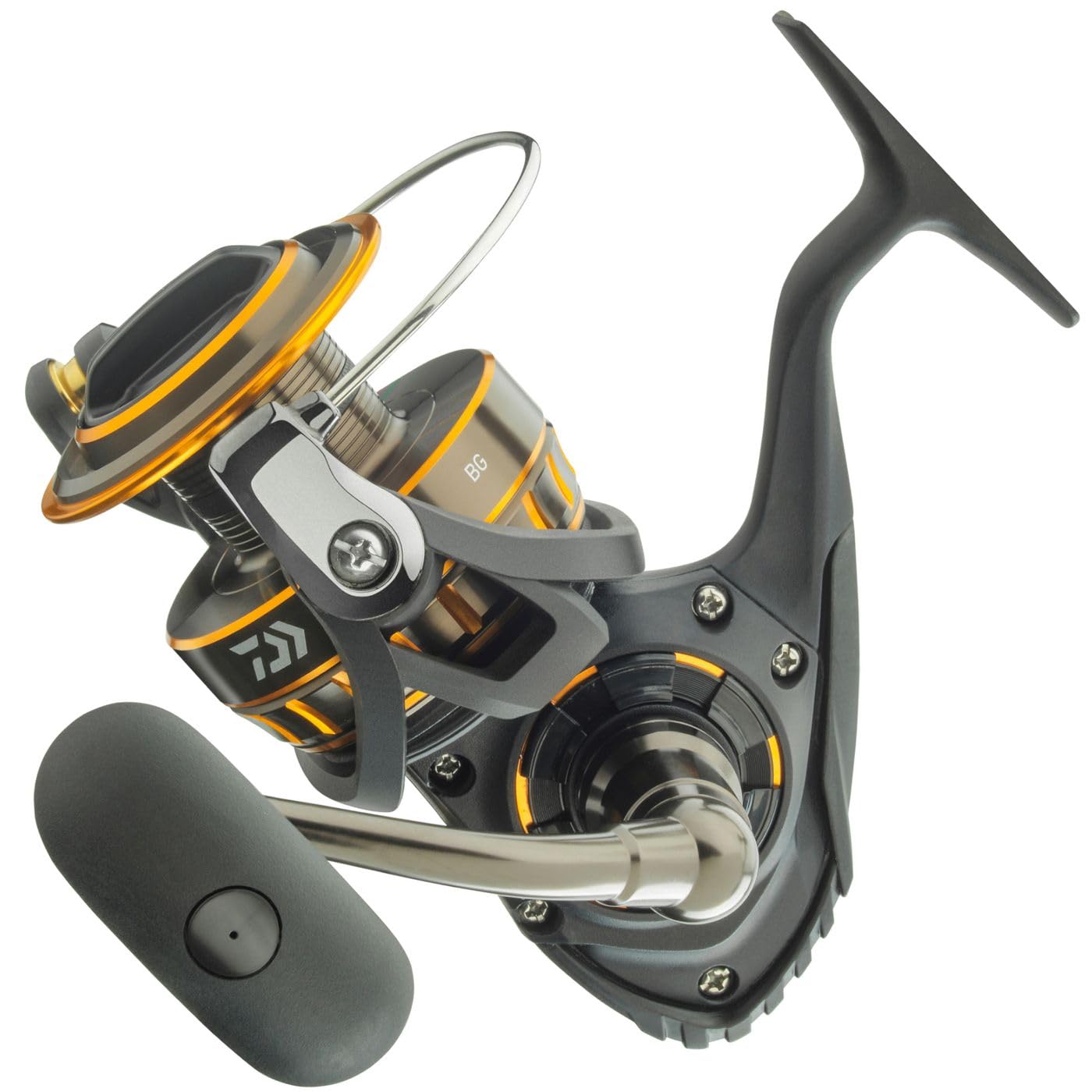
Daiwa BG

90 /100
Angler Score Outstanding

Key details

Size
4000
Weight
14.3 oz
Max Drag
17.6 lb
Line Retrieve
39.9 inches
Check Details on Amazon

The BG asks more than our top pick and hands back a bigger reel: a 4000 spool that swallows 260 yards of 12 lb mono or 230 yards of 30 lb braid, and 14.3 ounces of machined aluminum in the hand. Whether that trade is worth it depends entirely on what you're chasing.

We like it best as a winch. The 5.0:1 gear turns up 39.9 inches per crank, which isn't fast, and that's the point — low gearing and Daiwa's oversized Digigear give you torque for turning a big fish away from structure instead of just dragging it. On a boat rod or a heavy surf setup it makes sense. As an all-day casting reel for school fish, it's more reel than the job needs.

The Hard Bodyz housing is a machined aluminum shell bolted around the works, and it feels like one. The oversized gearing and solid screw-in handle are what the premium buys you, and the drag, listed at 7.98 kg, comes on smooth and stays even through a long run — which matters more than the number attached to it.

The part we watch is the handle, because that's where wear shows up first on this reel over a hard season. Keep the screw-in fitting tight and rinse it after saltwater and it keeps earning its price. Buy it for bigger fish and heavier line; if you mostly cast plastics to school fish, the lighter 3000s here are easier on the arm.

Pros

  • 4000-size capacity for bigger fish
  • Machined aluminum Hard Bodyz housing
  • Torquey low-gear retrieve, 39.9 in per turn
  • Drag stays smooth under a long run

Cons

  • 14.3 oz is a lot on a light inshore rod
Our verdict

Buy the BG when you need a 4000 that can winch bigger fish away from structure, and you don't mind carrying the extra ounces to the water.

Check Latest Price
3

Best Sealed for Surf

Penn Spinfisher VI

89 /100
Angler Score Excellent

Key details

Size
3500
Weight
12.2 oz
Sealing
IPX5
Max Drag
15 lb
Check Details on Amazon

If your fishing means standing in the wash with the reel a foot above the water, this is the reel here built for it. Penn rates the Spinfisher's spool and body IPX5, which is a spray-and-splash rating rather than a dive rating, and that's the honest way to read it: waves breaking over the reel are fine, a full dunking still means a strip, a dry, and fresh grease.

Inside there's a brass main gear, five shielded stainless ball bearings plus an instant anti-reverse bearing, and the same HT-100 carbon washers the Battle uses, capped at 15 pounds on this 3500. At 12.16 ounces it's light for a sealed metal reel, and that's what keeps a two-hour casting session from turning into a forearm workout.

A sealed reel has more friction in the works than an open one, and at this price you're paying for the seals as much as for the gears. If your reel lives on a boat deck, gets a rinse at the dock, and never sees a wave, that money buys you very little — the Battle will fish just as well for less.

Where the IPX5 earns its keep is the ugly days: wading a breachway, fishing a nor'easter, or leaving a rod on a beach spike while you bait up. A reel that keeps water out on Tuesday is a reel that still turns smoothly in July, and that's a trade we're glad to make on a surf rod.

Pros

  • IPX5 sealing on body and spool
  • Brass main gear with CNC gear technology
  • Light for a sealed metal reel at 12.16 oz
  • HT-100 carbon drag, 15 lb

Cons

  • The priciest reel in this group
Our verdict

Our pick for anyone who wades, takes spray, or fishes the surf regularly — the IPX5 sealing is the reason to pay for this one.

Check Latest Price
4

Best Value All-Aluminum

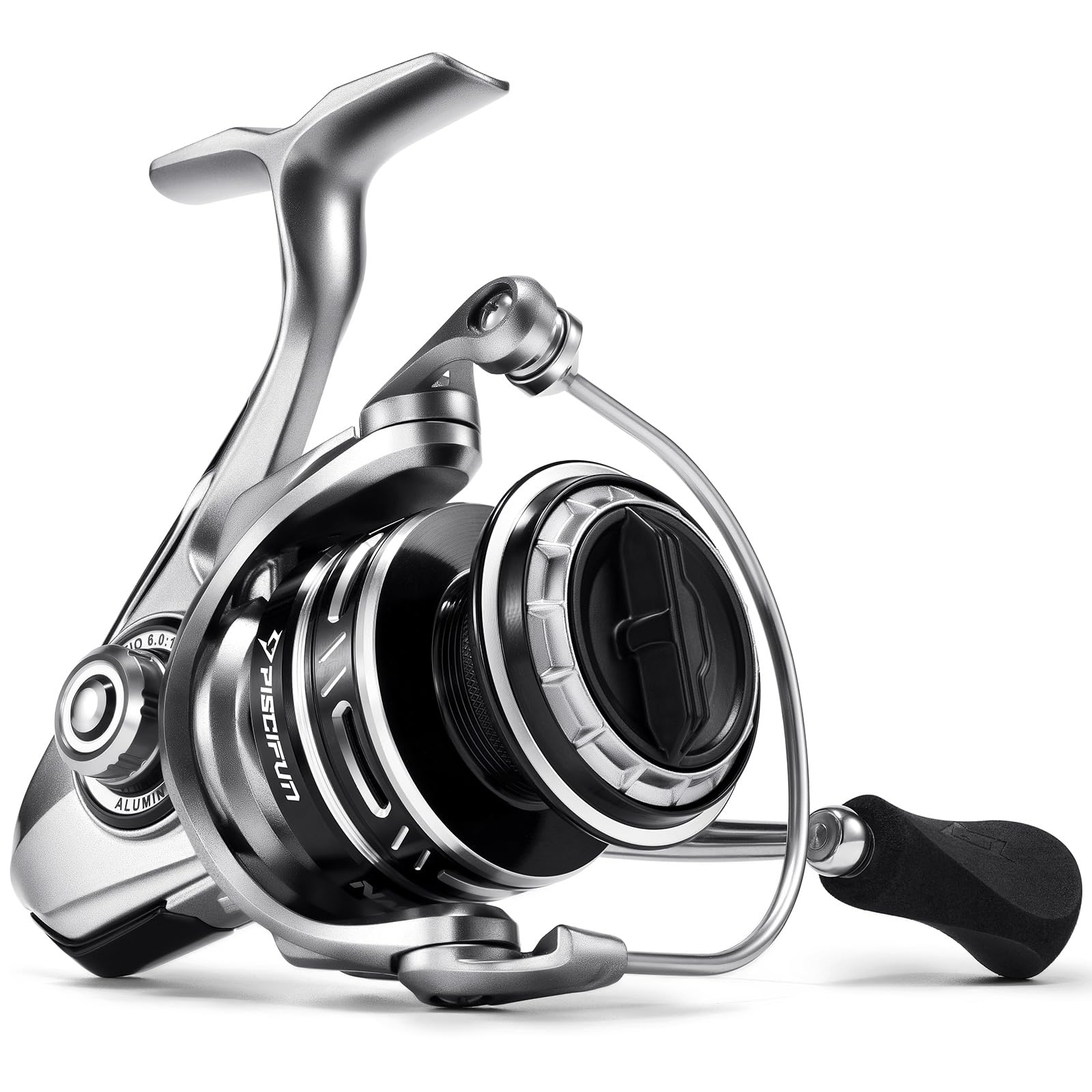
Piscifun NautiX

93 /100
Angler Score Outstanding

Key details

Size
3000
Weight
1 lb
Sealing
IPX5
Max Drag
33 lb
Check Details on Amazon

Thirty-three pounds of drag on a 3000-size reel is the number that stops people scrolling, and here it comes attached to a full aluminum main body, a carbon rotor, and an IPX5 water-resistance rating. That's a specification list you'd expect to find on a reel at twice the price.

What impressed us more than the drag figure is how tight the drive train feels. A CNC-machined aluminum main gear, a brass pinion, a stainless main shaft, and eight shielded bearings add up to a retrieve with almost no slop, and the spool sits flat enough that the carbon washers stay square when a fish makes a long run. For an angler who wants metal and stopping power without paying premium money, this is the pick.

Piscifun backs it with a two-year manufacturer warranty, which is worth more than it sounds on a reel at this price — seals and bearings are what you're really buying, and coverage on them is real value. Rinse it, dry it, and keep it out of the surf line, and the NautiX should hold up to a full season of inshore work and then some.

Pros

  • 33 lb drag with IPX5 sealing at a midrange price
  • Full aluminum body with carbon rotor
  • CNC aluminum gear and brass pinion
  • Two-year manufacturer warranty

Cons

  • About 1 lb, the heaviest reel in this group
Our verdict

The best drag-and-sealing package for the money here; accept the pound of weight and it will out-pull reels that cost more.

Check Latest Price
5

Best Budget Pick

KastKing ReKon

88 /100
Angler Score Excellent

Key details

Size
3000
Weight
12.2 oz
Bearings
5+1+1
Gear Ratio
6.2:1
Check Details on Amazon

The ReKon's frame and rotor are NyliTech composite rather than aluminum, and that single decision is why the reel costs what it does. We're at peace with it: composite saves weight and money, KastKing puts EverSeal rubber rings at the water-entry points, and at 12.2 ounces the reel doesn't feel like a penalty on the rod. If a metal body is non-negotiable, the NautiX and the Battle are your alternatives; if you want a genuinely good 3000 for a fair price, this one earns its spot.

Five shielded stainless bearings, an anti-reverse bearing, and a polymer bushing make the retrieve smoother than composite reels usually manage, and the 6.2:1 gear picks up line fast enough to work a jig in current. The double-disc carbon drag is generous for the size and comes on smoothly rather than grabbing.

Where the price shows is refinement, not function. Tolerances aren't as tight as the all-metal reels, and there's a touch more play in the handle than we like on a reel that will fish every weekend. For a first saltwater outfit, a backup rod, or a reel that lives behind the truck seat, that's a fair trade — and it's the one to hand a new angler before any bargain-basement no-name.

Pros

  • Smooth 5+1+1 bearing retrieve
  • Light 12.2 oz composite build
  • Fast 6.2:1 gear for working lures
  • EverSeal rings at water-entry points

Cons

  • Composite frame instead of an aluminum body
Our verdict

When the budget is tight and the fish are mid-size, the ReKon gives you a smooth retrieve and usable drag for less than the metal-bodied picks.

Check Latest Price
6

Lightweight Inshore

KastKing Sharky

91 /100
Angler Score Outstanding

Key details

Size
3000
Weight
7.5 oz
Bearings
10+1
Max Drag
33 lb
Check Details on Amazon

KastKing builds the Sharky around a long-cast spool with a lip profile designed to shed line friction, and it works — light braid comes off this reel a long way with very little effort from the rod. Ten shielded stainless bearings plus an anti-reverse is the highest count in this group, and the retrieve is quiet and fluid in a way that flatters a cheap rod.

At 7.5 ounces it's the lightest reel here by a wide margin, and that's the whole case for it: a kayak rod, a long day of casting a paddletail, a setup someone new to saltwater can handle without fighting the equipment. The folding CNC aluminum handle and oversized EVA knob are the kind of details that usually get cut at this price.

Two things to know before you buy. The bail and the anti-reverse are the parts that wear first over a hard season, so this is not the reel to take offshore or fish every day in the surf. It also belongs on an inshore rod — it's a light, capable 3000, not a big-fish tool. Fish within that brief and it's hard to beat for the money.

Pros

  • 7.5 oz, the lightest reel here
  • 10+1 shielded stainless bearings
  • 33 lb carbon fiber drag on the 3000
  • Folding CNC handle with oversized EVA knob

Cons

  • Line can nest under the spool with loose braid
Our verdict

The lightest reel in this group, and the one to hand someone building a first saltwater setup around a light inshore rod.

Check Latest Price
7

Live-Bait Soaking

Okuma Avenger ABF

85 /100
Angler Score Excellent

Key details

Weight
10.1 oz
Bearings
7
Max Drag
10 lb
Baitfeeder
On/off auto trip
Check Details on Amazon

Soaking a live bait with the bail closed is the job this reel was built for, and it's the only reel in this group that can do it. The Avenger's rear baitfeeder drag lets a baitfish run on a light secondary setting; flip the lever or turn the handle and the on/off auto trip hands control back to your main drag. If you've ever fished live bait on a reel with no free-spool option, you know exactly what that's worth.

The rest of the reel is honest budget work: a corrosion-resistant graphite frame, sideplates, and rotor, a machined two-tone anodized aluminum spool, a machine-cut brass pinion, and seven stainless bearings. At 10.1 ounces it balances nicely on a 7-foot medium rod, and the 5.0:1 gear turns at a pace that suits bait fishing rather than ripping lures through current.

It's a technique reel and we'd keep it on the bait rod — striped bass, bluefish, redfish, and trout on 10 to 20 lb line are its lane, and a fish that can spool a light reel will keep going while the baitfeeder feeds it line. Buy it because you soak bait, not because you want one reel for everything.

Pros

  • Rear baitfeeder with on/off auto trip
  • Corrosion-resistant graphite body and rotor
  • Light 10.1 oz build for a bait reel
  • Machined anodized aluminum spool

Cons

  • 10 lb max drag limits it to light tackle
Our verdict

For soaking live bait with the bail closed, the baitfeeder does a job none of the other reels here can, as long as a 10 lb drag is enough for your fish.

Check Latest Price

How We Tested: Eight Months of Salt and Sand

We built the shortlist by filtering every saltwater spinning reel we could get our hands on down to metal or heavily reinforced bodies, sealed or shielded drags, enough capacity for 20- to 30-pound braid, and prices in the band where most anglers actually shop. Then we cut anything with a repeating complaint pattern in owner reviews — bails snapping shut mid-cast, handles working loose after a season, drags that faded within months. That left 11 reels, which we spooled with braid and fished for eight months.

Most of that time was spent where these reels actually live: thigh-deep in the surf at first light, balancing on jetty rocks, drifting bait off a boat, and casting poppers from a dock after dark. After every long cast into a headwind we ran the line through our fingers hunting for wind knots and loose coils, then looked at whether the line lay back on the spool evenly or piled up at one edge.

Drag got the most attention. We set each reel to a known number with a spring scale, checked whether it held there under a running fish, then backed the drag all the way off after every trip to see whether it returned to the same setting or crept. We noted whether the spool started smooth or grabbed on the first hard run — that difference is usually the whole ballgame.

For durability, reels got dunked, dropped in sand, hosed down at the ramp, and left in a hot truck bed; at the end of each month we pulled the spool and cranked the handle listening for grit. On value, we looked up what replacement spools, bails, and drag washers cost and how easy they were to find, because a reel you can keep running is worth more than one you can only replace.

How to Choose a Saltwater Spinning Reel

Start With the Size Class

A 3000 or 3500 is the inshore default: big enough for redfish, snook, striped bass, and bluefish, small enough to cast all day. The metal-bodied reels in that class here run between 11.6 and 12.2 ounces, and that weight is what your wrist pays for over a long tide. Step up to a 4000 or 5000 when you want more line and more leverage around structure, and to a 6000 or larger for surf sharks and offshore work.

The trap is assuming bigger casts farther. It doesn't. A larger spool holds more line and adds mass, and on a light rod that mass costs you distance and tires your arm. Match the reel to the rod you already own, and only size up when the fish genuinely demand it.

Sealing Is What You Pay For in the Surf

IPX5 is the rating to look for if your reel takes spray: the Spinfisher and the NautiX both carry it, and it means the housing tolerates water projected at it rather than surviving a dunking. A reel without a sealing claim isn't doomed — plenty of anglers fish unsealed reels for years — but it asks more maintenance of you, and the drag washers and bearings are what suffer first if it doesn't get it.

The trap is the phrase saltwater rated on the box. Most of the time that means corrosion-resistant hardware, not a sealed body. If you wade, fish the wash, or leave a rod on a beach spike, sealing is the feature worth spending on; if your reel stays on a dry deck, it isn't.

Read the Drag Number, Then Discount It

Max drag is a ceiling, not a working range. A smooth 15 lb carbon-fiber drag stops most inshore fish, which is why our top pick lives comfortably at that figure while cheaper reels advertise double it. A big number only helps if the frame, spool, and shaft hold their shape under that load; on a flexing body it's advertising.

Set the drag at roughly a quarter to a third of your line's breaking strength and let the fish run. What separates a good drag from a bad one is startup — whether it breaks away smoothly on the first surge or jumps and costs you the hook hold.

Body Material and Weight

Aluminum frames resist flex and keep the gears aligned under load; graphite and composite frames cost less, weigh less, and hold up fine as long as the hardware inside is stainless. We take aluminum on anything that fights big fish in current, and composite on a light rod where casting all day matters more than brute strength.

Balance matters more than the number on the scale. A 14-ounce reel on a short, stout boat rod feels planted; the same reel on a 7-foot light inshore rod feels like a sinker. Think about the rod first, then the reel's weight.

Bearings, Gears, and What Actually Breaks

Bearing count is a marketing number as much as an engineering one. Ten unshielded bearings aren't better than five good shielded stainless ones, so judge smoothness by feel and by whether the bearings are sealed, not by the figure on the box. Gear ratios from 5.0:1 to 6.2:1 cover nearly all saltwater fishing — the higher number picks up slack faster, the lower one grinds harder on big fish.

When a saltwater reel does fail, it's usually the bail, the handle, or the anti-reverse. Those are the parts to rinse, dry, and check before a trip, and the parts worth reading about before you buy.

Frequently Asked Questions

Final Verdict

The Penn Battle IV is the reel we put in most people's hands: an aluminum body at 11.6 ounces, a smooth 15 lb carbon drag, and a 3000 spool that covers redfish, stripers, snook, and bluefish without wearing you out. It's the safest money in this group.

Wade the surf and the Spinfisher's IPX5 sealing is worth the step up. Want the most drag and sealing for the least money? The NautiX delivers, as long as the extra weight suits your rod. And if you need a 4000 to turn bigger fish away from structure, the Daiwa BG is the one.