Best Sleeping Bag Liners of 2026

A sleeping bag liner is a strange thing to get attached to — until you've spent a night on a hostel mattress you couldn't stop thinking about, or shivered through a morning in a bag rated ten degrees warmer than it slept. A liner is the thin layer between you and whatever the bed is: extra warmth when your bag comes up short, a clean barrier over hotel sheets you'd rather not test, something soft against bare skin. It weighs less than a paperback, stuffs into a pocket, and has lived in my duffel ever since.

Here's what nobody tells a first-time buyer: the warmth numbers printed on the package are the least reliable part. A liner works by trapping air against your skin, so width and cut matter as much as fabric — a roomy silk sack that bunches around your ankles runs colder than a snug fleece tube. We've spent six months with 14 liners in hotel rooms and on tent floors, and the keepers all got the boring things right. What follows is sorted by what each one is genuinely good at.

1

Best Overall

Friendly Swede Sleeping Bag Liner

88 /100
Angler Score Excellent

Key details

Fabric
100% polyester
Weight
9.17 oz (260 g)
Closure
Full-length side zipper
Dimensions
86"L x 41"W
Check Details on Amazon

This is the liner we recommend to almost everyone, and the reason is width. At 41 inches across it is roomier than most of the liners in this guide, which means you can roll from side to side inside a sleeping bag without the fabric wrapping around your knees. The polyester is silky rather than crisp, so it slides against a bag's lining instead of grabbing at it.

Two details move it ahead of the pack. The first is the full-length side zipper — getting in and out of a liner in a dark tent is where cheap ones fall apart, and this one opens all the way down. The second is the pillow pocket, which holds a camp pillow or a bundled fleece where you left it. Neither is exotic. Both are the things you notice every night.

Packed, it is 9.17 ounces in a 6 x 8 inch sack, small enough for a carry-on and light enough that you stop noticing it in a pack. It is a sheet, not insulation. Think of it as a hygiene barrier that takes the chill off a cool night, rather than something that stretches a summer bag into autumn.

The trade is breathability. Polyester this smooth doesn't move much air, and in a hot, still hostel room it can feel clingy; ours was fine under a fan and less so without one. If you sleep hot, the silk liner further down this list is worth the money.

Pros

  • Roomy 41-inch width for turning over
  • Full-length side zipper eases entry
  • Packs to 6 x 8 inches at 9.17 ounces
  • Pillow pocket keeps a camp pillow in place

Cons

  • Silky fabric slides around inside a bag
Our verdict

Roomy enough to turn over in, soft enough to sleep against, and light enough at 9.17 ounces that packing it costs you nothing.

Check Latest Price
2

Best for Cold-Weather Backpacking

Sea to Summit Reactor Liner

88 /100
Angler Score Excellent

Key details

Fabric
Thermolite
Weight
13.4 oz
Footbox
Drawcord, opens or closes
Dimensions
85"L x 31.5"W
Check Details on Amazon

Warmth in this category usually means fleece, and fleece means bulk. The Reactor takes a different route: knitted hollow-core Thermolite fibers with ceramic pigments that reflect body heat, in a mummy cut that weighs 0.38 kg. It packs down smaller than either of the fleece liners here, and it is the one we take when the bag we are carrying is only just rated for the forecast.

That is the whole case for it. It is a liner you can carry up a mountain, and the shape and drawcord footbox keep it where you put it — the foot end opens when you have gotten too warm, which happens more often than expected in a bag you have underrated. The feel is technical rather than silky, but nothing about it rustles or bunches.

It isn't a hotel sheet, and we don't treat it as one. There is none of the width that makes a travel sheet comfortable on a bed, and the fabric against your skin says equipment rather than bedding. What you get instead is a liner that performs in a cold tent, which is a different product for a different night.

Pros

  • Adds warmth without fleece bulk
  • Packs smaller than the fleece liners
  • Drawcord footbox opens for venting

Cons

  • No full-length zipper to open flat
  • Close mummy cut leaves little room to sprawl
Our verdict

The warmth layer we pack when the forecast drops: reflective Thermolite in a 0.38 kg mummy cut that disappears into a pack.

Check Latest Price
3

Best for Maximum Warmth

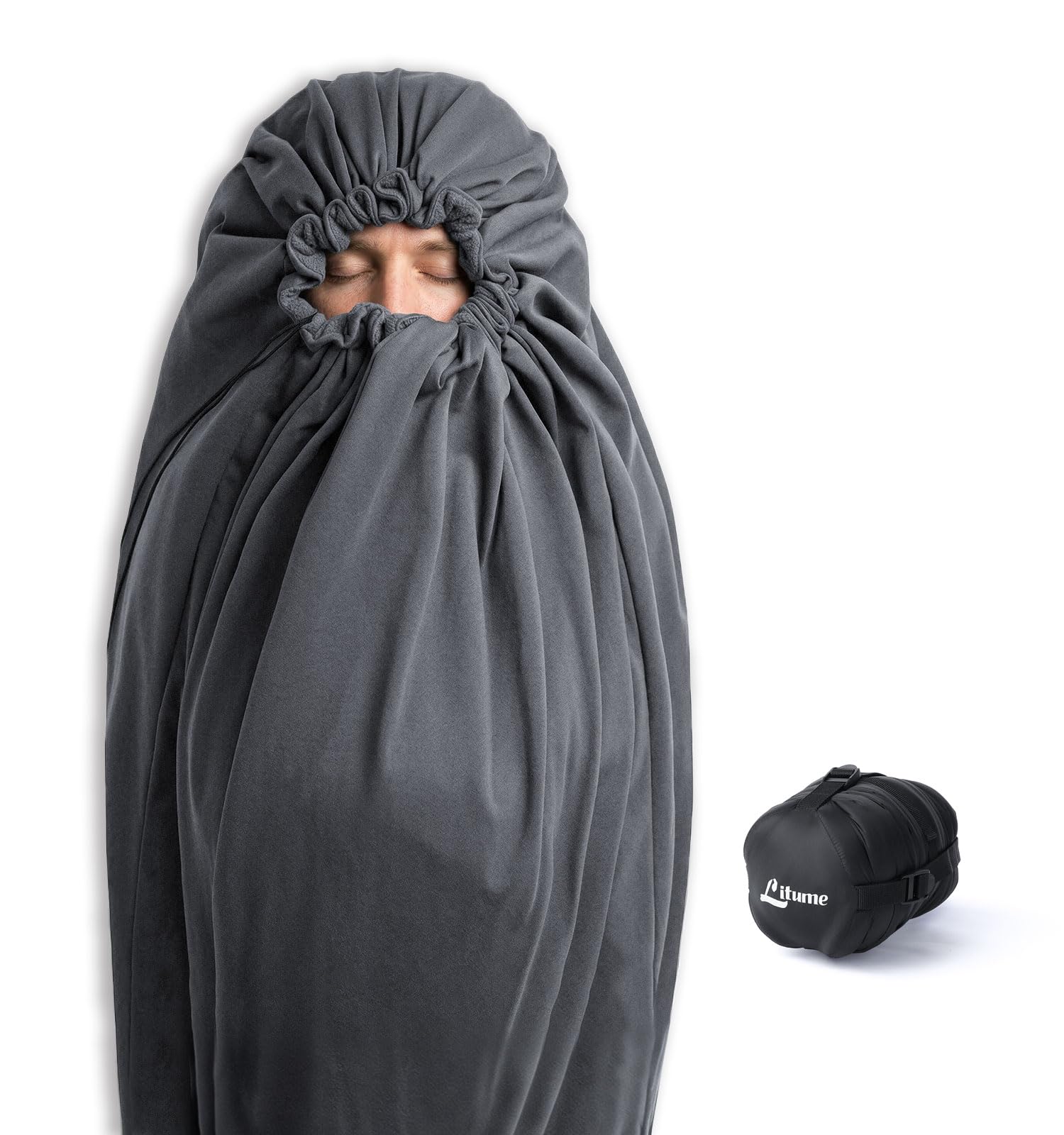
Litume Fleece Mummy Liner

90 /100
Angler Score Outstanding

Key details

Fabric
Fleece
Weight
1.12 lb
Dimensions
85"L x 32"W
Warmth Boost
Up to 27°F / 15°C
Check Details on Amazon

The claim on the packaging is up to 27°F of added warmth — the biggest boost any liner in this guide claims for itself. Take that as a manufacturer's figure rather than a measurement, but the construction behind it is real: thick fleece, a mummy cut that closes around the shoulders, and a drawstring hood that stops warm air escaping past your neck.

There is no zipper anywhere on it. That is deliberate, and it is the part we argued about: no zip means no cold hardware against your skin and nothing to break, but it also means you lower yourself in through the top. In a sleeping bag that is fine. On a hotel bed it is a wrestling match, which is why this one lives in the camping kit and not the carry-on.

Where it earns its place is the cold. Fleece this thick holds the heat your body is already making, the mummy shape keeps the liner where the bag is instead of bunching at your feet, and 85 inches of length suits tall sleepers — the listed height limit is 7 feet. If your bag is comfortable at 45°F and the forecast says 35, this is the piece that closes the gap without a second bag.

It costs you in the pack. At 510 g it is heavier than the silk and ultralight sheets here, though still lighter than the full fleece rectangles, and the bundle is closer to a football than a paperback. A fair exchange for the warmth — but a backpacker counting grams should look at the Reactor instead.

Pros

  • Largest warmth boost claimed in this group
  • Drawstring hood seals in heat
  • Fits sleepers up to 7 feet

Cons

  • Heavier and bulkier than sheet liners
Our verdict

For turning a summer bag into a cold-weather one, this fleece mummy is the most committed warmth layer in the group.

Check Latest Price
4

Best Budget Fleece

Coleman Stratus Fleece Liner

91 /100
Angler Score Outstanding

Key details

Fabric
Fleece
Weight
1.7 lb
Dimensions
75"L x 33"W
Warmth Boost
12°F
Check Details on Amazon

Seventy-five inches is the first thing to check. Coleman sizes this for campers up to 5 feet 11, so if you are taller the foot of the bag will pull at your shoulders — a shame, because almost everything else about it is right.

What we like is how little fuss there is. The fleece has substance without feeling like a blanket, the zipper is genuinely beefy and hasn't snagged on us once, and it unzips flat into a throw you can use over the bag on a mild night. The listed boost is 12°F, and on its own it is rated to 50°F, which puts it in the middle of the warmth range here — more than a sheet, less than the mummy fleece.

There is also a five-year limited warranty, longer than most liners here carry, and two of them zip together into a double. For a family car-camping setup, a cabin weekend, or a spare-room blanket that lives in the car, it is an easy recommendation — the kind of liner you stop thinking about because it just works.

Pros

  • Adds about 12°F of warmth
  • Snag-free full-length zipper
  • Unzips into a flat blanket
  • Five-year limited warranty

Cons

  • 33-inch width is snug for broad shoulders
  • Bulky next to a travel sheet
Our verdict

A well-made fleece liner with a snag-free full-length zip, added warmth, and a five-year warranty at a fair price.

Check Latest Price
5

Best Silk Liner

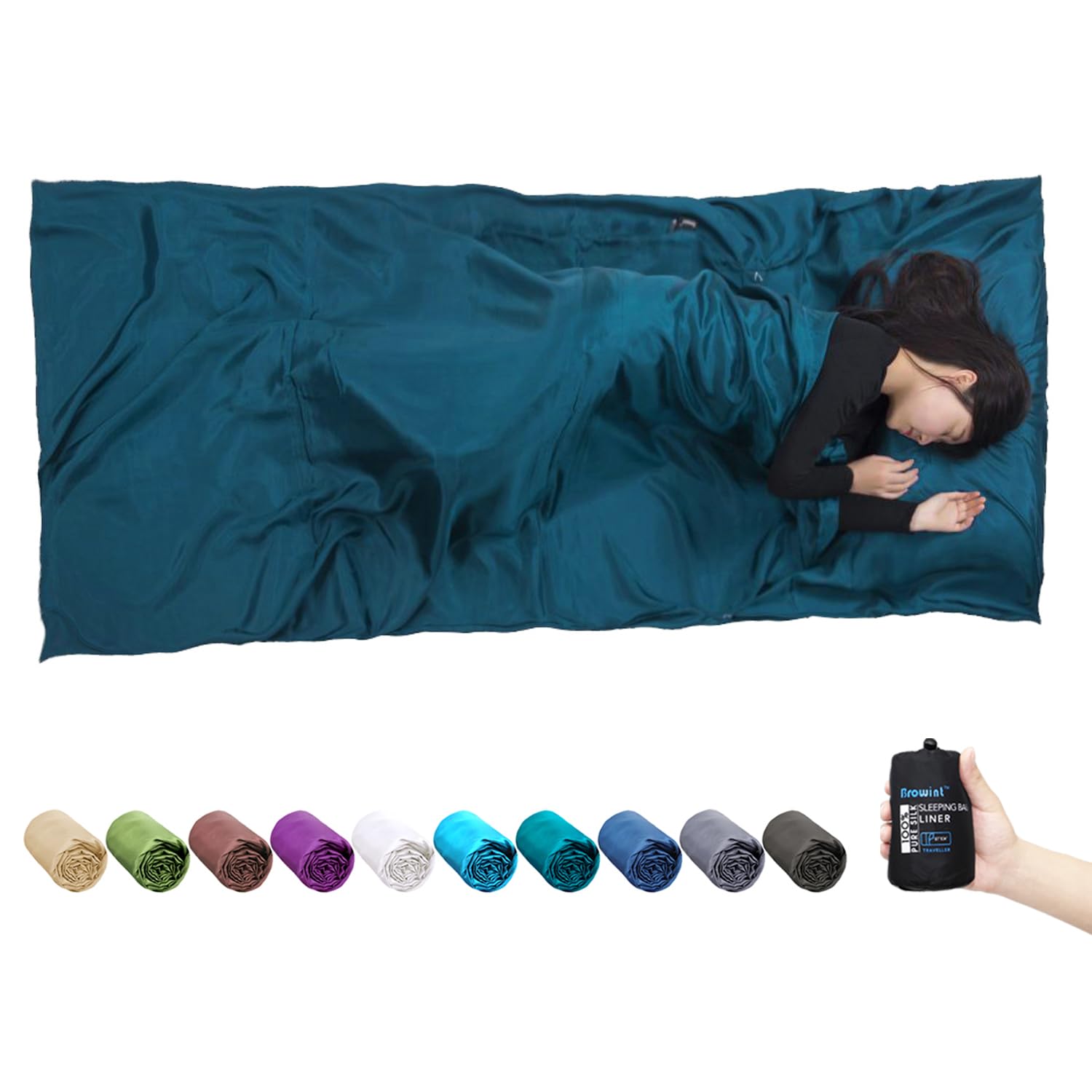
BROWINT Silk Sleeping Bag Liner

86 /100
Angler Score Excellent

Key details

Fabric
100% mulberry silk, 8 momme
Closure
Envelope style
Dimensions
87"L x 43"W
Pillow Pocket
Built in
Check Details on Amazon

Silk is the whole argument here, and it holds up. At 8 momme the fabric is thin — you will see light through it — but it doesn't have polyester's clammy side: it feels cool when you are warm and neutral when you are not, which is why it is the first liner out of the bag on a warm trip.

The 87 x 43 inch XL is the version worth having. Nine inches wider than the standard travel sheet, it gives side sleepers and anyone up to 6 feet 5 the room to turn, and the built-in pillow pocket keeps silk between you and the hotel pillow — the actual point of carrying one. Reinforced gussets at the stress seams suggest the maker knows thin silk needs help.

This is bedding, not equipment. It is happiest in a hotel, a hostel, or a guest room, and it doesn't belong in a tent, where a polyester sheet shrugs off the abuse that silk won't. Pack it for the nights you are sleeping in someone else's bed.

Pros

  • Pure mulberry silk feels cool on warm nights
  • 87 x 43 XL gives side sleepers room
  • Pillow pocket keeps hotel pillows covered

Cons

  • No zipper
Our verdict

Buy it for hotel beds and hot sleepers: pure silk that stays cool, packs small, and costs accordingly.

Check Latest Price
6

Best Budget Pick

WILLNORN Sleeping Bag Liner

87 /100
Angler Score Excellent

Key details

Fabric
Microfiber
Weight
1.1 lb
Dimensions
86.5"L x 37.3"W
Opened Flat
86.5" x 74.9"
Check Details on Amazon

There is little on this liner that announces its price. The microfiber is brushed soft against skin, the body runs 86.5 x 37.3 inches, and there is a pillow pocket that swallows a bundled jacket when you are camping or a hotel pillow when you are not.

Unzip it fully and it opens out to 86.5 x 74.9 inches, enough sheet to cover a double bed. In a sleeping bag the 37-inch width sits in the middle of this group — narrower than the Friendly Swede, wider than the mummy picks — and the brushed fabric feels like bedding rather than like a stuff sack with ideas.

We point first-time buyers here because it covers both jobs at the lowest price in this guide: a clean barrier in a strange bed and a softer, warmer surface inside a sleeping bag. Nothing about it feels like a compromise at that level, and it washes and dries without a fuss — the liner you actually use rather than save.

Pros

  • Soft brushed microfiber
  • Opens flat to cover a double bed
  • Pillow pocket for a jacket or pillow
  • Lowest price in this guide

Cons

  • Single-slider zipper feels light
  • Microfiber clings to cotton clothing
Our verdict

The liner we hand to first-time buyers: soft microfiber, a pillow pocket, and the lowest price here.

Check Latest Price
7

Best for Couples

REDCAMP Fleece Sleeping Bag Liner

89 /100
Angler Score Excellent

Key details

Fabric
Polar fleece
Weight
1.76 lb (0.8 kg)
Dimensions
75"L x 31"W
Zip-together
Two liners form a double
Check Details on Amazon

The trick with this liner is buying two. REDCAMP builds its zippers so a pair joins into a double, which fixes the problem every other fleece sack here has: two people, one narrow tube, one person cold and one person annoyed.

On its own it is a 75 x 31 inch polar fleece rectangle at 1.76 lb, washable, with a full-length zip. The fleece is the thicker, warmer sort rather than thin brushed polyester, so it traps heat instead of just feeling soft, and it works flat as a blanket when you open it up.

Size is the limitation to check. Thirty-one inches wide is the narrowest cut in this guide, and 75 inches of length is fine for most adults but tight for anyone much past six feet. As a single it is a warm, simple sack; the pair is where it makes sense.

What we keep coming back to is the couples math. Two liners, one double, and a shared fleece layer that doesn't slide off in the night — for a car-camping pair or a guest bed that beats one wide polyester sheet, and the fleece is warm enough to leave the bag unzipped. It is a car-camping answer, not a backpacking one.

Pros

  • Two liners zip into one double
  • Thick polar fleece holds heat
  • Unzips into a flat blanket
  • Machine or hand washable

Cons

  • Heavy and bulky next to a sheet liner
Our verdict

Two of these zip into one double, which makes it the answer for couples who want fleece warmth together.

Check Latest Price
8

Hot Sleepers

JAICOM Sleeping Bag Liner

86 /100
Angler Score Excellent

Key details

Fabric
Brushed polyester
Zipper
Two-way, L-shaped
Dimensions
86.6"L x 35.4"W
Packed Size
7.9 x 3.9 in
Check Details on Amazon

The L-shaped, two-way zipper is why this one is on the list. You can open the foot end and let your feet out while the rest stays zipped, or run the slider from either direction — the detail you want on a warm night in a hostel, when a single full-length zip means either all on or all off.

We rate it as the best of the budget sheets for hot sleepers. The brushed polyester is 86.6 inches long and 35.4 inches wide, long enough for tall sleepers and close enough to feel like a liner rather than a bed sheet, and it packs to 7.9 x 3.9 inches at 19 ounces. It is soft and quiet, and it doesn't rustle when you turn over.

What it is not is a warmth layer. There is no fleece or insulation in it, so it takes the edge off a cool night rather than changing what temperatures your bag can handle; for shoulder-season camping, pair it with a bag that is already rated for the forecast. As a summer and travel liner, the venting makes it the one we grab first.

Pros

  • Two-way L-zipper opens the foot end
  • Packs to 7.9 x 3.9 inches
  • Long 86.6-inch body

Cons

  • Slippery fabric twists inside a bag
Our verdict

The foot-opening zipper is the reason to pick it: let your feet out on a warm night without losing the rest of the cover.

Check Latest Price
9

Hotel Beds

MongByYa Sleeping Bag Liner

87 /100
Angler Score Excellent

Key details

Fabric
Polyester
Weight
1.2 lb
Closure
Two buckles, bottom zipper
Dimensions
82.7"L x 70.9"W
Check Details on Amazon

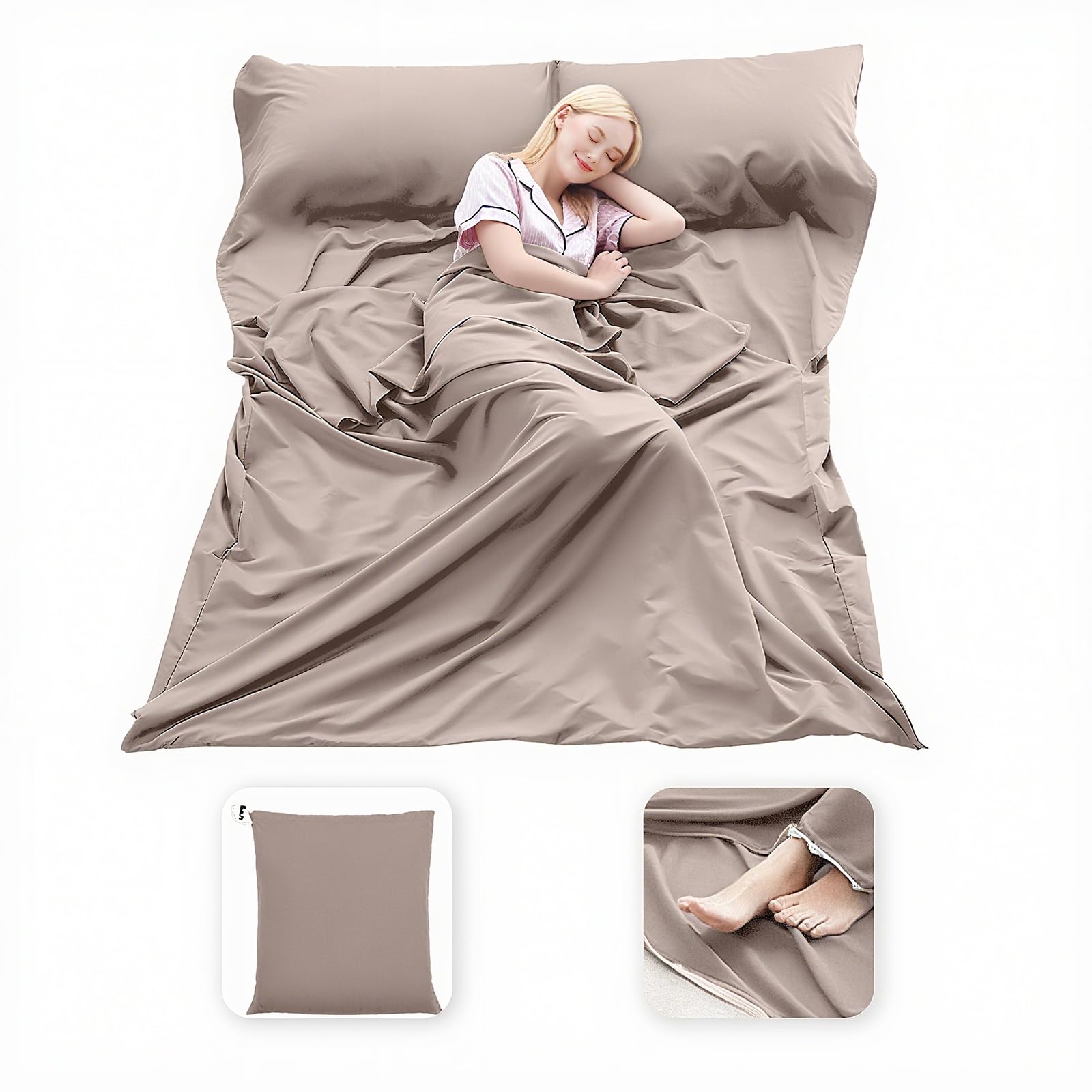
Seventy-point-nine inches of width puts this in a different category from the rest of the group. Laid out it covers a queen bed; zipped up it is a loose sack that never wraps around your legs. If you have tried a liner and hated the cocoon feeling, the extra fabric here is the fix.

The spec says two-person; we call it one generous single or a shared sheet rather than a genuine double, since two adults fit under it far more comfortably than they fit inside it. Length is 82.7 inches, weight 1.2 lb, and the polyester has a soft, sanded hand.

What makes it work on a bed is the closure. Two buckles at the top and a hidden zip at the bottom let you open one side or both, so you are not hunting for a zipper pull in the dark, and the foot can vent on a warm night. That is a better arrangement for hotel use than a full-length side zip, and it is why this is our pick when the bed is the point.

The extra fabric is fussier to fold back into its pouch than a narrow liner, and it takes a couple of tries to get it small again. That is a fair trade for a sheet that covers a hotel bed properly, and it is why this one travels in a suitcase rather than a backpack.

Pros

  • 70.9-inch width covers a queen bed
  • Buckles and bottom zip ease entry
  • Foot zip vents on warm nights

Cons

  • Thin fabric adds little warmth
  • Extra width is fiddly to repack
Our verdict

At 70.9 inches wide it behaves more like a bed sheet than a sack, which is exactly what hotel beds want.

Check Latest Price
10

Hostel Stays

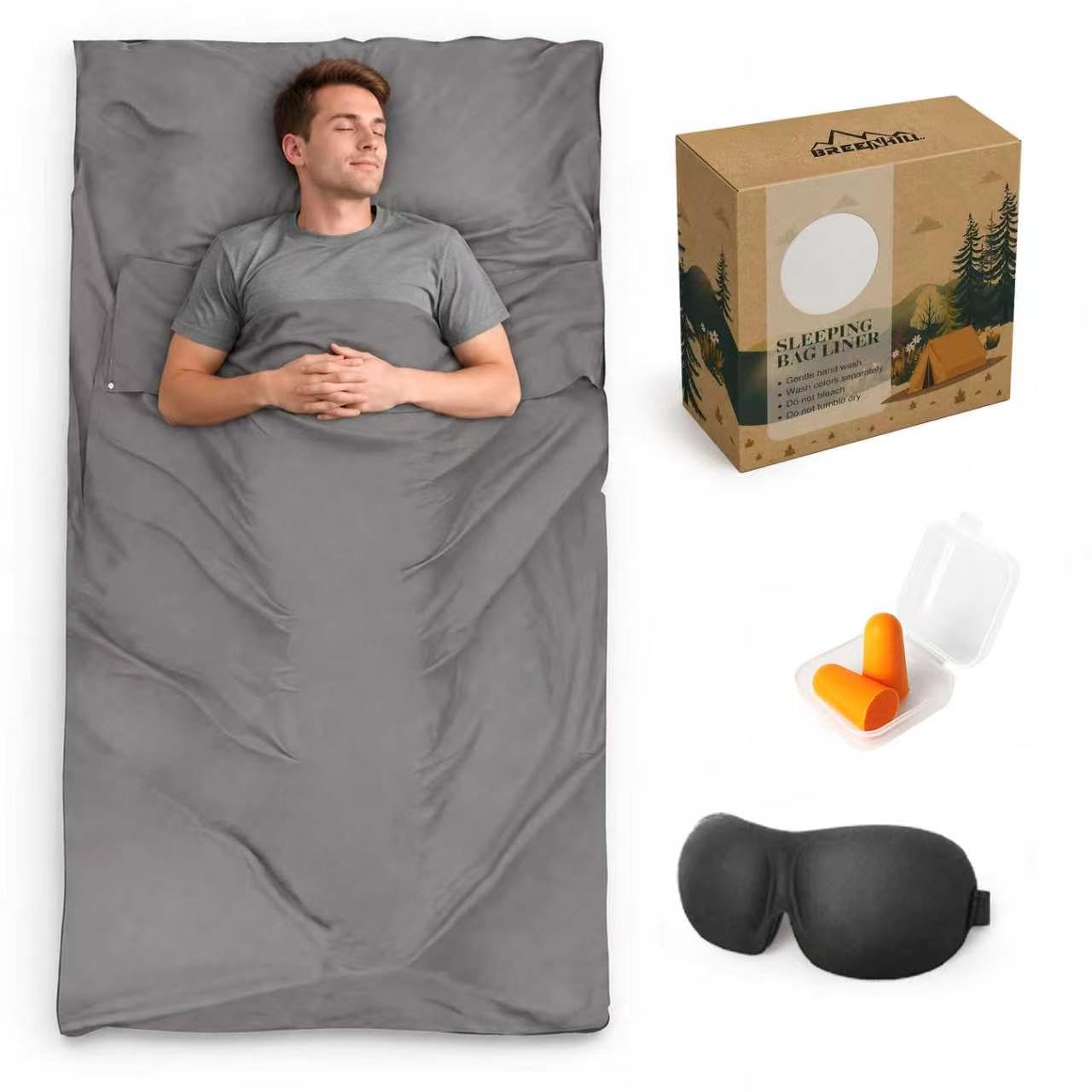
BREENHILL Sleeping Bag Liner

88 /100
Angler Score Excellent

Key details

Fabric
Polyester
Weight
1.2 lb
Dimensions
82.6"L x 45.2"W
Pillow Sleeve
Built in
Check Details on Amazon

The closures tell you what this is: a buckle at the top, an opening down one side, and a hidden zip at the foot for venting. It is a travel sheet in the traditional sense, the kind you fold into a carry-on and forget about until you are standing in a dorm room at midnight.

For hotel and hostel beds it works. The body is 82.6 x 45.2 inches — the widest single here after the MongByYa — the pillow sleeve keeps the sheet between you and the pillow, and the sanded polyester is soft rather than shiny. At the low end of this group's prices, it covers the basics without asking anything of you.

It is not built for a tent. There is no insulation in it, and the smooth polyester suits a bed rather than a bivvy; for cold or damp nights one of the fleece liners is the right tool. This one is about the mattress you didn't choose.

As a sheet that lives in a carry-on, it earns its place. Pack it for a week of hostel bunks, wash it when you get home, and it will outlast the trip. The buckle-and-slit arrangement is a fair trade for what it costs, as long as you know that is what you are buying.

Pros

  • Wide 45.2-inch body
  • Pillow sleeve keeps hotel pillows covered
  • Foot zip vents on warm nights

Cons

  • No full-length side zipper
Our verdict

A cheap, wide travel sheet with a pillow sleeve and a foot vent for hostel beds — not a tent liner.

Check Latest Price

How We Tested Sleeping Bag Liners in Hotels, Hostels, and Tents

We started with a long list of about 40 liners pulled from retailer listings and customer review sections, then cut anything with vague fabric claims, dimensions that wouldn't fit an adult over six feet, or a price that made no sense next to the material. That left 14, which we bought ourselves so no sample got handled gently. Testing ran six months, alongside real trips rather than a lab bench.

Every liner got weighed on a kitchen scale, then packed into both its own stuff sack and a 40-liter backpack to see how much room it actually stole. I timed getting in and out in the dark without waking a tentmate, and noted whether the zipper moved one-handed or needed two — a small thing that stops being small at 2 a.m. in a shared room. Two liners failed that test outright, with pulls that snagged the fabric every third zip.

For warmth, we slept in each liner inside a bag rated a little too cold for the forecast, and again in an overheated hotel room where the risk was sweating rather than shivering. We wrote down who woke up cold at 4 a.m. and who woke up damp. Softness got judged against bare legs and a light T-shirt, since that's how most people actually use these, and we paid attention to whether fabric felt clammy or breathed.

Finally, each liner went through three wash cycles. We checked seams for pulling, fleece for pilling, silk for splitting at the gussets, and zipper tape for separating from the fabric. Value came last, and only after we knew how a liner performed — the cheapest option here earned its place, and one expensive liner did not.

How to Choose a Sleeping Bag Liner

Sheet or warmth layer

Sheet liners — polyester, microfiber, silk — are hygiene barriers with a comfort bonus. They keep you off a strange mattress, they keep your bag's interior clean, and they take the edge off a cool night without changing what your bag can handle. Fleece and insulated liners add actual warmth, and they are heavier and bulkier for it.

Be honest about which job you need done. Someone who sleeps in hotel beds most nights wants a wide, soft sheet with an opening that works in the dark. Someone pushing a three-season bag into a cold snap wants fleece or Thermolite. Buying one liner to do both usually means doing neither well.

What a warmth claim really means

Coleman lists 12 degrees of added warmth for its fleece liner and Litume claims up to 27; those are the makers' figures, so read them as a way of ranking liners against each other rather than a forecast for your night.

The bag's own rating still governs. A liner buys margin — a warmer body inside the same bag — and it works best when you are already roughly comfortable. If you are cold because the bag is wrong for the conditions, a liner only postpones the problem, and the fix is a warmer bag.

Pack size and weight

Sheet-style liners run from around 9 ounces to roughly 1.2 pounds and stuff down to something between a paperback and a small loaf. Fleece liners sit near 1.7 to 1.8 pounds and take real room in a pack, which is the honest cost of the warmth.

Watch the word compact. Almost every listing uses it, and what it usually means is that the liner fits in a suitcase, not that it vanishes into a daypack. If you are counting grams on a backpacking trip, start at the ultralight end and accept a thinner fabric against your skin.

Width, length, and how you get in

Widths in this group run from 31 inches to 70.9, and that number predicts how a liner feels more than the fabric does: narrow cuts keep you contained inside a mummy bag, wide ones behave like a bed sheet. Length matters just as much — a 75-inch liner is built for campers up to 5 feet 11, while 86- and 87-inch cuts suit tall sleepers.

On closure, a full-length side zip is the feature that makes a liner usable on a hotel bed, because you can open it flat and slide in. Envelope and buckle styles are lighter and have less to break, but you enter through a slit, and that gets old in the dark.

Fabric against your skin

Brushed and sanded polyester is the comfortable default: soft, quiet, inexpensive, and not especially breathable. Silk feels coolest and packs smallest, and it is the one to choose if you sleep hot or want bedding rather than equipment. Fleece is warm and cozy but bulky, and it is the wrong choice for a humid night.

Whichever you pick, the liner is the thing you wash instead of the bag — that is the whole point of owning one.

Frequently Asked Questions

Final Verdict

Buy the Friendly Swede. It handles both jobs — a clean sheet in a hotel bed, a roomier and softer layer inside a sleeping bag — and at midrange money it doesn't ask you to choose between them. At 9.17 ounces, you won't resent carrying it.

If your nights are cold rather than strange, change the pick: the Litume fleece when the bag needs a real warmth boost, the Sea to Summit Reactor when you are the one carrying it up the hill.