
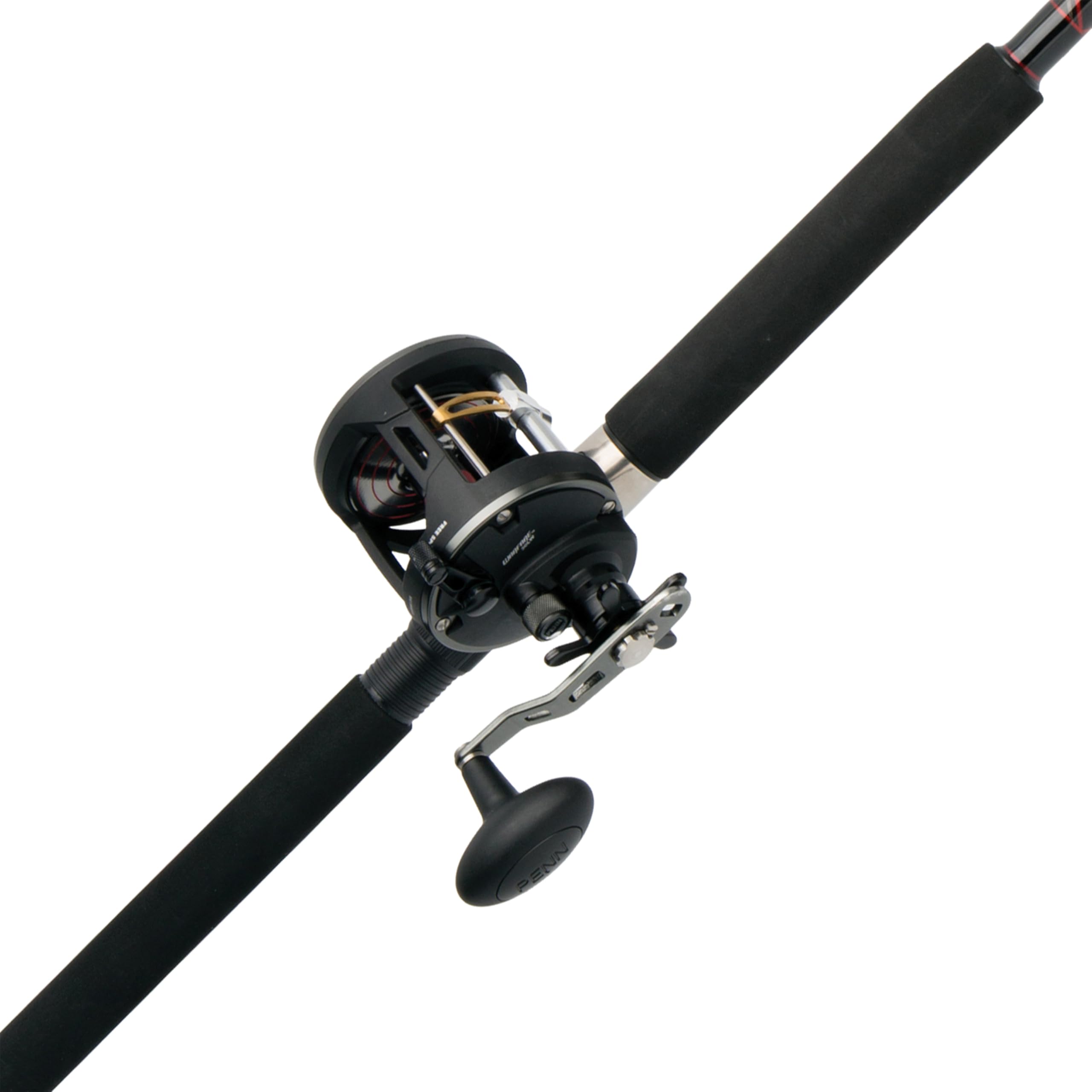
Best Trolling Rod and Reel Combos of 2026

Trolling looks passive until a drag starts screaming. Then you find out fast whether your combo can handle a fish that decides to run, and whether the level wind lays line back evenly when you reset. I've had cheap setups twist line, stick in the holder, and turn a calm morning into a knot-picking session. The right combo fixes that: it loads smoothly, tracks straight behind the boat, and keeps its drag predictable after hours of repeated deployments.

Over the past eight months, I've run nine trolling rod and reel combos through pre-dawn lake launches, long slow passes with downriggers and planer boards, and a few coastal runs. We looked hard at setup, build quality, and the kind of day-to-day functionality that matters when you're resetting lines for the fifth time. Value wasn't about the lowest sticker—it was whether the guides, reel seat, drag, and level wind felt like they'd hold up beyond one season. The picks below are the ones I'd trust with a bait spread and a day's worth of patience; a few surprised me, and a couple confirmed my suspicions.

1

Best Overall

Penn Warfare Level Wind Combo

84 /100
Angler Score Excellent

Key details

Max Drag
15 lb
Rod Power
Medium Heavy
Rod Length
6.5 feet
Line Capacity
455/25 370/30 285/40 1020/30 710/50 590/65
Check Details on Amazon

The Penn Warfare is the combo we hand to someone who wants one level-wind outfit for ordinary trolling rather than a specialist big-game reel. Its 6-foot-6 medium-heavy rod is short enough to work from a crowded boat, and the 30-size reel carries 455 yards of 25-pound mono or a much larger braid load. The 15-pound max drag is the honest ceiling: it covers walleye, stripers, and most freshwater trolling, but it is not the reel we choose for fish that make long, screaming runs. We liked the 7 stainless guides with aluminum oxide inserts for both mono and braid, and the EVA handle stayed comfortable through a long morning of repeated drops.

The level wind lays line back across the spool without thumbing, which is the convenience that makes this design easy to live with. We also noticed the 3-bearing system and instant anti-reverse give the handle a direct feel when a fish loads the rod. It is not a line-counter, so repeatable depth control is on you; metered braid or counting passes solves that for most trolling. What we kept coming back to is the balance: enough drag and line capacity for serious use, without the weight or cost of a dedicated big-fish outfit. For a first trolling combo or a spare that stays rigged on the boat, this is the one we point to.

Pros

  • Level wind lays line evenly without thumbing
  • 15-pound drag and 455/25 mono capacity suit mid-size trolling
  • 6-foot-6 medium-heavy rod is easy to handle in a boat
  • Stainless guides and EVA handle hold up to long days

Cons

  • One-piece rod is awkward to store and transport
Our verdict

We recommend the Penn Warfare as the best all-around trolling combo for buyers who want level-wind control, a manageable 6-foot-6 rod, and enough drag for everyday freshwater trolling.

Check Latest Price
2

Best for Big Fish

Penn Squall II Level Wind Combo

76 /100
Angler Score Very Good

Key details

Max Drag
32.9 lb
Rod Power
Medium Heavy
Rod Length
6.5 feet
Line Capacity
440/25 355/30 275/40, 685/50 570/65 495/80
Check Details on Amazon

The Penn Squall II is the outfit we pick when the trolling plan includes fish that can strip drag and keep going. The 30-size level-wind reel carries 32.9 pounds of max drag, more than double the Warfare's ceiling, and its 4.9:1 gear ratio brings in 35 inches of line with each turn of the crank. That fast retrieve matters after a long run: you spend less time cranking slack and more time keeping pressure on the fish. The 6-foot-6 one-piece rod is medium-heavy, with 8 PENN Dura-Guides and a fast gear access side plate that makes servicing the reel less of a project.

We liked the line capacity too: 440 yards of 25-pound mono or 685 yards of 50-pound braid gives you room for big fish and deep trolling. The level-wind mechanism is the part to watch. It can stop working, so check it during the return window and keep the receipt. That caveat aside, the Squall II is a clear step up in drag and retrieve speed for king salmon, big stripers, or saltwater trolling. It is the one we take when the target is big fish, and the one we leave home when the rod has to pack down.

Pros

  • 32.9-pound max drag handles big fish
  • 4.9:1 gear ratio and 35-inch retrieve pick up line fast
  • 30-size reel holds 440/25 mono or 685/50 braid
  • Fast gear access side plate simplifies reel service

Cons

  • One-piece rod is awkward to transport
Our verdict

Choose the Penn Squall II when big fish and long runs are part of the plan; its 32.9-pound drag and fast retrieve are a real step up for heavy-duty trolling.

Check Latest Price
3

Best Two-Piece Big-Water Setup

Ugly Stik Bigwater Rival Combo

78 /100
Angler Score Very Good

Key details

Reel Size
15
Rod Power
Medium Light
Rod Length
9 feet
Line Weight
15 - 30 lb
Check Details on Amazon

The Ugly Stik Bigwater/Penn Rival combo stretches to 9 feet, and the two-piece build breaks down when the rod has to travel. The Penn Rival 15 level-wind reel brings HT-100 carbon fiber drag washers and two shielded stainless steel ball bearings, with a 3.9:1 gear ratio. The rod is medium-light and rated for 15- to 30-pound line, so it is built around lighter line and a softer tip than the 6-foot-6 medium-heavy combos here.

We liked the way that medium-light rod loads with 15- to 30-pound line; it feels lively rather than clubby, which is what you want when you are watching the rod tip for a strike. The trade-off is power. This is a light-line trolling outfit, not the rod we choose for big kings or heavy braid, and the 15-size reel is sized to match that lighter line. For walleye, stripers, or salmon on a modest line class, the long rod gives you more spread and a softer tip without making the outfit hard to handle. It is the combo for an angler who wants a dedicated long-rod trolling setup and does not need a big-game drag stack.

Pros

  • 9-foot two-piece rod widens trolling spread and packs down
  • Penn Rival level wind with HT-100 drag washers
  • 15-30 lb line rating covers walleye, stripers, and salmon
  • Medium-light action loads well with lighter line

Cons

  • Two-piece joint adds a connection to inspect
Our verdict

Pick the Ugly Stik Bigwater/Penn Rival if you want a long two-piece rod for lighter-line trolling and easier transport, not a big-game drag stack.

Check Latest Price

How We Chose and Tested Trolling Combos

We started by pulling together level-wind conventional combos sized for trolling, then filtered the shortlist by rod length, action, reel capacity, and price band so we weren't comparing a heavyweight salmon setup to a light walleye rig. We read specs and owner feedback, looked for recurring complaints about drags, line lay, and reel seats, and narrowed the field to models that seemed built for repeated line-out and line-in cycles. Before any reel hit the water, we timed assembly and initial line setup, checked guide alignment, and noted whether the rod and reel felt balanced in hand.

From there, all nine combos spent eight months on the boat: pre-dawn starts, long slow passes with downriggers and planer boards, and repeated resets when fish or weeds interrupted a run. We set drags by hand, ran lines out to trolling depth, and paid attention to whether the level wind laid line evenly under pressure or piled it to one side. When a fish hit, we watched how the rod loaded, whether the reel seat stayed tight, and if the drag stayed smooth through short runs and sudden surges.

Back at the dock, we rinsed each combo after salt exposure, checked guides and hardware for corrosion, and rechecked drag settings before the next trip. Setup got a second look every outing: how quickly we could re-rig after a break-off, whether the line guide stayed aligned, and if the combo still felt solid after being knocked around in a rod holder. Value came down to whether the whole package—rod, reel, guides, drag, level wind—felt greater than the sum of its parts, not just whether it was cheap. Reliability showed up in the boring details: no sticking level wind, no loose reel foot, no surprise drag spikes.

How to Choose a Trolling Rod and Reel Combo

Start With the Reel's Control System

A level-wind reel lays line back across the spool without you thumbing it, which is why most trolling combos use one. A line-counter adds a number you can repeat, so it earns its place when you fish the same depths over and over. We choose a plain level wind for general trolling and a line counter when repeatable depth is the whole point.

Drag is the other half of control. A reel with 15 pounds of max drag is enough for walleye and schoolie stripers; a 30-pound-class reel is the safer choice for big kings, muskies, or saltwater fish that make long runs. Match the reel to the fish you expect, not the biggest fish in the lake.

Line Capacity and Line Weight Go Together

Line capacity tells you how much line you can put on the reel, and line weight tells you what the rod is built to handle. A combo rated for 15- to 30-pound line is a versatile freshwater trolling outfit; one rated to 40 pounds or more is moving into big-fish territory. Do not fill the spool to the lip: leave about an eighth of an inch of space so the line does not rub or jump off in a bird's nest.

We also look at braid capacity separately. Braid is thinner than mono, so a reel that holds 455 yards of 25-pound mono can hold much more 50-pound braid. That matters when you are trolling deep or letting out a long line behind the boat. Use the reel's stated capacity as your guide and spool with the line type you actually plan to fish.

Rod Length, Power, and Piece Count

A 6-foot-6 rod is easy to manage in a crowded boat and still has enough backbone for most trolling. A 9-foot rod lets you run lines wider or keep the tip higher over swells, and a two-piece build breaks down for travel. The trade-off is that longer rods can be awkward in tight quarters.

Power matters as much as length. Medium-heavy is the all-around choice for bigger fish and heavier line; medium-light loads nicely with lighter line and makes a long rod feel lively. If you leave a rod rigged on the boat, a one-piece rod is simpler. If it has to travel, choose the two-piece.

Check the Weak Points Before You Spool Up

The guides and the level-wind mechanism are where trouble tends to show up. Run the level wind back and forth across the spool before you add line, and check that it lays line evenly. Look over the guides for nicks or rough inserts that can fray line under tension.

We also check the drag washers and the handle before a trip. A smooth drag that starts without a jump is more useful than a big drag number. If you buy a combo with a one-piece rod, plan where it will ride in the truck or boat so the tip is not taking weight.

Frequently Asked Questions

Final Verdict

For most trolling, we recommend the Penn Warfare Level Wind Combo. It pairs a manageable 6-foot-6 medium-heavy rod with a level wind and enough drag and line capacity for walleye, stripers, and everyday freshwater trolling. The 15-pound drag is the limit; if big fish and long runs are normal, the Penn Squall II's 32.9-pound drag and fast retrieve justify the step up.

If you need a rod that packs down or fishes a wider spread, the Ugly Stik Bigwater/Penn Rival's 9-foot two-piece build is the better choice.