
Best Wading Socks of 2026

Wading socks are built around a stubborn trade-off. Neoprene keeps river water from stealing your body heat, but it also traps sweat, so you finish the day warm and clammy. Merino breathes and dries faster, yet a loose knit soaks through in a cold tailwater. Pick badly and your toes go numb an hour in, or your wader boot suddenly fits like someone else's. The right pair holds warmth without cooking you, and stays thin enough that your boots still fit.

I treated socks as an afterthought, layering cotton crews under waders and wondering why my feet ached by lunch. Over the past eight months my team and I wore 14 pairs on cold tailwaters, kayak launches, and long wet-wading walks over sand and cobble. Fit beats thickness every time — a sock that bunches under your arch makes a cold spot no amount of merino will fix. The picks below span heavyweight cold-water knits and thin waterproof shells, each earning its place on a different kind of day.

1

Best Overall

Ducks Unlimited Merino Wader Socks (2-Pack)

93 /100
Angler Score Outstanding

Key details

Pack
2 pairs
Size
Large
Height
Over-the-knee
Material
Merino wool blend
Check Details on Amazon

A tall sock has one job before warmth even enters the conversation: stay where you put it. A sock that slides down the calf and bunches under the arch ruins a day faster than cold feet, so staying up was the first thing we checked, and this pair came over the knee and held there through a full day of boots and water. The merino blend is soft against bare skin, too, with no itch and no seam working at the toes.

That reliability is why it's the default pick here. Warmth is steady rather than stifling: it holds heat on a cold morning, then survives being pushed down under your pants when the sun clears the ridge. And the two-pair pack earns its keep on any trip longer than a day, because one pair is on your feet while the other dries — the only way a wool sock keeps up with back-to-back mornings.

Size is the one thing to sort out before you order. The pack is listed in a single Large, so if your foot is on the small side or your calf runs wide, check the brand's chart first, or start with the Drake, which spans a wider shoe range. Get that right and the tall cut does extra duty: pushed down under jeans, it's a warm layer on a cold boat ride out.

Pros

  • Stays up over the knee through a long day
  • Warm merino blend with no itch
  • Two pairs, so one is always dry

Cons

  • Merino blend rather than pure wool
Our verdict

The pair we reach for first: a merino blend that comes over the knee and stays there, with a second set drying while you fish.

Check Latest Price
2

Best for Cold Water

Drake Heavyweight Merino Wader Socks

91 /100
Angler Score Outstanding

Key details

Fits
Shoe size 9–13
Knit
Heavyweight
Pack
1 pair
Material
Merino wool
Check Details on Amazon

Weight is the first thing you notice: a dense, heavy knit that pads the arch and the whole length of the foot. That cushioning is the reason to buy it — gravel bars and hard boot soles stop registering after an hour — and it's the warmest knit in this group by a clear margin. We were surprised by how much difference the extra loft makes on a genuinely cold morning, when your feet are the first thing to go.

The height cuts both ways. It comes up over the knee, which is exactly what you want under a wader before sunup, but it doesn't stay there reliably: over a long day the top works its way down, and hitching a sock back up inside waders with cold hands is nobody's favorite ritual. A shorter calf holds it better than a thick one, so it's worth being honest about your own leg before you commit.

Buy it for cold water and thin-soled boots, then size your wading boots around it. The extra volume is real — in a boot that's already snug with a midweight sock, this one turns tight — and that's a trade we make happily when the season is short and the water is snowmelt.

Pros

  • Warmest, thickest knit in this group
  • Cushions hard boot soles
  • Comes up over the knee under waders

Cons

  • Sold as a single pair
  • Sock size limited to men's 9–13
Our verdict

The thickest, warmest wool in this group, and the one we hand anyone fishing cold water in thin-soled boots.

Check Latest Price
3

Best for Wet Wading

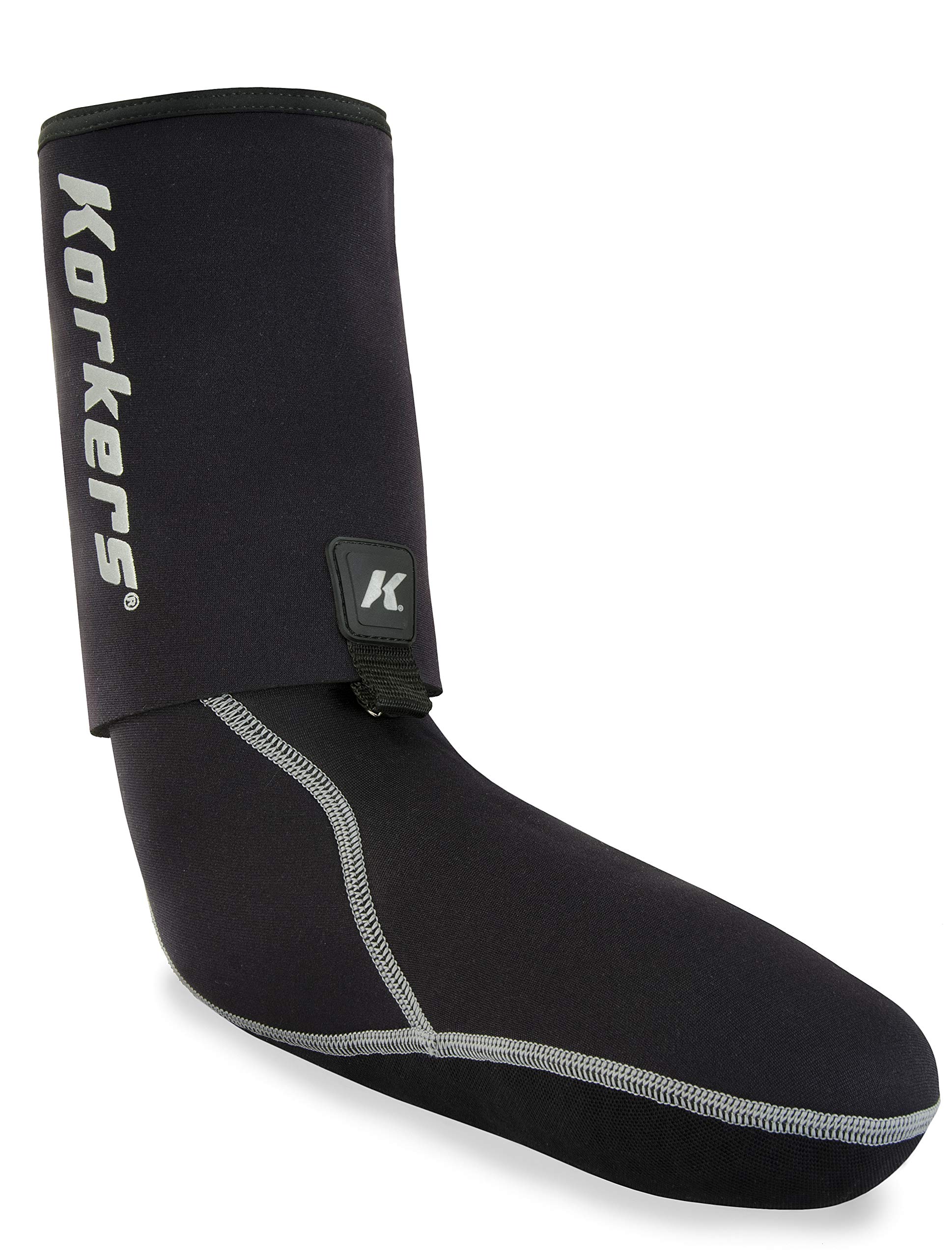
Korkers I-Drain Neoprene Guard Sock

89 /100
Angler Score Excellent

Key details

Footbed
Perforated for drainage
Material
Neoprene
Water Handling
Drains, doesn't seal
Check Details on Amazon

The priciest sock here is also the least conventional: a neoprene guard sock with a perforated footbed, built to be worn in wading boots with no wader at all. The logic is drainage rather than waterproofing — water gets in, water gets out, and your foot isn't left sitting in a puddle. For summer wet wading we think that's a smarter design than a membrane, and it's the pair we reach for once the water is warm enough to leave the waders in the truck.

The perforated sole is the detail that makes it work. A plain neoprene bootie holds water against your foot and gives you that squishy insole feeling with every step; this one lets it out, so the sock stays comfortable in a way that has as much to do with drainage as padding. It also makes the sock a warm-weather tool — under a wader the design has nothing to do, and you're carrying neoprene weight for no benefit.

Getting it on is the price of the fit. Neoprene grabs at the skin, and the sock has to be worked over the heel an inch at a time, which is a nuisance on a gravel bar with cold, wet hands. Once it's on, it fits like a sock and stays put inside the boot, and the fit runs snug enough that you should take the larger size if you're between two.

Pros

  • Drains water instead of trapping it
  • Comfortable for summer wet wading
  • Stays put inside wading boots

Cons

  • Slow to work on over a wet heel
Our verdict

Built for wet wading rather than waders: water goes through the perforated footbed and out, so your feet drain instead of soaking.

Check Latest Price
4

Best Waterproof Knee-High

Randy Sun Knee-High Waterproof Socks

85 /100
Angler Score Excellent

Key details

Use
Kayaking, hunting, fishing
Height
Knee-high
Waterproof
Yes
Check Details on Amazon

Knee-high and waterproof is the combination most wet-waders actually want, and this sock delivers it — up to a point. Water resistance is the split: it keeps feet dry through crossings, splashy boat rides, and cold streams, and it lets water through after a few hours of standing in the same spot. Depth and time separate those two outcomes far more than anything else.

Read it as a sock for moving through water rather than living in it, and it's the most useful waterproof option here for wading. The knee height covers more leg than the crew Randy Sun, the fit is snug enough to slide into rubber boots without bunching, and it holds warmth in water that would have you turning back in a cotton sock.

Sizing is the other wrinkle: they're cut snug by design, because that's what makes the seal, so take the larger size if you're between two — a tight cuff still slides into a boot, a loose one leaks. What we noticed most in the wet is that they don't get heavy. A soaked wool sock drags at your boot; this one stays thin and light even when the inside is damp, and the walk back to the truck is shorter for it.

Pros

  • Knee-high waterproof coverage
  • Keeps feet warm in cold water
  • Snug enough to slide into rubber boots

Cons

  • Costs more than the crew version
Our verdict

The most capable waterproof sock here for creek crossings and wet wading, best used for moving water rather than standing in it.

Check Latest Price
5

Wet Hikes, Kayaking

Randy Sun Waterproof Crew Socks

89 /100
Angler Score Excellent

Key details

Use
Hiking, wading, kayaking
Height
Crew
Sizing
Unisex
Waterproof
Yes
Check Details on Amazon

The other Randy Sun here gets the fishing billing; this crew version is the generalist, and that's how we treat it. It's a waterproof, breathable sock for shallow crossings, kayak launches, and wet hikes where a second pair of boots is impractical, and because it stops at the ankle, it slides into trail shoes, paddling booties, and rain boots that a knee-high would never fit inside.

Water resistance is the whole proposition, and it's what makes the sock useful in places a wader sock doesn't go: wet grass at dawn, spray over the bow, a shallow crossing on the way to a good pool. It's also the part to keep realistic — this is a sock, not a boot.

The fabric has a wetsuit-like feel against the skin, smooth and slightly rubbery, which some people notice and others don't. Warmth is real but modest: think of it as a windproof layer for your feet rather than insulation, and one that layers under a wool sock when the day turns cold.

Where it earns its place is as insurance. For a paddling trip, a rainy hike, or a cold launch, a sock that keeps your feet dry through the wet parts of the day is worth carrying even if it never becomes your everyday wader sock. Sizing is unisex and runs snug, so buy for your larger foot and let the cuff do its job.

Pros

  • Keeps feet dry on shallow crossings
  • Crew height fits hiking and paddling shoes
  • Layers under a wool sock when cold

Cons

  • Snug cuff is slow to pull on
  • Water gets through during long immersion
Our verdict

A waterproof crew sock for wet hikes and kayak launches, and cheap insurance for days when wet feet would end the trip early.

Check Latest Price

How We Chose and Tested 14 Pairs of Wading Socks

We started by pulling every pair we could find that was genuinely built for water — merino blends, neoprene guards, and waterproof membrane socks — then cut anything with a cotton base layer or a seam that ran under the arch. From there we filtered by height, since a sock that stops below the boot top defeats the point, and by material weight, so the final 14 ranged from thin shells to heavy cold-weather knits.

Each pair went to work for eight months: cold tailwater mornings when the water sat in the forties, kayak launches off a gravel ramp, and bare-leg wet wading over sand and cobble. I logged warmth by noting when toes first went numb, and moisture by peeling the socks off at the truck and pressing a paper towel into the sole to see how much came away. Two pairs left a visible damp print after an easy day; the best felt nearly dry.

Fit got tested twice, once under stockingfoot waders and once in a bootfoot pair, because a sock that slides down inside a boot is worse than no sock at all. I timed how long each took to pull on with cold, wet hands and stood in ankle-deep water for ten minutes checking for damp seams. Back home, every pair went through repeated washing, and I inspected heels and toes for thinning and pilling. Value came down to how many seasons a pair could plausibly survive.

How to Choose Wading Socks

Match the sock to the water you fish

Waders and wet wading ask for opposite things. Under waders, the boot and the wader already keep water out, so the sock's job is insulation and cushioning — a tall merino knit stays warm even when it's damp and pads the sole against gravel. Wet wading is the reverse: you want a sock that drains, like the Korkers neoprene, or one that seals, like a waterproof membrane. Buying a membrane sock to wear inside waders is paying for protection you already have.

If you fish both ways through the year, treat it as two purchases. One pair of wool socks for cold-water days and one pair of draining or waterproof socks for summer covers more water than any single pair can.

Height, and whether it stays up

Knee-high coverage keeps a boot cuff or gravel guard from rubbing and keeps sun and brush off your shins on a long wet-wade. The catch is that tall wool socks slide, and a sock bunched under your arch is worse than a short one that stays put. Look for a snug upper rather than an elastic band tight enough to leave a mark, and be realistic about your calf: the Ducks Unlimited pair holds above the knee, while the Drake is a taller, heavier sock that works its way down over a long day.

Cushioning versus boot fit

Thickness is a fit decision as much as a comfort one. A heavyweight knit feels wonderful on cobble, but it takes up volume inside a wading boot, and a heavy sock in an already-snug boot turns into a vice your toes pay for. Try boots on with the sock you actually plan to wear, and if you're buying both at once, size the boot to the thicker sock rather than the other way round.

What waterproof really means

A waterproof sock carries a membrane that keeps liquid water out while letting some vapor escape. That handles rain, spray, wet grass, and a creek crossing. It does not handle standing in a river for hours, where water pressure pushes moisture through the fabric, and it never replaces a wader. Expect a snug cuff, because that is what makes the seal, and expect a different feel from wool — smoother, cooler, and less forgiving on a long walk in.

Frequently Asked Questions

Final Verdict

Buy the Ducks Unlimited two-pack and stop thinking about socks: it stays up, it's warm without being bulky, and the second pair means tomorrow starts dry. If your water is genuinely cold, the Drake's heavyweight knit is worth the extra volume in your boots. If you fish wet all summer, the Korkers drain instead of soaking.

And if your wet feet come from crossings, rain, and launches rather than from standing in a river, pack a waterproof sock — the knee-high Randy Sun first, with the crew version for shoes a knee-high won't fit inside.