Best Wading Staffs of 2026

The first time I felt a river bottom shift under me, I was mid-thigh in fast water with a fly rod in one hand and nothing in the other. That's the moment a wading staff stops being an accessory and becomes the thing you're standing on. A good one buys you a third point of contact — something to lean on while you read a seam, cross a chute, or feel your way back to the bank with cold hands and tired legs. The wrong one wobbles at the joint, jams in its holster, or needs two hands to extend at the exact moment you only have one.

Over the past eight months, my team and I put 11 staffs through spring runoff, summer low water, and a couple of long days on slick rock, and the differences showed up fast. Some flicked open one-handed and locked hard enough to trust; others flexed under a lean or buried themselves in the holster when I was reaching for them in a hurry. What separates a staff you'll actually carry isn't the shaft material — it's the joint, the grip, and how it stows. Those are the three things we hammered on, and they're what the picks below got right.

1

Best Overall

Simms Wading Staff

90 /100
Angler Score Outstanding

Key details

Shaft
7075 aluminum
Included
Retractor, sheath, wrist strap
Deployed Length
54.75 in
Collapsed Length
14 in
Check Details on Amazon

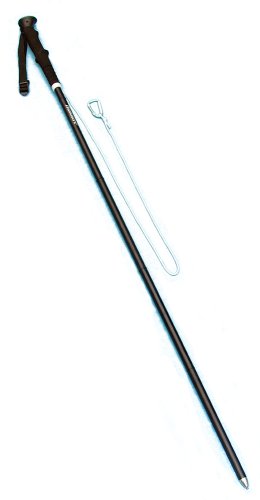
The part that makes the Simms the staff we reach for is the retractor. The staff hangs off your vest, you pull it down one-handed when the bottom turns slick, and you let it go again when you need both hands on the rod. No unclipping, no laying it on the bank and forgetting where. The hardware underneath is the best in this group: 7075 aluminum tubing, a coated stainless cable, 54.75 inches deployed and 14 inches collapsed.

In the water, the ribbed closed-cell foam handle gives you several places to grab, which matters more than it sounds. Choke up crossing a steep bank, drop your hand for a long reach across a seam, and your palm still fits. The aluminum tip is replaceable, so a worn point doesn't mean a new staff. It opens and locks in a couple of seconds, and what struck us is that it feels locked rather than merely extended.

Whether it's worth paying for comes down to how often you're in the water. Wade most weekends and the arithmetic works in your favor across a few seasons. Fish a handful of days a year and the Hammers below does the essential job for far less money, and we say so without hesitation.

Pros

  • Retractor and sheath keep it on your vest
  • Locks solidly and opens in seconds
  • Replaceable tip extends the staff's life
  • Ribbed foam handle offers several grip heights

Cons

  • Costs several times more than any other pick
Our verdict

For anyone who wades often, this is the staff to buy: it locks solid, carries on a vest retractor, and takes a replacement tip.
Check Latest Price
2

Best Value

Hammers Collapsible Wading Staff

86 /100
Angler Score Excellent

Key details

Tip
Carbide steel
Shaft
3/4 in aluminum alloy
Folded Length
12 in
Extended Length
52 in
Check Details on Amazon

Take the premium price out of the equation and you're left with the same basic idea: a corded staff that folds up, snaps open with a flick of the wrist, and rides to the water on your belt. The Hammers does that for a lot less. Extended it's 52 inches, folded it's 12, and the shaft is 3/4-inch aluminum alloy with a carbide tip.

For most anglers this is the sensible buy. The carbide point is the right shape for cobble and ledge, and the contoured EVA grip with its wrist strap stays comfortable through a long session. The sections are held by cord tension rather than a lock, so the staff wants a firm plant rather than a stab: set it, feel it take your weight, then move. Open it with a shake and the sections seat with a snap you can hear.

If you're over about six foot, look at the longer Aventik instead. Fifty-two inches is on the short side for a tall angler reaching downhill. Everyone else gets a staff that lives on the belt, comes out fast, and does what the expensive ones do, which is why we point most people here first.

Pros

  • Folds to 12 inches and opens one-handed
  • Carbide tip bites into rock and gravel
  • Costs a fraction of the premium staff
  • Wrist strap keeps it on your hand

Cons

  • ⚠️ Sections can pull apart when the tip jams in soft mud
  • 52-inch maximum is short for taller anglers
Our verdict

The best value here: folds to a foot, opens one-handed, and bites into rock, and it's the staff we recommend to most anglers.

Check Latest Price
3

Best for Mud and Marsh

MOJO Outdoors The Knot Wading Pole

91 /100
Angler Score Outstanding

Key details

Tip
Knot-shaped, mud-shedding
Weight
1.3 lb
Flotation
Floats
Adjustable Length
42 to 60 in
Check Details on Amazon

The Knot earns its name at the bottom of the staff. Instead of a spike, the tip ends in a blunt knot that spreads your weight instead of spearing into the bottom, so on a soft river bed or in flooded timber it plants and releases rather than burying and jerking your shoulder on every step. In mud, that single design choice is worth more than any spec on the page, and we take it over a spike-tipped staff every time.

It adjusts from 42 to 60 inches on a flip lock, covers a short angler and a tall one, and at 1.3 pounds it's light enough to carry in one hand all morning. It floats, too, which sounds like a novelty until you're taking a glove off in chest-deep water and the current is doing its best to take things away from you.

Sixty inches is the longest reach in this guide, useful when you're stepping down a cutbank or crossing a ditch, and the flip lock adjusts one-handed while you're moving. Stainless shaft, comfortable handle, carry strap: nothing about it is precious, and all of it works in the water it was built for.

Pros

  • Knot tip resists burying in mud
  • Adjusts from 42 to 60 inches
  • Floats if you drop it
  • Stable in deep, soft bottom

Cons

  • No folded position, so it can't be holstered
Our verdict

For soft bottoms, flooded timber, and anyone tired of hauling a spiked staff out of the mud, this is the one we reach for.

Check Latest Price
4

Best for Taller Anglers

Aventik Foldable Aluminum Wading Staff

84 /100
Angler Score Excellent

Key details

Tip
Tungsten
Shaft
7075 aluminum
Folded Length
12 in
Extended Length
55 in
Check Details on Amazon

Fifty-five inches is the number that matters. Of the folding staffs in this guide, the Aventik extends furthest, which puts the grip where a tall angler wants it instead of forcing a stoop at the end of every step. It folds back to 12 inches, so the extra reach costs you nothing in the vest.

The rest is familiar: four aluminum sections on an elastic cord, an EVA handle, a tungsten tip and a neoprene sheath. It snaps together one-handed, and the tungsten point is hard and fine-grained, the right sort of tip for rock and gravel. There's also a threaded camera seat on top of the grip. We can't say we've ever wanted to mount a camera on a wading staff, but it sits flush and doesn't foul your palm.

Beyond that, the value is hard to argue with: the longest folding staff in the group at the lowest price, with a point that's the equal of anything else here on wet rock. If you're tall and wading ledge and cobble, the extra reach is the whole argument.

Pros

  • Extends to 55 inches, the longest folder here
  • Folds to 12 inches for a vest or belt
  • Snaps together one-handed
  • Costs less than any other staff here

Cons

  • ⚠️ Handle can work loose and slide on the shaft
Our verdict

The longest folding staff here at the lowest price, which makes it the pick for a tall angler who wants a compact staff without spending much.

Check Latest Price
5

Best Lightweight

X Carbon Tech Pro Cork Wading Staff

84 /100
Angler Score Excellent

Key details

Fold
Three-section Z-fold
Shaft
Carbon fiber
Handle
Burl cork
Weight
10.2 oz
Check Details on Amazon

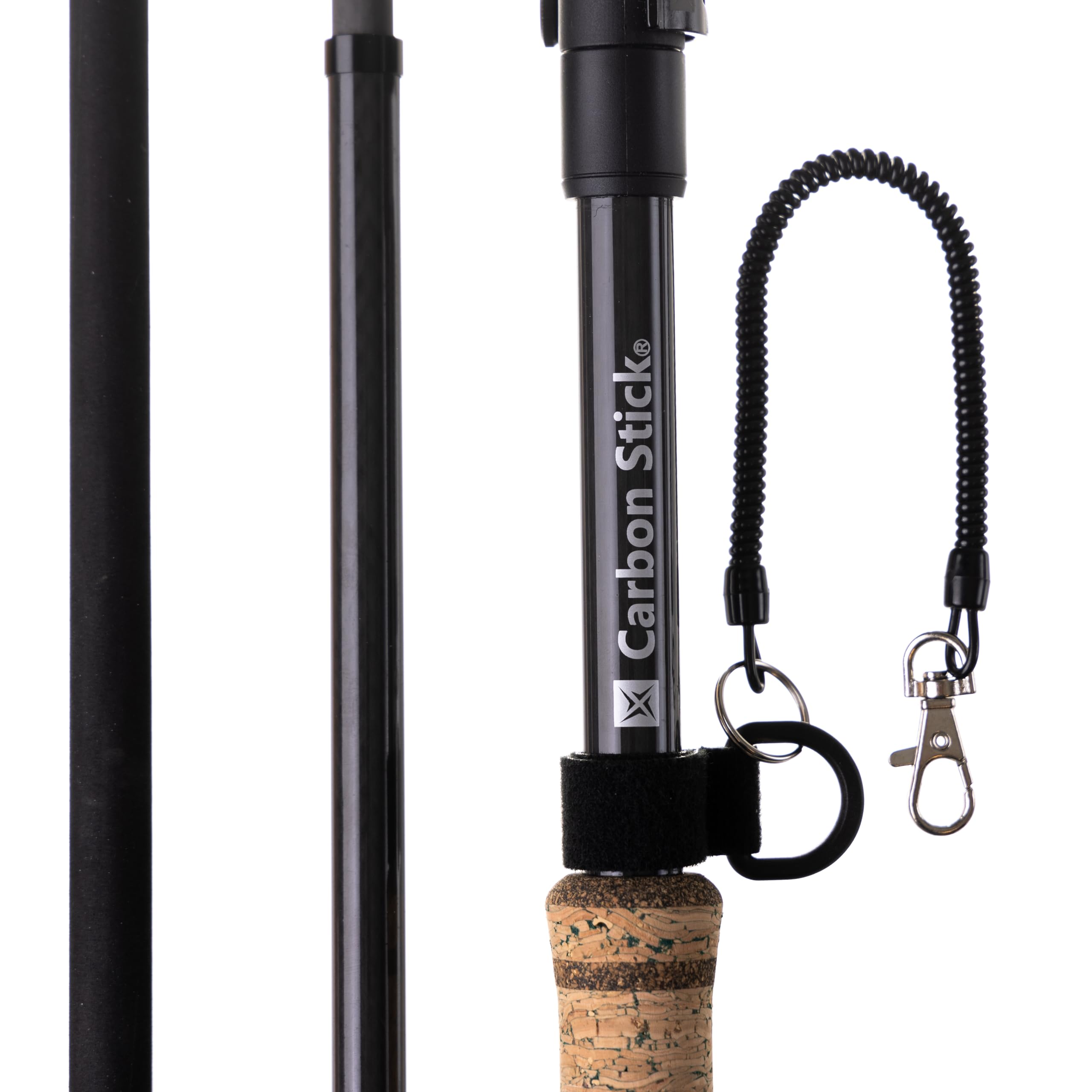
At 0.29 kilograms, about ten ounces, this is a staff you stop noticing on the walk in. The shaft is carbon fiber woven in an X pattern, the handle is burl cork rather than foam, and it breaks into three sections on a quick-lock collar. A case comes with it.

The cork is the part worth paying for. Cork stays grippy once it's wet, and it doesn't go slick the way a foam handle can after a few hours of rain and spray, which is exactly when you're leaning on it hardest. The z-fold opens and closes quickly, and the whole thing disappears into a daypack side pocket on the hike out.

Carbon is less forgiving than aluminum if you drop it on rock. An aluminum shaft dents and keeps working, where carbon can crack, so give it a look after a hard knock. For long walk-ins and hike-in water, the weight saving is the argument, and it's the staff to carry furthest.

Pros

  • Carbon shaft keeps it light in the hand
  • Burl cork grip stays secure when wet
  • Folds into three sections with a case
  • Quick-lock length adjustment

Cons

  • Costs more than the aluminum folders here
Our verdict

The lightest staff here, with a cork grip that holds up wet, and it's worth it if you hike in far and want a staff you forget you're carrying.

Check Latest Price
6

Hiking Crossover

Zephr Wading Staff

82 /100
Angler Score Excellent

Key details

Handle
Cork
Weight
15.8 oz
Included
Carry pouch, compass
Extended Length
54 in
Check Details on Amazon

There's a compass set into the top of the Zephr's cork handle, and it tells you what this staff is really for: hikers who fish rather than anglers who hike. The 54-inch aluminum shaft and the cork grip are the parts that matter on the water, and it collapses on a quick lock and comes with a pouch.

It opens easily and locks firmly enough for a slow crossing, and the cork stays comfortable through a long day. The joints are the weak spot. They develop play, and once they do the staff rocks under your weight instead of holding still, which is the difference between a plant you trust and one you don't.

Cork is the right call for the handle, and at 15.84 ounces it's light enough to carry on a hike. It's the joints that decide it, and ours never felt as solid as the aluminum folders above.

Pros

  • Cork handle is comfortable and grippy
  • Opens and locks with one hand
  • Compass in the handle for hiking

Cons

  • Pouch is flimsy and fails early
  • Can bend when wedged between rocks
Our verdict

A comfortable crossover for a hiker who fishes a few days a year; for regular river wading, the dedicated staffs here hold up better.

Check Latest Price

How We Tested 11 Wading Staffs in Moving Water

We started by pulling every wading staff we could find that was genuinely built for water — folding or telescoping, with a locking joint and a holster or belt loop — then dropped anything that was really a hiking pole with a lanyard, and anything with a recurring pattern of complaints about joints seizing. That left 11 staffs from six brands, running from budget aluminum to carbon fiber, and every one of them got wet. Testing ran from early spring through late fall, roughly eight months, so each staff saw cold, high water and warm, low water before we made a call.

Each staff spent at least two weeks riding on a vest or belt and came along on tailwater mornings, a few gorge hikes, and one long day on a rock jetty. We deployed each one one-handed with a rod in the other hand and counted how many motions it took to reach full length and lock. In knee-deep current we leaned our full weight onto the grip and pushed off it climbing a muddy bank, then repeated the push on dry gravel to see whether the tip skated. Grips were tested wet, with bare hands and with neoprene gloves, and every joint got packed with sand and silt, left to dry overnight, and opened again the next morning.

Storage mattered more than we expected: we judged holsters by whether we could re-sheathe one-handed without looking, and measured collapsed length against a vest pocket and a pack strap. We also counted what came in the box, since a staff without a usable holster is one that tends to stay in the truck. At the end of the eight months we re-checked every joint for wobble, every tip for wear, and every locking mechanism for grit — that last pass is where the field separated.

How to Choose a Wading Staff

Decide How It Carries Before Anything Else

A staff that lives in a holster on your vest comes out without thinking. A staff that lives in your hand gets used less, because you have to put the rod down to pick it up. Folding designs collapse to roughly 12 to 14 inches and clip to a belt or wader, which is why they dominate among fly fishers working pocket water. A telescoping pole like the MOJO bottoms out at 42 inches and stays in your hand or on the bank: steadier and simpler, but a commitment to carry. Neither is wrong. They suit different rivers.

Match Length to Your Height and the Bank

Extended lengths in this group run from 52 to 55 inches, with one adjustable pole reaching 60. A staff that's too short makes you stoop at every step; one that's too long pushes you upright and puts your weight behind your feet instead of over them. If you're over about six foot, start at the 55-inch end. Adjustable staffs earn their keep on side slopes and ditches, and they're the only ones you can share with a partner of a different height.

The Tip Should Match the Bottom, Not the Brochure

The sharp point that saves you on cobble is the one that buries in silt, and that trap catches anyone who fishes two kinds of water. Carbide and tungsten points bite rock and gravel, which is what you want on a freestone river. A blunt, knot-shaped tip spreads your weight and refuses to sink, which is why the MOJO is the marsh pick. If you wade both, buy the sharp tip and keep your plant short in the soft stuff rather than leaning your weight into a buried staff and fighting it out.

Joints and Locks Are Where Staffs Fail

Folding staffs hold their sections together with a tensioned cord. It's fast, it works, and it's the first thing to give when the tip jams and the bottom section stays behind. Telescoping staffs use a flip or twist lock instead, and slippage there shows up as a shaft that shortens under load. Test either on land before you trust it in current: push down hard, twist the shaft, and feel for play at the joins. A little rock at the joint becomes a lot of rock with your weight on it.

Grip and Weight Over a Long Day

Foam and cork both work wet, but cork tends to stay grippier once your hands are soaked, and it's what the two lightest staffs here use. Weight matters less while you're leaning on the staff than while you're carrying it, so the difference between a carbon shaft and a heavy aluminum pole shows up on the walk in, not the crossing. If your access is a mile of trail, pay for light. If you park at the bridge, put the money into the lock and the tip instead.

Frequently Asked Questions

Final Verdict

The Simms is the best staff here: it locks solid, rides on a vest retractor so you can let go of it mid-cast, and takes a new tip when the point wears. If the price is a non-starter, the Hammers does the same folding job for a fraction of the money and is the staff we point most people toward.

Wade mud more than rock and the MOJO's knot tip beats both, at the cost of carrying it rather than holstering it. Decide how the staff will ride and what's under your feet, and the choice makes itself.