Best Air Mattresses for Camping of 2026

An air mattress has one job, and camping makes it harder: keep you off the ground all night, on ground that isn't level, with no outlet in sight. I've slept on pads that went soft by 2 a.m. and on a borrowed queen that beat my bed at home. A good one buys you something unglamorous and enormous: you wake up without a rock in your back and without a slow leak to nurse through the night.

The questions are always the same: will it stay firm until morning, how long does inflation take, and will the seams survive a season of weekends. We've spent six months on a dozen of these, pumping them up at dusk on packed dirt and living room rugs alike, then checking pressure again at dawn. One thing that surprises first-time buyers: a plush mattress can soften overnight as the material stretches, and the ones that hold their shape have a coil or beam structure inside rather than one open chamber. What follows are the ones I'd hand to a friend without a caveat.

1

Best Overall

iDOO 18-Inch Queen

86 /100
Angler Score Excellent

Key details

Pump
Built-in, 3 min
Weight Limit
650 lb
Inflated Size
80 x 60 x 18 in
Mattress Weight
13.9 lb
Check Details on Amazon

Three of the beds in this group stand 18 to 20 inches off the ground, and the iDOO is the lightest of them at 6.3 kg on the listing, against 16.6 pounds for the OhGeni and 19 pounds for the SoundAsleep. Combine that with a full 18-inch deck and a built-in pump and you have the raised queen we reach for first — the one that doesn't punish you for wanting a real bed in a tent.

The pump is the part to think through before you buy. It draws 110-120V AC, so it fills the mattress in about three minutes wherever there's an outlet and does nothing at a primitive site. Our own trips split between the two, which is why a small inverter now lives in the car kit alongside the tent pegs.

Underneath the flocked top there are 40 continuous air coils and a 650-pound rating, second in this group only to the OhGeni's 800. The surface is waterproof and takes a fitted sheet well enough that the bed stops announcing itself as plastic. A repair patch and a carry bag are in the box, and 60 inches of width is standard queen, so nobody's elbows are the issue.

What we watch on any PVC mattress is the second night. The material stretches on first inflation, and this one behaved like the rest of the group: firm on night one, asking for a top-up on night two, settled after that. Support runs one year, which is shorter than the OhGeni's decade-long promise and about par for the set.

Pros

  • Lightest of the tall queens here
  • 18-inch deck with a 650-pound rating
  • Built-in pump fills in about three minutes
  • Repair patch and carry bag included

Cons

  • 110-120V pump needs an outlet
  • One-year support term
Our verdict

The raised queen we recommend by default: full 18-inch height, a 650-pound rating, and less to carry than the other tall beds here. Buy it if you have power for the pump.
Check Latest Price
2

Best for a Bed-Like Feel

King Koil 20-Inch Queen

88 /100
Angler Score Excellent

Key details

Pump
Built-in, 120V
Weight Limit
600 lb
Inflated Size
80 x 60 x 20 in
Mattress Weight
17 lb
Check Details on Amazon

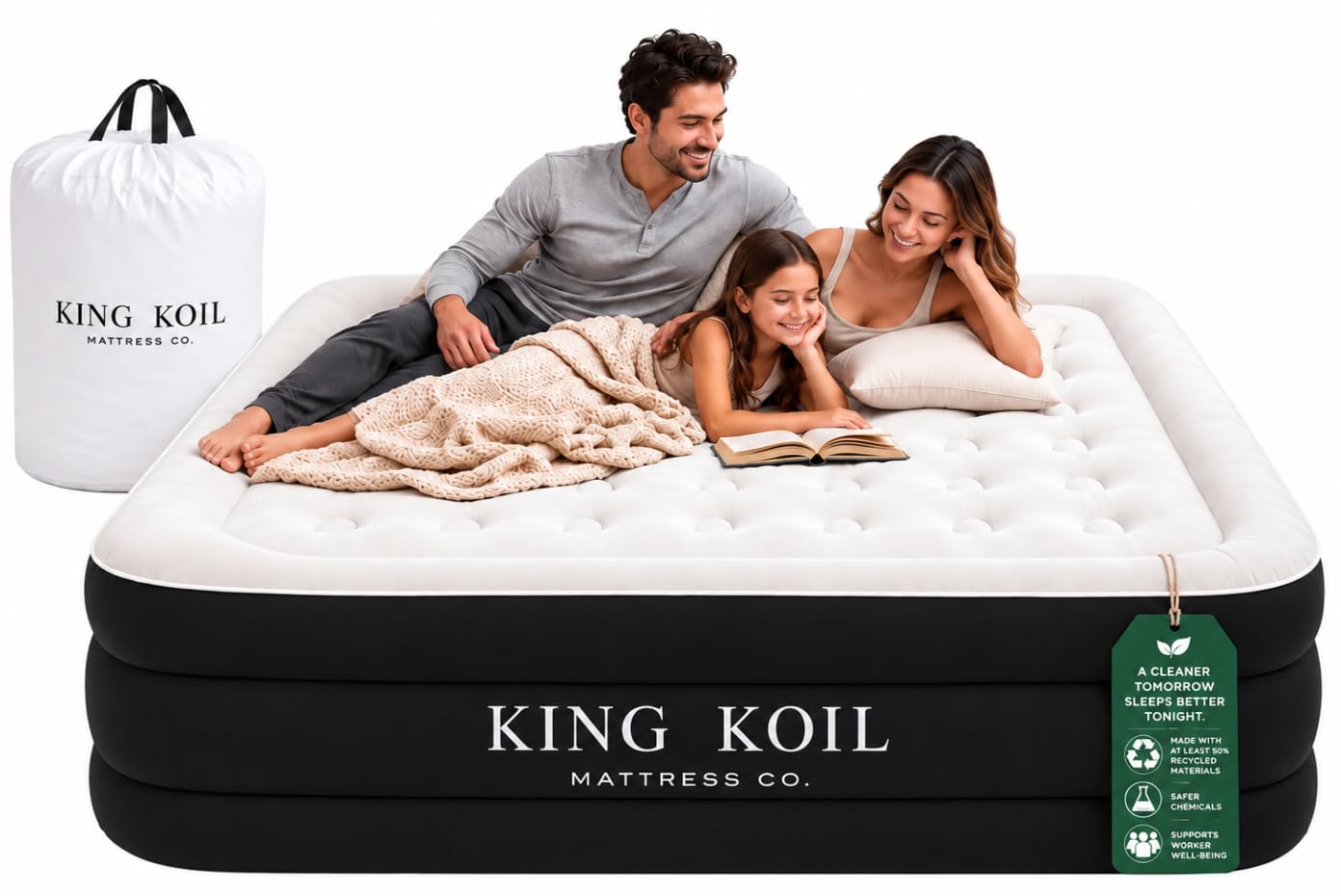
Twenty inches is the tallest deck here, and it changes how the bed lives in a tent. Getting up in the morning is genuinely easy — you sit on the edge and stand rather than crawling off the floor — but a two-foot wall of PVC eats headroom a low tent doesn't have, and 7.72 kg is a real carry from the trunk to the pitch.

Comfort is where it earns its place. The flocked top over a coil-beam core is the closest thing in this group to a mattress rather than an inflated bag, and the 600-pound rating covers two adults without argument. It's the tall bed we hand to the camper who says they can't sleep on air.

The pump is a 210W unit quoted at two minutes for the queen, which is the quickest claim on the page and the difference between setting up in a drizzle and setting up in a downpour. Deflating and rolling it back into the included bag is uneventful. Just know that the pump, like every powered pump here, wants an outlet, so the 20-inch height and the two-minute fill are indoor conveniences as much as camping ones.

Pros

  • Quickest fill claim here at two minutes
  • Tallest deck for easy getting up
  • 600-pound rating and flocked sleep surface
  • Carry bag and repair patch included

Cons

  • 20-inch height crowds a low tent
  • 7.72 kg to carry to the site
Our verdict

The most bed-like sleep in this group, with the fastest fill — worth the height and the carry weight if your tent is tall and your site has power.

Check Latest Price
3

Best Double-Duty Guest Bed

SoundAsleep Dream Series Queen

89 /100
Angler Score Excellent

Key details

Support
40 air coils
Weight Limit
600 lb
Inflated Size
80 x 60 x 19 in
Mattress Weight
19 lb
Check Details on Amazon

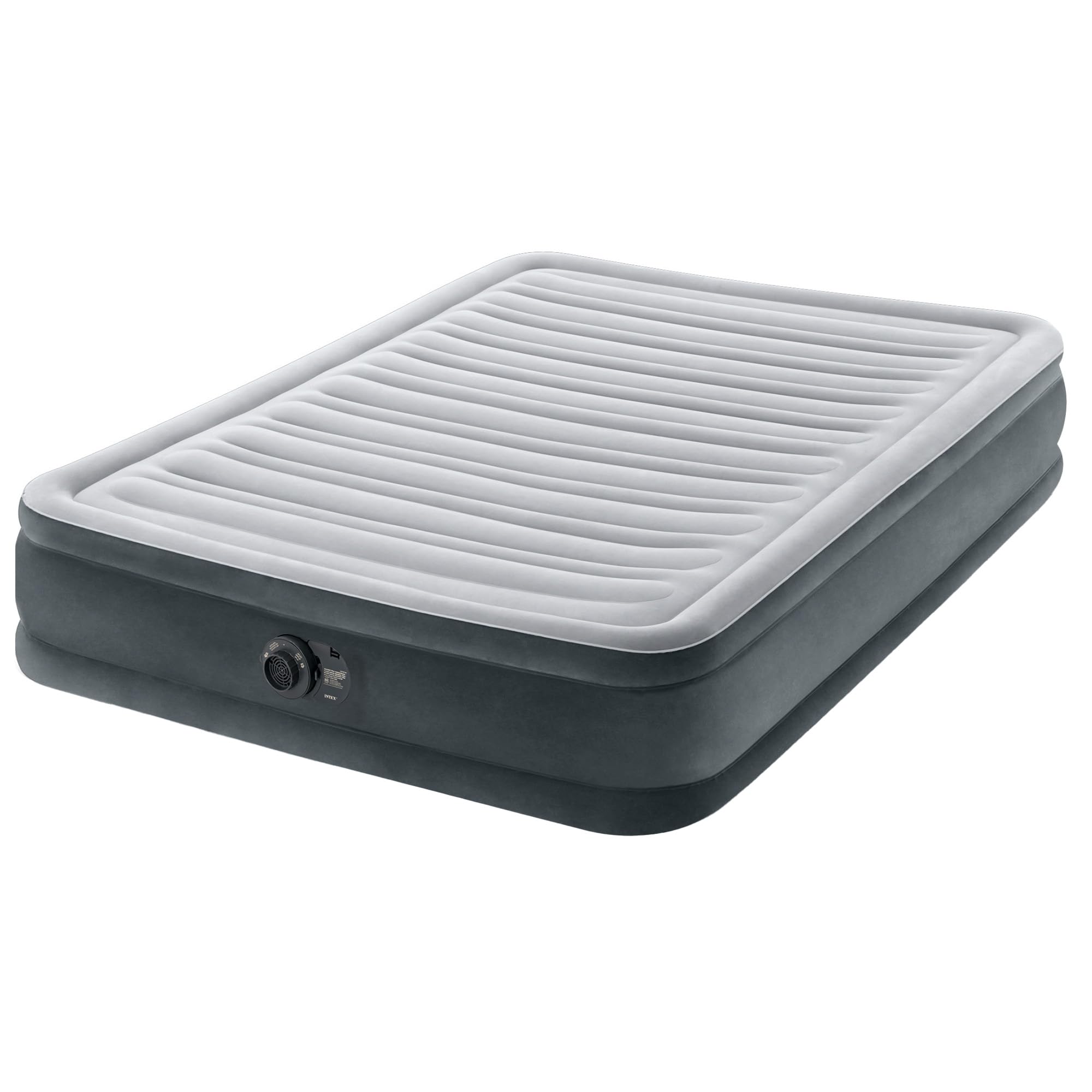
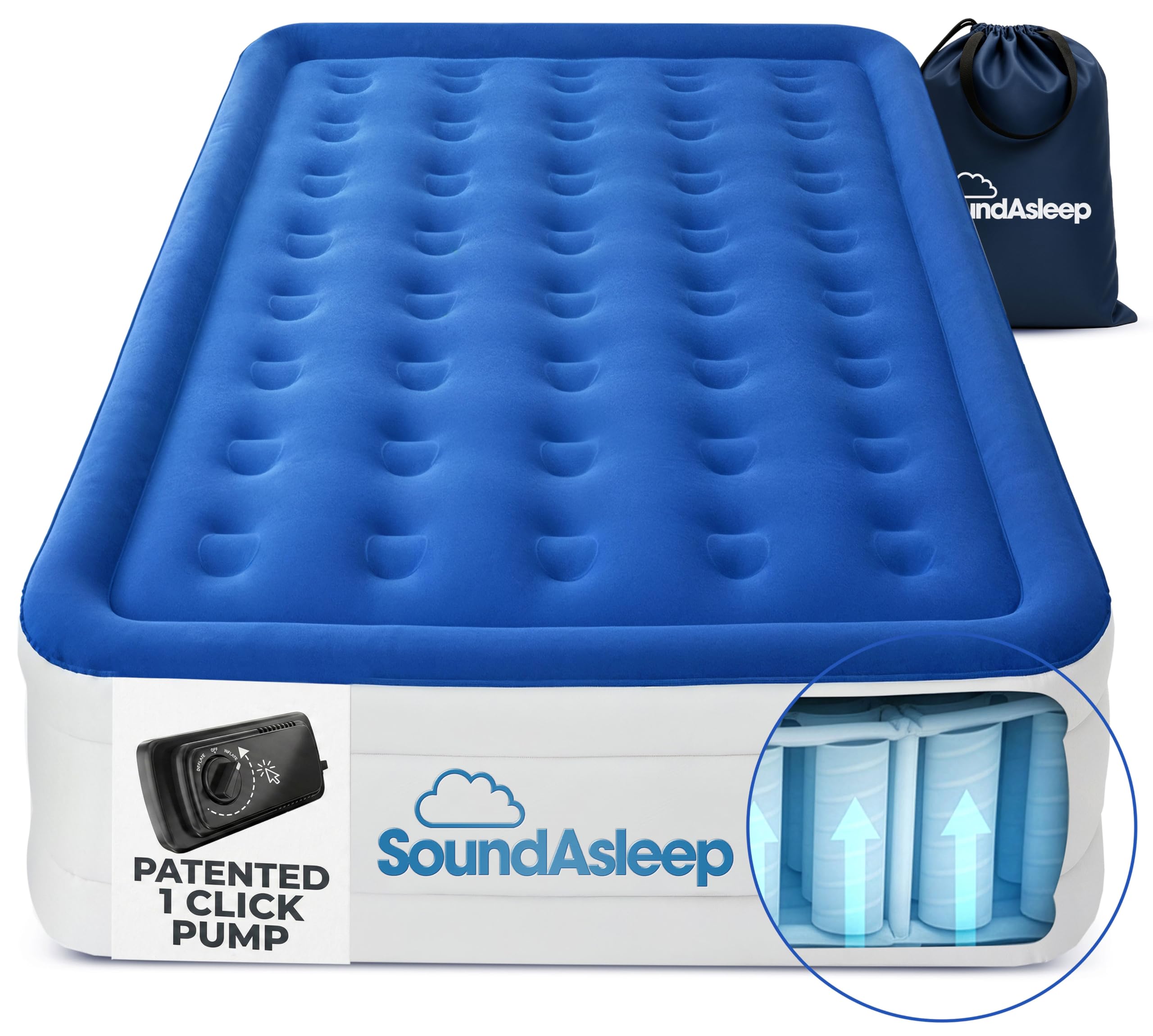
If the mattress has two jobs — a guest bed at home and a tent bed a few weekends a year — the Dream Series is built for exactly that overlap. It's the shape most of us picture when we think of a raised air bed: 19 inches tall, dual chamber, flocked top, one-click pump.

Forty air coils and a textured SureGrip base do the structural work, and the bottom really is grippier than the rest of this group — it doesn't skate across a tent floor or a hardwood one when you roll over. The shell is multilayer puncture-resistant PVC, the flocked top is waterproof and spot-cleanable, and firmness is adjustable enough to suit a side sleeper and a back sleeper in the same bed.

The pump is why it works as a guest bed: one click inflates it in under four minutes and it deflates flat enough to fold back into the bag without a fight. Nineteen pounds is the trade. This is the heaviest bed here, and at 19 inches tall it's a lot of mattress inside a small tent.

Where it wins us over is the surface itself — soft enough that a fitted sheet stays put and you stop noticing seams under your hip, which is not true of every bed on this page. The catch is the money and the material: PVC of any grade can develop a seam leak over years, and this is the priciest bed in the group. If it lives in a closet eleven months a year, that trade is fine. If it's in a tent every other weekend, spend the savings elsewhere.

Pros

  • Plush flocked top over 40 air coils
  • One-click pump fills in under four minutes
  • SureGrip base resists sliding
  • Waterproof top wipes clean

Cons

  • Heaviest bed here at 19 pounds
  • Tall 19-inch profile limits tent choice
Our verdict

Buy it as the guest bed that also camps: the plushest surface here, a pump that fills in under four minutes, and a premium price to match. Car campers who pack light should take the iDOO instead.

Check Latest Price
4

Best Mid-Height for Two

Intex Dura-Beam 13-Inch Full

88 /100
Angler Score Excellent

Key details

Pump
Built-in, 110-120V
Weight Limit
600 lb
Inflated Size
75 x 54 x 13 in
Mattress Weight
13.4 lb
Check Details on Amazon

Thirteen inches is the middle of this group, and for a lot of campers it's the sensible middle: high enough that you're not climbing off the floor, low enough that a three-season tent still has room above your face. The full-size deck measures 75 by 54 inches and carries 600 pounds, which is a lot of mattress for the footprint.

Fiber-Tech beams run horizontally to hold the edges up so the sides don't fold you into the middle, and the velvety top has the same soft finish as the rest of the Intex line. A carry bag and repair patch come with it, and the whole thing is 13.4 pounds — nearly five pounds lighter than the raised queens.

We like this one for couples who don't want to feel like they're sleeping on a stage. What you accept is 54 inches of width, a standard full, which is fine for two people who sleep close and tight for anyone who doesn't. The best argument for it is simple: it's the widest bed here that doesn't stand two feet off the ground. Set it up at home once before the trip, because Intex warns that the vinyl stretches and reads like a leak on first inflation.

Pros

  • 600-pound rating on a 75 x 54 deck
  • Mid-height suits low and mid-size tents
  • Built-in pump, carry bag, and patch included

Cons

  • 54-inch width is snug for two adults
Our verdict

For two people in a tent who want a real bed without a two-foot wall between them and the fly, this is the one we point to.

Check Latest Price
5

Best for Tall Solo Sleepers

VOSSER Twin XL

88 /100
Angler Score Excellent

Key details

Pump
Built-in, 110V
Weight Limit
500 lb
Inflated Size
80 x 39 x 15 in
Wall Thickness
0.45 mm PVC
Check Details on Amazon

Eighty inches of length on a 39-inch footprint is the whole idea here. The VOSSER is as long as a queen and as wide as a twin, which makes it the pick for anyone whose feet hang off a standard 75-inch mattress; set beside the twin Intex beds on this page, those extra five inches are the difference between stretched out and curled up.

The construction is I-beam rather than coil, in 0.45 mm PVC, and the rotary dial on the 110V pump is easier to work by torchlight than a push button. Inflating takes a couple of minutes, deflating takes less, and the carry bag is generous enough that you aren't wrestling the mattress back into it at the end of a trip.

Firmness dials from soft to properly firm, the flocked top is waterproof like the rest, and at 15 inches it's the lowest of the raised beds — which suits a tent with sloping walls where a 20-inch queen would press against the fly. Two things to weigh: 39 inches is one person, and the seams are what decide how many seasons you get, so keep it off gravel and stow it dry.

Pros

  • 80-inch length for tall sleepers
  • Extra-thick 0.45 mm PVC shell
  • Rotary dial pump is easy to operate
  • Carry bag sized to take it back

Cons

  • 39-inch width rules out two sleepers
  • Long 80-inch body takes trunk space
Our verdict

The bed for a tall solo camper: queen-length at 80 inches, 15 inches high, and quick to fill. If two of you are sleeping, this isn't it.

Check Latest Price
6

Best Ultralight Budget Pick

Intex Dura-Beam 10-Inch Twin

88 /100
Angler Score Excellent

Key details

Pump
Sold separately
Weight Limit
300 lb
Inflated Size
75 x 39 x 10 in
Mattress Weight
3 lb
Check Details on Amazon

At the bottom of this group is the cheapest route to a night off the ground: a 75-by-39-inch twin, 10 inches tall, three pounds on the listing. It's the only bed here you can carry to a walk-in pitch without thinking about it, and the one that disappears into a small tent's leftover floor space.

The pump isn't included, and that turned out to be the feature we appreciate most. The 2-in-1 valve opens wide enough for a hand pump, a foot pump, or a 12V car pump, so a primitive campsite doesn't strand you the way the powered beds here would. Give it a few minutes with a decent barrel pump and the fill is painless; a flimsy one will make you regret the savings.

What you give up is obvious the moment you lie down. Ten inches is close to the floor, the 300-pound rating is the lowest on this page, and the 90-day warranty is the shortest. None of that matters for a weekend, a sleepover, or a kid's first tent — it's the bed you buy when the trip is the point and the furniture isn't.

Pros

  • Three pounds, the lightest here
  • 2-in-1 valve takes hand, foot, or 12V pumps
  • Cheapest bed in this group
  • Velvety top wipes clean

Cons

  • No pump in the box
  • 90-day warranty is the shortest here
Our verdict

The lightest, least expensive way to sleep off the ground: three pounds, a valve that takes any pump you own, and no outlet required.

Check Latest Price
7

Heavy Sleepers

OhGeni 18-Inch Queen

88 /100
Angler Score Excellent

Key details

Pump
Built-in, 3 min
Weight Limit
800 lb
Inflated Size
80 x 60 x 18 in
Mattress Weight
16.6 lb
Check Details on Amazon

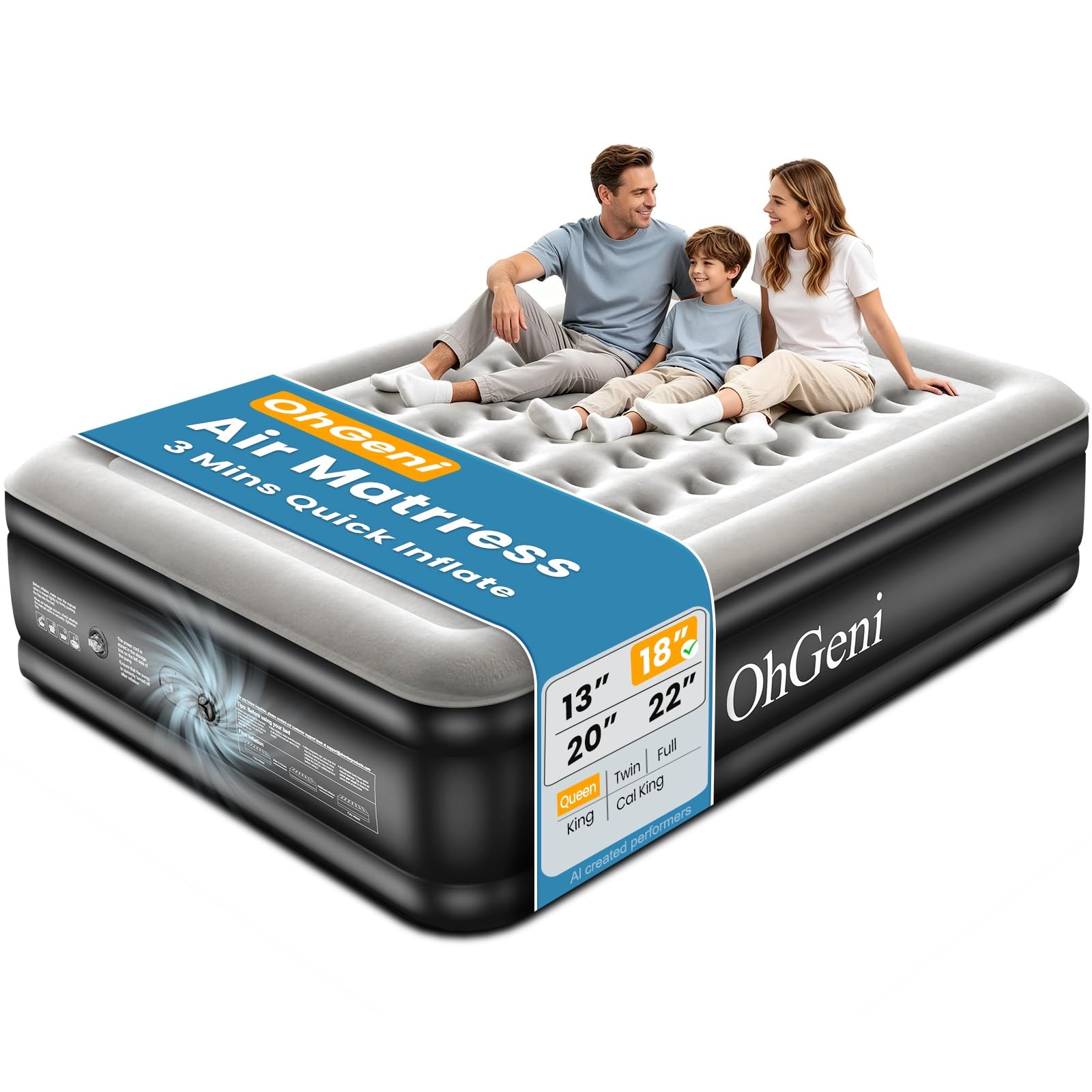
The headline here is capacity: an 800-pound rating, the highest in this group, on an 18-inch queen that weighs 16.6 pounds. OhGeni also claims a PVC formula 40% thicker than the standard, and backs the bed with a 10-year product support promise — the longest commitment on the page, though it's support rather than a warranty.

The rest is the familiar raised-queen recipe: 40 coils, a waterproof flocked top, a built-in pump quoted at three minutes, and a repair patch and carry bag in the box. It measures 80 by 60 by 18 inches, so it takes exactly the same floor as the iDOO and the SoundAsleep.

While we haven't put as many nights on this one as on our top pick, nothing in the design argues against it — the coil-beam core is the same idea, the deck is the same size, and the rating is meaningfully higher. If two heavy adults share a bed, or you want the longest support commitment in the group, it's worth a few extra pounds on the carry. Otherwise the iDOO does the same job more lightly.

Pros

  • 800-pound rating, highest here
  • 10-year product support
  • Flocked top and three-minute pump
  • Carry bag and repair patch included

Cons

  • 16.6 pounds to carry
  • Support promise is not a warranty
Our verdict

The pick when the rating matters most: 800 pounds on a standard 18-inch queen, plus the longest support commitment here. The trade is a few pounds to carry.

Check Latest Price

What Six Months of Sleeping on the Ground Taught Us

We started with about 40 mattresses sold by outdoor retailers and big-box stores, then cut anything without a built-in pump option, without a stated weight capacity, or with a packed size that wouldn't fit in a trunk alongside the rest of the gear. That left 12, from single-height twins to 20-inch queens.

Testing ran six months, from early spring through late summer, and most of it happened where these mattresses actually live: three weekend tent trips, a backyard campout, a week when relatives visited and the living room became a guest room, and one long night on ground that turned out not to be level. We inflated each one with its own pump and timed it, ran a hand-pump test to see how bad the backup plan was, and noted how loud each pump sounded at 10 p.m. in a quiet campground.

Air retention got its own test: inflate to full, leave it untouched for 48 hours, then measure how much it gave up. A few millimeters of sag is normal; a visible slump is not. Overnight, we logged whether anyone woke up on the ground, whether hips and shoulders bottomed out, and how much the surface had stretched by morning. Durability was unglamorous work — dragging each mattress across gravel, folding and refolding it, and seeing whether it went back into its carry bag without a fight.

We weighed all of that against price, because a twin that holds air all weekend is a better buy than a queen that needs topping up at 3 a.m. The best of the group did three things well: inflated fast, stayed firm until dawn, and packed down without a wrestling match.

How to Choose a Camping Air Mattress

Match the Deck Height to Your Tent, Not Your Bedroom

The raised beds here stand between 13 and 20 inches tall, and that height does two jobs at once: it keeps you off the cold floor, and it eats the space between your face and the roof. A 20-inch queen is wonderful in a cabin tent with near-vertical walls and oppressive under a sloping fly. Measure the interior height above where the mattress will actually sit, not the peak, and lean lower when you're unsure.

Height also changes how stable the bed feels. The taller the air chamber, the more you notice an uneven pitch, so on sloped ground the lower decks are the forgiving choice while the tall ones give you a bed you can sit on to pull your boots off.

Work Out Inflation Before Anything Else

Almost every built-in pump in this group is a 110-120V AC unit. That's a three-minute setup in the driveway or at a powered site, and a dead end at a primitive one, where the mattress is a very large bag until you find an outlet or an inverter. If your camping is unpowered, buy a bed with a wide 2-in-1 valve and bring a barrel or foot pump, or inflate at home the day before and accept a top-up at camp.

Valve design counts as much as the pump. An extra-wide opening fills and empties faster with a hand pump, and a valve that seats firmly is the difference between a slow leak and a good night.

The First Night Is Supposed to Be Soft

New PVC stretches. Intex prints a warning on its listings that pressure loss on first inflation is the material relaxing rather than a leak, and it's the most common reason a brand-new mattress gets sent back. Inflate yours at home a day or two before the trip, top it up once it's had time to settle, and judge air retention from the second night onward.

After that, a nightly sag is information. Check the valve first, then the seams — a valve that isn't fully seated behaves exactly like a pinhole in the shell.

Weigh the Bed Against the Walk From the Car

The spread here runs from three pounds to nineteen, and it matters in proportion to how far you carry it. A drive-up pitch makes a nineteen-pound queen a non-issue; a hundred yards of trail makes it the deciding factor. Packed bulk follows weight, and a queen fills a duffel that a twin leaves half empty.

Our rule of thumb: if you can park beside the tent, buy for comfort; if you can't, buy for the carry and accept a lower deck.

Sizes, Ratings, and Sleeping Two

Twin decks run 39 inches wide, fulls 54, queens 60 — and that 60 is why a queen is the couple's answer, because two adults on a full are touching all night whether they planned to or not. Length matters just as much: most twins stop at 75 inches, the VOSSER runs 80, and anyone tall should take the extra five.

Weight ratings in this group run from 300 to 800 pounds and describe the whole bed rather than each half, so treat the number as a ceiling for the pair of you plus whatever gets piled on top.

Frequently Asked Questions

Final Verdict

Across the group, the iDOO is the one we keep recommending. An 18-inch queen at 650 pounds, lighter to carry than the other tall beds here, and it fills in about three minutes — that's the balance most campers are actually looking for. If your site has power and you want the plushest sleep on the page, the King Koil's 20-inch deck earns its extra height and weight.

And if you're walking into a pitch with no outlet at all, the three-pound Intex twin is the only bed here that doesn't need one.