Best Coolers of 2026

There's a moment that tells you whether you bought the right cooler: mid-afternoon on a hot Saturday, when you reach in for a can and it's floating in an inch of meltwater. Cold drinks are the easy part. What a good cooler really buys you is time — hours before the ice gives out, plus enough structure to survive being sat on, dragged across a parking lot, and left in a hot trunk all day.

I've spent most of the last six months living with 14 coolers, from soft backpack bags to heavy rotomolded chests, and the differences come down to insulation, lid seals, and how much usable space is left once the ice goes in. That last part catches people out: quart ratings measure total volume, not cans, and a cooler packed loose will melt out hours before a full one. The picks below are the ones that held their ice, took the abuse, and felt worth what they cost.

1

Best Overall

YETI Tundra Haul

96 /100
Angler Score Outstanding

Key details

Shell
Rotomolded
Wheels
Single-piece NeverFlat
Capacity
10244.14 cubic inches
Outside Dimensions
18.6 x 28.1 x 19.6 in
Check Details on Amazon

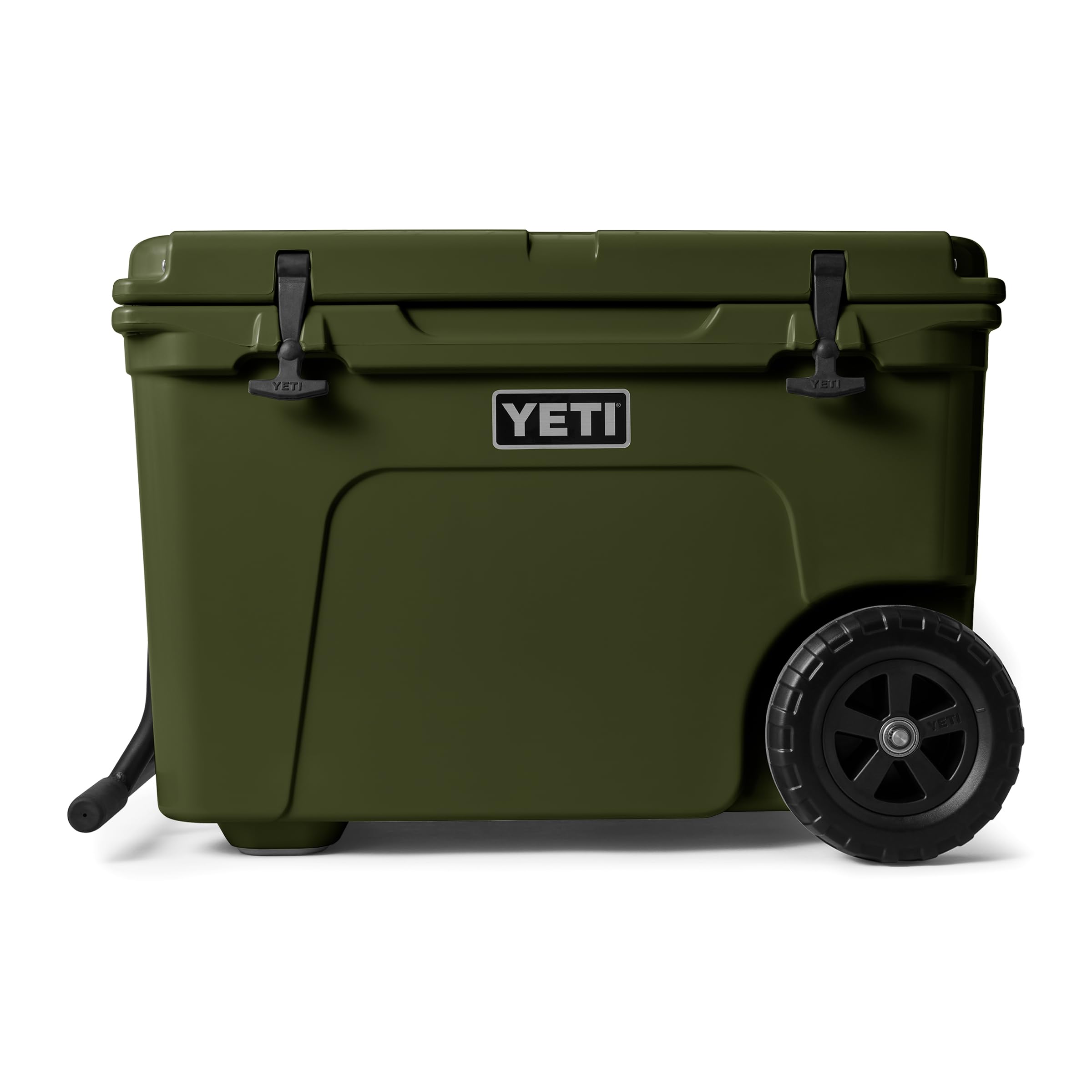
A rotomolded cooler packed with ice and drinks is a two-person lift, and that's the problem the Haul solves. Its NeverFlat wheels are a single piece of solid tire rather than a foam-filled shell, so a curb or a puncture doesn't end the trip, and the welded aluminum StrongArm handle curves so it tracks left or right instead of fighting your wrist. We towed ours loaded over grass and gravel and never wished for a second set of hands, which we can't say about any other hard box here.

The insulation is the other half of the argument. PermaFrost foam is pressure-injected into the walls and lid, the T-Rex latches pull the lid down hard and even, and the Vortex drain opens without tipping the box on its side. What went in cold on Friday morning came out cold on Sunday, with ice still rattling around the bottom.

What you give up is space and easy lifting. It's heavy before you put anything in it, and at 28 inches across it eats most of a wagon's cargo area. YETI also notes the Haul won't take its Dry Goods basket, so sandwiches need their own tray. None of that matters if the cooler lives in the truck bed and comes out twice a weekend, which is exactly the buyer this one is for.

Pros

  • Solid NeverFlat wheels roll over gravel and grass
  • Welded aluminum handle tracks left or right
  • Rotomolded shell and thick foam hold ice for days
  • Drain opens without tipping the box

Cons

  • Premium price
Our verdict

For anyone who fills a cooler most weekends, this is the one we reach for: rotomolded cold retention with wheels that make the weight a non-issue.

Check Latest Price
2

Best for Truck Beds

YETI Tundra 45

95 /100
Angler Score Outstanding

Key details

Capacity
45 quarts
Empty Weight
23 lb
Cans With Ice
26
Interior Dimensions
18.3 x 9.4 x 10.7 in
Check Details on Amazon

The Haul above is this cooler with wheels bolted on; the Tundra 45 is the version that stays where you put it. Molded tie-down slots take a strap or a length of rope, so it rides in a pickup bed or on a boat deck without sliding, and the one-piece rotomolded shell has no seams to split when something heavy lands on it.

Inside, it comes about as close to a refrigerator as a box can: up to 3 inches of PermaFrost foam in the walls, a freezer-style rubber gasket, and T-Rex latches that pull the lid down evenly on all four sides. We care less about the dry basket than about that gasket, because the gasket is what keeps cold air from leaking out every time the lid flexes over a rough road.

The catch is the shape. The interior measures 18.3 by 9.4 by 10.7 inches, and the 26-can figure already assumes a 2:1 ice ratio, so a family's worth of food plus ice packs tighter than the outside suggests. Buy it for cold that lasts for days and a shell that survives a pickup bed; if you're feeding four, a wider 50-quart does the job better.

Pros

  • Molded tie-down slots keep it put in a truck bed
  • Freezer-style gasket and 3-inch walls hold cold
  • One-piece rotomolded shell resists drops
  • Food-safe, BPA- and BPS-free interior

Cons

  • Heavy to move without wheels
  • Premium price
Our verdict

We lash this one down in a truck bed: rotomolded toughness, a gasketed lid, and days of ice in a box two people lift rather than roll.

Check Latest Price
3

Best Wheeled Value

Coleman Xtreme 50qt

91 /100
Angler Score Outstanding

Key details

Capacity
50 quarts
Empty Weight
12.7 lb
Lid Seat Rating
250 lb
Cans Without Ice
84
Check Details on Amazon

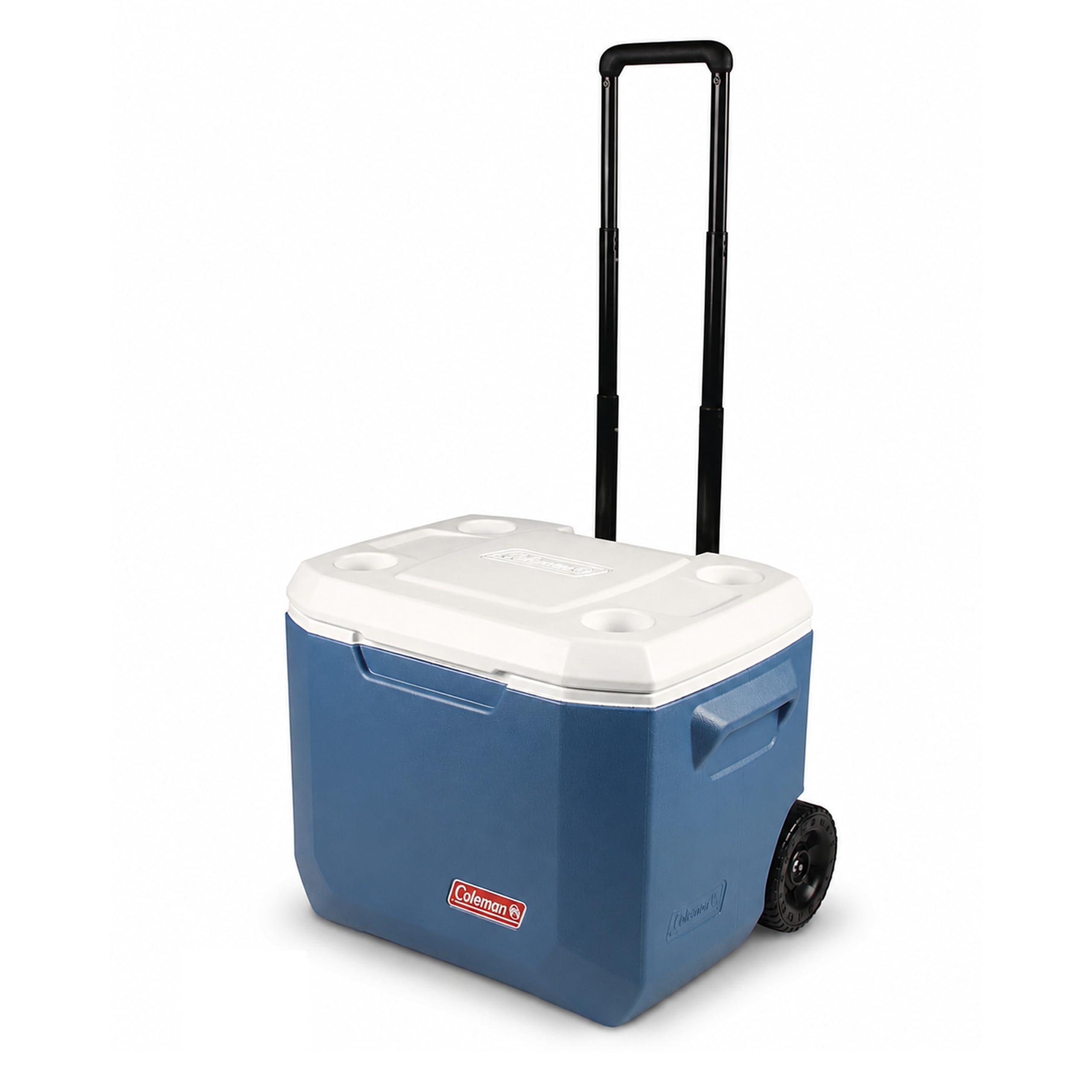
Five days of ice at 90°F is the claim molded into the lid, and our advice is to treat it as a best case. What this box reliably gives you is a full weekend of cold drinks, wheels that roll over gravel and grass, a drain you can open without tipping it, and a lid rated to hold 250 pounds — for a fraction of what the premium boxes ask.

The rolling part matters more than the insulation part for most buyers. A loaded 50-quart cooler is not something you carry 200 yards, and the retractable handle and all-terrain tires turn that haul into a tow. We also use the lid as a bench far more than we expected; at a campsite, the cooler is the extra seat.

The lid is the daily annoyance. It needs a firm two-handed pull and won't stay open by itself, so pack it in the order you'll want things and plan to hold it with your free hand while you dig. Otherwise this is the least fussy cooler here: wipe it out, open the drain, and put it away.

Pros

  • Fifty quarts on big wheels for modest money
  • Seat-rated lid holds 250 pounds
  • Drain empties without lifting the cooler
  • Telescoping handle collapses for storage

Cons

  • Wheels and telescoping handle are the wear points
  • Drain plug can pop open when the lid closes
Our verdict

Most families should start here: 50 quarts on big wheels with a seat lid for the least money in this group, as long as you don't believe the five-day ice claim.

Check Latest Price
4

Best Budget Cooler

Coleman Chiller 16qt

93 /100
Angler Score Outstanding

Key details

Capacity
16 quarts
Empty Weight
3.6 lb
Cans With Ice
11 with 8 lb ice
Lid Seat Rating
200 lb
Check Details on Amazon

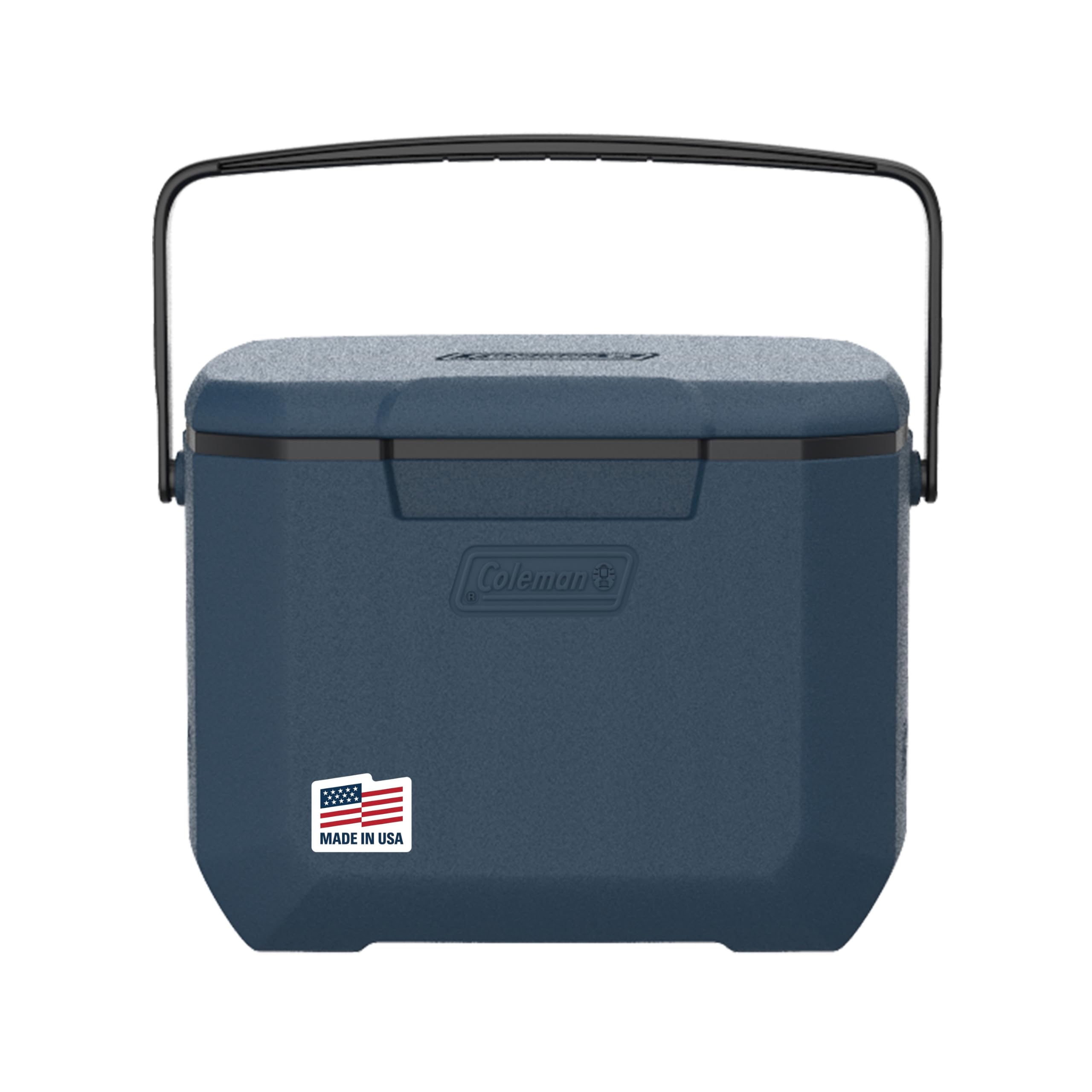
Sixteen quarts doesn't sound like much until you're the one carrying it. The Chiller weighs 3.6 pounds, has a wide bail handle you can hook with two fingers, and takes 11 cans plus 8 pounds of ice — or 25 cans bare — which is lunch and a few rounds of drinks for two or three people.

For the money, this is the box we hand to first-time buyers. TempLock foam is not in the same league as the rotomolded shells above, but 36 hours is a real rating for a box this size, the lid is ribbed to take 200 pounds, and the smooth top wipes clean after a day of sandy hands.

The honest limit is capacity. Sixteen quarts with ice is a lunch-and-drinks box for a small group, not a family's beach day, and it's at its best as the second cooler: sandwiches and drinks up front, the big box for everything else. Two small coolers beat one that's too heavy to carry.

Pros

  • 3.6 pounds with a handle you can hook
  • Rated to hold ice up to 36 hours
  • Lid doubles as a 200-pound seat
  • Smooth lid wipes clean in seconds

Cons

  • Lid takes a firm pull and won't stay open
Our verdict

The cheapest honest hard cooler here — a day of ice, a 200-pound seat, and one-hand carry — but 16 quarts won't feed a crowd.

Check Latest Price
5

Best for Work Sites

Klein 55600

95 /100
Angler Score Outstanding

Key details

Capacity
17 quarts
Can Capacity
18 cans
Empty Weight
6.8 lb
Lid Seat Rating
300 lb
Check Details on Amazon

Three hundred pounds is the number that sells this cooler. Klein rates the lid for a grown adult, which is really a rating for how a work cooler gets treated — sat on at lunch, stood on to reach a shelf, dropped off a tailgate. Ours has spent more time as a seat than as a lunch box, and the lid still latches square.

The rest of the design is aimed at the same buyer. The lid opens to 180 degrees and holds at 90, so you can reach in one-handed instead of propping the lid with your head; the recessed top takes a 1-liter bottle standing upright; and there's a shallow compartment in the lid for a phone, keys, and a couple of napkins. The shoulder strap converts to a carry handle for short walks.

Capacity is where the box shows its work. The walls are thick — that's where the 30-hour rating comes from — so 17 quarts is one person's shift, or lunch for two packed flat. For a truck cab and a tailgate, that trade is the right one; if you want light rather than armored for the same lunch, the 16-quart Coleman does similar duty for a good deal less money.

Pros

  • Rated to hold 300 pounds as a seat
  • Lid holds at 90 degrees for one-handed access
  • Recessed top fits a 1-liter bottle upright
  • Keeps cool up to 30 hours

Cons

  • Ice packs sold separately
  • 6.8 pounds and boxy to carry any distance
Our verdict

If lunch rides in a truck, this is the box we hand over: cold through a shift, rated for a 300-pound seat, and hard to kill.

Check Latest Price
6

Best for Fishing

Engel 19qt Drybox

95 /100
Angler Score Outstanding

Key details

Capacity
19 quarts
Warranty
5 years limited
Empty Weight
5.5 lb
Outside Dimensions
16.6 x 11.25 x 12.75 in
Check Details on Amazon

The gasket is the reason to buy an Engel. A recessed EVA seal plus stainless latches makes this box airtight as well as cold, which is a different job from what a party cooler does: no spray in, no meltwater out, and no smell of last week's catch drifting through the cab.

The hanging tray is the second good idea. It lifts out, keeps sandwiches and soft food above whatever collects at the bottom, and gives small items somewhere to live instead of sliding around under the ice. At 5.5 pounds the box carries under one arm with the strap over the other shoulder, and a five-year limited warranty backs it.

The weak point is the carry hardware. The shoulder strap and the spot where the handle meets the shell are what to watch; the shell itself is stiff and doesn't flex with the load, so all the strain lands on those two places. For a wet, salty day on the water this is the box we take, and carrying it by the molded handle is how we keep it that way.

Pros

  • Airtight gasket keeps water and dust out
  • Stainless latches and hinged lid
  • Hanging tray keeps food out of meltwater
  • Five-year limited warranty

Cons

  • Nineteen quarts covers a day, not a weekend
Our verdict

Buy it when the cooler goes on a boat: an airtight, leak-proof 19-quart drybox that keeps a day's food cold and your gear dry.

Check Latest Price
7

Best Soft-Sided Day Cooler

Titan Zipperless Cooler

93 /100
Angler Score Outstanding

Key details

Capacity
12.68 quarts
Can Capacity
16 cans
Empty Weight
2.3 lb
Outside Dimensions
8 x 12.25 x 12.25 in
Check Details on Amazon

No zipper is the whole idea. The lid flips open on a hinge, so you can reach in at a rest stop or from the passenger seat without unzipping, peeling back a flap, and pinning the bag open with your chin. We noticed it most in the car, where a zippered soft cooler is a two-second, two-hand job every single time.

The removable HardBody liner does more than hold the shape. It carries a shelf that separates soft food from cans and ice, so a sandwich comes out a sandwich instead of a pressed, damp thing, and because the liner is leak-proof you can lift it out and wipe it in the sink. That's the detail we didn't expect to care about and now use on every trip.

Sixteen cans plus ice fit in a 12.68-quart body that weighs 2.3 pounds — small enough to sit behind the driver's seat, light enough to bring back from the car in one hand with the shoulder strap. Two people for a day, or one person for a long one.

Where it gives ground is cold retention: a hinged lid isn't as airtight as a good zipper, so this is a day of ice rather than a weekend of it, and frozen bottles hold up far better than cubes. Pack it that way and the convenience costs you nothing.

Pros

  • Zipperless lid opens one-handed
  • Removable hard liner with a shelf
  • Leak-proof liner lifts out for washing
  • 2.3 pounds with a shoulder strap

Cons

  • Mesh side pockets tear
Our verdict

The soft cooler we keep in the car: a zipperless lid you flip one-handed, a hard liner that saves the sandwiches, and a day's worth of cold.

Check Latest Price
8

Hands-Free Beach Walks

LTINVECK Cooler Backpack

93 /100
Angler Score Outstanding

Key details

Capacity
20.67 liters
Can Capacity
30 cans
Outside Dimensions
6.5 x 12 x 17.3 in
Check Details on Amazon

The walk from the parking lot to the sand is where a cooler backpack earns its place. Wheels quit at the dune line and a hard box is a two-hand carry; this one goes on your back with shoulder straps, leaving both hands for a chair and a kid.

The layout is what makes it work. There's an insulated lower compartment and a dry upper one, plus a front pocket and zipped side pockets, so ice packs and drinks ride low while towels, sunscreen, and a phone stay dry up top. It even ships with a bottle opener, which is the kind of thing nobody thinks about until they're standing on a beach with a capped bottle.

The capacity is 20.67 liters, spread across room for 30 cans, and the leak-proof liner means a melting bag of ice doesn't end up running down your back. The RFID pocket in the back panel is aimed at travelers rather than beachgoers, but it does no harm, and it makes this a reasonable bag to travel with if you like your own snacks.

It won't replace a hard cooler at a tailgate — no seat, no drain, no rigid walls — and it wants to be packed full, because a half-empty backpack cooler sits lumpy against your back. Loaded properly, it gets a day's food and drink to the pier, the dune, or the far end of the park, which is exactly what nothing else here does.

Pros

  • Insulated and dry compartments in one bag
  • Carries on your back with both hands free
  • Leak-proof liner contains meltwater
  • Plenty of pockets, including an RFID one

Cons

  • Zippers are the weak point if you overstuff it
Our verdict

For the walk from the lot to the water, this is the one: a backpack cooler with a cold lower half and a dry top.

Check Latest Price

How We Tested: Ice Retention, Lid Access, and Parking-Lot Abuse

We started with more than 40 models — soft bags, wheeled chests, rotomolded boxes, lunch-size dry boxes — and cut the list to 14 based on capacity options, wall construction, latch and zipper hardware, and what owner reviews actually complained about. Each one then went where coolers really go: a trunk on a camping weekend, a tailgate, a beach, and the back of a truck for a week of work lunches.

For the core test, we loaded every cooler two-thirds full with a weighed 10-pound ice mix and a case of cans, parked it in direct sun for a day, then moved it to shade. We checked at 12, 24, 48, and 72 hours — and out to five days on the models claiming that kind of performance — recording how much ice remained, how much meltwater had collected, and the temperature of a drink pulled from the bottom. We also weighed each one empty and loaded, since a chest that holds ice for four days is useless if you can't get it into the truck.

Lids got their own round of abuse: we reached in one-handed while holding a drink to see whether the lid stayed up or cracked down on our knuckles, and worked latches and hinges until we knew which ones flexed or stopped seating. Soft-sided coolers ran 200 zipper cycles, then sat loaded on a car seat overnight to see whether seams wept. We dropped loaded coolers off a tailgate, dragged them by the handle across pavement, and left them in the sun to watch for fading and warp. Finally, we measured interior space against each claimed quart rating and figured cost per quart of usable room — which is where several mid-priced models beat the expensive ones outright.

How to Choose a Cooler

Start With How Far You'll Carry It

A loaded 50-quart cooler is a two-hand, bent-knee lift, and the distance from your trunk to the picnic table decides more than an extra inch of foam does. Wheels handle parking lots, gravel, and grass; they stop helping on soft sand, stairs, and a rocky portage. A backpack cooler is the answer for the last quarter mile, and a soft bag is what rides in the passenger footwell.

Decide the route first. If the cooler never leaves arm's reach of the car, buy capacity and skip the wheels. If it goes to a campsite or a beach, pay for wheels or straps. The Coleman Xtreme's big tires and the Tundra Haul's solid wheels are doing more work for most buyers than the difference between two insulation ratings.

Read the Can Count Twice

A can count on the side of a box is usually measured without ice, and ice is what you are actually packing. The Tundra 45 is unusually clear about it: 54 cans bare, 26 at a 2:1 ice ratio. When a listing gives only the bare number, halve it for a day trip and you'll be close.

Quarts describe the outside of the box, not the sandwiches inside. Thick walls are what make a cooler cold, and they eat usable space, so a 17-quart work cooler holds less lunch than a 17-quart lunch bag. Picture the real load — a shelf of food, a row of drinks, a bag of ice — and size to that.

Discount the Ice-Retention Claim

Five days at 90°F, two days, 36 hours: those figures come from a cold box, packed full, shaded, and barely opened. Yours will sit in the sun, get opened forty times, and start with a bag of cubes from a gas station. Treat the printed number as a ranking between models, not a promise about your trip.

What actually buys time is foam thickness, a gasket that seals, a lid that closes flat, and block ice instead of cubes. If a long trip is on the calendar, buy one tier more cooler than you think you need and plan to top up the ice once.

The Hardware Is What Breaks

Foam rarely fails; hinges, latches, drains, zippers, and telescoping handles do. A lid that won't stay open is a small annoyance every single time you reach in, while a latch that won't hold or a hinge that cracks is a cooler that has stopped being a cooler. On wheeled models, inspect the wheels and the handle lock first.

Before you commit, check that the drain opens without tipping the box, that the latch is metal rather than a plastic tab, and that the lid meets a gasket rather than a bare rim. Then, when it arrives, work every latch and roll it loaded once before the trip you bought it for.

Where It Lives Between Trips

A 100-quart box takes a serious bite out of a garage shelf and a trunk, and a full one takes two people. Measure the space it will occupy when empty and the space it will occupy in the car when full, because those are different problems.

Soft coolers fold flat into a closet, which is a genuine advantage in a small apartment, and a 45- to 50-quart hard cooler is about the biggest size that still fits across a back seat. Anything larger is a truck-bed or a garage item.

Frequently Asked Questions

Final Verdict

Our pick is the YETI Tundra Haul. Cold that lasts a weekend and wheels that don't quit are the two things that decide whether a cooler earns its keep, and the Haul is the only box here that gets both right.

If the cooler comes out a handful of times a summer, the Coleman Xtreme 50qt gives you the same 50 quarts, a seat lid, and the same idea of wheels for a fraction of the money — just plan to top up the ice on a long trip. Choose on how often you'll go, not on the label.