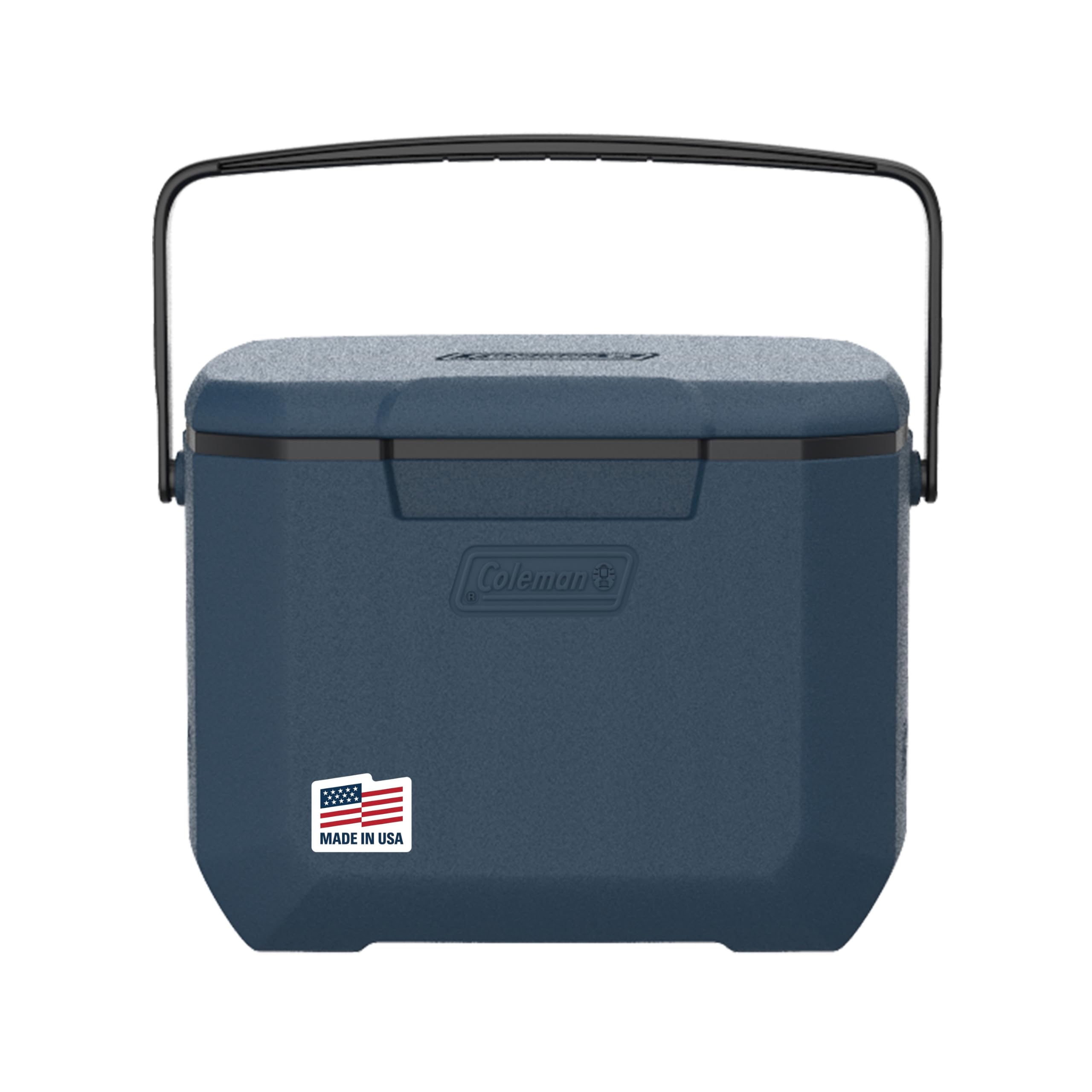
Best Hard Coolers of 2026

Nothing deflates a long weekend faster than reaching into the cooler on day two and finding everything bobbing in meltwater. A hard cooler's whole job is buying you time — a few more days before the ice gives out and the potato salad starts to float — and the gap between a good one and a forgettable one is measured in days, not degrees. The right one also takes being sat on and dropped off a tailgate without splitting a hinge or popping a latch.

My team and I have spent the past 10 months living with 14 hard coolers, from lunchbox-sized boxes you'd carry onto a job site to 110-quart wheeled models. Something first-time buyers rarely hear: the ice-retention figure printed on the box is measured with the lid never opening, so treat it as a ceiling, not a promise. What separated the winners was hour 30 — after a dozen lid openings, a bag of ice dumped on top, and a cooler baking in the sun since breakfast.

1

Best Overall

Lifetime 65-Quart Cooler

94 /100
Angler Score Outstanding

Key details

Weight
25.5 lb
Capacity
65 quarts
Warranty
5-year limited
Ice Retention
Up to 8 days
Check Details on Amazon

Eight days is the longest ice-retention claim in this group, and the Lifetime 65-Quart is built like a cooler that means it. The walls are heavy-duty polyethylene, the lid is gasketed and latches down at both ends, the drain cap is threaded for a garden hose, and the warranty runs five years — the longest coverage here, alongside the Engel.

We think it is the one most people should buy. Sixty-five quarts covers a family weekend or two days of fishing with food, ice, and bottles, and midrange money buys the longest cold claim in the group — the premium rotomolded pick does not publish a day count at all.

The small decisions are the ones you notice on the third trip. Two rope handles with molded grips, four serviceable feet, and a pair of bottle openers molded into the body mean you are not hunting for a church key after dark, and the capped drain takes a hose so emptying 65 quarts does not involve tipping the whole box on its side.

It is IGBC-certified bear resistant for up to an hour when locked, which is what makes it usable at campsites with food-storage rules, and the molded lock holes are already there for the padlocks that certification assumes. Thirteen inches of interior height clears upright bottles and a jug of milk and not much more, so pack it like a cooler rather than a pantry.

Pros

  • Up to 8-day ice retention, the longest claim here
  • Five-year limited warranty
  • Garden-hose-ready capped drain
  • IGBC-certified bear resistant when locked

Cons

  • 25.5 pounds empty, so a two-person lift when packed
Our verdict

For campers and anglers who want one cooler to do everything, this is our pick: the longest ice-retention claim here, a five-year warranty, and a hose-ready drain at midrange money.

Check Latest Price
2

Best Premium

YETI Tundra 45

95 /100
Angler Score Outstanding

Key details

Weight
23 lb
Capacity
45 quarts
Cans With Ice
26 at a 2:1 ratio
Insulation Walls
Up to 3 inches
Check Details on Amazon

A truck bed or a boat deck is where the Tundra 45 makes sense, and it is the cooler here we trust most for that life. One-piece rotomolded construction leaves no seams to crack, the molded tie-down slots accept a strap so it stays put over washboard roads, and the shell is built for something that gets dropped.

Cold-keeping is where it earns the premium. YETI specs up to three inches of PermaFrost insulation in the walls and a freezer-style rubber gasket around the lid — the thickest walls and the most deliberate seal in this group — and the payoff is a box that holds temperature through a long weekend without babysitting.

The number to shop is 26 cans, not 54. That is what fits at YETI's stated two-to-one ice ratio, and the dry figure is one you will never see on a real trip. Interior measures 18.3 by 9.4 by 10.7 inches, which is the honest cost of those walls: you pay for insulation in volume you cannot pack. The Vortex drain and the hanging dry basket stop being features and start being how you use the cooler — wet things drain, dry things stay dry.

Pros

  • Three-inch walls with a freezer-style gasket
  • One-piece rotomolded shell with tie-down slots
  • 26 cans with ice at a 2:1 ratio

Cons

  • 23 pounds with no wheels
Our verdict

Buy this if the cooler lives in a truck bed or on a deck and you want the toughest shell here; the thick walls cost you interior space.

Check Latest Price
3

Best for Big Groups

Igloo MaxCold Glide 110

92 /100
Angler Score Outstanding

Key details

Weight
25.4 lb
Capacity
110 quarts
Mobility
Telescoping handle and wheels
Can Capacity
168 cans
Check Details on Amazon

A hundred and sixty-eight cans is more than most people need, but it is the number that turns a cooler into furniture at a party. The Glide 110 takes a truck bed's worth of drinks, ice, and food, and the telescoping handle means one person can pull it there.

THERMECOOL insulation runs through the body and the lid, both carry UV inhibitors to slow sun damage, and the hinges are stainless — the parts that fail first on a big cooler are the ones Igloo upgraded. DuraLatch closures pull the lid down evenly, and the drain plug empties it without tipping.

At 25.4 pounds empty it lives in the garage and travels by vehicle. On gravel and grass the soft-ride wheels do what they claim; on soft sand, fully loaded, it is a two-person drag.

For a graduation, a tailgate, or a week of feeding a crew, nothing else here carries as much, and the wheels mean you are not recruiting help every time it moves. We came away thinking of it less as a camping cooler and more as the thing you bring when the guest list is the point.

Pros

  • Holds 168 cans, the most in this group
  • Telescoping handle and soft-ride wheels
  • Stainless hinges and DuraLatch closures
  • UV inhibitors in body and lid

Cons

  • Latches can loosen and stop pulling the lid down tight
  • 37.5 inches long, so measure the vehicle first
Our verdict

The big-group answer: 168 cans, a telescoping handle, and soft-ride wheels for anyone whose cooler mostly serves parties and camps.

Check Latest Price
4

Best Wheeled

Coleman Xtreme Rolling 50

91 /100
Angler Score Outstanding

Key details

Weight
12.7 lb
Capacity
50 quarts
Seat Rating
250 lb
Ice Retention
Up to 5 days
Check Details on Amazon

Set the Xtreme Rolling next to the 110-quart Igloo and the trade is obvious: half the capacity and half the empty weight, at 12.7 pounds. What you keep is enough for a weekend for two or three people, and a cooler you can lift into a trunk without asking for help.

Coleman rates it for ice up to five days at 90°F, and the double-walled lid and body are why that figure is plausible at all in shoulder season. The geometry is what sells it: a retractable telescoping handle, wheels that cope with gravel and grass, and a lid rated to 250 pounds that doubles as a seat at the campsite.

The drain is leak-resistant rather than hose-threaded, so emptying it means tipping and a little patience. Five days of ice is a cooler-weather number, not a July one — in real heat plan on topping up mid-trip. For car camping and tailgates, though, this is the easiest wheeled cooler here to live with.

Pros

  • All-terrain wheels and telescoping handle
  • Lid rated to 250 pounds as a seat
  • 12.7 pounds empty, half the big Igloo
  • Holds 84 cans

Cons

  • Lid needs a firm two-handed pull
Our verdict

For car camping and tailgates, this is the wheeled cooler to beat: 84 cans, a 250-pound seat lid, and 12.7 pounds empty.

Check Latest Price
5

Best Small Day Cooler

Engel 19-Quart Drybox

95 /100
Angler Score Outstanding

Key details

Weight
5.5 lb
Capacity
19 quarts
Warranty
5-year limited
Ice Retention
Up to 2 days
Check Details on Amazon

The gasket is the whole idea. Engel recesses an EVA seal into the lid and pulls it down with stainless latches, so the 19-quart box closes air-tight and leak-proof — which makes it as useful as a drybox for a phone, a wallet, and a spare layer on a boat as it is as a cooler.

At 5.5 pounds empty with an adjustable shoulder strap, it is the one here you can carry a mile without thinking about it. Inside, a removable hanging tray keeps sandwiches and soft food off the ice, and the stainless hardware and self-stopping ABS hinges are the parts that usually go first on a saltwater boat.

Two days of ice is the claim, and that is about the honest limit of a box this light — a full day in summer heat is the realistic version, and a pre-chilled load with block ice gets you closer to the number. We think of it as a day cooler that happens to hold cold overnight, which is exactly what a kayak, a small boat, or a truck cab needs.

Pros

  • Air-tight, leak-proof EVA gasket seal
  • 5.5 pounds with an adjustable shoulder strap
  • Removable hanging tray keeps food off ice
  • Five-year limited warranty

Cons

  • Two-day ice claim is optimistic in summer heat
Our verdict

The best small cooler here for a boat or a kayak: air-tight, 5.5 pounds, and covered by a five-year warranty.

Check Latest Price
6

Best Budget

Igloo Profile 30

95 /100
Angler Score Outstanding

Key details

Drain
Integrated pouring channels
Capacity
30 quarts
Insulation
THERMECOOL foam
Can Capacity
41 cans
Check Details on Amazon

Thirty quarts for budget money is the pitch, and the Profile 30 delivers it without feeling like a compromise: 41 cans, THERMECOOL foam in the body, a slotted lid that stacks under another cooler, and an interior tall enough to stand two-liter bottles upright.

Cool Riser Technology lifts the body off hot pavement, which matters more than it sounds when the cooler sits in a parking lot all afternoon, and the liner has molded pouring channels that send meltwater out in a directed stream instead of over the rim. Thirty quarts is a day cooler and the 41-can figure is a dry count — we like it for lunches, groceries, and a road trip, not for a week off-grid.

Pros

  • 41 cans in a 30-quart body
  • Slotted lid stacks under another cooler
  • Cool Riser keeps the base off hot pavement
  • Pour channels direct meltwater

Cons

No notable drawbacks to flag.

Our verdict

The budget pick: a 30-quart cooler that stacks, holds two-liter bottles upright, and pours clean for day trips and groceries.

Check Latest Price
7

Small Tailgates

Coleman Chiller 16

93 /100
Angler Score Outstanding

Key details

Weight
3.6 lb
Capacity
16 quarts
Seat Rating
200 lb
Ice Retention
Up to 36 hours
Check Details on Amazon

This is the cheapest cooler here, and it is the one we point people toward when they are not sure they need a hard cooler at all.

Sixteen quarts holds 11 cans with 8 pounds of ice, or 25 cans dry — enough for two people's lunch and drinks at a tailgate, and light enough at 3.6 pounds to carry one-handed on the bail handle. TempLock foam is rated to 36 hours, the lid takes 200 pounds, and the smooth top wipes clean of sand and spilled soda in a couple of passes.

Sixteen quarts is a lunch-and-drinks box, not a weekend cooler: two people for an afternoon, one person for a long day. Where it earns its place is as the second cooler — the one that rides in the trunk with groceries or sits on the deck with drinks while the big box holds the food. It will not be the last cooler you own, but it might be the one you use most.

Pros

  • 3.6 pounds with a wide-grip bail handle
  • Up to 36 hours from TempLock foam
  • Lid rated for 200 pounds
  • Wipe-clean lid surface

Cons

  • Lid needs a firm pull and will not stay open
Our verdict

The cheap spare that earns its keep: 16 quarts, 36 hours of cold, and 3.6 pounds for tailgates, beaches, and grocery runs.

Check Latest Price
8

Jobsite Lunches

Klein Tools 55600 Work Cooler

95 /100
Angler Score Outstanding

Key details

Weight
6.8 lb
Capacity
17 quarts
Seat Rating
300 lb
Cold Retention
Up to 30 hours
Check Details on Amazon

Three hundred pounds. That is what the Klein 55600's lid is rated to take, more than any other cooler here, and enough that the box doubles as a seat or a step where there is nowhere else to sit.

The lid is the interesting part. It is stainless, hinged, and recessed so a one-liter water bottle stands upright under it, and it opens a full 180 degrees but stops and holds at 90 so you can work with both hands. Inside there is a small compartment for a phone, keys, and a wallet — the difference between a cooler and a lunch box you actually carry to work.

Seventeen quarts holds 18 cans, or a lunch, snacks, and a couple of drinks around an ice pack, and it keeps cold up to 30 hours, so a night-shift dinner is still cold at 3 a.m. The shoulder strap holds the lid shut in transit and converts to a handle, and 6.8 pounds carries easily in one hand.

What it is not is a campsite cooler. The box is built around a shift rather than a weekend, and the strap-and-lid arrangement is designed for the walk from the truck to the site. As a work cooler it is the best of these, and the details show it came from someone who has carried lunch to a job every day.

Pros

  • Lid rated to 300 pounds, the highest here
  • Recessed lid fits one-liter bottles upright
  • Lid holds at 90 degrees for two-handed access
  • Interior compartment for phone and keys

Cons

  • 17 quarts fills fast for two people
Our verdict

For tradespeople who eat lunch on a site, this is the one: a 300-pound seat, a lid that holds at 90 degrees, and 30 hours of cold.

Check Latest Price

How We Tested Hard Coolers, From Ice Retention to Lid Latches

We started with a list of roughly 60 hard coolers and cut it down by capacity, shell construction, latch design, and price — anything whose cost ran well past what its usable interior justified came off, and so did lids that needed two hands to open. That left 14, spanning small dry-box styles to 110-quart wheeled haulers, which we used for 10 months across tailgates, campsites, backyard cookouts, beach days, and the trunks of our own cars.

Ice retention got the most attention. Each cooler started identically: a weighed 10-pound bag of ice plus six cans of room-temperature soda, closed up and parked in a garage that climbed into the mid-90s by afternoon. We checked morning and night, pouring off and weighing the meltwater so we were comparing drain rates rather than guessing, and we ran a separate trunk test with each one sitting in a parked car through a full workday.

Lids earned their own round of abuse. We opened each cooler 20 times in a row one-handed while holding a drink in the other, noted whether the lid stayed propped or swung down onto our knuckles, and checked the gasket by trapping a dollar bill in it and pulling. Then we filled every cooler to its claimed capacity with cans and ice to see what actually fit once the ice went in, stood on the lids, dropped the loaded boxes off a tailgate onto pavement, and dragged the wheeled ones over gravel.

Value came last, on purpose. A bargain cooler that surrenders its ice overnight costs more in ice runs than one that holds for three days, so we weighed price against usable capacity and measured retention. The sturdy ones with thick walls and honest latches were almost always the same ones still cold on day three.

How to Choose a Hard Cooler

Buy the cans-with-ice number, not the dry one

Cooler marketing quotes capacity two ways, and the gap is large. The Coleman Chiller holds 25 cans without ice and 11 with 8 pounds of it; the YETI Tundra 45 takes 54 cans dry and 26 at a two-to-one ice ratio. Assume ice eats roughly half your usable volume, and more if you are packing block ice for a long trip.

Interior dimensions matter as much as quarts, because thick insulated walls take space out of the inside. If you are feeding four people for a weekend, start at 50 quarts and work up from there rather than defaulting to the biggest box on the page.

What an ice-retention number is really telling you

Days-of-ice claims are measured under set conditions — cooler closed, usually pre-chilled, out of direct sun — so treat them as a ranking rather than a promise. What you can compare directly is construction: wall thickness, a gasketed lid, and latches that pull the lid down evenly at both ends.

The YETI's three-inch walls and rubber gasket are the most deliberate version of that idea here; the Engel achieves something similar with a recessed EVA seal at 5.5 pounds. A cooler whose lid stops sealing will lose to a cheaper one that still seals, which is why the latch matters more than the sticker.

Weight and wheels decide how often you take it out

Empty weight is the number most people skip and later regret. A 25-pound cooler becomes a two-person lift into a truck bed once it is full of ice and drinks, and no handle makes that easier after the third trip.

If you will move it more than twenty feet, wheels earn their place. The Igloo Glide's telescoping handle and soft wheels cope with gravel and grass, and the Coleman Xtreme does the same job with half the capacity and half the weight. Then measure the footprint against your vehicle — the Glide is 37.5 inches long, which fits a truck bed and little else.

Lids and drains: the details you notice every trip

Two small things separate a cooler you like from one you dread. The first is whether the lid stays open while you load — a lid that drops on your wrist every time you reach for a sandwich turns a ten-second job into a two-minute one.

The second is the drain. A threaded plug that takes a garden hose, like the Lifetime's, empties 65 quarts without tipping, while a molded pour channel means wrestling the box onto its side. Check both before you fall for a capacity figure.

Frequently Asked Questions

Final Verdict

The Lifetime 65-Quart is the cooler we point most people toward: the longest advertised ice retention here, a five-year warranty, and a hose-ready drain, all at midrange money rather than premium. Buy it if you want one box that handles camping, fishing, and a party without asking you to think about it.

If you will move it more than you carry it, the Coleman Xtreme Rolling 50 is the easier answer — wheels, a 250-pound seat lid, and half the empty weight. And if the cooler lives in a truck bed or on a deck and the shell matters more than the day count, the YETI Tundra 45 is the step up.