Best Fishing Lures of 2026

A fishing lure is a cheap little lie you tie to the end of your line, and its only job is to be convincing enough that a fish commits. What separates one from the next isn't the paint job that caught your eye on the pegboard — it's what the thing actually does in the water: how fast it falls, how it sits at rest, whether it wobbles or runs straight, and whether it still swims true after a fish has chewed on it. Get that match right and you spend the evening unhooking fish instead of picking weeds off trebles.

I have a box full of lures I bought because they looked incredible in the package and have never caught a thing. That gap between appearance and performance is the whole game, which is why my team and I have spent the past six months fishing 18 lures — stickbaits, soft plastics, jerkbaits, topwater, and a couple of all-in-one kits — in ponds, reservoirs, and one muddy river. The ones that earned a place did it by catching fish on days when nothing else did, and then surviving a season of it. One thing I'd tell any first-timer: fish care about profile and fall rate long before they care about color. The picks below are the ones I keep tying back on.

1

Best Overall

Yamamoto 5" Senko

96 /100
Angler Score Outstanding

Key details

Count
10 per pack
Length
5 inches
Rigging
Weightless, wacky, Texas, Carolina
Target Species
Bass, panfish
Check Details on Amazon

The cast that catches most Senko bass is the one where you do almost nothing. Rig it weightless, lob it at a dock or a weed edge, let it fall on a semi-slack line, and watch for the line to tick sideways. The plastic is soft enough that it shimmies the whole way down, and that fall is the entire presentation. The bait does the work — no twitching, no reel handle, nothing to get right — which is not something we can say about most of the hard baits on this page.

That versatility is why it takes the top spot rather than just a place on the list. The same five-inch worm fishes weightless, wacky, Texas, Carolina, on a shaky head, or as a trailer, and it catches bass in water you can see through and water you can't. Ten to a pack, and the green pumpkin with black flake is the one to start with, because it looks like nothing in particular and everything at once.

The softness that makes the fall work is also why a good fish can leave one shredded. Wacky rigging is the fastest way to destroy them, so run an O-ring around the middle and slide the hook under it instead of through the worm; that single change stretches a pack considerably. Weightless Texas rigging is gentler still, and it's how we fish a Senko when the cover is thick.

Pros

  • Falls and shimmies with no retrieve input
  • Rigs weightless, wacky, Texas, or Carolina
  • Catches bass in clear and dirty water

Cons

  • One color per pack, so a spread means several packs
Our verdict

The bait we put in any box first: it shimmies down on a weightless cast with no retrieve at all, and it's the cheapest lure here.
Check Latest Price
2

Best Hard Bait

Rapala X-Rap XR10

93 /100
Angler Score Outstanding

Key details

Count
1 per pack
Hooks
VMC black nickel trebles
Lure Class
Suspending jerkbait
Body Length
4 in
Check Details on Amazon

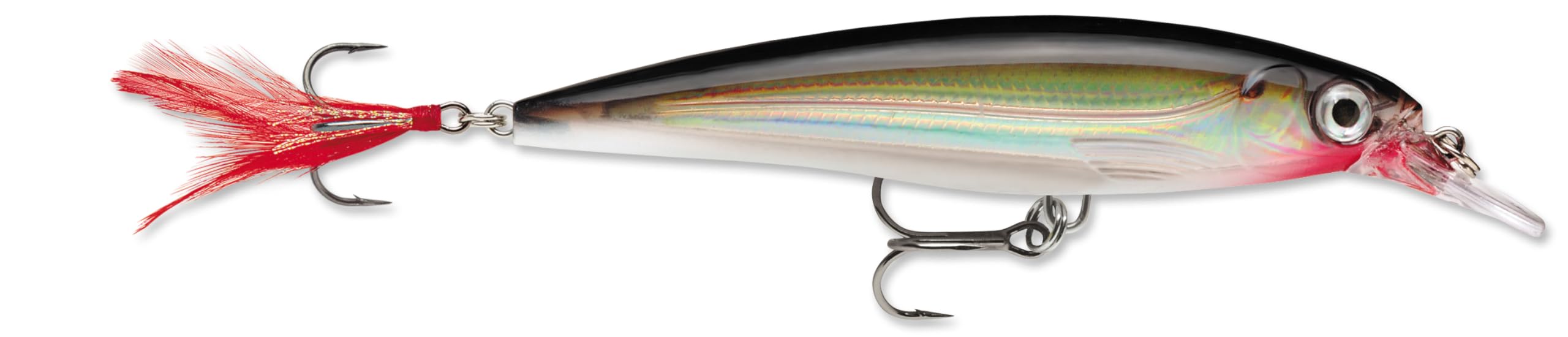
Twitch, twitch, stop — and then leave it. The X-Rap is a suspending jerkbait, which means it hangs where you stop it instead of floating up or sinking out of the strike zone, and most of the bites come while it's sitting still. That pause is the whole trick, and it's why we keep a jerkbait in the box even when soft plastics are doing the catching.

Four inches of hard plastic with VMC black nickel trebles, it handles bass, walleye, and pike, and it fishes almost like two baits: snap the rod and it slashes side to side, or reel it steadily and it behaves like a shallow crankbait. We paid attention to how far it casts for its size, because a jerkbait you can't reach a point with is a jerkbait that stays in the box.

One per pack is the part to think about before you commit — lose it to a pike and that bait is gone for the day, unlike the six-packs elsewhere on this list. What it gives back is a bait that keeps working in the stretch of the year when fish stop chasing and soft plastics go quiet.

Pros

  • Suspends in place on the pause
  • Darts like a slashbait, cranks on a steady retrieve
  • Sharp VMC hooks straight out of the pack

Cons

  • Bill and split ring are the weak points
Our verdict

Buy this one if your fish suspend: it hangs on the pause, darts on the twitch, and gives you a hard-bait option the soft plastics can't cover.

Check Latest Price
3

Best Bulk Value

YUM Dinger 100 Pack

94 /100
Angler Score Outstanding

Key details

Color
Watermelon red flake
Count
100 per pack
Length
5 in
Hook Slot
Molded slot
Check Details on Amazon

Take the top pick, keep the shape and the slow fall, and sell it a hundred at a time — that's the Dinger, and the arithmetic is the reason to look at it. The plastic holds up to more fish than a premium stickbait, and a molded slot down the back gives a Texas-rigged hook somewhere to sit instead of tearing its own hole through the nose.

For us, the appeal is not having to think about the bait budget. Texas rig one for flipping, wacky rig another, and cut a torn one down as a trailer without wincing. It fishes the same water the Senko fishes and it fishes it the same way: weightless, slow, and mostly on the fall.

The catch is volume. A hundred worms is a season or two for most anglers, so this is a bag for someone who already knows a stickbait works in their water, not a sampler. Buy it once you've settled on the color you like; until then, smaller packs let you experiment for less.

Pros

  • Hundred-count bag keeps you fishing all season
  • Molded hook slot seats a Texas rig straight
  • Holds up to more than one fish per bait

Cons

  • One color per bag
Our verdict

For anyone who already trusts a stickbait, this is the sensible buy — a hundred baits that hold up, with a hook slot that seats a Texas rig.

Check Latest Price
4

Best Pre-Rigged Swimbait

TRUSCEND Shadtale

91 /100
Angler Score Outstanding

Key details

Hook
Pre-rigged BKK treble
Count
6 per pack
Length
2.3 in (6 cm)
Weight
0.4 oz (11.34 g)
Check Details on Amazon

At 2.3 inches and under half an ounce, the Shadtale is a small bait that carries better than its length suggests — the weight sits in a stubby body, so you can throw it on a medium rod into a headwind instead of reaching for light spinning gear. Six come in the pack, pre-rigged with BKK trebles, in a spread of colors for clear and stained water.

Two actions come out of the same bait, and both work. Reel it steadily and the paddle tail ticks with a tight vibration; hop it and let it fall, and the body trembles on the way down. That tremble is the part we were surprised by — a soft bait that keeps moving after you stop reeling is doing something the rest of this list mostly can't.

Small is the point and the limit. It's a finesse swimbait built for bass, trout, crappie, perch, and walleye, and it's the wrong tool if you're hunting pike and muskie — they'll eat it, but you're fishing for numbers rather than size. Where it really earns its place is as the bait we hand someone who has never fished a swimbait: there's nothing to rig.

Pros

  • Pre-rigged with sharp BKK trebles
  • Casts well for a 2.3-inch bait
  • Trembles on the fall as well as the retrieve

Cons

  • Soft body tears after a handful of fish
Our verdict

Six pre-rigged swimbaits that cast well, tremble on the fall, and catch bass and trout without a single knot to tie.

Check Latest Price
5

Best Topwater

TRUSCEND Popobait

91 /100
Angler Score Outstanding

Key details

Count
3 per pack
Length
3 in (8 cm)
Weight
0.3 oz (9 g)
Material
ABS plastic
Check Details on Amazon

Most topwater lures need a few turns of the handle before they start working. This one is already plopping on the first one: a double-bladed tail throws a visible spray and a gurgle the moment it lands, and the body casts far enough to reach the far edge of a weed line without leaning into it. The first blow-up on one of these was the most fun we had with any bait on this list.

It's still a topwater, and that's a narrow window — dawn, dusk, and shallow cover where fish are looking up. When they aren't, nothing about the Popobait changes their mind. Float each one at your feet before you cast at a rise, because how high they ride can vary from bait to bait, and a low rider is worth swapping out rather than fishing.

There's no subtlety in it, and that's the appeal. It's the bait we tie on after a long, quiet morning when we've stopped counting fish and just want a strike we can watch.

Pros

  • Works on the first turn of the handle
  • Casts farther than its 3-inch body suggests
  • Double blade throws a visible spray

Cons

  • Tail props can snap off on a snag
Our verdict

The topwater we reach for when fish are looking up: it starts plopping on the first turn and throws spray you can see across a cove.

Check Latest Price
6

Stream Trout

Trout Magnet Neon Kit

91 /100
Angler Score Outstanding

Key details

Fall
Horizontal
Colors
Neon assortment
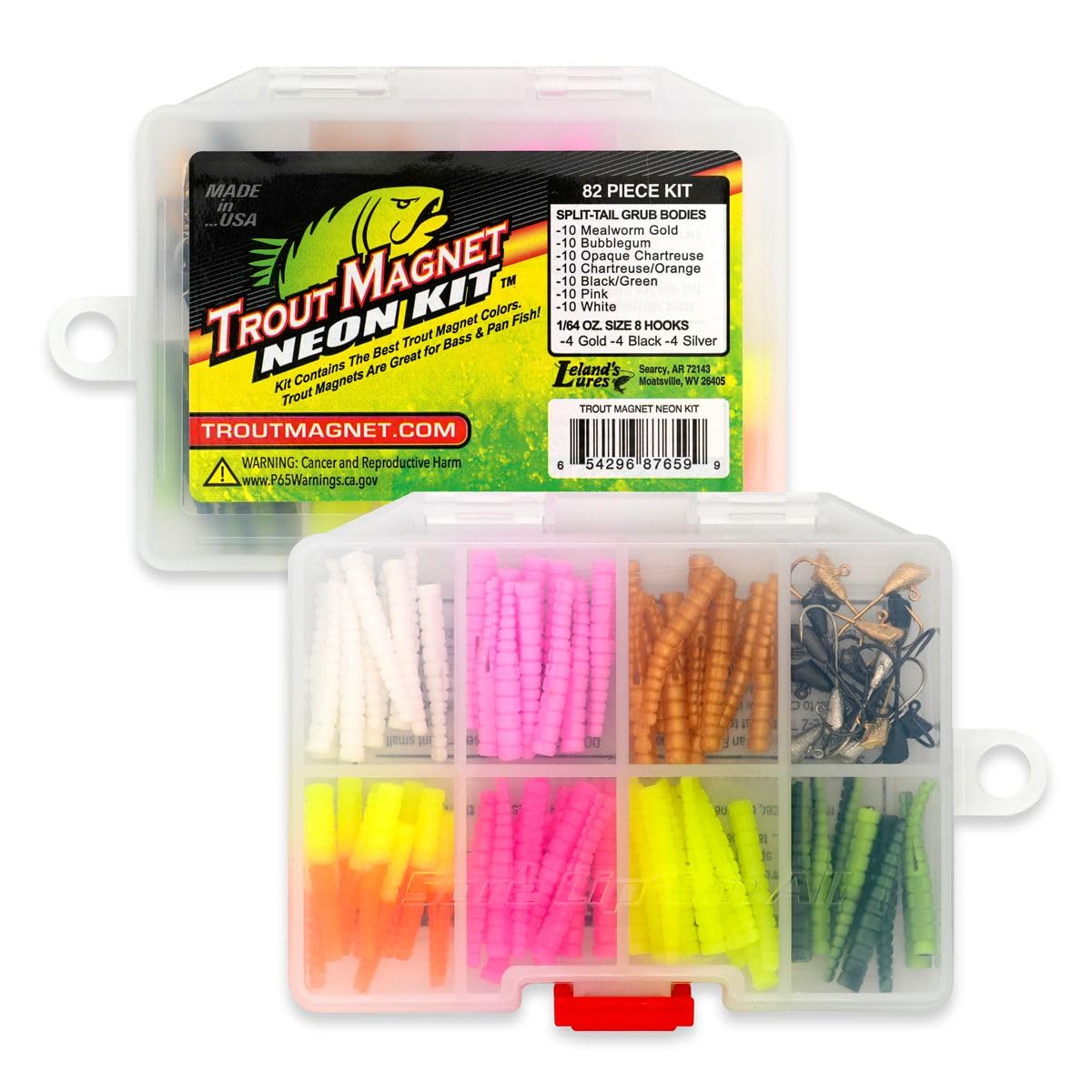
Contents
70 bodies, 12 size 8 jig heads
Hook Size
8
Check Details on Amazon

Ordinary jigs fall nose-first. The Trout Magnet is built so the grub body and jig head drop flat and level, which keeps a small bait in the strike zone longer in current and looks less like a lead weight tumbling downstream. That detail is the reason the system has a following on pressured trout streams, and it's the first thing we noticed when we dropped one into clear water.

The kit is 70 bodies and 12 size-8 jig heads in neon colors, with hot pink doing most of the work on panfish as well as trout. It's a system rather than a lure: one box covers a whole season of creek trips, and it's small enough to live in a vest pocket and be forgotten until you need it.

The honest limit is size. A size-8 hook and a short grub are built for small fish on light line, so this is a stream and panfish box rather than a bass box, and the thin plastic case warps if it rides in a hot truck. Where it earns its keep is the day the trout are rising and nothing else in the bag is small enough to matter.

Pros

  • Falls horizontally instead of nose-down
  • One box covers a whole stream season
  • Hot pink draws panfish as well as trout

Cons

  • Thin plastic case warps and the latch loosens
Our verdict

A complete small-bait system for streams and panfish — one pocket box, sharp jig heads, and bodies that outlast a season of creek trips.

Check Latest Price
7

First Tackle Box

PLUSINNO 128-Piece Kit

89 /100
Angler Score Excellent

Key details

Pieces
128
Weight
7.84 oz
Box Size
6.9 x 4.7 x 1.2 in
Includes
Crankbaits, spoons, hooks, weights, tackle box
Check Details on Amazon

If you're buying for someone who owns nothing yet — a kid, a partner who came along once, a kit for the glovebox — one box holding hooks, weights, and a handful of lures has obvious appeal. This is that box: 128 pieces in a case measuring about seven inches by five.

Inside there's a crankbait, spoons, soft worms, jig heads, hooks, weights, and swivels in divided compartments, plus a short handbook on choosing and fishing a lure. Nothing in it is junk, and nothing in it is the bait you'd pick out yourself.

The size is what surprises people: a hundred and twenty-eight pieces sounds like a big box and arrives as a small one, and the lures inside are finesse-scale rather than the baits you'd buy one at a time. None of that makes it bad — it makes it a starter kit, judged against the wrong expectation.

What we appreciated most is how little it asks of a beginner: open the lid, pick something out, go fish. The dividers do real work, too, keeping a hundred small pieces from becoming a drawer of loose hooks.

Pros

  • One purchase covers a first trip
  • Divided case keeps small parts sorted
  • Includes a beginner handbook

Cons

  • A big share of the count is hooks and weights
Our verdict

The gift-and-first-box answer: one purchase, a case, a handbook, and enough hooks and lures to get a beginner through a first season.

Check Latest Price

How We Tested (and Occasionally Lost) 18 Lures

We started with the lure shapes that account for most bass and panfish caught — straight-tail and curl-tail plastics, stickbaits, jerkbaits, pre-rigged swimbaits, a surface popper, and a few starter kits — then cross-checked them against what tackle shop staff actually recommend and which ones get bought again and again, filtering out anything that couldn't be worked from the bank or that cost more per lure than we'd be willing to throw into a tree. That left 18.

Every lure got fished, not just looked at. We threw topwater at first light and last light when the surface bite was on, cranked and twitched moving baits across points and flats in the afternoon, and dragged soft plastics Texas-rigged through grass and around dock pilings. We counted casts, strikes, and hookups, and noted where in the retrieve fish ate — the ones that only got bit on the pause or on a dead-slow crawl sorted themselves out fast. We measured and weighed each lure, then paid attention to which ones cast into a headwind and which helicoptered and cost us distance.

At the dock we filled a five-gallon bucket and dropped each lure in, watching whether it floated nose-up, sank slowly, sank like a rock, or rolled onto its side — the surface baits that didn't sit right got benched immediately. Soft plastics went through the durability test every angler knows: how many fish before the nose tears out or the bait slides down the hook. We ran a thumb across hook points after every fish to see if they stayed sharp, and checked paint and finish after teeth, rocks, and one unfortunate dock encounter, since that's where a cheap lure reveals itself.

We also tracked what each one cost against how many fish and how many trips it survived, because a bargain pack of plastics that lasts six outings beats a hard bait that loses its action in a month. And we dug through the kits rather than trusting the box art, sorting real fishable lures from filler. We're still fishing all of these, and anything that quits on us gets pulled from the list.

How to Choose Fishing Lures

Start With Depth, Not Color

Fish feed at a particular level, and the fastest way to narrow a wall of lures is to pick a bait for that level rather than a color you like. A popper works the surface; a suspending jerkbait owns the few feet just under it; a pre-rigged swimbait covers the middle; a weightless stickbait falls through all of it.

Pick one bait per layer and you'll out-fish a box of duplicates. The trap is buying color first: a chartreuse lure at the wrong depth still catches nothing, and no shade of green pumpkin fixes a bait that's running above the fish.

Match the Bait to Your Rod

Light baits and heavy baits need different rods, and that's before you think about the fish. A 2.3-inch swimbait weighing under half an ounce casts best on medium spinning gear; a 3-inch topwater and a jerkbait want a rod with enough backbone to snap the bait and drive a treble home.

Too light and the rod never loads, so distance and accuracy go. Too heavy and you cast timidly to protect the tip. Two setups — a medium spinner and a medium-heavy caster — cover everything we recommend here.

Treat Soft Plastics as Consumables

Soft plastic is a consumable, so the cost per bait matters more than the number on the bag. A ten-count of premium stickbaits and a hundred-count bag do the same job on a Texas rig; the difference is how often you reach into your pocket. Buy bulk in the shape you fish most and keep a small pack of the expensive ones for tough days.

The other half is rigging. An O-ring on a wacky rig and a molded hook slot on a Texas rig both stretch a bag considerably, and both cost less than replacing worms every trip.

Check the Hardware on Hard Baits

Hooks and split rings are where hard baits fail first, and they're the cheapest thing to fix. A cracked ring or a bent point is a missed fish, so run a fingernail over the point before you tie on. On topwater baits, look at the prop or blade after every snag — that's the part that breaks.

Most of our picks come with brand-name hooks already fitted, which is one fewer thing to buy. Check the rings anyway on anything that has taken a hard strike.

Buy a Kit for a Beginner, Not for Yourself

A 128-piece box looks like a shortcut to a tackle collection and isn't. Piece counts include hooks, weights, swivels, and split rings, so the number of actual lures is far smaller than the label, and those lures tend to run small.

That's genuinely fine for a kid's first box or one that lives in the car. For your own fishing, buy the specific bait you need and let the collection build itself from there.

Frequently Asked Questions

Final Verdict

If you're buying one bait off this list, make it the 5-inch Senko. It's the cheapest bait here, it needs no retrieve to speak of, and ten of them will out-fish a box of lures you don't understand yet.

If your fish suspend in clear, cool water, the Rapala X-Rap does the one thing the soft plastics can't, and for a trout stream the Trout Magnet is a complete system in a box that fits a vest pocket.