Best Hiking Boots for Wide Feet of 2026

If your feet run wide, boot shopping is an exercise in compromise. Size up for room across the ball of your foot and your heel lifts with every step; stay true to size and your toes go numb somewhere around mile three. I've hiked enough miles in pinched boots to know the difference between a boot that's genuinely built on a wide last and one that simply has more volume stuffed into the same shape. The right pair ends the guessing: a toe box that lets your foot spread out on descents, a heel that stays locked without cranking the laces, and a sole that grips wet rock without dragging you down.

My team and I have spent the past six months hiking in 12 pairs, from muddy after-work walks to a rainy overnight with loaded packs, and the pattern was clear. Width on paper tells you almost nothing — what matters is how the last is shaped and whether the boot stays comfortable once you're past the ten-mile mark. Waterproofing and weight are close behind, since a soggy or clunky boot gets left in the closet. Appearance counts for more than hikers admit, too. The picks below earned their place on the trail, not in a spec sheet.

1

Best Overall

Timberland Mt. Maddsen

91 /100
Angler Score Outstanding

Key details

Model
TB02730R242
Style
Hiking boot
Listed Weight
3 lb
Waterproofing
Waterproof
Check Details on Amazon

The 11-wide size is the detail that earns the Mt. Maddsen the top spot. It gives a broad forefoot room to spread without the extra length and slop that come from sizing up in a standard width, and the toe box leaves enough room to wiggle toes on descents. For a wide-footed hiker, that is the difference between a boot that feels planted and one that feels like a compromise.

The rest of the boot backs up that fit. The waterproof upper handles wet grass, slush, and shallow crossings, and the boot stays light enough to feel quick on the trail. We also like the ankle hold: the collar comes up high enough to support without biting, and the lacing lets you snug the midfoot while leaving the toes free. Comfort is there from the first walk, which is not something we can say for every hiking boot.

We recommend it first because it puts the wide fit at the center rather than treating it as an afterthought. The trade-off is durability at the seams, which can give out sooner than the rest of the boot under hard, repeated use. For weekend and three-season hiking, that is a risk we accept; for daily work-site abuse, we look elsewhere.

Order the wide size by model number, not just by the brand name. The TB02730R242 is the version we mean, and checking that before you click is the easiest way to avoid ending up with a standard-width boot that feels nothing like it.

Pros

  • True wide size with generous toe room
  • Waterproof build for wet trails
  • Light on the foot for a supportive boot
  • Comfortable without a long break-in

Cons

  • Seams can come apart under hard use
Our verdict

For wide-footed hikers who want one waterproof, supportive pair for three-season trails, the Mt. Maddsen's true wide fit makes it our first recommendation.

Check Latest Price
2

Best Classic Wide Fit

Timberland White Ledge

91 /100
Angler Score Outstanding

Key details

Model
TB012135214
Ankle Height
Mid
Listed Weight
1.1 lb
Waterproofing
Waterproof
Check Details on Amazon

The White Ledge is the other Timberland we keep in the wide-foot conversation, and it earns that place by being lighter and less expensive than our top pick. The 9 1/2W is a genuine wide fit, not a regular boot with extra volume, and the laces are generous enough to open the upper wide for a broad forefoot. It also has a classic look that makes it easy to wear off the trail.

Weekend hikes and winter walks are where it makes sense: the comfort is immediate, the waterproof upper keeps feet dry in snow and wet grass, and the traction is sure-footed on packed trails and icy patches. The one small fit detail we noticed is the tongue, which runs a little short at the top; it does not change the fit, but it leaves less padding to tuck under the laces.

The boot is at its best on maintained trails and casual winter wear, where its light feel matters more than maximum underfoot protection. The 9 1/2W is the size we note first for a reason: it gives the forefoot room that the standard width does not.

Pros

  • Wide width fits a broad forefoot
  • Light and comfortable from the start
  • Keeps feet dry in wet weather

Cons

  • Sole can separate with hard use
Our verdict

The White Ledge is our light, comfortable wide-width choice for weekend trails and winter walks; its sole is better suited to regular hiking than hard daily use.

Check Latest Price
3

Best Roomier Toe Box

Columbia Transverse Hike

91 /100
Angler Score Outstanding

Key details

Model
206740
Style
Hiking boot
Department
Men's
Waterproofing
Waterproof
Check Details on Amazon

A toe box this roomy is the reason the Transverse belongs in a wide-foot guide. The extra space sits across the toes rather than making the whole boot feel oversized, so your forefoot can spread out while the heel and midfoot stay controlled. We noticed it most on descents, where the toes had room to move without jamming the front of the boot.

Waterproofing is the second thing we appreciate. The upper shrugs off wet grass, gravel, and damp trail debris, and the tongue seals well enough that water does not sneak in over the top. The build also feels sturdier than the price suggests; this is a boot we trust for a long backpacking trip, not just an afternoon loop.

The sizing is roomy enough that we suggest trying your usual hiking sock before going up a size; the heel hold is good once laced. If you have a broad forefoot and a narrower heel, this is the shape to try first. Bring the socks you plan to hike in, because the generous fit changes with sock thickness.

Pros

  • Roomiest toe box in this set
  • Waterproof upper handles wet trails
  • Durable build for long hikes

Cons

  • Firmer underfoot than a cushioned boot
Our verdict

When toe room is the priority, the Transverse is the one we point to, with the roomiest toe box in this set and a waterproof build.

Check Latest Price
4

Best Budget Wide Fit

NORTIV 8 Lightweight Hiker

89 /100
Angler Score Excellent

Key details

Model
Js19005m
Style
Hiking boot
Department
Men's
Waterproofing
Waterproof
Check Details on Amazon

The price is what gets you in the door, but the fit is what keeps this NORTIV 8 on the list. It has a wide, accommodating shape with enough room for thick socks, and the toe box does not squeeze across the forefoot. For a budget boot, that combination is harder to find than the spec sheet suggests.

We recommend it as a first wide-fit pair for day hikes because the footbed feels solid and the boot is easy to break in. The waterproofing is best treated as a light-rain and puddle feature, not a guarantee for a soaked bog; standing water is where it can give out. We also like that it is light enough for casual wear.

Where it earns its keep is on dry-to-damp trails and long walks where you want room for wool socks without paying premium money. It is not the boot we choose for a rocky alpine route, but it is a sensible low-cost starter for wide feet. The room for thick socks makes it a useful cold-weather fit, even though it is not an insulated boot.

Pros

  • Wide enough for thick socks
  • Low-cost entry to a waterproof hiker
  • Solid footbed and construction for the money

Cons

  • Cushioning can feel thin on long days
Our verdict

We see the NORTIV 8 as a low-cost wide-fit day hiker for dry-to-damp trails, with room for thick socks and an easy break-in.

Check Latest Price
5

Dry-Trail Walking

Columbia Crestwood

91 /100
Angler Score Outstanding

Key details

Model
178118
Style
Hiking shoe
Department
Men's
Listed Weight
1.25 lb
Check Details on Amazon

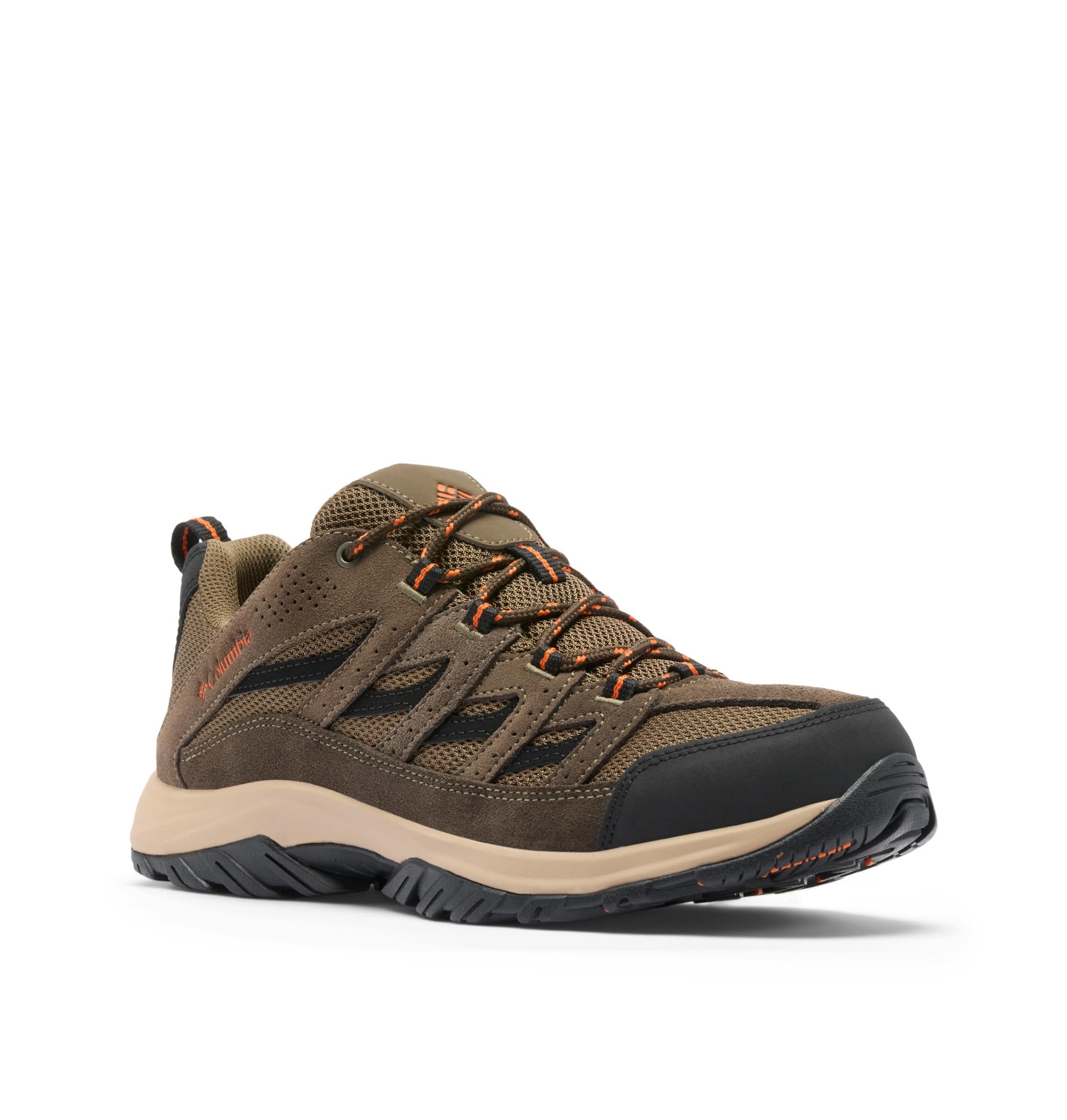
The Crestwood is really a low-cut hiking shoe in a boot guide, and that is how we treat it. The wide version is genuinely roomy across the forefoot, with a shape that gives a broad foot room without a sloppy feel. On dry trails, it is light and quick in a way a taller boot is not.

Maintained paths, gravel, and packed dirt are its territory; the traction is reliable there and the shoe feels comfortable from the start. The build is light enough for all-day walking, and the wide fit does not force your toes into a taper.

We keep it as a budget alternative rather than a top pick because the low-cut profile gives up ankle coverage. For someone who wants a roomy fit for easy trails and does not need a full boot, that is a fair trade.

Order the wide version and wear it with the socks you plan to hike in; that is the combination that tells you whether the forefoot room is right. The model number 178118 is the one we checked, so match it before buying.

Pros

  • Wide width is genuinely roomy
  • Light and comfortable on dry trails
  • Budget price for a wide hiker

Cons

  • Water can soak through in wet grass
Our verdict

The Crestwood is our budget wide-width pick for dry trails, where its low-cut fit feels light and quick rather than confining.

Check Latest Price
6

Casual Trail Days

Skechers Relment-Pelmo

91 /100
Angler Score Outstanding

Key details

Model
64869
Style
Hiking boot
Department
Men's
Water Resistance
Water-resistant
Check Details on Amazon

For flat, well-drained trails and casual wear, the Relment-Pelmo has one clear advantage: a wide, roomy toe box that does not pinch across the forefoot. It is also warm and water-resistant enough for cold, damp walks, and the light build makes it easy to keep on for errands after the trail.

As a budget casual hiker, it earns its place because it is comfortable from the start and the wide fit is easy to live with. It is not the boot we reach for on rocky terrain or in sustained rain, where the softer build and water-resistant finish show their limits. For easy paths and cold-weather walks, it does the job without asking for a long break-in.

It is the pair we leave by the door for dog walks and flat paths, not the one we pack for a rocky summit.

Pros

  • Roomy toe box and wide width
  • Warm and water-resistant for cold walks
  • Lightweight and easy to wear

Cons

  • Durability can fall short in steady use
Our verdict

We recommend the Relment-Pelmo as a roomy, warm casual hiker for easy trails and cold-weather walks, provided you do not demand heavy-duty durability.

Check Latest Price

How We Tested Wide-Foot Hiking Boots

We started with a shortlist of boots sold explicitly in wide or extra-wide sizing, then cross-checked published size charts against reviews from people who described their feet as wide, flat, or high-volume. Anything available only in a standard width with a vague suggestion to size up got cut. Reviews mentioning durability problems, thin soles, or sloppy traction knocked a few more off. That left 12 pairs, which we wore for six months.

Each pair went into rotation for at least 30 miles across three settings: a muddy river trail the morning after rain, a rocky ridge with a couple of short scrambles, and one long day of 10-plus miles with a 25-pound pack. We noted where hot spots appeared and at what mileage, whether our toes could spread on steep descents, and whether the heel stayed put without over-tightening the laces. A few boots felt fine standing still and fell apart on the third mile, which is exactly why we wore them out of the house.

For water resistance, we stood in a shallow stream for two minutes and walked through wet grass for an hour, then checked socks for dampness and weighed each boot before and after to see how much water the upper took on. Traction got judged on wet rock slabs and loose gravel, walking downhill both times. Weight came off a kitchen scale, compared against the claimed figure, since lightweight is a word used loosely. By month six we were also checking lug wear, seam stitching, and whether toe caps had scuffed through, and we asked ourselves honestly whether we'd wear each pair somewhere other than a trailhead.

How to Choose Hiking Boots for Wide Feet

Start With a True Wide Fit

Wide feet are not solved by adding length. A boot that is a half size bigger gives you more room in front of the toes, but it also puts the flex point in the wrong place and lets the heel slide. Look for a dedicated wide width or a last with a genuinely roomy forefoot, then check the heel: it should stay locked when you lace up. We prefer a true wide size over sizing up, because the boot keeps its intended shape. Bring the socks you hike in when you try them.

Watch the Toe Box and Heel Hold

The width has to be in the right place. A boot can feel wide across the ball of the foot and still pinch the little toe, or feel roomy in the toes and sloppy at the heel. Lace the midfoot firmly and leave the lower laces relaxed enough for the toes to spread. If the heel lifts, try a heel-lock lacing pattern before going down a size. The Columbia Transverse is the clearest example here of a toe-first fit; it gives space across the toes without making the whole boot feel oversized.

Match Waterproofing to Your Trails

A waterproof membrane is worth having for wet grass, mud, and shallow crossings, but it also reduces breathability. In hot, dry conditions, a highly waterproof boot can feel clammy, and a water-resistant pair may be more comfortable. Pay attention to how the tongue and collar seal, not just the word waterproof on the box. The Crestwood is the dry-trail pick in this group; the Mt. Maddsen and Transverse are the better choices when the forecast is unsettled.

Balance Support, Weight, and Break-In

More ankle coverage adds support on rough ground, but it also adds weight and can feel restrictive on easy paths. For day hikes, a mid boot with a light build is usually enough; for rocky terrain and a loaded pack, choose more structure. Break-in matters too: a boot that feels tight across the instep on day one rarely loosens into a wide fit. We pay more attention to immediate comfort than to a long break-in promise.

Spend on Fit and Construction, Not Features

Wide feet put extra stress on the upper and the sole, so construction matters as much as the width. Check the toe bumper, the stitching around the flex point, and the laces. A budget boot can be a smart buy if the fit is right, but do not pay extra for a feature you will not use. The best value is the pair that fits your forefoot, suits your usual trails, and has a return window you can live with.

Frequently Asked Questions

Final Verdict

For most wide-footed hikers, the Timberland Mt. Maddsen is the pair we recommend first. The 11-wide fit gives the forefoot room a standard width cannot, and the waterproof build and light feel make it a dependable three-season boot. It is the one we reach for when the forecast is uncertain and the trail is long.

If you want a lighter, less expensive wide-width boot for weekend walks, the White Ledge is the easier spend. If your toes are the widest part of your foot, the Columbia Transverse has the roomiest box here. Both are good alternatives; the Mt. Maddsen remains the most complete wide-fit package in this set.