
Best Hiking Boots for Women of 2026

You usually find out what a hiking boot is really made of about four miles in, on a wet downhill, when your heel starts lifting and your toes slam the front of the boot with every step. Fit is the whole ballgame: a pair that pinches in the shop will cost you a toenail by mile eight, no matter how aggressive the tread looks. What you want is a boot that disappears on your foot — waterproof enough for a stream crossing, grippy when the trail turns to slick rock, and handsome enough that you don't wince wearing it to the brewery afterward.

Over the past eight months, my team and I have hiked in 12 different pairs, from lightweight ankle boots to burlier mid-cut leather ones, and the pattern was consistent: the boots people end up loving are rarely the stiffest or the most feature-loaded. They're the ones that fit a real foot straight out of the box. One thing nobody warns first-time buyers about — a waterproof membrane makes any boot run warmer, and most leather pairs need a solid 10 miles of breaking in before the collar stops pressing on your ankle bone. The picks below have already done that work.

1

Best Overall

Merrell Moab 3 Mid Waterproof

91 /100
Angler Score Outstanding

Key details

Height
Mid
Widths
Standard and wide
Waterproofing
Waterproof
Check Details on Amazon

Most boots ask for a week before they stop reminding you they are on your feet. The Moab 3 Mid is the pair we hand someone who leaves in three days. It comes out of the box soft enough for a real trail and stays supportive once the padding settles, which is the harder half of the trick.

That balance is why it is our top pick. The collar sits below the ankle bone instead of pressing on it, so support comes from the heel counter and the mid cut rather than a padded cuff digging in. The forefoot leaves room for a wool sock on a cold morning, and the wide sizes mean a broad foot is not squeezing into a boot built for someone else.

Fit is the one place this boot divides people. Order your usual size first, but if you wear thick socks on every hike, going up half a size is the safer call — it runs close over the instep. Waterproofing handles wet trail, wet grass, and mud without drama; like every membrane here, it stops mattering once water comes over the top of the collar.

The value shows up in the second and third season. The upper and outsole hold together on rocky ground, and the boot still looks like a boot after a muddy spring. It is the pair we pack when we do not yet know what the trail is going to do.

Pros

  • Comfortable from the first mile
  • Ankle support that clears the ankle bone
  • Wide sizes for broad feet
  • Upper and sole hold up over seasons

Cons

  • Water protection weakens under sustained soaking
Our verdict

The boot we point most buyers to: comfortable from the first mile, steady on rough ground, and made in wide sizes that genuinely fit.
Check Latest Price
2

Best for Wide Feet

Columbia Newton Ridge Plus

91 /100
Angler Score Outstanding

Key details

Widths
Standard and wide
Waterproofing
Waterproof
Product Dimensions
10 x 15 x 6 inches
Check Details on Amazon

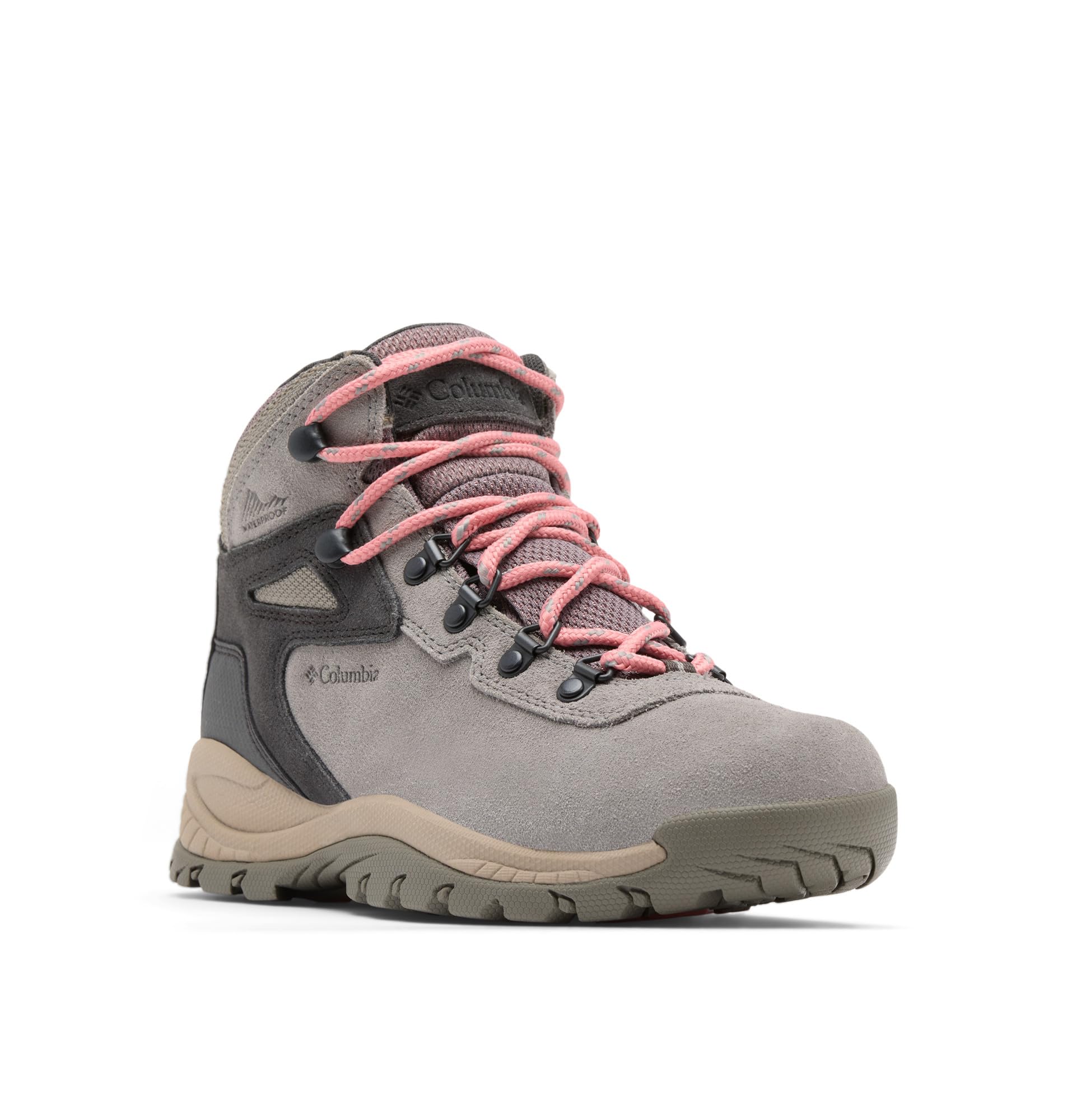
If your feet have been called wide, or you have finished a hike with your little toe pressed against stitching, start here. The Newton Ridge comes in wide widths, and even the standard fit keeps a roomy toe box, so a broad forefoot or a bunion is not the deciding problem. It also looks like a proper hiking boot rather than a wide-fit compromise, with a bright lace accent that lifts it out of the usual brown.

Water rolls off drizzle and wet grass, and the ankle support is the firm, structured kind rather than a soft cuff — useful on cobblestones, roots, and rough trail. Underfoot it is light, which matters more on a six-mile day than any single feature we could list. For a first real hiking trip, or a week of walking where pavement outnumbers trail, that combination is hard to beat.

Quality is consistent, and the boot takes mud and travel without looking beaten. Order your usual size; if the toe box feels tight across the ball of your foot, the wide version is the one to choose rather than a bigger size.

Pros

  • Roomy toe box with a true wide option
  • Structured ankle support on uneven ground
  • Light underfoot for a mid-height boot
  • Repels drizzle and wet grass

Cons

  • Ankle collar can rub on the first few wears
Our verdict

For wide feet, this is the easy answer — a roomy toe box, a real wide option, and firm ankle support at a mid-range price.

Check Latest Price
3

Best Premium

Danner Mountain 600

90 /100
Angler Score Outstanding

Key details

Outsole
Vibram
Break-in
None needed
Waterproofing
Waterproof
Check Details on Amazon

No break-in. That is the first thing to know about the Mountain 600, and it is rarer than it sounds — plenty of boots at this end of the market still want a week of short walks before a real hike.

The grip is the part we keep coming back to. The Vibram outsole bites on rock and wet roots, and the boot carries its support high enough to steady you on loose descents without feeling like a cast. Waterproofing holds through stream crossings, well past what we expect from a boot this light, and the styling is why it is the one here you can wear into town without looking like you are between trailheads.

Choose it if you want one pair to do everything — day hikes, wet weather, a weekend away — and you plan to keep them for years. Sizing runs close, so go up half a size if you hike in thick socks.

Pros

  • No break-in period worth planning around
  • Vibram outsole grips rock and wet ground
  • Stays waterproof through stream crossings
  • Supportive without feeling heavy

Cons

  • Highest price tier of the boots here
Our verdict

Worth the splurge if you want one pair for everything: no break-in, serious grip, and waterproofing that holds in a stream.

Check Latest Price
4

Best Budget Waterproof

NORTIV 8 Waterproof Trekking

91 /100
Angler Score Outstanding

Key details

Fit
Runs narrow for some
Height
Ankle
Waterproofing
Waterproof
Check Details on Amazon

Plenty of inexpensive boots say waterproof and mean a coating that quits after a season. These hold to the ankle: shallow creek crossings, mud, and wet grass are fine, and water resistance is one of the stronger parts of the boot rather than an afterthought.

Comfort is the other strength, in a specific way — they feel like a sneaker underfoot, soft and immediately forgiving. On a groomed trail or a gravel path that is exactly what you want at the end of a long day. On wet roots and loose scree, the same softness is why we reach for something stiffer.

Fit is where it splits. The boot runs narrow through the middle for some feet and loose for others, so the lacing does a lot of the work. The ankle does not cinch down as firmly as the Moab or the Targhee, and on a steep descent you may feel the heel move before the laces take up the slack.

Buy these for weekend hikes, dog walks, and travel where one pair has to handle whatever the weather does. Treat the laces as the weak link — ours worked loose on descents, and a waxed pair solves it for good.

Pros

  • Holds water out to ankle height
  • Soft, sneaker-like comfort from day one
  • Sturdy ankle and arch support

Cons

  • Runs narrow through the middle for some feet
Our verdict

The budget boot we trust in wet weather, best on weekend trails where soft comfort matters more than stiffness.

Check Latest Price
5

Best for Everyday Versatility

Ariat Terrain

91 /100
Angler Score Outstanding

Key details

Upper
Leather
Height
Ankle
Weight
Lightweight
Check Details on Amazon

It is the boot that ends up by the back door rather than in the pack. The Terrain is light for leather, and it moves between chores, a ride, and a two-mile trail without asking you to change shoes — more versatility than any other pick here offers.

Comfort is genuine and lasts through a working day. The arch support is the standout, built for feet that want something under the midfoot, and the leather upper takes scuffs without looking wrecked while the lace hardware holds its shape.

Choose it if you want one boot for real life: a bit of trail, a lot of standing, and you prefer leather to a synthetic membrane. Ours needed no break-in at all, and the leather gave within a week. Expect it to look better with age than a synthetic boot does.

Pros

  • Moves from yard work to trail to saddle
  • Strong arch support for high arches
  • Light for a leather boot
  • Leather upper takes scuffs well

Cons

  • No waterproof membrane
Our verdict

A light leather workhorse for the yard, the saddle, and an easy trail — just keep it out of deep puddles.

Check Latest Price
6

Wide Toe Box

KEEN Targhee III Mid

88 /100
Angler Score Excellent

Key details

Height
Mid
Toe Box
Wide
Waterproofing
Waterproof
Check Details on Amazon

The Targhee III has the roomiest toe box here and arch support to match, and it is also the pick we are most cautious about. The shape is excellent; the long-term story is less tidy.

What it does well, it does from the first mile: a wide toe box that lets your toes spread on a descent, firm support under the arch, and enough structure at the ankle to steady you on loose rock. It reads as a proper hiking boot rather than a sneaker with lugs, which not every pick here manages.

Fit is the variable to settle first. The volume runs generous, so if you are between sizes, size down rather than up, and give yourself a short walk before committing to a long one. This is a boot worth trying on rather than ordering blind.

Pros

  • Widest toe box of the picks here
  • Firm arch support on uneven ground
  • Comfortable from the first wear

Cons

  • Toe and upper can split with hard use
  • Waterproofing fades as the boot ages
Our verdict

Buy it for the roomy toe box and arch support, and accept that the upper and waterproofing may not match that fit over time.

Check Latest Price
7

Light Summer Hikes

NORTIV 8 Lightweight Ankle

90 /100
Angler Score Outstanding

Key details

Height
Ankle
Weight
Lightweight
Outsole
Rubber
Check Details on Amazon

Light is the whole point. These are ankle-height, soft underfoot, and easy to forget you are wearing — comfortable from the first day, true to size, and roomy enough that a second pair of socks does not turn them into a vise.

For occasional hikes, camp chores, and travel, that is plenty, which is why they have stayed in our rotation as the spare pair we throw in the car. The catch is water: dew and wet grass can soak through in a way the waterproof picks here do not, though they dry faster than most, which takes some of the sting out of a damp morning.

Pros

  • Light and soft from the first wear
  • True to size with room for thick socks
  • Dries quickly after a soaking

Cons

  • Water soaks through in wet grass and dew
Our verdict

A light, cheap pair for the handful of hikes you do each year — comfortable and quick-drying, but not a wet-weather boot.

Check Latest Price
8

Cold-Weather Hikes

XPETI Thermator Mid

87 /100
Angler Score Excellent

Key details

Height
Mid high-top
Warmth
Cold-weather build
Waterproofing
Waterproof
Check Details on Amazon

Cold, wet mornings are where this boot earns its place. It is the warmest pick here by a wide margin, holds water out through shallow crossings, and puts real structure under the ankle — the combination that matters when the trail is muddy and the air is in the forties.

Comfort holds up over long days. These are boots for standing shifts and full-day walks, and the cushioning under the arch is generous enough that we noticed it by mid-afternoon. They are also better looking than the price suggests, with a clean profile that does not shout winter boot.

The thing to watch is the sole. Separation at the heel can develop over a season or two of hard use, so check the seam where the sole meets the upper before a long trip and treat these as a seasonal boot rather than a decade-long one.

Choose them for winter walking, wet-weather hikes, and anyone who feels the cold in their feet. If you only hike in summer, they are more boot than you need.

Pros

  • Warmest boot of the picks here
  • Keeps feet dry through shallow crossings
  • Strong arch and ankle support
  • Comfortable for full days on your feet

Cons

  • Sizing runs small
Our verdict

The cold-weather pick: warm, supportive, and dry through shallow water, provided you size up and watch the sole seam.

Check Latest Price

How We Chose and Tested 12 Pairs of Women's Hiking Boots

We began by pulling together every women's hiking boot we could find that listed a genuine waterproof membrane, a lug pattern deep enough for loose dirt, and a wide enough size run to fit narrow and wide feet alike. From that group we cut the list down to 12 pairs spread across the price range, from budget-friendly options to investment boots, so we could see whether the extra money actually bought anything on the trail.

Each pair went through the same eight-month rotation, from late winter through early fall. That meant a rocky ridge trail with a long, loose descent, a muddy spring thaw where the path was closer to a creek, and a two-night trip where the boots stayed on from the trailhead to camp. Between hikes we wore them for dog walks and errands, since a boot that only works on dirt is a boot you'll resent.

Comfort and fit got judged at mile one and again at mile ten, with notes on exactly where hotspots appeared and whether they showed up with thin socks, thick socks, or both. To check water resistance we stood each boot in a basin of water for 20 minutes with a paper towel stuffed inside, then felt whether the towel came out damp. We tracked scuffs, wear at the toe cap, and how much tread had rubbed away after 40 miles of mixed terrain, then hosed the mud off to see which pairs cleaned up and still looked presentable. Value came down to a simple question: what did this pair give back, in comfort and durability, for what it cost?

How to Choose Women's Hiking Boots

Waterproofing: what a membrane actually covers

A waterproof membrane keeps out rain, dew, mud, and water that stays below the collar. It does nothing about water coming over the top, which is where most wet feet actually happen. Membranes also trap heat, so a waterproof boot runs warmer than an unlined one — worth knowing if you hike in July.

Our rule: if your trails are wet for most of the year, pay for the membrane. On dry, high-summer ground, a leather boot without one breathes better and costs less to replace. And don't confuse waterproof with warm — they are separate jobs, and a wet-weather boot is not a winter boot.

Fit: width, toe room, and the half-size question

Feet swell through the day and spread on descents, so shop in the late afternoon and fit the foot you have at four o'clock rather than at breakfast. You want roughly a thumb's width between your longest toe and the front of the boot, and no pressure across the ball of the foot.

The trap is assuming a size is a size. A 7 in one brand is not a 7 in another, and the same boot in a wide fitting feels like a different shoe. If the standard width leaves your little toe against stitching, change width before you change size — the wide options from Columbia and Merrell exist for exactly that foot. If your heel lifts on a test walk, tighten the lacing first; a heel that still moves with the laces snug means the boot is wrong, whatever number is on the box.

How much boot a day hike actually needs

A mid cut gives you ankle support on uneven ground, and across a full day with a pack that is worth having. Weight is the trade: a stiff, heavily built boot costs energy with every step, which is why the lightest picks here feel so easy on a short walk.

For most day hikers a mid boot of moderate weight is the right answer. If your hikes are short, flat, and close to home, weight matters more than structure — a lighter boot you actually wear beats a stiffer one that stays in the closet.

Outsole grip and where it counts

Lug depth is what you are buying. A deep, widely spaced lug clears mud, a softer rubber compound sticks to wet rock, and a shallow sneaker-style sole is fine on gravel and out of its depth on wet roots. The Danner's Vibram outsole is the surest of these on rock; the softer sole on the NORTIV 8 trekking boot is the one to leave home on a rooty, wet descent.

Match the tread to the trail. On smooth, dry paths, aggression you don't need simply wears down faster on hard ground.

What you get for the money

Above entry level, the extra spend buys three things: a better membrane, more consistent sizing, and an upper that survives more than a season or two. The cheapest boots here are genuinely comfortable — what they don't promise is longevity, and a boot that lasts half as long hasn't saved you anything.

Spend up if you hike most weekends. If you get out a handful of times a year, one budget pair plus a spare is a more sensible way to own this than a single expensive boot you rarely wear.

Frequently Asked Questions

Final Verdict

Start with the Merrell Moab 3 Mid. It is the most complete day-hiking boot here: comfortable out of the box, supportive without pressing on the ankle bone, and available in wide sizes, so it fits more feet than most of the picks on this page.

If your forefoot is broad and the Moab still pinches, the Columbia Newton Ridge is the next call and the lighter of the two. And if you want one pair to carry you through a decade of weekends, the Danner Mountain 600 is worth the step up.