Best Dual-Purpose Marine Batteries of 2026

A dual-purpose marine battery has an unglamorous job: crank a cold outboard on a foggy morning, then keep a trolling motor, livewell pump, and fish finder running for eight hours without complaint. Those are two different demands — burst power versus a long, slow draw — and most batteries are built for one or the other. Get the balance wrong and you're either grinding a sluggish starter at the ramp or watching your electronics brown out on the hook. We've spent 10 months with eight of them, and the gap between good and mediocre shows up fast.

Weight surprised me most — hauling a group 31 into a cramped locker is a two-person job with some of these and a one-person job with others. Advertised amp-hours are a starting point, not an answer; what counts is how much you can draw before the voltage sags. The picks below run from plain lead-acid replacements to lithium packs that report their own state of charge to your phone.

1

Best Overall

Power Queen 12V 100Ah Dual-Purpose

90 /100
Angler Score Outstanding

Key details

Capacity
100 Ah
Chemistry
LiFePO4
Group Size
Group 24
Cold Cranking
900 CCA
Check Details on Amazon

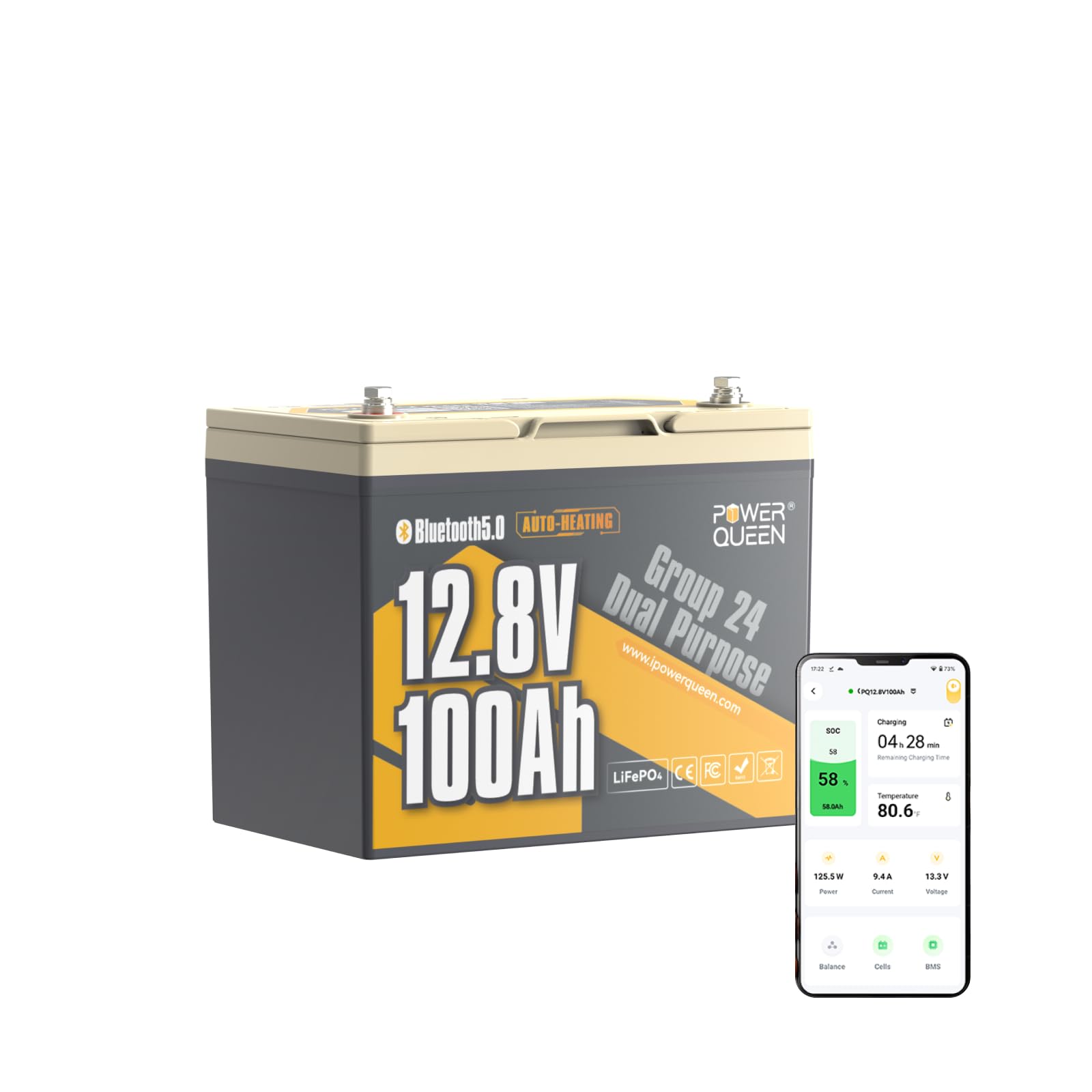
About 20 pounds is all this battery asks of you when you lift it out of a locker, against 43 to 60 pounds for the lead-acid picks here. That number decided it for us: the Power Queen is the one we fit first on a boat where the battery lives under a jump seat or in a bow compartment you reach into blind, and it is the reason swapping one at the ramp stopped being a two-person job.

It is not a light battery that gave up the starting job to get there. Power Queen rates it at 900 cold cranking amps and 100 amp-hours, so the same case spins the outboard and runs the graph, livewell and lights. The phone app reports capacity, current draw and an estimated runtime rather than a single voltage figure, and that runtime estimate is the part that matters in practice — on a long drift you can watch a percentage instead of guessing.

The 15 percent reserve is the other feature worth knowing about. When state of charge reaches that line the battery stops discharging and holds the remainder for the starter, so a hard day on the trolling motor does not end with a call for a tow. Below 32°F it will not accept a charge until its self-heating circuit warms the cells, which is correct behavior for lithium and the reason it holds up as an ice-fishing battery.

One thing to sort before you order: if your onboard charger predates lithium and lists only flooded and AGM settings, add a lithium-profile charger to the budget. A charger that never reaches the right profile will leave this battery short of full, and no amount of capacity on the label fixes that.

Pros

  • About 20 pounds, easy to lift alone
  • 900 cranking amps and 100 amp-hours in one case
  • App shows estimated runtime, not just voltage
  • Self-heats so it can charge below freezing

Cons

  • Starting rating listed for outboards up to 250 hp
Our verdict

We fit this one first: 900 cranking amps, 100 amp-hours and about 20 pounds, plus an app that shows how much fishing time is left.
Check Latest Price
2

Best for Big Power Needs

LiTime 12V 165Ah Dual-Purpose

92 /100
Angler Score Outstanding

Key details

Capacity
165 Ah
Chemistry
LiFePO4
Group Size
Group 31
Cold Cranking
1,200 CCA
Check Details on Amazon

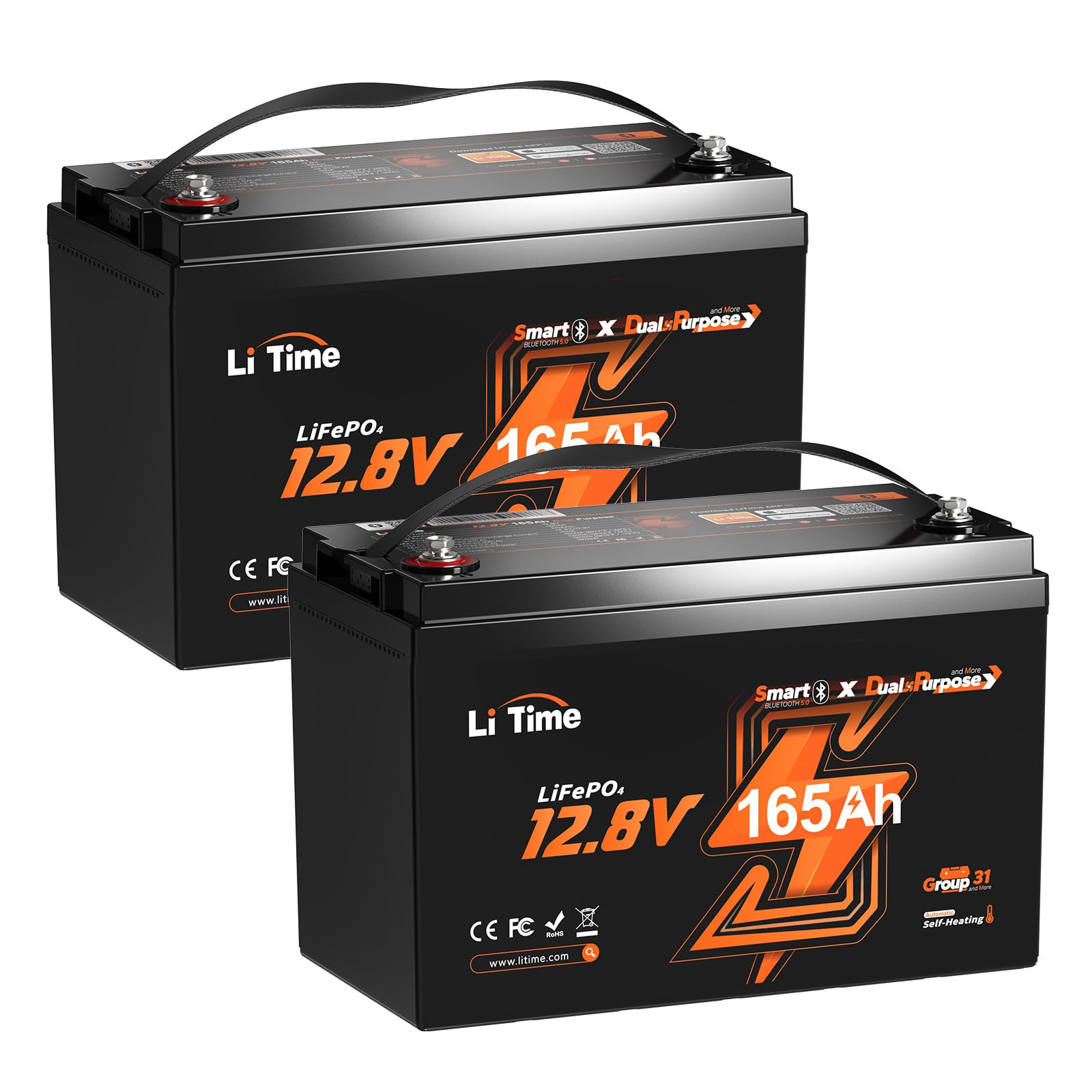
Two 165 amp-hour batteries arrive in one order, which is either exactly what your boat needs or twice what it needs. There is not much middle ground. On a rig running a trolling motor, a couple of graphs and a livewell, the pair lets you wire one battery to the outboard and one to the electronics — the arrangement we prefer whenever there is room for both cases.

The starting rating is the headline for us: 1,200 cold cranking amps measured at 14°F rather than on a warm bench, with 1,300 marine cranking amps at 32°F. That is more headroom than anything else here, and it is why this is the set we point at for a bigger outboard or a cold-weather launch.

Weight is the other argument. Each battery is 33.5 pounds, roughly half a comparable lead-acid, and each case is a Group 31, so a pair fits where two AGMs would have gone. The Bluetooth app does more than report: discharge can be switched on and off from the phone, and the 15 percent reserve cuts the load automatically before the battery is flat.

Cold-weather charging follows the same logic as the Power Queen — self-heating below 32°F and a discharge cutoff at -4°F — and the warranty runs five years. What you are buying is capacity per pound and a second bank without a second charging system, so it rewards a boat that actually uses the amp-hours.

Pros

  • 1,200 cold cranking amps measured at 14°F
  • 165 amp-hours per battery in a Group 31 case
  • App can switch discharge on and off
  • Five-year warranty

Cons

  • Listing says not for Yamaha or Mercury outboards
  • The priciest set in this group
Our verdict

Two 165 Ah lithium batteries with 1,200 cold cranking amps: the pick for a boat that splits cranking and house duty and can absorb the cost.

Check Latest Price
3

Best AGM Warranty

Odyssey 34M-PC1500ST-M

82 /100
Angler Score Excellent

Key details

Weight
49.5 lb
Warranty
Up to 4 years, full replacement
Chemistry
AGM lead
Cold Cranking
850 CCA
Check Details on Amazon

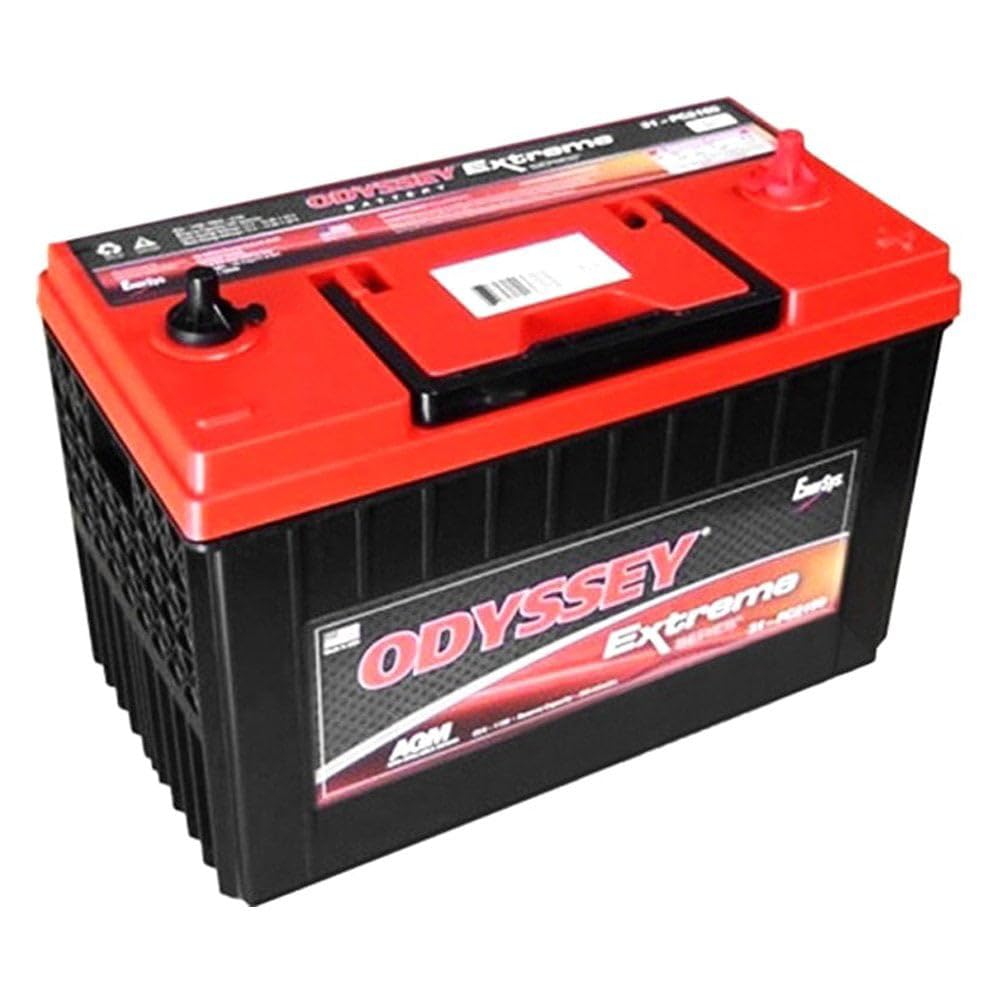
A four-year full replacement warranty is the first thing we look at on a battery that is this much trouble to change, and the Odyssey's is the longest here outside the lithium pair. It is a straight swap rather than a pro-rated credit, which matters when a battery quits in July instead of at the end of some theoretical service life.

The rest is old-school AGM done properly. Odyssey builds it with thin pure lead plates, rates it at 850 cold cranking amps, and publishes a 3-to-10-year service life plus two years of shelf life on open circuit without a recharge. The case is sealed and classified non-spillable for transport, so there is no water to add and nothing to leak into a locker that takes a beating.

At 49.5 pounds it is a two-hand lift, and the case is a conventional rectangle rather than the small Group 24 shape of the Power Queen, so measure before assuming it drops straight into a tight tray. It also suits a charging system that was built for lead: an AGM setting on the shore charger and an alternator that has never heard of lithium.

That two-year shelf life says something useful about off-season ownership. A battery that can sit disconnected through a winter without a maintenance charge is one less thing to think about between haul-out and launch, which is not the case with every battery on this page.

Pros

  • Four-year full replacement warranty
  • 850 cold cranking amps
  • Sealed and non-spillable, maintenance free
  • Two years on the shelf without recharging

Cons

  • No amp-hour rating published to size electronics
Our verdict

We recommend it for lead-acid setups that want cranking headroom and a warranty that replaces the battery instead of pro-rating it.

Check Latest Price
4

Tight Battery Lockers

OPTIMA D34M BLUETOP

86 /100
Angler Score Excellent

Key details

Weight
43.5 lb
Capacity
55 Ah
Cold Cranking
750 CCA
Reserve Capacity
120 min
Check Details on Amazon

The D34M is the small one. Its case measures about 10 by 7 by 8 inches, which is the shape that still fits the tray under a bench seat on plenty of older boats, and the top carries both SAE posts and 5/16-inch stainless studs. That second set of terminals saves a small argument every time: the outboard cable clamps to the post while the trolling motor lead bolts to the stud, with nothing stacked.

Inside, the spiral-cell construction is what Optima is known for, and the vibration resistance is the reason it survives a hull that pounds. It is rated at 750 cold cranking amps, 55 amp-hours and 120 minutes of reserve capacity, maintenance free and backed by a 24-month guarantee.

Our reservation is about time rather than the first season. Where it earns its place is a boat with a compact tray and a simple charging system: it drops in, the studs take a ring terminal without an adapter, and the AGM setting on an older shore charger is the right one. Buy it for the fit and the dual terminals, not for a decade of service.

Pros

  • Dual SAE and stud terminals simplify wiring
  • Compact case for shallow or short trays
  • Spiral cell resists vibration

Cons

  • Some units stop holding charge within a year or two
  • 55 amp-hours is modest for a day of electronics
Our verdict

It is the one we point to when the tray is small and the wiring is fussy, as long as you go in expecting a compact AGM and not a deep-cycle workhorse.

Check Latest Price
5

Budget Cranking Power

Interstate 31-AGM5

76 /100
Angler Score Very Good

Key details

Weight
60 lb
Capacity
100 Ah
Group Size
Group 31
Cold Cranking
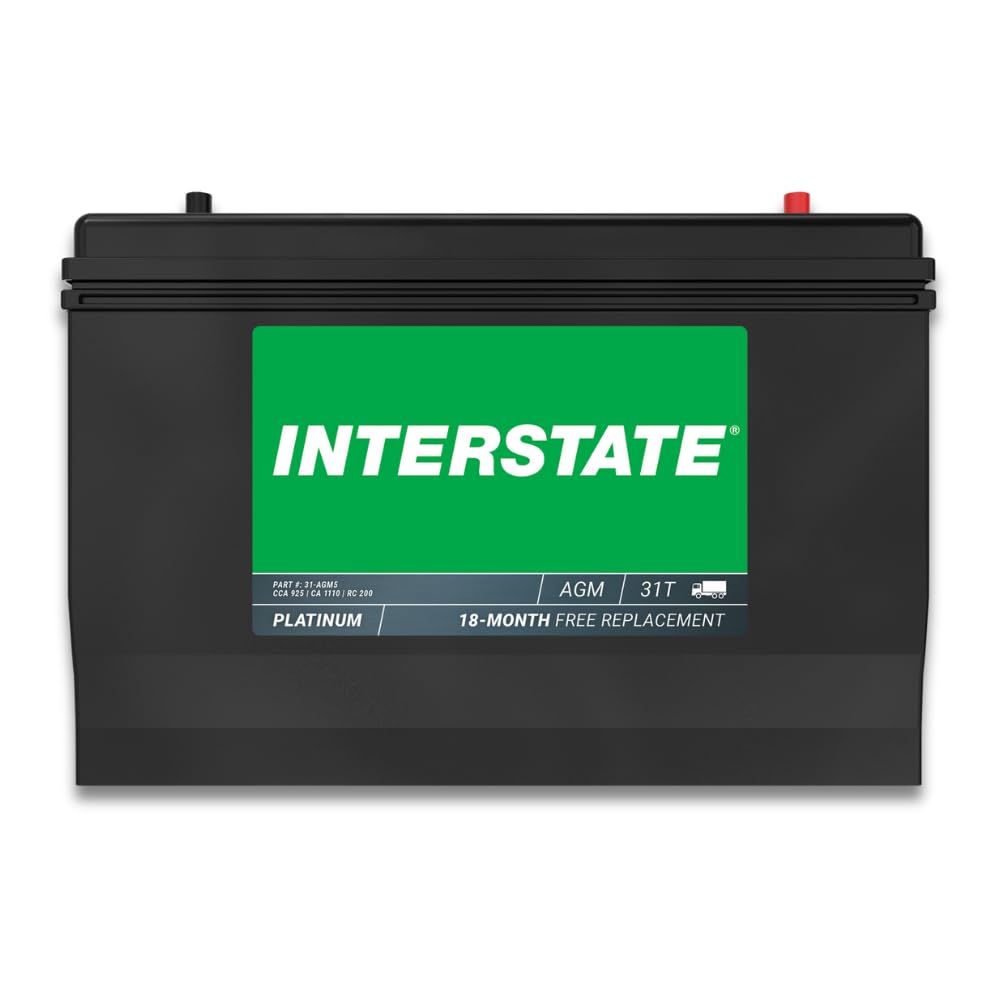
925 CCA
Check Details on Amazon

Nine hundred twenty-five cold cranking amps and 100 amp-hours in a Group 31 case is more of both than either AGM above it, and the Interstate does it for the least money in this group. Two numbers on the same listing explain how that reads: the 925 is cold cranking amps at 0°F, the 1,110 is cranking amps at 32°F. Same battery, warmer test, bigger-looking figure.

What we like is how little it asks of the rest of the boat — pure lead AGM plates, thickened so the battery can be discharged and recharged trip after trip rather than spun for a second and put away. A Group 31 case runs roughly 13 inches long, so measure the tray and the hold-down before you order, and count on the heaviest lift in this group at 60 pounds.

Pros

  • 925 cold cranking amps, the most of the lead-acid picks
  • 100 amp-hours in a Group 31 case
  • Thick pure lead plates built for repeated cycling
  • Least expensive of the picks here

Cons

  • Warranty term not stated on the listing
Our verdict

It is the value play among the lead-acid picks: 925 cranking amps and a full 100 amp-hours for the least money here, in a case that needs measuring first.

Check Latest Price

How We Tested These Dual-Purpose Marine Batteries

We narrowed the field on paper first: group size and footprint, since a battery that won't sit on your tray is a non-starter, then chemistry, cold-cranking amps, reserve capacity, and warranty terms. Anything billed as dual-purpose that published only one of those two ratings got cut. That left eight batteries, which we bought at retail and ran for 10 months — a full boating season plus the off-season that follows it.

Two boats did the work: a center console with a 150-horsepower outboard and a trolling motor, and a pontoon that spends long days on the hook with a fish finder, livewell, and stereo drawing it down. On launch mornings we logged whether the engine turned over on the first key or labored, and how it sounded at 40-degree starts. On the water we ran the trolling motor to a set voltage cutoff and timed it, then checked recovery voltage an hour later. In storage we left each battery connected to its usual parasitic draw, read resting voltage at two and six weeks, and noted which ones needed a top-up before the season restarted.

Every battery got weighed on a shipping scale before install, and every Bluetooth-equipped model got paired with a phone so we could compare its reported state of charge against a multimeter at each check — a couple of them were optimistic by a meaningful margin. We inspected terminals for corrosion and cases for swelling monthly, and set price against usable amp-hours to see which ones actually earned their cost.

How to Choose a Dual-Purpose Marine Battery

Clear the Engine's Cranking Minimum, Then Size the House Load

Start with the number your outboard maker publishes — most manuals give a minimum cold-cranking figure — and treat the battery's rating as a floor to clear, not a score to maximize. A 60-horsepower tiller doesn't need 900 amps, and a 250-horsepower four-stroke will make you regret 600. Once that's settled, look at amp-hours and reserve for the electronics, which is where these picks separate: 55 amp-hours in the Optima against 100 in the Power Queen and Interstate.

Chemistry Decides Your Charger, Not the Other Way Around

Lithium gives you more usable capacity per pound and a flat discharge curve, but it only pays off if the rest of the system speaks the same language. Check that your shore charger has a lithium profile and that the engine's charging output is rated for it; an older alternator and a modern LiFePO4 pack are not automatically friends. AGM is the lower-risk swap because it works with the gear most boats already carry, and both the Odyssey and the Optima will take a charge from a conventional AGM setting.

Measure the Tray Before You Fall for the Amp-Hours

Group size is the number people skip and then regret. A Group 24 case runs roughly 10 by 7 by 9 inches and a Group 31 about 13 by 7 by 9½, so the bigger battery can be the wrong battery. Check the hold-down too: a 60-pound case needs a strap or bracket rated for it, not the flimsy original from a 40-pound battery. Terminals matter as well — a dual-post design like the Optima's lets a starting cable and a trolling-motor ring terminal share one case without stacking.

Watch the Reserve, Not Just the Voltage

On lithium the voltage stays flat until the battery is nearly empty, so a dash voltmeter tells you almost nothing about how much fishing is left. That is why the Bluetooth monitoring on the Power Queen and LiTime picks earns its keep, and why their 15 percent reserve cutoff matters more than a few extra amp-hours: at that line the battery stops discharging and holds enough for the starter. With lead-acid, plan to stop nearer half capacity, which is where reserve minutes actually help.

Read the Warranty as Part of the Price

Coverage in this group runs from 24 months on the Optima to five years on the lithium pair, with the Odyssey's four-year full replacement in between. Full replacement beats pro-rated credit, and it is the reason we weight the Odyssey's coverage so heavily. Whatever you buy, register it, keep the receipt, and photograph the terminals when it arrives — a warranty conversation goes much faster with evidence.

Frequently Asked Questions

Final Verdict

For most boats, the Power Queen is the battery to buy. It starts an outboard up to 250 horsepower, runs a full day of electronics on 100 amp-hours, weighs about as much as a loaded toolbox, and tells you in an app how much is left. That combination is why it wins.

Two requirements change the answer. If your outboard is a Yamaha or a Mercury, the LiTime set is off the table and the Odyssey becomes the cranking-minded alternative, with the longest full-replacement warranty among the lead-acid picks. If the tray is small and the wiring crowded, the Optima's compact case and stud terminals solve a fit problem nothing else here does.